


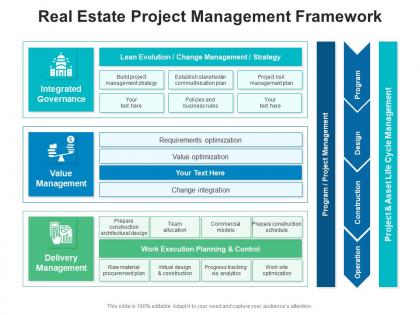
Real estate project management framework




Try Before you Buy Download Free Sample Product
 Impress Your
 Audience
 100%
100% Editable
 Save Hours
 of Time


There are many factors to consider when starting a real estate development project. The first step is to develop a clear and concise project management framework. By doing so, you will be able to effectively communicate the project's goals, objectives and deliverables to all stakeholders involved. Furthermore, a well-defined project management framework will help to ensure that the project is completed on time, within budget and to the required standard. If you're looking for a comprehensive guide to real estate project management, look no further than SlideTeam's project management PowerPoint presentations. Our templates provide an overview of the entire process, from start to finish, and can help you get your projects off the ground quickly and easily. Plus, our team is always updating our templates to ensure that they reflect the latest best practices in the industry. So download SlideTeam's project management ppt templates now and see how easy it is to get started on your next real estate project.
People who downloaded this PowerPoint presentation also viewed the following :
Real estate project management framework with all 2 slides:
Use our Real Estate Project Management Framework to effectively help you save your valuable time. They are readymade to fit into any presentation structure.
FAQs for Real estate
So there's basically three big chunks you'll go through. First is pre-development - that's your site analysis, permits, financing, all the boring paperwork stuff before anything actually happens. Construction phase comes next and honestly? It's chaos. You're juggling contractors, budgets going over, timelines getting pushed. Final phase is post-completion where you're either selling, leasing, or managing the property. Each one throws completely different problems at you and involves different people, so don't make my mistake of assuming the same team works for everything. Plan ahead for that.
Honestly, good communication fixes like 90% of real estate timeline disasters. Set up your channels early - group chats, weekly calls, whatever works. Map out who needs to talk to who before you even start. I've watched projects get totally wrecked because nobody told the city inspector about a change, or the contractor went dark for two weeks. Super frustrating but totally avoidable. Keep everyone posted on updates, especially architects and stakeholders. Catch problems early and you won't be dealing with expensive surprises later. Trust me, it's way easier than playing catch-up when things go sideways.
Track your ROI and profit margins first - those matter most to everyone above you. Timeline stuff is huge too though, plus quality scores from inspections. Honestly, stakeholder satisfaction surveys saved my ass once on a project that seemed fine financially but was a total mess behind the scenes. Change orders are worth monitoring if you're dealing with those. Safety incidents obviously. The trick is setting these benchmarks before you start, not halfway through when things are already sideways. Monthly check-ins work well - gives you time to actually fix problems instead of just documenting them at the end.
Dude, stakeholder management can make or break your whole project. I've watched perfectly good developments crash because someone pissed off the neighborhood association right at the start - it's brutal. Map out everyone who matters early: investors, residents, city planners, contractors. They all want different things and have their own timelines. Regular check-ins are your lifeline here. Don't wait for problems to blow up. Actually understand what each group cares about and keep them in the loop. Being proactive saves you so much headache later.
Dude, you've gotta try project management platforms - they're actually insane for tracking budgets and timelines without drowning in spreadsheets. Real-time collaboration tools let your whole team see updated plans instantly through the cloud. Drone surveys and BIM modeling speed everything up too, though the learning curve can be annoying at first. Mobile apps for site inspections are clutch. Honestly, I was skeptical but it beats juggling a million email chains. Start with one solid platform and add tools as you go - don't overwhelm yourself right away.
Dude, budget overruns and delays are gonna be your biggest headaches. Market shifts can totally kill your project value too - plus regulatory stuff changes when you least expect it. Build in like 15-20% extra for contingencies, trust me on this. Get permits early before they become a nightmare. Do your homework on zoning and environmental crap upfront. Check in with everyone regularly so problems don't spiral. Oh, and assume everything takes twice as long as planned. I swear project timelines are just fantasy sometimes, but better to plan for reality.
Dude, check zoning laws RIGHT at the start or you're screwed. Seriously learned this the hard way last year on this mixed-use thing - total disaster. If your project doesn't match current zoning, you're stuck waiting months or even years for rezoning apps and public hearings. Even basic stuff like how far back from the street you have to build can mess up your whole design. Height limits too. Then you're redoing everything and blowing past deadlines. I always tell people now - do the zoning homework during feasibility, not after you've already promised crazy timelines to clients.
Figure out ALL your costs before you even think about starting - seriously, everything adds up fast. Set aside 10-15% extra because I promise something weird will happen. Weekly budget check-ins are a lifesaver, and get some decent project management software to track it all. You can usually find ways to save money without cutting corners if you're creative about it. Oh, and make sure your contractor payment schedule actually works with when you'll have cash coming in. Set up alerts on your phone or whatever when you're hitting budget limits - way easier to fix things early than scramble later.
Dude, you can't mess around with deadlines in real estate - I learned this the hard way. One delay triggers everything else: permits get pushed back, contractors get booked elsewhere, inspections pile up. It's like dominoes falling. Carrying costs keep ticking while you're stuck waiting. I watched one guy lose $200k because his "two week delay" stretched into four months. Markets can shift on you too while you're sitting there. Build in extra time from day one - trust me on this. Track everything weekly or you'll lose control fast.
Set green targets right from the start - waste reduction goals, energy benchmarks, whatever makes sense for your project. Don't wait until later. Track those metrics like you would costs or timelines. Pick sustainable materials during planning, not when you're scrambling at the end. Find contractors who actually know green building (trust me, there's a difference). Honestly, most clients expect this stuff now anyway, so you're behind if you're not doing it. The trick is making sustainability a real requirement from day one. Otherwise it's the first thing that gets axed when money gets tight.
Definitely get 3-4 bids minimum and actually call their references - don't just collect the names like most people do. Look for contractors who've handled similar projects because honestly, strip mall guys don't always nail office build-outs. Weekly check-ins are your friend once you pick someone. Build in extra time because I promise something will go sideways. Document everything in writing - scope changes, timeline shifts, budget stuff. Oh, and use some kind of shared project tool so everyone's on the same page. Trust me on this one.
Dude, seriously - do the market research first. I can't stress this enough after watching so many people get burned. Look at comparable properties, check out the local demographics, see what demand actually looks like. It'll help you figure out your unit mix, pricing, all that stuff. Also dig into zoning changes and what other developers have planned nearby (competition's sneaky like that). Yeah it costs a few grand upfront, but trust me - way better than dumping hundreds of thousands into something nobody wants.
Honestly, start with Procore or Buildertrend - they're made for construction stuff so you won't be fighting the software. Microsoft Project handles scheduling pretty well, though Asana's easier if your team isn't super tech-savvy. Slack is a game changer for communication because email threads are the worst. You'll need QuickBooks for money tracking and something like Box for documents. Maybe a CRM if you're juggling lots of clients? But seriously, don't go crazy adding everything at once. Pick one tool per category first, then expand when people actually know how to use them.
Don't wait till the end to find problems - build checks into every step. Weekly site visits are good but honestly? Pop by unannounced sometimes, keeps everyone on their toes. Get your specs crystal clear upfront, then use checklists for each trade. Take photos of everything. If work looks shoddy, make them redo it - I learned this the hard way once. Catching stuff early saves you serious money later. Simple tracking system helps too so you can see who's consistently screwing up and actually hold people accountable.
Dude, coordination is gonna be your biggest pain point. Every city has totally different building codes and permit BS to deal with. Quality control gets messy when you can't babysit every job site - learned that one the hard way! Time zones make communication a nightmare too. You'll be texting contractors at weird hours trying to keep budgets on track. My advice? Find solid local partners in each market who know the ropes. Also create some standard processes that aren't too rigid - you need wiggle room for local quirks. It's chaos but manageable chaos.
-
Perfect template with attractive color combination.
-
Perfect template with attractive color combination.
-
Use of icon with content is very relateable, informative and appealing.