


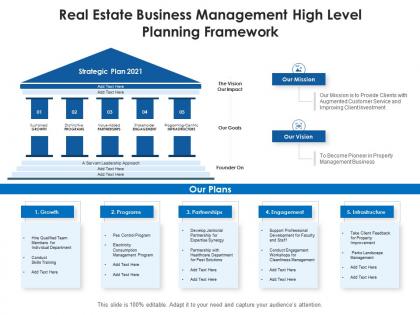
Real estate business management high level planning framework




Try Before you Buy Download Free Sample Product
 Impress Your
 Audience
 100%
100% Editable
 Save Hours
 of Time


Our Real Estate Business Management High Level Planning Framework are topically designed to provide an attractive backdrop to any subject. Use them to look like a presentation pro.
People who downloaded this PowerPoint presentation also viewed the following :
Real estate business management high level planning framework with all 2 slides:
Use our Real Estate Business Management High Level Planning Framework to effectively help you save your valuable time. They are readymade to fit into any presentation structure.

FAQs for Real estate business management high
You're basically a mini-CEO of buildings - managing tenants, budgets, and keeping everything running smoothly. Rent collection, lease negotiations, tenant complaints... it's all you. Plus coordinating repairs, marketing empty spaces, dealing with vendors (some are great, others will drive you nuts), and staying on top of regulations. One day you're an accountant, next day you're negotiating or fixing problems. The juggling act is real. My biggest tip? Build solid relationships with your vendors early - trust me, when something breaks at 2am, you'll want contractors who actually pick up the phone.
Start with whatever's driving you crazy right now - for me it was chasing people down for rent checks. Apps handle that automatically now, plus lease renewals and maintenance requests go straight to contractors. Property management software keeps tenant screening and expenses in one dashboard (game changer honestly). Going paperless alone saves hours every week. Smart locks and sensors are pretty cool too - they'll catch problems before you're dealing with water damage at 2am. Pick your biggest headache first, then add more tech as you go.
So I'd definitely track cash-on-cash return first - shows you real cash flow against what you put in upfront. Cap rates are solid for comparing different properties, and IRR gives the full picture with appreciation. Occupancy rates matter too, obviously. NOI is probably my favorite metric though, maybe I'm weird but I check it constantly lol. It just keeps everything real, you know? Start doing this monthly and you'll catch issues way earlier. Oh and don't ignore those occupancy numbers - empty units kill your profits fast.
Dude, local regs will totally make or break your rental game. Rent control caps what you can charge tenants. Eviction rules? They'll slow down how fast you can boot problem renters. You can't just convert that duplex into a triplex without jumping through permit hoops either. Safety inspections and code stuff - honestly such a pain but it'll eat into your maintenance budget real quick. My advice? Get cozy with housing officials early and always build compliance costs into your numbers upfront. Trust me on this one.
Look, good communication with tenants will literally save your sanity as a landlord. Respond to their messages within 24 hours - even just "got it, looking into this" works. Small issues turn into expensive nightmares when people feel ignored. Happy tenants stick around longer, pay on time, and actually care about not trashing your place. I learned this the hard way with my first rental honestly. Set up regular check-ins too. It's amazing how many problems you can catch early just by staying in touch instead of being that landlord who only surfaces when rent's due.
Honestly, get a ticketing system set up first - tenants submit stuff online and get auto confirmations. Priority matters big time though. Water leaks? Drop everything. Squeaky door? Yeah, that can wait. Communication saves your sanity - I used to get bombarded with "what's the update??" calls until I started texting people regular progress reports, even boring ones like "still waiting on the part." Do preventive maintenance too or you'll hate yourself later. Oh, and always respond within 24 hours even if it's just "got it, we'll be there Thursday." Shows you actually give a damn.
Honestly, just be super responsive to maintenance stuff - that's what tenants remember most. When they text about a broken faucet, don't leave them hanging for days. Small upgrades help too, like new light fixtures or even those Amazon package lockers (everyone loves those). Most people just want to feel like you actually care when problems come up, not like they're bugging you. I check in with mine every few months just to see how things are going. Oh, and make sure your rent's not way above what similar places are charging. You want them thinking "why would I move?" when lease time rolls around.
Smart building tech is everywhere now - IoT sensors, LED upgrades that actually make money back. Green certifications like LEED aren't just for show anymore either. Tenants are straight up picking buildings based on sustainability stuff, which honestly surprised me at first. Water management is massive too with all the drought issues. Most of these upgrades pay for themselves faster than you'd think. Oh, and definitely get an energy audit done first - it'll tell you exactly where to dump your money for the best returns. Way better than guessing what needs fixing.
Market shifts totally change how you price and time everything. Hot markets? Push those rents up and skip the non-essential fixes for now. Downturns are different - you're basically bribing tenants to stay with competitive rates because empty units just bleed money. Your property values swing around too, which messes with refinancing plans and when to sell. Honestly, I check local market data every month (maybe I'm obsessive?) but it keeps you ahead instead of scrambling to catch up. Stay flexible with your strategy - what worked last year might tank this year.
Fair housing laws are huge - don't mess around with discriminating against protected classes. Your lease needs to follow local rent control stuff and tenant rights (which change constantly, ugh). Security deposits have specific rules about where you store them and return timelines. I'd honestly keep a state requirements checklist somewhere because there's too much to remember. Photos and written reports during move-ins/outs will save your butt later. Oh, and document literally everything - even stuff that seems minor at the time.
Honestly, data analytics is a game changer for property stuff. Instead of throwing darts at a board, you can actually spot which areas are heating up and predict what properties will be worth down the road. Tenant screening becomes way less of a headache too. I'd say start with something simple like figuring out optimal rent prices - don't go crazy trying to analyze every single thing right away or your brain will melt. Once you get the hang of it, you can expand into maintenance schedules and vacancy predictions. Makes the whole guessing game feel less... well, like guessing.
Honestly, the biggest pain is gonna be tenant turnover and maintenance headaches multiplied by however many units you have. Losing multiple tenants at once really sucks for cash flow. Maintenance gets weird too - shared utilities, common areas, plus you're now the referee for neighbor disputes. Fair housing stuff gets trickier with multiple units, which I didn't expect when I started looking into this. Definitely spend the extra time screening tenants upfront. And find contractors who actually know multi-unit properties - trust me on that one.
Dude, first thing - get your staff trained on protected classes. Document absolutely everything because lawsuits are expensive and terrible. Same application process for everyone, same credit checks, same rental criteria. Don't make exceptions because you "like" someone better. Marketing materials matter too - make sure you're not accidentally excluding people. Honestly, the rental business brings out weird biases in people sometimes. Write down all your fair housing policies and actually follow them. When you're unsure about something, just treat every applicant identical to how you'd want someone treating you.
Honestly, most landlords are terrible at raising rent annually - they just leave money sitting there. Do a market analysis this month to see what you should actually be charging. Fresh paint and updated fixtures make a huge difference without breaking the bank. In-unit laundry is gold if you can swing it. I'd also charge for parking and pets separately - why bundle that stuff? Screen tenants like crazy since turnover costs way more than you think. Oh, and try offering longer leases at slightly higher rates. Vacancy kills your profits faster than anything else.
Good photos are everything - that's literally where everyone starts looking. Write descriptions that actually mention the stuff people care about like parking, updated kitchen, pet situation. Price it right and reply to messages super fast because decent renters don't wait around. Virtual tours help a ton, especially for people who work weird hours. Social media is hit or miss honestly - works great in some areas, total waste of time in others. I'd nail down your online listings first since that's doing most of the heavy lifting anyway, then maybe branch out if you're still not getting bites.
-
The Designed Graphic are very professional and classic.
-
Much better than the original! Thanks for the quick turnaround.
-
Use of icon with content is very relateable, informative and appealing.