

Avaliação de riscos de sistemas de TI Apresentação em Powerpoint Slides





Try Before you Buy Download Free Sample Product
 Impress Your
Audience
 100%
Editable
 Save Hours
of Time


O gerenciamento de riscos identifica, analisa e controla as ameaças ao capital e aos ganhos de uma organização. O gerenciamento de riscos de TI é a aplicação de métodos de gerenciamento de riscos para controlar os perigos de TI. Confira nossa apresentação em PowerPoint de avaliação de riscos de sistemas de TI projetada profissionalmente. Primeiro, cobre os problemas atuais de TI que a empresa enfrenta, incluindo os riscos relatados pela empresa e seus impactos. Ele também menciona o ônus financeiro para a empresa. Além disso, o PPT abrange a necessidade de gerenciamento de riscos de TI, classificação de riscos de TI e abordagem de gerenciamento de ameaças com estrutura e processo. Além disso, menciona os critérios de segurança e medidas de controle para vulnerabilidades de sistemas de TI, que incluem a detecção e prevenção de controles operacionais e controles de segurança de gerenciamento, juntamente com medidas detalhadas de controle de riscos técnicos de segurança. Além disso, o módulo abrange riscos residuais de segurança de TI, software de gerenciamento de riscos de TI e estimativa de custos para auditoria de sistema com um plano de mitigação de riscos com medidas de controle. Por fim, destaca a avaliação de controle de danos e painéis de gerenciamento de riscos de TI. Obtenha acesso a este modelo poderoso agora.
People who downloaded this PowerPoint presentation also viewed the following :
Conteúdo desta apresentação em Powerpoint
Slide 1 : Este slide apresenta a Avaliação de Risco de Sistemas de TI. Indique o nome da sua empresa e comece.
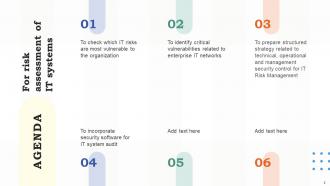
Slide 2 : Este slide apresenta a Agenda da apresentação.
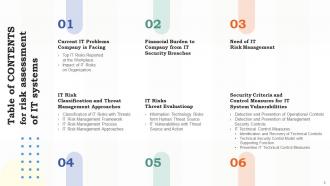
Slide 3 : Este slide mostra o índice da apresentação.
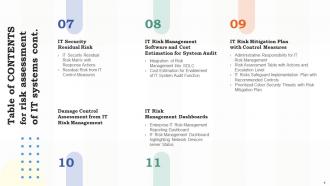
Slide 4 : Este é outro slide que continua o índice da apresentação.
Slide 5 : Este slide destaca o título dos tópicos que serão abordados a seguir no modelo.
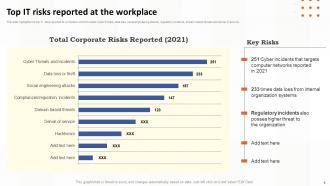
Slide 6 : Este slide apresenta os principais riscos de TI relatados no local de trabalho.
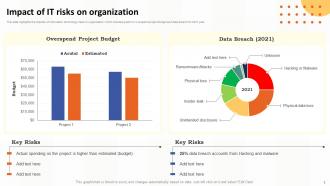
Slide 7 : Este slide mostra o impacto dos riscos de TI na organização.
Slide 8 : Este slide destaca o título dos tópicos que serão abordados a seguir no modelo.
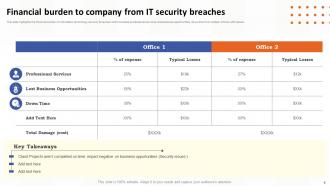
Slide 9 : Este slide representa o ônus financeiro para a empresa devido às violações de segurança de TI.
Slide 10 : Este slide destaca o título dos tópicos que serão abordados a seguir no modelo.
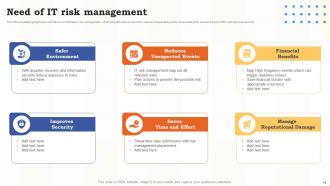
Slide 11 : Este slide mostra a necessidade de gerenciamento de riscos de TI.
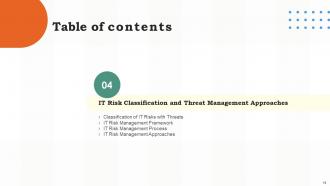
Slide 12 : Este slide destaca o título dos tópicos que serão abordados a seguir no modelo.
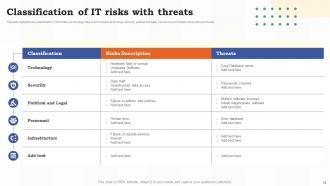
Slide 13 : Este slide mostra a Classificação de riscos de TI com ameaças.
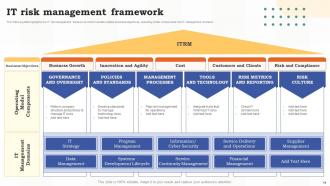
Slide 14 : Este slide apresenta a estrutura de gerenciamento de riscos de TI.
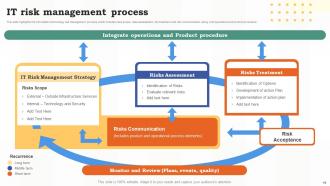
Slide 15 : Este slide mostra o processo de gerenciamento de riscos de TI.
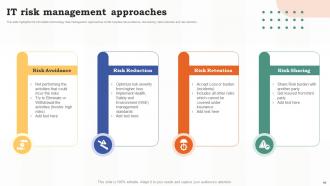
Slide 16 : Este slide representa as abordagens de gerenciamento de riscos de TI.
Slide 17 : Este slide destaca o título dos tópicos que serão abordados a seguir no modelo.
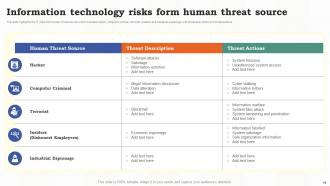
Slide 18 : Este slide mostra os riscos de tecnologia da informação da fonte de ameaças humanas.
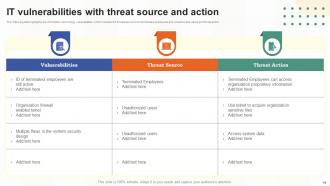
Slide 19 : Este slide mostra vulnerabilidades de TI com fonte de ameaça e ação.
Slide 20 : Este slide destaca o título dos tópicos que serão abordados a seguir no modelo.
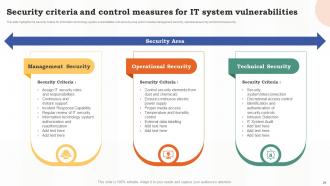
Slide 21 : Este slide apresenta Critérios de Segurança e Medidas de Controle para Vulnerabilidades do Sistema de TI.
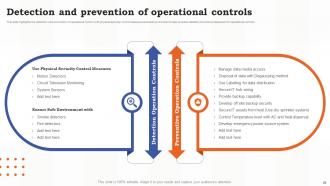
Slide 22 : Este slide exibe Detecção e Prevenção de Controles Operacionais.
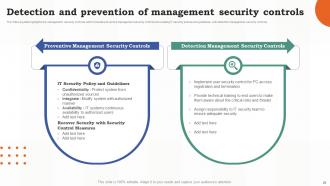
Slide 23 : Este slide representa a Detecção e Prevenção de Controles de Segurança de Gerenciamento.
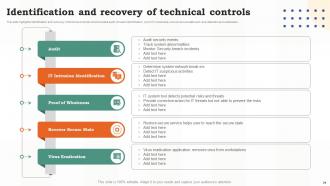
Slide 24 : Este slide mostra a Identificação e Recuperação de Controles Técnicos.
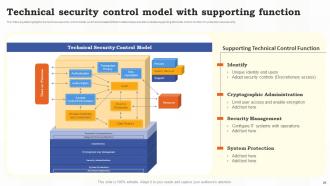
Slide 25 : Este slide mostra o modelo de controle de segurança técnica com função de suporte.
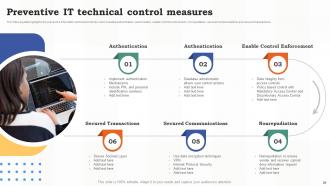
Slide 26 : Este slide apresenta as Medidas Preventivas de Controle Técnico de TI.
Slide 27 : Este slide destaca o título dos tópicos que serão abordados a seguir no modelo.
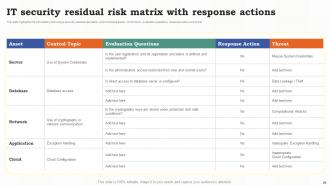
Slide 28 : Este slide exibe a Matriz de riscos residuais de segurança de TI com ações de resposta.
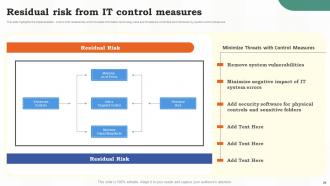
Slide 29 : Este slide representa o Risco Residual das Medidas de Controle de TI.
Slide 30 : Este slide destaca o título dos tópicos que serão abordados a seguir no modelo.
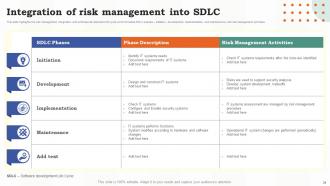
Slide 31 : Este slide mostra a integração do gerenciamento de riscos no SDLC.
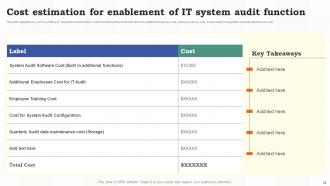
Slide 32 : Este slide mostra a estimativa de custo para habilitação da função de auditoria do sistema de TI.
Slide 33 : Este slide destaca o título dos tópicos que serão abordados a seguir no modelo.
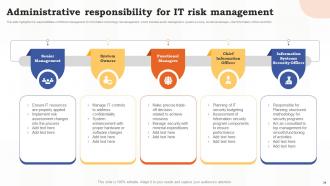
Slide 34 : Este slide apresenta a responsabilidade administrativa pelo gerenciamento de riscos de TI.
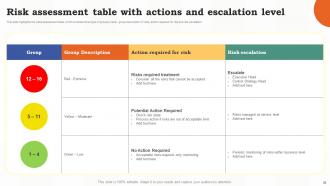
Slide 35 : Este slide exibe a Tabela de Avaliação de Risco com Ações e Nível de Escalonamento.
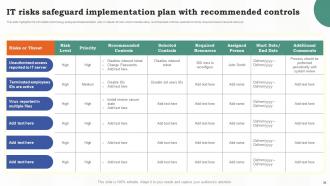
Slide 36 : Este slide representa o plano de implementação de proteção de riscos de TI com controles recomendados.
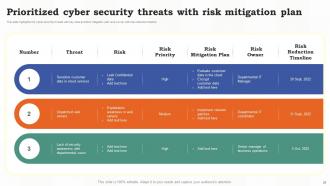
Slide 37 : Este slide mostra ameaças prioritárias de segurança cibernética com plano de mitigação de riscos.
Slide 38 : Este slide destaca o título dos tópicos que serão abordados a seguir no modelo.
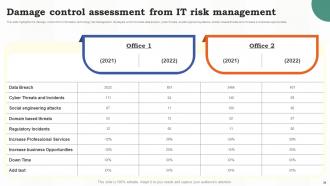
Slide 39 : Este slide mostra a avaliação de controle de danos do gerenciamento de riscos de TI.
Slide 40 : Este slide destaca o título dos tópicos que serão abordados a seguir no modelo.
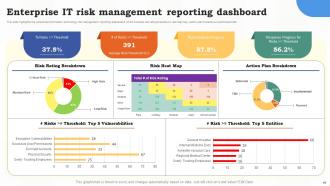
Slide 41 : Este slide apresenta o painel de relatórios de gerenciamento de riscos de TI corporativos.
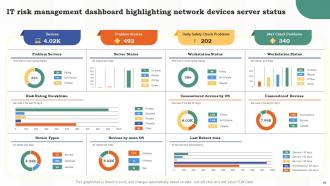
Slide 42 : Este slide exibe o painel de gerenciamento de riscos de TI destacando o status do servidor de dispositivos de rede.
Slide 43 : Este slide contém todos os ícones usados nesta apresentação.
Slide 44 : Este slide é intitulado como Slides adicionais para avançar.
Slide 45 : Este é o slide Nosso Objetivo. Indique os objetivos da sua empresa aqui.
Slide 46 : Este slide fornece o Plano de 30 60 90 dias com caixas de texto.
Slide 47 : Este é um slide da linha do tempo. Mostrar dados relacionados a intervalos de tempo aqui.
Slide 48 : Este slide contém um quebra-cabeça com ícones e texto relacionados.
Slide 49 : Este slide mostra Post It Notes. Poste suas notas importantes aqui.
Slide 50 : Este é um slide financeiro. Mostre suas coisas relacionadas a finanças aqui.
Slide 51 : Este é um slide de agradecimento com endereço, números de contato e endereço de e-mail.
Avaliação de risco de sistemas de TI Apresentação em Powerpoint Slides com todos os 56 slides:
Use nossos slides de apresentação do Powerpoint de avaliação de riscos de sistemas de TI para ajudá-lo a economizar seu valioso tempo. Eles estão prontos para caber em qualquer estrutura de apresentação.





FAQs for Risk Assessment Of IT Systems
Okay so for risk assessment you need five main things: threat identification, vulnerability analysis, impact assessment, likelihood evaluation, and risk prioritization. First map out what could go wrong, then find your weak spots. Next estimate how bad things might get and how likely each scenario is. Honestly, the prioritization step trips everyone up - there's always too many risks screaming for attention. Don't try to fix everything at once though. Pick your top 3-5 risks and make action plans for those. Oh and set up regular reviews because this stuff changes constantly.
Okay so basically qualitative risk assessment is like saying "this is pretty risky" or "meh, not so bad" - you're using categories instead of actual numbers. Quantitative is when you crunch the data and get real percentages and probabilities. I'd go qualitative first if you're short on time or don't have much data to work with. Heat maps, expert opinions, that kind of thing. Way faster to set up honestly. But for stuff like financial planning or anything where people could get hurt? You really want those hard numbers that quantitative gives you. It just comes down to what info you've got and how exact you need to be.
So you've got a few good routes here. GRC platforms can centralize everything and automate the boring workflow stuff. Monte Carlo simulations are clutch for modeling different scenarios with real probabilities. Heat maps work surprisingly well too - people just get the color-coding thing instantly, which honestly saves so many meetings. Survey tools help you pull input from different teams without chasing everyone down. Oh, and AI analytics can catch patterns you'd probably miss doing it manually. I'd just pick whatever meshes with how you're doing things now and expand from there.
Honestly, just start with a basic risk matrix - plot probability vs impact and you're golden. Score each risk on how likely it is and how much damage it'd cause. Focus on the high-probability, high-impact stuff first (your "red zone" risks). Don't get stuck analyzing every little thing equally - I've seen teams waste weeks doing that. Also check what controls you already have in place. Sometimes a scary-looking risk isn't that urgent if you've got decent safeguards. Pick your top 5 and build action plans from there. Way less overwhelming than trying to tackle everything at once.
Dude, you absolutely need those people in the loop - they see stuff you'll never catch sitting at your desk. Ground-level folks know what actually breaks in their departments, plus they spot weird connections between risks that look totally separate from above. I've watched so many risk assessments completely bomb because some manager thought they had it all figured out solo. Getting them involved early is clutch though - if they help build the solutions, they won't just blow off your recommendations later. Map out who really understands each process first, then just talk to them systematically.
Honestly, once a year is the bare minimum but that's kinda useless advice. Your industry matters way more than some random timeline. High-risk stuff? Do it quarterly. Pretty stable operations can probably get away with annual reviews, but here's the thing - you need trigger events too. Major changes, new regulations, big incidents - that's when risks actually shift. Don't let these turn into paperwork that sits in a drawer somewhere. I'd tie them to real business stuff happening rather than just picking random calendar dates. Way more likely to catch problems that actually matter.
Don't rush through it like some boring checklist - I've watched too many teams just phone it in. You're gonna miss the subtle stuff that actually kills projects if you only focus on obvious risks. Get people from different departments involved because they catch things you'd never think of. Oh, and don't make it too narrow in scope or you'll regret it later. Honestly, the teams that skip regular stakeholder input are setting themselves up for disaster. Set a quarterly reminder to revisit everything since projects change fast and your original assessment becomes useless pretty quick.
You gotta match your risk assessment to whatever industry you're in, honestly. Healthcare? Patient safety and compliance stuff. Manufacturing deals with equipment breaking down and people getting hurt. Tech companies are paranoid about data breaches and their systems crashing - which makes sense. Construction is all about physical dangers and projects running late. Here's what works: look at what's screwed over other companies in your field first. That'll show you the real threats. Then build your whole assessment around those specific risks instead of some generic template.
Track your incident frequency, severity scores, and financial impact first - that's the obvious stuff. But here's the thing, those numbers only show up after something's already gone wrong. You'll want leading indicators too like compliance rates and how fast your team spots new risks. Training completion stats help as well. Set your baseline measurements before you change anything, then watch the trends instead of obsessing over individual data points. Oh and don't skip stakeholder feedback - sometimes the soft stuff tells you more than spreadsheets do.
External stuff can totally flip your risk game upside down. New regulations drop and suddenly what you're doing is sketchy overnight. Market shifts? That "safe" bet becomes a nightmare real quick. 2008 was the perfect example - came out of nowhere and wrecked everyone. You've got to bake these variables into your planning from the start, not scramble later. Stay on top of regulatory changes and market moves so you're not the last one to know. I mean, nobody wants to get caught with their pants down when everything goes sideways.
So scenario analysis basically lets you test your risk models against different "what if" situations that could actually happen. You're not just stuck relying on old data. Think economic crashes, supply chain mess, new regulations - that kind of stuff. Honestly, it's pretty eye-opening once you start doing it. Don't just do best/worst case scenarios though - reality's usually somewhere in the middle, so you need 3-4 realistic ones. Start with your biggest weak spots and build scenarios around those. You'll quickly see where you're most screwed if things go sideways.
Honestly, you can't just do this once and call it done. Build those review cycles right into your process - I'm talking quarterly or every six months where you're actually looking at new threats and how your business has changed. Annual reviews are pretty much useless now since everything moves so damn fast. Different departments will catch stuff you totally missed, so get them involved. Keep an eye out for new regulations and tech shifts too. Oh, and if your business model changes at all, that's gonna create fresh risks you haven't thought about. Think of it more like an ongoing chat than some boring compliance thing you have to check off.
Honestly, the whole field is shifting toward real-time monitoring instead of those pointless annual assessments that nobody reads anyway. AI-powered risk modeling is huge right now. Climate risks are finally getting integrated too - about time. Third-party management is blowing up because supply chains are so messy and connected. Companies are diving deep into behavioral analytics using employee data, which is kinda creepy but makes sense. Oh, and emerging tech risks like deepfakes are becoming a real headache. I'd start by figuring out what you can automate and get real-time data feeds for.
Honestly, you've gotta nail down your risk limits before anything else - like what's actually acceptable vs what'll keep you up at night. Use some kind of scoring system that balances potential upside against how likely things are to go sideways. I've watched way too many teams freeze up trying to avoid every possible risk instead of just managing it smartly. Have real conversations about trade-offs, not just "this feels right" moments. Set up decision rules based on your budget, goals, and whatever regulations you're stuck with. Oh, and definitely create low/medium/high risk categories with different approval chains - saves so much headache later.
Your company culture totally affects how people handle risk assessment - way more than most realize. Risk-averse places get super conservative, imagining worst-case scenarios that'll probably never happen. Meanwhile, bold cultures might brush off real threats or speed through analysis. What matters most? Whether people feel safe reporting bad news without getting thrown under the bus. Culture decides what risks folks will actually talk about and how deep they'll dig. I've seen teams stay quiet about huge red flags just because nobody wanted to be "that person." Create space where people can be honest about what scares them.
-
Great quality slides in rapid time.
-
Been using SlideTeam for some time now…can’t imagine why I wasted all that time in front of the screen trying to make the perfect presentation.