


Enterprise It Risk Management Reporting Dashboard Risk Assessment Of It Systems




Try Before you Buy Download Free Sample Product
 Impress Your
 Audience
 100%
100% Editable
 Save Hours
 of Time


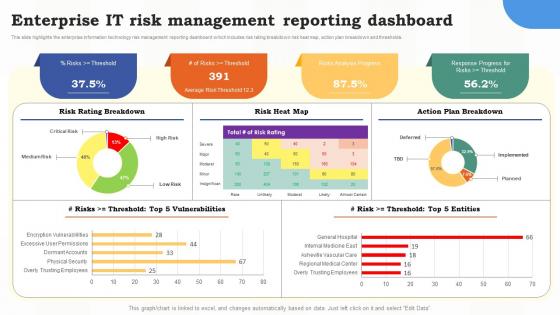
This slide highlights the enterprise information technology risk management reporting dashboard which includes risk rating breakdown risk heat map, action plan breakdown and thresholds.
People who downloaded this PowerPoint presentation also viewed the following :
Enterprise It Risk Management Reporting Dashboard Risk Assessment Of It Systems with all 7 slides:
Use our Enterprise It Risk Management Reporting Dashboard Risk Assessment Of It Systems to effectively help you save your valuable time. They are readymade to fit into any presentation structure.






FAQs for Enterprise It Risk Management Reporting Dashboard Risk Assessment
Okay so you need five main things for IT risk management. Start with governance - figure out who's making decisions and who's on the hook when things go sideways. Risk identification comes next (seriously, most teams suck at this part). You've gotta actually hunt down threats before they wreck your day. Assessment methods help you figure out what to panic about first. Then build mitigation strategies that don't just look good on paper. Oh, and monitoring - can't stress this enough. Risks love to sneak back in when you're not watching.
Start with your industry's specific compliance stuff and what threats actually hit companies like yours. Healthcare gets hammered differently than banks, you know? Check out reports from ISACA or your trade groups - they put out decent threat landscape data each year. NIST frameworks are solid for risk assessments, but tweak the controls for what matters in your space. Honestly, some of the best intel comes from just talking to other security folks at conferences. Find out what's keeping them awake at night. Build your risk register around actual scenarios that have wrecked similar orgs, not just generic IT nightmares.
So cybersecurity is basically your frontline defense against hackers, ransomware, all that nasty stuff. IT risk management is the bigger picture - identifying every tech risk you've got. But here's the thing: cyber attacks can mess up everything else once they get in. That's why I'd honestly prioritize this over a lot of other IT risks. You'll want to map out your current security controls against your risk register first. Shows you exactly where you're vulnerable. It's like... you can have all the risk frameworks in the world, but if someone breaks into your systems, game over.
So basically you'll want to make a risk matrix - just plot your IT risks on a grid where one side is how likely it'll happen and the other is how bad the impact would be. The high likelihood + high impact stuff? That's where your money goes first. Don't get caught up in doomsday scenarios though - be realistic about what's actually probable. Medium risks need watching and backup plans. Low-low risks you can probably just accept or get insurance for. Oh, and update this thing regularly because threats change all the time. Start with your top 10 IT risks and rank them.
So once you spot those IT risks, there's a bunch of ways to handle them. Basic stuff first - lock down who can access what, keep everything updated, and back up your data religiously. Cyber insurance is honestly a game-changer these days, totally worth the investment. For low-level risks, sometimes it's fine to just live with them if fixing costs more than the potential headache. You can also ditch systems you don't really need - why invite trouble? Oh, and document whatever approach you pick because you'll forget otherwise. Risk stuff changes constantly anyway, so review it periodically.
Compliance pretty much dictates your whole IT risk strategy - you're managing what regulations require, not just potential threats. GDPR, SOX, HIPAA - they all force specific security controls and constant documentation (ugh, the paperwork). But here's the thing: following these rules actually makes your security better since they're based on solid practices. I'd start by checking your current setup against whatever regulations hit you. You'll probably find some gaps that need fixing ASAP. The documentation headache is real, but it'll save your butt during audits.
So AI and blockchain are totally changing how you think about risk management. AI's great for automating threat detection - honestly, you need it just to keep up with all the alerts. But it also brings new headaches like algorithmic bias and adversarial attacks. Blockchain gives you solid data integrity, though smart contract bugs and regulatory confusion are real issues. The tricky part? You can't just slap these technologies onto what you're already doing. Your whole risk strategy needs a refresh to handle both the new threats they create and the better capabilities they give you.
Honestly, there's a bunch of solid options depending on what you need. Nessus and Qualys are great for vulnerability scanning - they'll find security holes automatically. For bigger picture stuff, ServiceNow or MetricStream handle overall risk management pretty well. Splunk's dashboards look crazy impressive (makes you feel like a hacker in the movies lol). Rapid7's good for threat detection too. Oh, and Nmap's super basic but useful for network scanning. I'd say figure out your budget first, then start simple and add more tools as you go. Don't overthink it initially.
Talk about security stuff in regular team meetings, not just those boring annual trainings. When your team leads bring up recent incidents - even minor ones that got stopped early - people actually pay attention. Real examples from your own company work way better than those generic training scenarios, honestly. Set up simple ways for people to report sketchy stuff without fear of getting in trouble. Oh, and definitely celebrate when someone flags a potential issue, even if it's a false alarm. Makes people way more likely to speak up next time.
First thing - get leadership on board or you're basically writing a document no one will read. Define what counts as a risk at your company and create assessment criteria that aren't totally confusing. Someone needs to own each risk category because otherwise it's like that group project where everyone assumes someone else is handling it. Quarterly reviews work well for the big stuff. Honestly, I've seen so many policies that are way too complicated - people just ignore them. Keep yours straightforward so folks actually use it instead of finding workarounds.
At minimum, do them yearly. But really depends on your situation, you know? Finance companies do quarterly ones because they have to - those regulations are brutal. If you're constantly updating systems or growing fast, you'll need more frequent checks. Had a security incident recently? Time for another assessment. Industries with stricter rules obviously can't get away with just annual ones. I'd say start with yearly as your baseline, then add extras whenever something major changes in your setup. Growth spurts, new tech rollouts, weird threats - all good reasons to reassess sooner.
Honestly, most companies treat IT risk like a one-time thing instead of something ongoing - huge mistake. They'll do one assessment, check the box, then forget about it for two years. Plus everyone obsesses over technical stuff while ignoring the human element. That one employee who clicks every sketchy email? Way more dangerous than some random unpatched server sitting in the corner. Make it part of your regular planning - quarterly reviews work well. Get your business people involved too, not just the IT team. And yeah, train people consistently on the basics.
Don't treat your incident response plan like some afterthought you slap together later. Map it directly to the risks you've already spotted - so if data breaches worry you most, build specific response steps for exactly that scenario. Most teams keep these totally separate which drives me crazy honestly. Your tabletop exercises will reveal blind spots you never saw coming, so use those insights to update your risk assessments too. Oh and update both documents at the same time when new threats pop up - saves you headaches later.
Focus on incident frequency, how fast you catch stuff, and whether your security posture is actually getting better. Track critical vulns fixed, patch compliance rates, security training completion - that kind of thing. Those "risk reduced" slides look great for executives but honestly? What matters more is how quickly your team spots problems and shuts them down. Don't forget compliance audit findings and how long they take to fix. Oh and start small - maybe 5-7 metrics that actually match what your business cares about. You can always add more later once things are running smoothly.
So basically you've gotta weave this into your current IT risk setup. Start by vetting vendors hard before you bring them on - check their security, compliance, financials, all that stuff. Then keep monitoring them constantly because honestly, vendors can go sideways pretty quick. Six months ago they looked great, now? Who knows. Also make sure your contracts spell out security requirements and give you audit rights. Oh and don't try to tackle everyone at once - that's a nightmare. Just start with your riskiest vendors and work down from there.
-
Appreciate the research and its presentable format.
-
Nice and innovative design.