Enterprise Risk Management Enterprise IT Risk Management Reporting Dashboard

Rating:
100%
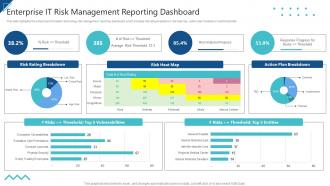
A dashboard showing risk management metrics for an enterprise
Slide 1 of 7

or

Favourites Favourites

Try Before you Buy Download Free Sample Product

Audience Impress Your
Audience
Editable 100%
Editable
Time Save Hours
of Time
The Biggest Sale is ending soon in
0
0
:
0
0
:
0
0
Rating:
100%
This slide highlights the enterprise information technology risk management reporting dashboard which includes risk rating breakdown risk heat map, action plan breakdown and thresholds. Present the topic in a bit more detail with this Enterprise Risk Management Enterprise IT Risk Management Reporting Dashboard. Use it as a tool for discussion and navigation on Risk Rating Breakdown, Risk Heat Map, Action Plan Breakdown. This template is free to edit as deemed fit for your organization. Therefore download it now.

FAQs for Enterprise Risk Management Enterprise IT Risk

So you'll need five main things to get this working: risk identification processes, solid governance (with actual clear roles - not just "IT figures it out"), monitoring systems, incident response plans, and regular compliance checks. Most companies totally botch the governance piece, honestly. Your framework can't just exist in some IT bubble either - it needs to actually connect to what the business is doing. Oh, and keep that risk register updated every quarter or it becomes completely pointless. Start there and build out from that foundation.

Start with your industry's specific rules - HIPAA for healthcare, PCI-DSS for retail, that kind of thing. Industry groups are honestly where you'll get the best intel, way better than those cookie-cutter security frameworks everyone pushes. Map those risks to your actual setup and see what's vulnerable. Manufacturing gets hit with totally different stuff than banks do, so don't just copy someone else's playbook. Join some security groups in your field - nothing beats hearing war stories from people who've been there. You'll learn more from one good incident debrief than a dozen whitepapers.

Look, governance is what holds your whole IT risk program together. It's your framework for who makes decisions and how risks get handled across the company. Skip this step and you'll just be putting out fires randomly instead of having a real system. You need clear ownership - like who's actually responsible when stuff breaks? Set your risk tolerance levels upfront and create consistent processes for spotting and dealing with threats. Honestly, most companies mess this up by making it too complicated. Just map out who owns what risks first, then build clear escalation paths for when things inevitably go wrong.

So here's what worked for me - build your compliance stuff right into the risk assessment from day one. Don't try to add it later, it's a nightmare. Map your IT risks to whatever regs you're dealing with (SOX, GDPR, etc) and create controls that knock out both the risk AND compliance at once. Way more efficient that way. Document everything though - auditors love their paper trails. Run regular checks to make sure your controls actually do what they're supposed to. Honestly, if you do risk management right, compliance just kinda happens naturally instead of being this separate pain in the ass.

Honestly, cybersecurity stuff is probably your biggest headache right now - ransomware, data breaches, all that fun stuff. Cloud security's messy too since everyone just moved everything to AWS without thinking it through. Your old systems breaking down? That's another nightmare, especially if you're still stuck with some ancient ERP from like 2010 (been there). Oh, and compliance regulations will eat you alive if you're not careful - GDPR, SOX, the whole mess. Just start with a basic risk assessment of what you've got. You'll probably find gaps you didn't even know existed just by asking "what breaks if this goes down?"

So emerging tech is doing this weird double thing to IT risk management right now. Creates brand new headaches - like AI bias issues or IoT devices that basically turn your network into swiss cheese. But then it also hands you amazing tools to fight back. AI threat detection is getting scary good, and predictive analytics can catch stuff before it blows up. Short sentences work better sometimes. The trick is just staying on top of how new tech changes your risk landscape and tweaking your frameworks as you go. Honestly feels like playing whack-a-mole half the time, but the defensive tools are worth it.

Honestly, automated security scanning is a lifesaver - just set it up to run constantly so it catches vulnerabilities without you babysitting it. Real-time dashboards help too since they'll show your risk indicators at a glance. SIEM systems are clutch for alerting you when weird stuff happens across your network. Also grab some threat intelligence feeds and set up automated compliance checks. The key is not getting buried under a million alerts (learned that one the hard way). Pick your top 5 risk areas first, then find tools that monitor those without needing daily hand-holding.

So risk appetite is basically how much IT risk your company's cool with taking to hit business goals. Risk tolerance? That's where you draw the actual line and do something about it. Picture it like this - appetite says "yeah, some downtime's fine" while tolerance gets specific: "but max 4 hours monthly." One's more philosophical, the other you can actually measure. Here's what I'd do: map out which IT risks would really hurt your business, then set hard limits. Maybe you're okay with moderate cyber risks in theory, but in practice you want 99.9% uptime and absolutely zero breaches. Honestly, I always start with the most critical systems first - makes the whole process way less overwhelming.

Honestly, get your leaders talking about risks and screw-ups in regular meetings first - people copy what the boss does. Train everyone to spot problems without getting blamed for it (because who wants to be that person, you know?). Make reporting super easy and actually praise people when they catch stuff early. Here's the thing though - you've got to connect it to performance reviews and recognition. Otherwise it just becomes another thing nobody cares about. Oh, and maybe don't call it "risk management" all the time? Sounds so corporate.

So basically, don't treat incident response like some separate thing you bolt on later. Build it right into your risk assessment from day one - when you're scoring risks, map out your response playbooks at the same time. I mean, it's honestly bizarre how many companies keep these totally disconnected. Your response procedures should tie back to your risk tolerance levels so you know whether to escalate or just contain something. Oh, and actually test these plans regularly - then update your risk scores based on whether your responses work in the real world or not.

Track both leading and lagging indicators - stuff like mean time to detect incidents, security breaches, compliance scores, and risk assessment coverage. Employee training completion rates matter too since people mess up more than tech does. Business continuity metrics are huge: RTO/RPO achievement and how many risks actually have mitigation plans. Honestly, most companies track way too much garbage. Pick 5-7 metrics that actually connect to what your CISO worries about at 2am. Focus on what could really hurt your business, not just pretty dashboards.

Honestly, it's all about sorting your projects by risk level. Low-risk stuff? Just streamline the approvals and don't bog people down with paperwork - that's how you kill good ideas fast. High-risk projects though, you've gotta keep those rigorous checks in place. Set up some "sandbox" environments where teams can mess around safely without breaking anything important. The trick is making your risk thresholds super clear so everyone knows when they can just go for it versus when they need to slow down and get the official stamp of approval. Works way better than trying to control everything equally.

So think about it this way - when you bring in third-party vendors, you're basically handing over pieces of your security to someone else. Their weaknesses become your weaknesses, which honestly can be pretty nerve-wracking depending on what they're handling. You've got to check out their security practices upfront and make sure they meet your compliance standards. But here's the thing - it can't just be a one-and-done deal when you sign the contract. You need to keep monitoring how they're doing throughout the whole relationship. Some vendors have crazy amounts of access to your stuff, so staying on top of their risk is crucial.

Honestly, treat cyber risks like any other business risk on your ERM framework. Map threats to actual business goals and put dollar signs on potential losses - executives tune out when you start rattling off vulnerability counts. Create risk registers that speak business language, not tech jargon. Split ownership between IT and business units so nobody's confused about who handles what. Build incident response plans that cover business continuity too. The whole point is making cyber risks visible alongside your other enterprise risks. That way leadership can actually make smart decisions about where to spend money. Makes sense?

Look, start with vulnerability scanners - Nessus or Qualys are solid for finding gaps. Then grab a GRC platform like ServiceNow for workflow stuff, plus something like Splunk for monitoring. But here's the thing that drives me crazy: people buy all these tools and they don't talk to each other! You end up with more silos than before. Map out what you're doing manually first. Automate the biggest time-wasters. Oh, and check out Rapid7 or Tanium for continuous compliance - they're pretty decent. Just make sure whatever you pick actually plays nice with your current setup.

Ratings and Reviews

100% of 100
Review Form
Write a review
Most Relevant Reviews
  1. 100%

    by Roberts Roberts

    Making a presentation has never been this easy for me. Thank you SlideTeam for offering a splendid template library.
  2. 100%

    by Dane Harrison

    My search for complete decks ended with SlideTeam. Such a surplus collection of HD PowerPoints. Moreover, their standard and widescreen formats have helped me in delivering bullseye presentations.

2 Item(s)

per page: