


IT Risk Management Framework Risk Management Guide For Information Technology Systems




Try Before you Buy Download Free Sample Product
 Impress Your
 Audience
 100%
100% Editable
 Save Hours
 of Time


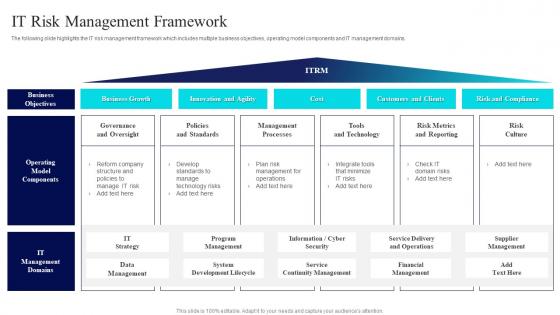
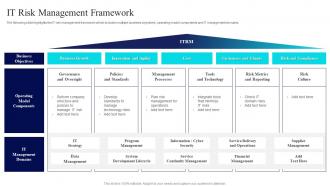
The following slide highlights the IT risk management framework which includes multiple business objectives, operating model components and IT management domains.
People who downloaded this PowerPoint presentation also viewed the following :
IT Risk Management Framework Risk Management Guide For Information Technology Systems with all 6 slides:
Use our IT Risk Management Framework Risk Management Guide For Information Technology Systems to effectively help you save your valuable time. They are readymade to fit into any presentation structure.





FAQs for IT Risk Management Framework Risk Management Guide For
Okay so you'll want to start with the basics: risk identification, assessment, mitigation, and monitoring. Catalog everything first - servers, laptops, all that stuff - plus what could go wrong. Then figure out which risks are actually likely vs just scary-sounding. Fair warning: you're gonna uncover way more problems than you bargained for, it's kinda depressing honestly. Next step is creating your action plans with deadlines and who's responsible. Don't just write this thing and shelf it though. Regular check-ins are key, especially when you're adding new tech to the mix.
Okay so first thing - figure out what tech you actually have running right now. Make a list of everything: systems, software, processes, all of it. Next, think about what could go wrong with each piece. Cyberattacks, hardware dying, natural disasters, whatever. That ancient server nobody wants to mess with? Yeah, that's probably your biggest risk tbh. Rate each threat by how likely it is and how badly it'd hurt your business. Frameworks like NIST help structure this stuff, but don't overthink it. Just be honest about your weak spots and prioritize fixing what matters most.
Risk assessments are your bread and butter - both the number-crunching kind and the gut-check qualitative ones. Threat modeling's solid too. But honestly? Start with an asset inventory first because you literally can't secure stuff you forgot existed (happens way more than it should). Vulnerability scanning gives you those quick wins everyone loves. FAIR's great if you want to get quantitative about it, and frameworks like NIST or ISO 27001 keep you organized. Most decent teams mix and match rather than going all-in on one approach. Asset inventory plus a vuln scan - that's where I'd begin.
Look, regulatory stuff is basically your non-negotiable foundation - you've gotta build everything else around it. SOX, HIPAA, PCI-DSS, GDPR... whatever applies to your industry sets your minimum controls and audit requirements. It's annoying but that's reality. You can't just assess risks based on business logic anymore - compliance risks come first, then you add your business strategy on top. I'd start by mapping what controls you already have against your regulations. My old boss used to say it's like building a house - you need the foundation before you can get creative with the design.
Honestly, stakeholder communication can make or break your whole IT risk setup. Everyone from C-suite down to regular users needs to know what's happening with risks and what they're supposed to do about it. Otherwise you'll have gaps everywhere - missed threats, people making bad calls, compliance issues. Different groups need different info though. Executives just want the business impact cliff notes, while your IT folks need all the technical details. Oh, and don't sleep on regular users - they actually spot emerging risks pretty early if you're listening. Set up consistent reporting schedules and clear escalation paths right from the start, or you'll be scrambling later.
Honestly, just make a risk matrix - plot probability vs impact so you can see what actually matters. Score each risk on both, then dump your energy into the high-prob, high-impact stuff first. Tons of teams skip this and just chase whatever's making the most noise right now (which is usually not the real problem). Your company probably has some risk tolerance guidelines too, plus any regulatory stuff to factor in. The whole point is being methodical instead of constantly putting out fires. Make a ranked list and revisit it every few months since things change.
Budget's gonna be your first call here. ServiceNow GRC and RSA Archer are solid for the full risk lifecycle, though honestly RSA can be a pain to configure. Nessus is my go-to for vulnerability scanning - way better than Qualys IMO. OpenVAS works if you're broke. RiskLens does decent quantitative stuff with FAIR methodology. Don't overthink it though - I've seen small teams do fine with SharePoint risk registers or even Excel. Figure out which processes you actually need automated first. Then grab tools that play nice together instead of trying to boil the ocean.
Risk appetite is basically your "how much can go wrong" threshold for different IT areas. Gets you making consistent choices instead of flip-flopping every time something breaks. Like, will you let that ancient server limp along another year or panic and replace it now? Leadership needs to actually set these limits upfront (good luck with that), but once you have them, decisions get way faster. Otherwise you're either paralyzed by every tiny risk or throwing money at problems randomly. It's your risk budget - tells you where to focus when stuff inevitably hits the fan.
Honestly, the hardest part is convincing leadership to actually fund it - they all want security until they see the price tag. Resource constraints hit everyone. Plus technical teams think frameworks are too vague to be useful, which... fair point sometimes. Different departments guard their info like it's state secrets, so good luck getting collaboration. Oh, and people absolutely hate changing their workflows. Start with just one department though. Get some quick wins under your belt, then frame everything around business impact when you're pitching to execs. Skip the tech speak entirely.
Look, continuous monitoring completely changes how you handle risk management. Instead of that annual checklist BS, you're actually keeping pace with what's happening right now. Real-time threat detection, vulnerability spotting, changes across your whole setup - you'll catch stuff immediately rather than finding out months later. Honestly saved my butt more times than I can count. No more audit surprises or panic mode when things break. The data lets you pivot quickly and adjust your security stance as threats shift. My advice? Start with automated scanning on your most critical stuff, then build out from there. Way less stressful.
Look, incident response plans are basically your backup when everything hits the fan. Without one, you're just winging it during a crisis - making dumb mistakes and probably breaking compliance rules. Think of it like a fire drill, but instead of flames it's a data breach that could destroy your company. Your plan needs clear roles and communication steps so everyone knows their job when disaster strikes. And honestly? Test the thing regularly. I've seen too many "perfect" plans that were completely useless because nobody actually practiced them. Recovery procedures should be step-by-step so there's no confusion when you're stressed and caffeine-deprived at 3am trying to fix everything.
Look, you've gotta build IT risk assessment right into your BCP from the start. Figure out which IT risks can actually mess with your critical business stuff - don't treat them like they're separate issues. Most companies do this completely backwards, but your disaster recovery should match up with your business impact analysis. Recovery time needs to be realistic for what the business can handle. Run tabletop exercises with both IT and business people in the room together. Trust me, that's where you'll spot the holes before they bite you during a real crisis. Way better than finding out the hard way.
Here's what I'd focus on if I were you - start with mean time to detect/resolve incidents, plus how many risk assessments you're actually finishing on time. Track your mitigation wins vs. new risks popping up too. Compliance audit results are solid indicators. Oh, and this might sound boring but check how many risks have actual owners assigned - seriously, the orphaned ones just collect dust forever. I'd also watch how often your risk ratings change after stuff hits the fan. Shows if you're being realistic upfront. Pick maybe 3-4 metrics that actually matter for your company and review monthly.
Look, the old risk management stuff just doesn't work anymore with all this cloud and AI chaos. You're stuck figuring out what Amazon or whoever actually handles versus what's still your problem - it's honestly a mess sometimes. AI brings weird new headaches too, like biased algorithms making terrible decisions without you knowing. Short version: audit whatever cloud tools you're already using first. Then update your risk assessments to cover things like cloud outages or your AI models completely failing. Your incident response plans need to account for this tech-specific stuff now or you'll be scrambling when something breaks.
Start with quarterly training sessions - way better than those useless annual things everyone sleeps through. Run phishing sims regularly and do workshops based on what your team actually deals with. Real scenarios work best, like when someone calls pretending to be IT asking for passwords (happens more than you'd think). Get your leadership to show up and participate - if the boss skips it, everyone else will too. Track who's completing stuff and how they're doing on the simulations. Honestly, measuring engagement is half the battle. Adjust frequency based on how many incidents you're seeing.
-
SlideTeam is the way to go when you are in a time crunch. Their templates have saved me many times in the past three months.
-
The content is very helpful from business point of view.