


Enterprise Risk Management Powerpoint Presentation Slides




Try Before you Buy Download Free Sample Product
 Impress Your
 Audience
 100%
100% Editable
 Save Hours
 of Time


A successful business needs to strike new opportunities and develop risk management strategies. Identify and manage risks with our enterprise risk management PowerPoint presentation slides. This presentation slide of business risk management gives you a powerful tool for presenting the process of controlling and managing activities of the organization to mitigate potential risks on earnings and capitals. This Enterprise Risk Management PPT template will also help you effectively approach threat management and assist your enterprise to establish uniform policy to manage threats. Covering business risk planning, this presentation template can be used as a structure to define risks, assign responsibility and ownership to the stakeholders, create enterprise risk map, better decision making and help to change the overall culture of a company. Download these Enterprise Risk Management presentation slides and engage your stakeholders. The slideshow covers topics such as risk management cycle and helps you evaluate types of risks, categorize them and build effective threat assessment plans. Our Enterprise Risk Management Powerpoint Presentation Slides are fit for heavy duty. They are good for any arduous assignment.
People who downloaded this PowerPoint presentation also viewed the following :
Content of this Powerpoint Presentation
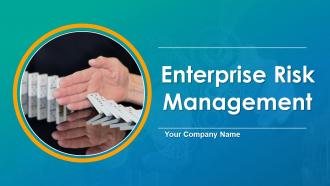
Slide 1: This slide introduces Enterprise Risk Management. Add your company name here.
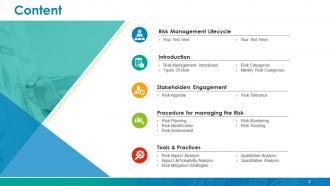
Slide 2: This slide is titled Content which includes- Risk Management Lifecycle, Introduction, Procedure for managing the Risk, Stakeholders Engagement, Tools & Practices.
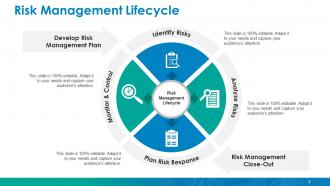
Slide 3: This slide showcases Risk Management Lifecycle in a circular form. This includes- Identify Risks, Plan Risk Response, Analyze Risks, Monitor & Control.
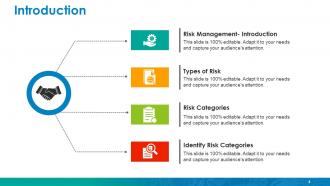
Slide 4: This is an Introduction slide with icons and text boxes presenting- Risk Management- Introduction, Types of Risk, Risk Categories, Identify Risk Categories.
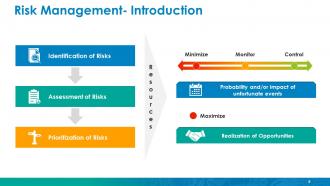
Slide 5: This is Risk Management- Introduction slide. Its 3 steps are- Identification of Risks, Assessment of Risks, Prioritization of Risks.
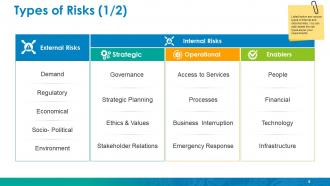
Slide 6: This slide states different Types of Risks and consists a list of various types of internal and external risks. You can add/ delete the risk types as per your requirements.
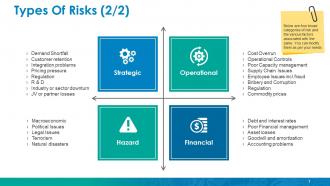
Slide 7: This is another slide stating the Types Of Risks with respect to- Strategic, Operational, Financial, Hazard. These are the four broad categories of risk and the various factors associated with the same. You can modify them as per your needs.
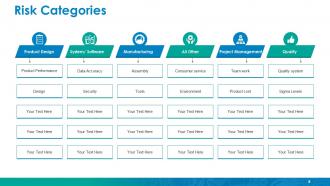
Slide 8: This slide states Risk Categories which involve- Quality, Project Management, All Other, Manufacturing, System/ Software, Product Design.
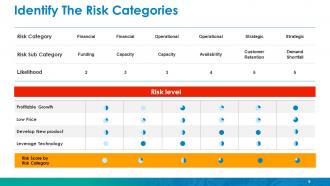
Slide 9: This is Identify The Risk Categories slide.
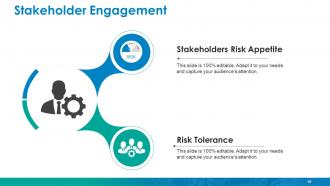
Slide 10: This slide showcases Stakeholder Engagement with- Stakeholders Risk Appetite, Risk Tolerance.
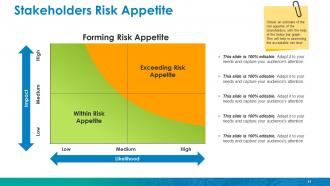
Slide 11: This slide displays Stakeholders Risk Appetite matrix in High, Medium and Low parameters. Obtain an estimate of the risk appetite of the shareholders with the help of the below bar graph. This will help in assessing the acceptable risk level.
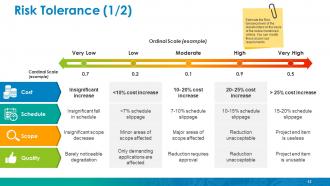
Slide 12: This slide showcases Risk Tolerance. Estimate the Risk tolerance level of the stakeholders on the basis of the mentioned criteria. You can modify these as per your requirements.
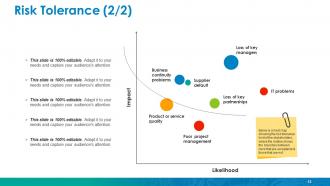
Slide 13: This slide also states Risk Tolerance with a heat map. This heat map shows the risk tolerance limit of the stakeholders, where the redline shows the boundary between risks that are acceptable & those that are not. Edit/ alter as per need.
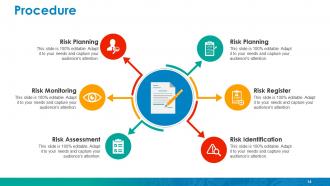
Slide 14: This is a Procedure slide with the following steps. Risk Planning, Risk Register, Risk Monitoring, Risk Planning, Risk Identification, Risk Assessment.
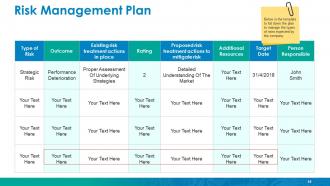
Slide 15: This slide showcases the Risk Management Plan template.
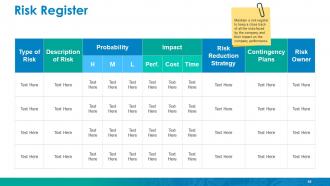
Slide 16: This is a Risk Register slide. Maintain a risk register to keep a close track of all the risks faced by the company and their impact on the company performance.
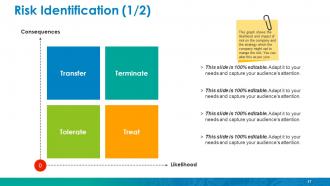
Slide 17: This is a quadrant showing Risk Identification (1/2). This graph shows the likelihood and impact of risk on the company and the strategy which the company might opt to mange the risk. You can alter this as per your need.
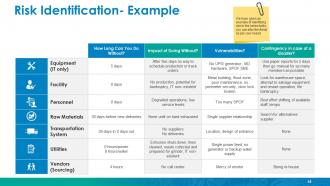
Slide 18: This is also a Risk Identification slide with an example. We have given an example of identifying risk in the table, you can alter the fields as per your needs.
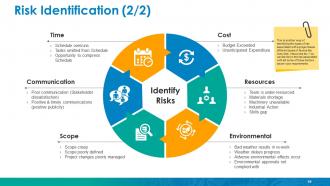
Slide 19: This slide also showcases Risk Identification in a circular image form. This is another way of identifying the types of risk associated with a project basis different types of factors like cost, time, resources etc. You can list down the risk associated with all/ some of these factors as per your requirements.
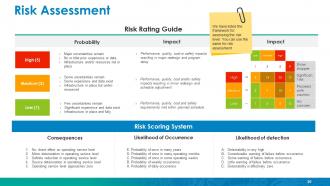
Slide 20: This slide showcases Risk Assessment with High, Medium and Low parameters. We have listed the framework for assessing the risk level. You can use the same for risk assessment.
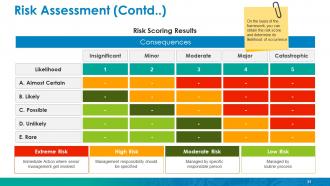
Slide 21: This slide also showcases a framework of Risk Assessment. On the basis of the framework, you can obtain the risk score and determine its likelihood of occurrence.
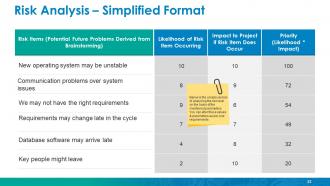
Slide 22: This is Risk Analysis – Simplified Format slide in a tabular form. This is a simple version of analysing the risk level on the basis of the mentioned parameters. You can alter these values & parameters as per your requirements.
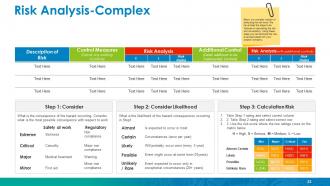
Slide 23: This slide also presents the steps of Risk Analysis-Complex. These steps are- Step 1: Consider, Step 2: Consider Likelihood, Step 3: Calculation Risk. This is a complex version of analysing the risk level. We have listed the steps to be followed in calculating the risk and its certainty. Using these steps you can estimate the risk level associated with your project/ company.
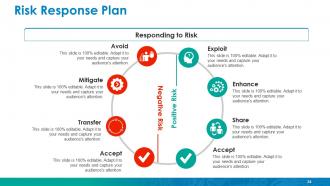
Slide 24: This is Risk Response Plan slide in a circular form. It states two types of risks which are- Negative Risk, Positive Risk.
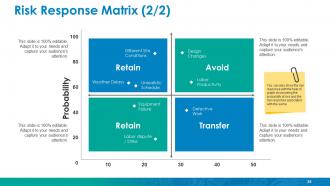
Slide 25: This is a Risk Response Matrix slide. You can also show the risk response with the help of graph showcasing the probability of risk and the risk response associated with the same.
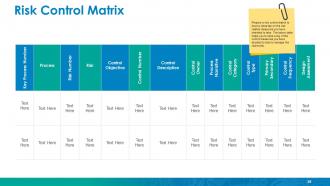
Slide 26: This slide showcases Risk Control Matrix. Prepare a risk control matrix to have a close tap on the risk related measures you have intended to take. The below table helps you to keep a log of the control measures you have decided to take to manage the risk levels.
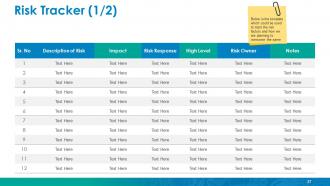
Slide 27: This is a Risk Tracker slide. It has a template which could be used to track the risk factors and how we are planning to overcome the same.
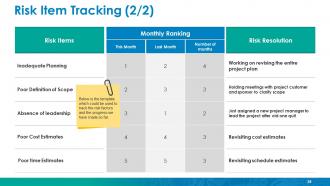
Slide 28: This is Risk Item Tracking slide with Risk items, Monthly Ranking and Risk Resolution as its sub headings.
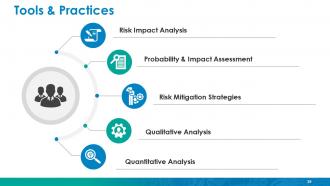
Slide 29: This slide presents various Tools & Practices. These are- Risk Impact Analysis, Probability & Impact Assessment, Risk Mitigation Strategies, Qualitative Analysis, Quantitative Analysis.
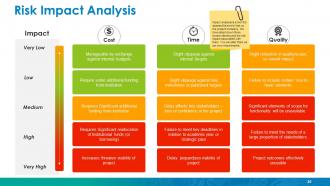
Slide 30: This slide showcases Risk Impact Analysis with text boxes. Impact analysis is a tool the assess the level of risk on the project/ company. We have listed down three broad criteria's and the risk impact associated with them. You can alter them as per your requirements.
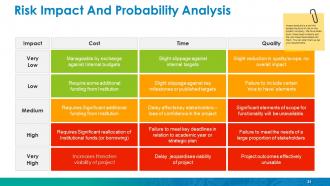
Slide 31: This slide showcases Risk Impact And Probability Analysis with the following sub headings- Cost, Time, Quality, Impact.
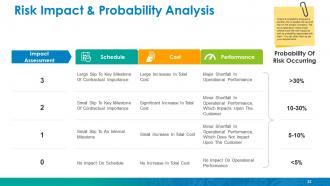
Slide 32: This slide also showcases Risk Impact & Probability Analysis in terms of- Schedule, Cost, Performance, Impact Assessment. Impact & probability analysis is another tool to assess the level of risk on the project/ company. We have listed down three broad criteria's and the risk impact as well as probability associated with them. You can alter them as per your requirements.
Slide 33: This is also Risk Impact & Probability Analysis slide.
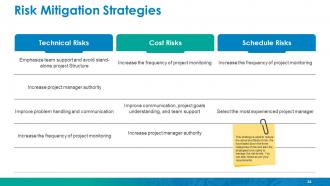
Slide 34: This slide showcases Risk Mitigation Strategies. Its 3 main categories are- Technical Risks, Cost Risks, Schedule Risks.
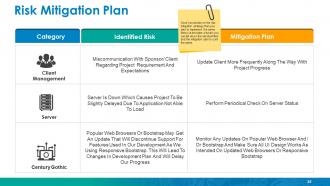
Slide 35: This slide showcases Risk Mitigation Plan. Once you decide on the risk mitigation strategy then you plan to implement the same. Here is the table wherein you can list down the risk identified and the mitigation plan to curb the same.
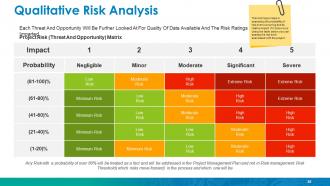
Slide 36: This slide presents Qualitative Risk Analysis. This technique helps in assessing the probability of risk event occurring and its relative impact if it does occur. Using the table you can assess the risk level associated with the project.
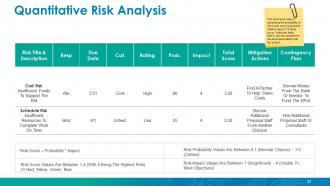
Slide 37: This slide also showcases Quantitative Risk Analysis.
Slide 38: This is a Coffee Break image slide for a halt. Add your own image as per requirement.
Slide 39: This is Enterprise Risk Management For Icon Slide. Choose icons as per need.
Slide 40: This slide is titled Charts & Graphs to move forward. You can change the slide content as per need.
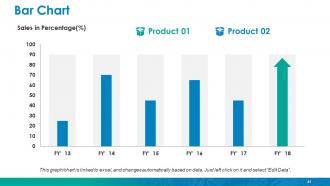
Slide 41: This slide showcases a Bar Chart for showcasing product/company growth, comparison etc.
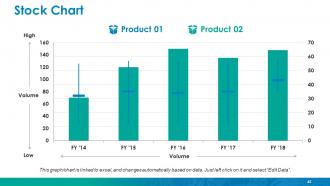
Slide 42: This slide displays a Stock Chart with volume as a parameter in terms of high and low.
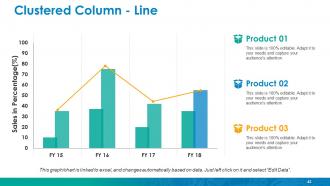
Slide 43: This is a Clustered Column - Line slide to present product/entity comparison, specifications etc.
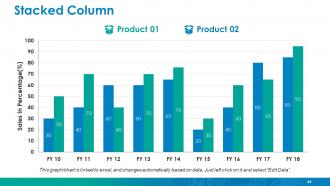
Slide 44: This is a Stacked Column chart slide to present product/entity comparison, specifications etc.
Slide 45: This slide is titled Additional Slides. You can change the slide content as per your needs.
Slide 46: This is Our Vision slide with imagery. State your vision here.
Slide 47: This is an About Us slide. Provide a brief introduction about company/ team here.
Slide 48: This is Our Team slide. Mention name, designation etc. here.
Slide 49: This is Our Goals slide. State goals etc. here.
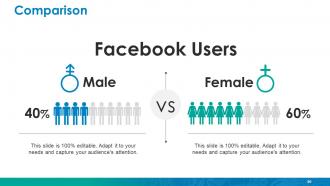
Slide 50: This is a Comparison slide to compare two products/ entities etc.
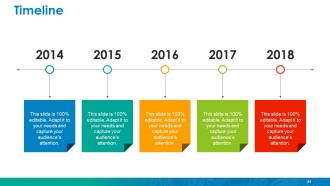
Slide 51: This slide showcases a Project Timeline to show milestones, important highlights etc.
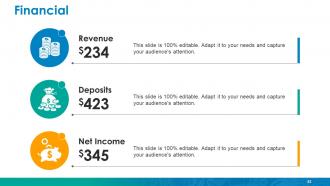
Slide 52: This slide presents Financial scores to display.
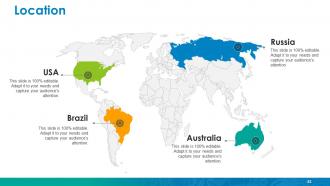
Slide 53: This slide showcases Global Project Locations with a World map and text boxes to make it explicit.
Slide 54: This is a Puzzle image slide to show information, specifications etc.
Slide 55: This slide shows Our Target with imagery and text boxes.
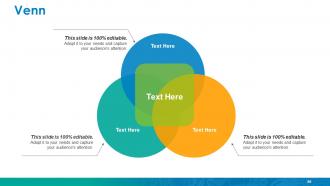
Slide 56: This is a Venn diagram image slide to show information, specifications etc.
Slide 57: This is a Mind Map slide to show behavioural segmentation, information or anything relative.
Slide 58: This is a Lego box image slide. Use it to state information, specifications etc.
Slide 59: This is a Post it slide to mark reminders, events etc.
Slide 60: This is a Circular image slide to show information, specifications etc.
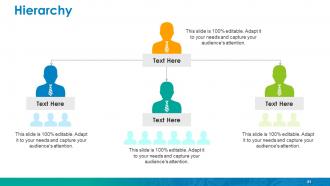
Slide 61: This is a Hierarchy slide. State team/department, organization information, specifications etc. here.
Slide 62: This is a Silhouettes image slide. Use it the way you want to show solutions etc.
Slide 63: This slide displays a Magnifying Glass with imagery to show information, scope, specifications etc.
Slide 64: This is a Bulb or Idea slide to state a new idea or highlight specifications/information etc.
Slide 65: This is a Thank you slide with Address# street number, city, state, Contact Numbers, Email Address.
Enterprise Risk Management Powerpoint Presentation Slides with all 65 slides:
Communicate your ambitions with our Enterprise Risk Management Powerpoint Presentation Slides. Your determination to achieve will come across clearly.
-
Enterprise Risk Management
-
Content
-
Risk Management Lifecycle
-
Introduction
-
Risk Management Introduction
-
Types of Risks 1 2
-
Types Of Risks 2 2
-
Risk Categories
-
Identify The Risk Categories
-
Stakeholder Engagement
-
Stakeholders Risk Appetite
-
Risk Tolerance 1 2
-
Risk Tolerance 2 2
-
Procedure
-
Risk Management Plan
-
Risk Register
-
Risk Identification 1 2
-
Risk Identification Example
-
Risk Identification 2 2
-
Risk Assessment
-
Risk Assessment Contd
-
Risk Analysis Simplified Format
-
Risk Analysis Complex
-
Risk Response Plan
-
Risk Response Matrix 2 2
-
Risk Control Matrix
-
Risk Tracker 1 2
-
Risk Item Tracking 2 2
-
Tools Practices
-
Risk Impact Analysis
-
Risk Impact And Probability Analysis
-
Risk Impact Probability Analysis
-

Risk Impact Probability Analysis
-
Risk Mitigation Strategies
-
Risk Mitigation Plan
-
Qualitative Risk Analysis
-
Quantitative Risk Analysis
-
Coffee Break
-
Enterprise Risk Management For Icon Slide
-
Charts Graphs
-
Bar Chart
-
Stock Chart
-
Clustered Column Line
-
Stacked Column
-
Additional Slides
-
Our Vision
-
About Us
-

Our Team
-
Enterprise Risk Management
-
Comparison
-
Timeline
-
Financial
-
Location
-
Puzzle
-
Our Target
-
Venn
-

Mind Map
-
Lego
-
Post It Notes
-
Circular
-
Hierarchy
-
Silhouettes
-
Magnifying Glass
-
Bulb or Idea
-

Thank You for Your Attention
FAQs for Enterprise Risk Management
Look, you've got five main pieces to nail down. First is risk governance - basically who's responsible when things go sideways. Then risk identification and assessment (what could blow up and how bad). Risk appetite comes next - how much danger you're cool with. After that, your response strategies and monitoring systems. Honestly? Most companies totally botch the monitoring part. They'll set everything up nice and pretty, then just... forget about it. Leadership buy-in is huge upfront - without that you're dead in the water. Oh, and make sure it actually talks to all your business units instead of just being some standalone thing nobody uses.
Look, you've gotta weave risk assessment into your planning from the start - none of this tacking it on at the end nonsense. Figure out what could completely mess up your goals first. Then actually talk about those scenarios when you're in planning meetings. Risk people need to be in the room when big decisions happen, not hearing about it later through the grapevine. And honestly? Those risk appetite statements everyone writes need to actually mean something beyond just existing in some forgotten document. Every major strategy conversation should touch on risk somehow. I've watched companies learn this the hard way.
Dude, tech totally transforms ERM. Instead of those awful monthly spreadsheet dumps, you get real-time dashboards and automated data collection. AI can actually predict risks before they smack you in the face - which honestly feels like magic sometimes. Collaboration tools keep everyone aligned too. But here's the thing: make sure whatever you pick plays nice with your current systems. And actually train people to use it! I've seen companies blow money on fancy software that just collects digital dust. Modern ERM without decent tech? You're basically fighting with one hand tied behind your back.
Track your KRIs and see if incidents are actually dropping - that's the basic stuff. Response times matter too, plus whether stakeholders still trust you after a crisis hits. Honestly, most companies get obsessed with fancy metrics but forget to just compare what they predicted vs. what went down. Financial losses tell the real story though. Set up dashboards that you'll actually look at, not ones that collect dust. Quarterly reviews help catch patterns before they bite you. Oh, and check if your risk appetite matches reality - sometimes there's a weird disconnect there.
Honestly, getting leadership on board is the hardest part. They'll nod along but won't actually fund it properly. Breaking down those department silos is brutal too - everyone's protecting their turf. Your data will be a mess since nothing connects, and half the team thinks it's just paperwork nobody cares about. Budget's always tight, and finding people who actually get risk management? Good luck with that. Oh, and departments love treating it like checkbox compliance instead of something that actually matters. Start with maybe two big risks, get a couple wins under your belt, then build from there. Way easier than trying to boil the ocean.
So compliance basically sets your floor - you can't go below what regulators demand. It forces you to prioritize certain risks whether you want to or not. Your whole ERM framework gets built around these requirements, especially when you're doing risk assessments and setting up controls. Honestly, it's kind of annoying how much it shapes your risk appetite, but that's just reality. You end up creating all these reporting structures to prove you're doing things right. Start by matching your compliance stuff to your risk register first - that's where you'll spot the obvious gaps. Makes the whole process way clearer.
Dude, stakeholder engagement is a game-changer for spotting risks. Your customers, suppliers, and employees see stuff your team totally misses - they're in the trenches dealing with it daily. Regulators can give you a heads up on what's coming down the pipeline too. The trick is making these check-ins regular, not waiting until everything's on fire. Honestly, some of my best risk mitigation ideas have come from random conversations with frontline staff. They know where the real pain points are way better than any executive sitting in a conference room.
Track your risk heat maps first - probability vs impact stuff. Then add financial metrics like VaR and loss calculations. KRIs are clutch for this - system downtime %, regulatory breaches, vendor concentration ratios, whatever fits your business. Honestly, the most telling metric? Gap between your risk appetite and actual exposure. That's where the real insights live. Set up monthly automated dashboards pulling all this data. Trust me, you don't want to be frantically pulling numbers together right before your next board meeting. Been there, it sucks.
You've gotta get everyone thinking about risk, not just compliance people. Train your team to actually spot problems in their day-to-day work - use examples they'll recognize from their own jobs. Your leadership needs to be real about failures instead of hiding them. Some companies I know create "risk champions" in each department which honestly works pretty well. The trick is rewarding people when they flag potential issues, even if it means hitting pause on projects. Oh and throw risk discussions into regular team meetings. Once people get used to it, they'll start doing it naturally without being reminded.
Honestly, you've gotta know your audience first. Executives just want the bottom line - costs and big picture stuff. Meanwhile, your operations people need all the nitty-gritty details about actually doing things. Skip the jargon completely, and always start with why they should give a damn. Visual dashboards are your friend here - seriously, dense reports just collect digital dust. Don't wait for some annual dog-and-pony show either. Check in regularly since risks change constantly. Be upfront about what you don't know, but still give them something they can actually act on. Map out who needs what info for their decisions.
Think of risk appetite as your company's speed limit for making decisions. You've got this framework that tells you how much risk is cool to take on new projects or investments. Falls within your comfort zone? Go for it. Too risky? Either pass or figure out how to dial down the danger first. Short sentences work. But honestly, half the companies I know have these fancy risk policies that nobody actually reads or follows. The whole thing only works if people know what your limits are and actually stick to them when they're making calls.
Think of scenario analysis as your "what if" planning tool for when shit hits the fan. You pick 3-5 worst-case situations - maybe a recession, cyber breach, or supply chain mess - then map out how they'd actually hurt your business. Way more useful than just staring at last year's numbers. Honestly, it feels like fortune telling sometimes, but that's kinda the point. Forces you to think outside normal day-to-day operations. The blind spots you'll find are pretty eye-opening - stuff you never would've considered otherwise. Start small with your biggest threats and work from there.
Honestly, data analytics is a game-changer for catching stuff you'd never notice otherwise. Set up automated monitoring for your main business metrics and customer behavior - algorithms will spot weird patterns way before you would. We actually caught a fraud ring like 3 weeks early this way, which was huge. Machine learning is crazy good at connecting dots between random events that end up signaling trouble. Supply chain issues, customer churn, whatever. Don't go overboard though. Pick one area that'll make a real impact first, maybe operational downtime, then build from there. Much easier than trying to tackle everything at once.
Oh man, external factors are huge in ERM - probably the scariest stuff since you can't do anything about them. Economic crashes, new regulations, supply chain mess-ups, geopolitical drama. They're all connected too, which is honestly the worst part because one thing goes wrong and suddenly you've got three other problems you didn't see coming. You need solid monitoring systems to catch this stuff early. Build out some "what if" scenarios for different situations. Don't just watch the obvious risks either - sometimes it's the weird second-order effects that'll really get you.
Look, risk and opportunity are basically the same thing viewed from different angles. First figure out your comfort level with uncertainty - like how much you're willing to gamble on various decisions. Then actively hunt for opportunities that fit within those boundaries instead of just trying to avoid everything scary. I learned this the hard way honestly. Set up monthly check-ins to review both the threats and potential wins on your horizon. The trick is being picky about which risks actually make sense for where you're headed. Most people either play it way too safe or go completely reckless.
-
Easy to edit slides with easy to understand instructions.
-
Unique research projects to present in meeting.
-
excellence