


Procurement Risk Management Powerpoint Presentation Slides




Try Before you Buy Download Free Sample Product
 Impress Your
 Audience
 100%
100% Editable
 Save Hours
 of Time


Introducing our content ready Procurement Risk Management PowerPoint Presentation Slides. Take advantage of the risk analysis PPT templates to show the components of integrated risk management such as supplier risk events, regulatory compliance, etc. Take the assistance of the risk assessment PPT visuals to highlight the pros of risk management including reduced cost, greater lead time and central information platform. Demonstrate the steps to manage risk such as establishing overall program goals, gathering needed data, monitoring supply base, etc. Evaluate the intensity levels of business risks such as low, medium and highly critical risks using the risk mitigation PPT infographics. Reduce the supplier risk through the development of disaster recovery plans, identification of main suppliers, etc. with the help of this risk evaluation PPT layouts. Download this visually appealing threat management PowerPoint slideshow to improve various decisions pertaining to procurement.
People who downloaded this PowerPoint presentation also viewed the following :
Content of this Powerpoint Presentation
Slide 1: This slide introduces Procurement Risk Management. State your company name and begin.
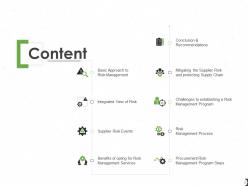
Slide 2: This slide showcases the Content of the presentation.
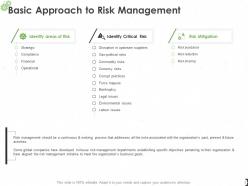
Slide 3: This slide displays Basic Approach to Risk Management.
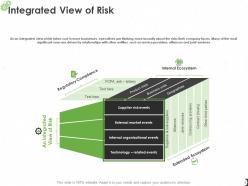
Slide 4: This slide represents Integrated View of Risk.
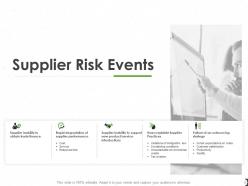
Slide 5: This slide depicts Supplier Risk Events.
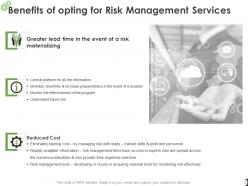
Slide 6: This slide displays the Benefits of opting for Risk Management Services.
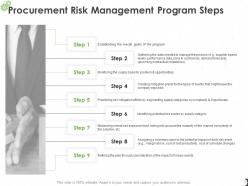
Slide 7: This slide showcases the Procurement Risk Management Program Steps
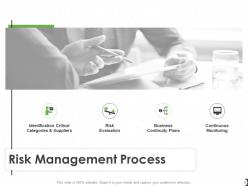
Slide 8: This slide showcases Risk Management Process.
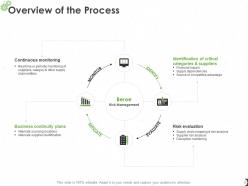
Slide 9: This slide displays Overview of the Process.
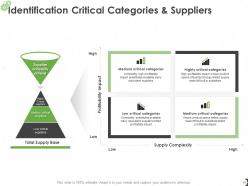
Slide 10: This slide displays Identification Critical Categories & Suppliers.
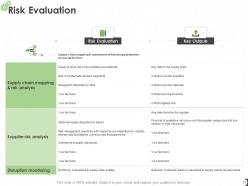
Slide 11: This slide showcases the Risk Evaluation.
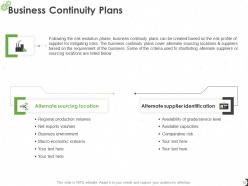
Slide 12: This slide showcases Business Continuity Plans.
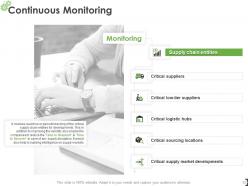
Slide 13: This slide depicts Continuous Monitoring.
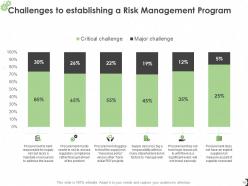
Slide 14: This slide showcases the Challenges to establishing a Risk Management Program.
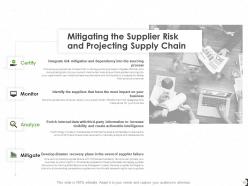
Slide 15: This slide presents Integrate risk mitigation and dependency into the sourcing process.
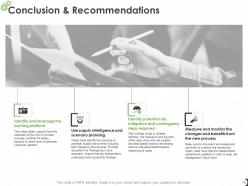
Slide 16: This slide discusses about Identifying and leverage the burning platform.
Slide 17: This is Procurement Risk Management Icon Slide.
Slide 18: This slide displays the time for Coffee Break.
Slide 19: This slide displays the Charts & graphs.
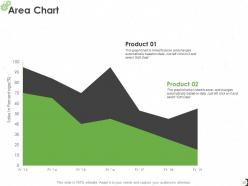
Slide 20: This slide displays the Area Chart with product comparison.
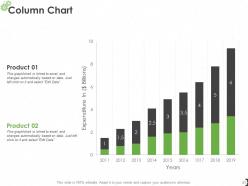
Slide 21: This slide displays the Column Chart with product comparison.
Slide 22: This slide is titled as Additional Slides for moving forward.
Slide 23: This is Our Mission slide with related imagery.
Slide 24: This is About Us slide to showcase company specifications.
Slide 25: This is Our Team with names and designation.
Slide 26: This is Our Goal slide. State your goals here.
Slide 27: This is Financial slide. Showcase finance related stuff here.
Slide 28: This is Idea Generation slide to showcase ideas, information etc.
Slide 29: This is Puzzle slide with icons and text boxes.
Slide 30: This is Venn slide.
Slide 31: This is four years Timeline slide.
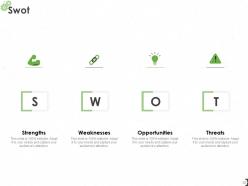
Slide 32: This is Swot Analysis slide with Strengths, Weaknesses, Opportunities and Threats.
Slide 33: This slide displays Magnifying Glass to highlight important content.
Slide 34: This is Quotes slide to convey message, beliefs etc.
Slide 35: This is Comparison slide.
Slide 36: This is Mind Map for representing entities.
Slide 37: This is Thank You slide with address, Email address and contact number.
Procurement Risk Management Powerpoint Presentation Slides with all 37 slides:
Use our Procurement Risk Management Powerpoint Presentation Slides to effectively help you save your valuable time. They are readymade to fit into any presentation structure.












FAQs for Procurement Risk Management
Start with your biggest suppliers first - way easier that way. You'll want to check their finances, how they actually operate, and if they've had compliance issues. Contracts are huge here. Get clear deliverables, penalties, exit clauses written out because trust me, you don't want to figure that stuff out when things go sideways. Set up regular check-ins and keep tabs on what's happening in their market. Oh, and have backup suppliers lined up for anything critical. I know it sounds like a lot upfront, but catching problems early beats scrambling later when you're in crisis mode.
Start with mapping out your whole procurement process - vendor picks, contracts, everything. Check supplier finances, geopolitical stuff, market changes, plus any gaps in your internal processes. Most teams hate doing compliance risk checks because they're tedious, but trust me, they'll save your ass later. Do regular supplier audits and talk to stakeholders. Historical data shows patterns you'd never spot otherwise. Don't make this a one-and-done thing though. Quarterly reviews work well, and build a risk register that people will actually use instead of ignoring.
Look, think of supplier relationships like having good contacts who'll actually warn you when stuff's about to hit the fan. Strong partnerships mean they'll tell you early about supply shortages, quality issues, or if they're having money problems. You want these people rooting for you, not just treating you like another invoice to collect. Regular check-ins with your main suppliers work wonders - and honestly, most companies skip this basic step. Ask them what keeps them up at night. The more you understand their world, the quicker you can adjust when things inevitably go wrong.
Dude, start with getting your data cleaned up first - that's the boring part nobody talks about. Then set up dashboards that'll actually ping you when suppliers are about to tank or miss deadlines. AI can spot weird spending patterns and predict which vendors might fail before you're scrambling. Real-time tracking of supplier finances is honestly a game changer. You'll see compliance red flags automatically instead of finding out the hard way. Pick one specific risk area to focus on initially - don't try to fix everything at once. It helps you diversify suppliers smarter too.
Honestly, the worst part is suppliers never tell you the full story upfront - they're super sketchy about sharing real data. Your own teams aren't much better since everyone hoards info like it's gold or something. Cybersecurity risks change daily, which makes everything harder. Oh, and project managers will totally minimize any risk that threatens their timeline (so annoying). Time's always an issue too. Nobody ever budgets enough for proper assessments. Start schmoozing key suppliers early though - that relationship stuff actually pays off. Also make some standard templates so you're not reinventing everything each time.
Ugh, regulatory changes are such a pain - you're constantly updating risk frameworks because what was fine last week could bite you next month. New regs pop up everywhere your suppliers are based, so you're always tweaking due diligence and rewriting contracts. Honestly, the qualification criteria changes are the worst part. Pro tip though: don't wait to react after stuff hits. Build monitoring into your regular reviews so you're not panicking when something new drops. Still feels like drinking from a fire hose half the time, but at least you'll stay ahead of it.
Honestly, a risk matrix works really well - just plot likelihood vs impact and you'll see what needs fixing first. High probability + high impact = deal with it now, obviously. Scoring systems are solid too where you give numbers to things like financial damage, timeline mess-ups, supplier stuff. Some people love simple ABC categories instead (whatever works for your brain). The main thing? Pick one method and don't flip-flop between approaches or your team will be all over the place. Consistency beats perfection here.
Honestly, just bake risk talks into your regular meetings instead of waiting for disasters. Train people on spotting issues early - but keep tools simple or they'll ignore them completely. I've watched teams create these elaborate risk matrices that just sit there looking pretty! Celebrate when someone flags a problem, even false alarms. Nobody should feel like the office pessimist for raising concerns. Quick post-project debriefs work wonders too. Share what you learn across teams - that's where the real value is. Make raising red flags feel normal, not dramatic.
Build compliance right into procurement from the start - trust me on this. We got burned in an audit last year because we tried adding it later. Document everything: contracts, approvals, risk stuff. Automated alerts are a lifesaver for renewals and deadlines. Train your team constantly since rules change all the time (honestly, it's exhausting how often). Clear escalation procedures help when things go sideways. Oh, and actually review your risk register quarterly - don't just let it collect digital dust like most companies do.
Honestly, global sourcing just makes everything harder - currency swings, political drama, shipping delays that'll mess up your timeline. Communication gets weird with language barriers too. You'll want to vet suppliers really well and spread your sourcing around different regions (learned that one the hard way). Get local partners who actually know what's going on in those markets. Always have backup suppliers ready because stuff goes sideways fast. Invest in some decent tracking tools so you're not flying blind. Don't put everything in one country - that's just asking for trouble when things get messy.
Dude, geopolitical stuff will totally wreck your procurement if you're not paying attention. Trade wars hit and suddenly your suppliers are either blocked or charging insane prices. I spread mine across different regions now - learned that lesson during COVID when our whole Asian supply chain just vanished overnight. Really sucked. You can't rely on one area anymore. Map out where your suppliers are by country risk and have backups ready. Political tensions are always brewing somewhere, so redundancy is your friend. Trust me, figure out your plan B suppliers before you actually need them, not during the crisis.
Look, executives just want the big picture stuff - save the details for your project teams. Visual dashboards work way better than reports because let's be real, who has time to read anymore? Keep updates simple: what's the risk, how likely, impact, and your plan. I'd do monthly briefings for leadership, weekly for procurement folks. The trick is staying ahead of problems - don't wait for disaster to strike. Set up alerts so people know immediately when something hits critical levels. Oh, and risk heat maps are your friend here.
Look, your contracts are honestly your best shot at avoiding procurement disasters. Build in penalty clauses for late deliveries and nail down quality standards with real consequences. Force majeure stuff is crucial too - we all learned that lesson the hard way recently. Here's the thing though: skip the generic contract templates everyone uses. Actually sit down and think about what could realistically blow up with each specific supplier. Late shipments? Supply chain hiccups? Then write those exact scenarios into your terms. Be super specific about deliverables and deadlines. When things inevitably go sideways, you'll thank yourself for doing the homework upfront.
So basically you want to map out different "what if" scenarios for your biggest procurement headaches - supplier going under, crazy price jumps, supply chain meltdowns, that kind of stuff. I'd sketch out maybe 3-4 realistic situations, from best case to total disaster. Then work backwards to figure out what warning signs you'd spot early and how you'd actually respond. It's way better than panicking when everything hits the fan. Document your backup suppliers and budget cushions for each scenario. Oh, and definitely tackle your most critical stuff first - don't get lost trying to plan for everything at once.
Look, start with supplier performance scores and how often they actually stick to their contracts. Delivery times matter big time - late shipments mess everything up down the line. I'd also track cost variance from your budget and how often risk stuff happens. The backup plan thing is underrated though. Like, does your Plan B actually work when suppliers flake? Financial health of your key suppliers is crucial too, plus how long it takes to fix procurement headaches when they pop up. Honestly, just pick 3-4 that hit your biggest pain points first.
-
Excellent
-
Great designs, really helpful.
-
Excellent Designs.
-
Awesome presentation, really professional and easy to edit.
-
Appreciate the research and its presentable format.