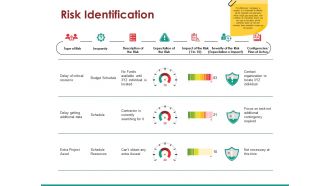
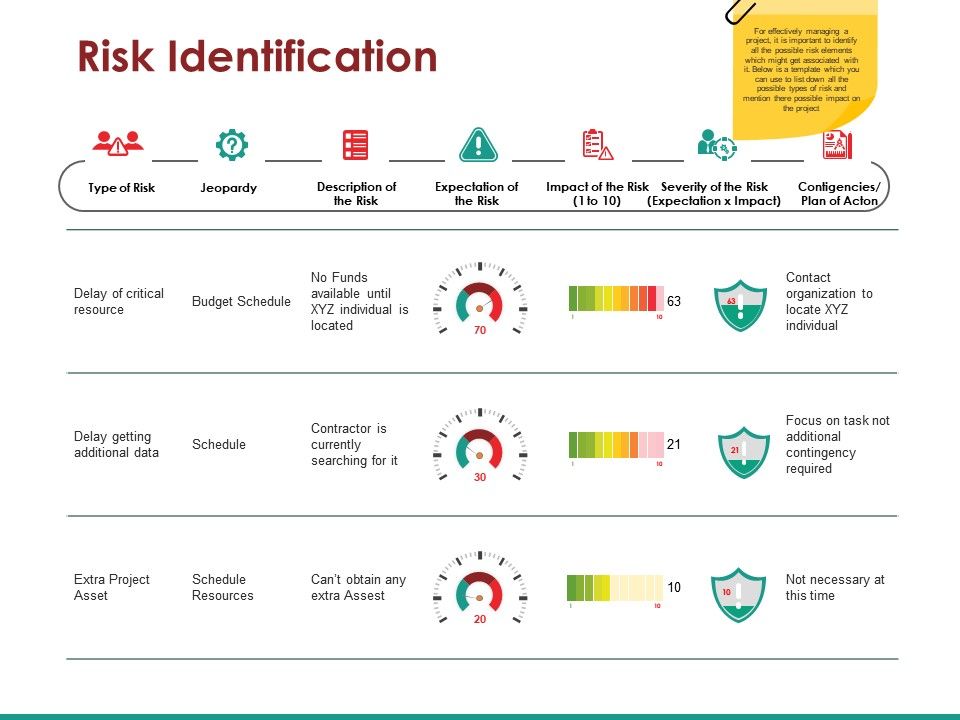
Risk identification ppt examples
Try Before you Buy Download Free Sample Product
Audience
Editable
of Time
Highlight false allegations with our Risk Identification Ppt Examples. Amend incorrect impressions folks may have.
People who downloaded this PowerPoint presentation also viewed the following :
Risk identification ppt examples with all 5 slides:
Enjoy the feeling of abundance with our Risk Identification Ppt Examples. Experience the delight of having a host of choices.
FAQs for Risk
Honestly, just start with brainstorming - gets everyone involved and thinking. Then dig into lessons learned from old projects (super helpful if you can find good ones). SWOT analysis works but feels kinda basic sometimes. Stakeholder interviews are clutch though, people will tell you risks you'd never think of. Oh, and assumption analysis is huge - basically questioning everything you think you already know. If your company has risk checklists, use those too. For really complex stuff, expert judgment or Delphi technique can help. Build up from simple brainstorming to the formal methods based on how complicated your project actually is.
Honestly, getting different people involved is a game-changer for spotting risks. Finance folks worry about money stuff you might miss. Operations teams know exactly where things fall apart daily. Customers? They'll tell you if something's actually usable or not. It's like having extra eyes everywhere. Each group deals with totally different headaches, so they catch things others won't. Don't just ask "what could go wrong" though - that's too vague. Run separate workshops with each team and get specific about their world. Way better than trying to guess what might bite you later.
Historical data is your best friend for catching risks early. Look at past incidents and patterns - they'll show you exactly where things went sideways before. Why reinvent the wheel when you can learn from other people's mistakes? Plus it beats making decisions based on hunches. The numbers help you figure out how likely something is to happen and how bad it'll be if it does. Just grab whatever records you have, even the messy ones. I mean, incomplete data is still better than flying blind, right?
Look, every industry worries about completely different stuff when it comes to risk. Healthcare freaks out about patient safety and staying compliant with regulations. Tech companies? They're constantly paranoid about getting hacked or losing data. Manufacturing cares way more about equipment breaking down or their supply chains getting messed up - which honestly makes total sense. Banks have these crazy detailed systems for tracking credit and market risks. You can't just steal another industry's playbook though. Figure out what actually scares the hell out of leaders in your field, then design your whole risk process around those specific nightmares.
Get a good mix of people - different departments, experience levels, you know? I always throw out something like "what could go wrong here?" then let everyone brainstorm for 15-20 minutes. Sticky notes work great so people aren't waiting their turn to talk. Here's the thing though - the weirdest ideas usually lead to the best ones. Don't organize while you're going, it kills the vibe. Save that for after. Oh and set ground rules upfront: no judging ideas, build off what others say. Trust me, it works way better than going around the table one by one.
Bigger projects = way more headaches to think about, honestly. That small website tweak? Maybe just tech issues and deadlines to worry about. But a full system overhaul? Now you're dealing with integration nightmares, users who hate change, vendor drama, budgets going crazy. I learned this the hard way on my last big project - should've seen it coming! Thing is, you gotta spend more time upfront on the complex stuff. Get different teams together for brainstorming sessions. Create risk buckets that match your project phases, then dig deeper into each one. Start wide, then get specific.
So there's a bunch of different tools you can use for this. RiskWatch, LogicGate, ServiceNow GRC - those are the fancy dedicated platforms that guide you through everything step by step. But honestly? Sometimes simpler is better. Spreadsheets work fine, or mind mapping tools like MindMeister. Monday.com has some decent risk templates too. I've literally seen teams nail this using just sticky notes on a whiteboard during brainstorming sessions. The real trick is finding whatever your team will consistently use instead of abandoning after two weeks.
Don't just do risk planning once at the start - that's rookie mistake territory. Build it into every phase instead. Begin with high-level stuff during kickoff, then get specific about timeline and budget threats when you're actually planning. New risks will absolutely show up during execution (they're sneaky like that), so keep scanning for them. I'd set up regular team check-ins to make this feel normal rather than some big formal thing. Also reassess whenever you hit major milestones or scope shifts. Making it routine instead of scrambling when problems hit? Game changer.
So for qualitative risks, brainstorming sessions and SWOT analysis work really well - plus expert interviews since people catch stuff data can't. Quantitative needs Monte Carlo sims, sensitivity analysis, that kind of number-crunching. Oh and honestly? Don't sleep on basic checklists - they're boring but they catch the obvious things everyone forgets about. Best approach is starting broad with qualitative methods, then zeroing in on your biggest risks with the quantitative stuff. I'd probably run a hybrid workshop where you brainstorm everything first, then immediately start slapping probability estimates on what comes up.
Culture totally messes with how teams identify risks. People from high-context backgrounds will hint at problems instead of saying them outright. Hierarchical cultures? Junior staff won't challenge senior decisions even when something's obviously wrong. Some cultures think talking about potential failures is just being negative - which drives me nuts when you're trying to build good risk registers. Different communication styles mean stuff gets lost in translation constantly. Oh, and language barriers don't help either. You'll need multiple ways for people to flag issues and actually push for different viewpoints in your workshops.
You've gotta identify risks first - can't analyze what you don't know exists, right? So identification is basically your hunting phase where you're tracking down every possible threat or weak spot that could mess with your project. Assessment comes after - that's when you dive deep into each risk to figure out the odds of it happening and how badly it could hurt you. Honestly, most people want to skip straight to the fun analysis part, but you'll miss all the sneaky stuff hiding in plain sight. Short version: find them first, then worry about ranking them.
Honestly, scenario planning is like organized worrying - but it actually works. You dream up crazy "what if" situations (market crashes, supply chain meltdowns, new regulations) then figure out what could trigger them. Gets you thinking outside your normal bubble. The trick is bringing different people into these conversations since we all miss different stuff. I'd probably run these sessions quarterly with your team - maybe 3 or 4 wild scenarios that could mess with your business. You'll definitely uncover risks you hadn't thought about before.
Honestly, the main issue is everyone sees risks differently based on their job. Marketing worries about brand stuff while IT focuses on security - totally different blind spots. Departments don't talk to each other enough, so info gets stuck in silos. People catch the obvious problems but miss those sneaky ones that actually bite you later. And there's always someone thinking "that'll never happen here" (spoiler: it will). Daily crises feel more urgent than planning for future risks. My advice? Get different people in a room together and make sure they feel comfortable speaking up without looking like Debbie Downer.
Think of it like switching from annual doctor checkups to wearing a fitness tracker. You're spotting problems while they're still small instead of waiting for your quarterly "how screwed are we?" meeting. Business moves crazy fast now - something that seemed fine last week could bite you tomorrow. Weekly data reviews work way better than monthly ones, trust me on that. Set up alerts for the stuff that actually matters to your business. The real win? You can fix things before they blow up into those disasters that keep you awake at night.
Track a few things to see if your risk identification actually works. Coverage first - are you hitting all business areas and project phases? Quality matters more though. How many risks do you catch early vs finding them way too late? Compare what you identify against real problems that actually happen to your projects. Nobody talks about this, but if zero of your identified risks ever happen, you're probably just making stuff up. Check stakeholder participation in your risk sessions too. Do a quarterly review of these patterns and tweak your approach based on what you find.
-
Designs have enough space to add content.
-
Great quality product.