


Root Cause Analysis And Action Plan For Sales Manager




Try Before you Buy Download Free Sample Product
 Impress Your
 Audience
 100%
100% Editable
 Save Hours
 of Time


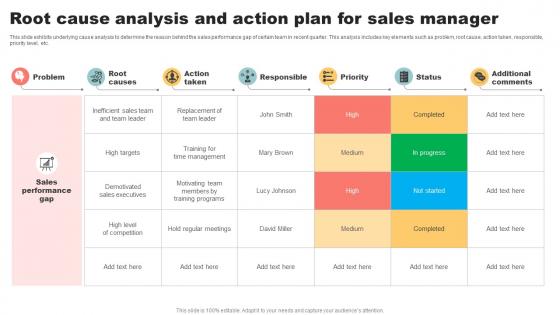
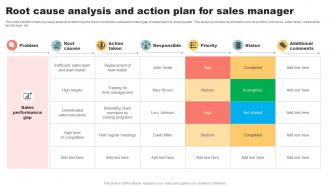
This slide exhibits underlying cause analysis to determine the reason behind the sales performance gap of certain team in recent quarter. This analysis includes key elements such as problem, root cause, action taken, responsible, priority level, etc.
People who downloaded this PowerPoint presentation also viewed the following :
Root Cause Analysis And Action Plan For Sales Manager with all 6 slides:
Use our Root Cause Analysis And Action Plan For Sales Manager to effectively help you save your valuable time. They are readymade to fit into any presentation structure.





FAQs for Root Cause Analysis And Action Plan
Honestly, just focus on four main things: conversion rate, average deal size, sales cycle length, and pipeline velocity. Those will tell you everything. Revenue per rep matters too but that's more backward-looking, you know? Also track lead-to-opportunity conversion and win/loss ratios by source. Activity stuff like calls and emails? Meh, don't stress too much about those since they don't really predict results anyway. Pull this data monthly and look for patterns - daily numbers will drive you crazy with all the ups and downs.
First thing - figure out where each rep is actually struggling. Role-play with them, listen to their calls, whatever works. Then build training around those specific gaps instead of doing some generic program that helps nobody. Like, if Sarah can't close deals but Mike's great at closing but terrible at prospecting, why would you train them the same way? That's just dumb. Pair your weaker people with top performers too - peer coaching works way better than you'd think. Oh, and make it ongoing. Those one-day workshop things are basically useless.
Look, tech really does make a huge difference for sales teams. Your CRM handles all the pipeline tracking and customer stuff automatically. Analytics show you which activities actually work (and which ones are just busy work). AI can predict your best leads now, which still blows my mind honestly. Automation does the boring follow-ups and scheduling. Don't overcomplicate it though - pick one good CRM first. You can always add more tools later, but I'd start simple and see what you actually need.
Dude, pull your CRM data and look for where deals are dying. Conversion rates between stages will tell you everything. We just found out 40% of our prospects were bailing after demos - turned out our pitch was totally wrong. Time-to-close and deal size by rep are goldmines too. Also check which lead sources actually convert vs the ones that just look good on paper. Honestly, most people overthink this stuff. Just throw the data into a basic dashboard and focus on your biggest drop-offs first. You'll spot the patterns pretty quick.
Dude, communication literally makes or breaks your sales - I can't stress this enough. Listen to what prospects actually need instead of just pitching features. When you focus on benefits and adapt your message to each person, close rates go through the roof. I've watched reps completely turn around their numbers just by getting better at this stuff. Trust builds faster, objections become way easier to handle. Oh and definitely start recording your calls if you can - you'll cringe at some things but catch so many gaps you didn't know were there.
Get your people in regular huddles where they share what's actually working - not just celebrating wins, but real tactics and customer insights. Pair up your top performers with developing ones for mentorship. Create shared goals that force collaboration, like team quotas or cross-selling targets. Don't sleep on the coffee machine conversations either - that's where some of the best ideas happen, honestly. Oh, and definitely celebrate collaborative wins publicly so everyone sees that helping teammates isn't just nice, it actually benefits them too. Breaks down those silos pretty fast.
Honestly? Most of the time it comes down to messy processes and garbage leads. Your reps probably don't have decent tools either - I've seen teams trying to close deals with spreadsheets from 2019. Marketing and sales fighting each other doesn't help. Start by figuring out where deals actually die in your pipeline, that's usually pretty eye-opening. Get a real CRM if you don't have one. Regular coaching beats those one-and-done training sessions every time. Also, sit down with your reps more often - they'll tell you what's broken way before the numbers will.
Dude, customer feedback is like having a cheat sheet for sales. You get the real deal on what's bugging them and what makes them actually buy stuff. Surveys, reviews, random chats - it all counts. Way better than just winging it and hoping for the best. Here's the thing though - most people collect feedback and then... do nothing with it? Don't be that person. Use what you learn to tweak your pitch and figure out which products to focus on. It's honestly one of the easiest ways to get better at this whole sales thing.
Honestly, get a CRM system first - it'll save your sanity. I'd set up something like call within 24 hours, email after 3 days, then another call a week later. Sounds super rigid but it actually works. Templates are your friend for emails, just throw in personal details from your conversations. Oh and block actual calendar time for follow-ups. Treat it like a real meeting or you'll blow it off every time. Once you start tracking this stuff you'll notice weird patterns in how people respond. Trust me on this one.
Your sales team needs to know what they're actually aiming for, you know? Instead of saying "sell more stuff," give them something concrete like "hit $50K this month." That way they can check their progress daily instead of just hoping things work out. Honestly, I think vague goals are worse than no goals at all. Break those big yearly numbers down into smaller chunks - weekly or monthly targets work great. Your reps will actually celebrate the small wins, and you'll catch problems before they turn into disasters. It's basically like giving them a GPS instead of a crumpled map.
Honestly, recognition is huge - call out wins publicly, even the small stuff. Make sure everyone actually knows what they're working toward with clear targets. I've watched teams flip completely just from weekly shoutouts and fixing their commission setup. Do regular one-on-ones so you catch problems early. Team competitions work great too, and not everything has to be about money. Seriously, I know it sounds dumb but a good parking spot can be surprisingly motivating. Start celebrating people this week and build from there. The momentum usually picks up pretty fast once they feel seen.
Dude, happy customers are literally your best sales tool. They buy more stuff, tell their friends about you, and don't bail for competitors. I made this mistake early on - just focused on hitting numbers without caring if people were actually satisfied. Big mistake. Instead of pushing products, actually solve their problems first. Trust me, it works way better. You should track customer satisfaction scores next to your sales data - the connection is crazy obvious once you see it. Oh, and ask your current customers why they bought from you originally. That feedback will help you close more deals.
Get their actual numbers first - pipeline metrics, conversion rates, all that stuff. Most people already know where they're struggling anyway, so don't beat around the bush. I'd balance what's going well with specific problem areas. Ask them what obstacles they're hitting and what they need from you. Way better than just telling them what's wrong. Set maybe 2-3 concrete goals with real deadlines instead of vague "improve your numbers" nonsense. The whole thing should feel like you're problem-solving together, not like you're judging their performance. Oh, and always schedule the next check-in before you wrap up.
Honestly, start with super clear expectations - like actual numbers, not fuzzy "do better" stuff. Weekly one-on-ones are huge (so many managers blow this off). Celebrate wins where everyone can see, but handle the misses privately. Pipeline reviews work great too - when everyone's sharing their numbers openly, accountability just kinda happens naturally. The tricky part is making people feel safe enough to admit when they screwed up or need help. Oh and track progress weekly, not monthly - too much time passes otherwise.
Honestly, video messages are where it's at right now - way better than drowning people in emails. Record quick personalized videos for your best prospects and watch your response rates go crazy. LinkedIn's been my go-to for connecting with people, plus those industry forums everyone's on now. Oh, and if you've got complex products, VR demos are pretty sick (though maybe overkill depending on what you're selling). The whole trick is making remote stuff feel more personal, not like you're hiding behind a screen. Maybe throw in some team challenges or leaderboards to keep things fun? Start with the video thing this week - seriously, people just respond better when they can see your face.
-
Out of the box and creative design.
-
It's always a delight to see new templates from you! I am extremely pleased with the fact that they are easy to modify and fit any presentation layout in seconds!