


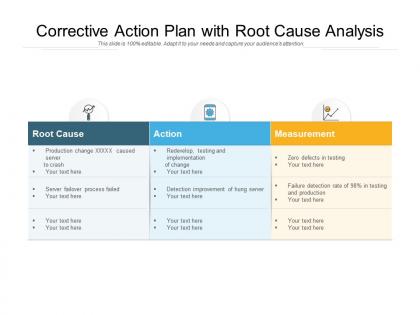
Corrective action plan with root cause analysis




Try Before you Buy Download Free Sample Product
 Impress Your
 Audience
 100%
100% Editable
 Save Hours
 of Time


Our Corrective Action Plan With Root Cause Analysis are explicit and effective. They combine clarity and concise expression.
People who downloaded this PowerPoint presentation also viewed the following :
Corrective action plan with root cause analysis with all 2 slides:
Give your audience a fulfilling experience. They will find our Corrective Action Plan With Root Cause Analysis elevating.

FAQs for Corrective action plan with
Honestly, you need five main things for a solid corrective action plan. First, be brutally honest about what actually went wrong - no sugarcoating. Then dig into the real root cause, not just surface stuff. Your action items have to be specific and measurable too. None of that vague "we'll communicate better" nonsense. Assign clear owners for each task with realistic deadlines. I've seen too many plans fail because timelines were completely unrealistic. Oh, and don't forget regular check-ins to make sure it's actually working. That's probably the part most people skip, but it's crucial for preventing the same mess from happening again.
You need a corrective action plan when the same problems keep showing up despite your usual fixes. Check for patterns in audit findings, customer complaints, or quality issues that won't go away. That's your main warning sign. One-off incidents? Usually not worth the full formal process unless we're talking safety or major compliance stuff. Focus on the systemic headaches that could mess with your operations or reputation. Honestly, I'd start by figuring out the root causes first - saves you time later. That way you can tell if you actually need the whole formal plan or if some quick process adjustments will do the trick.
Okay so data analysis is basically your detective work before fixing anything - gotta figure out what actually broke and why. You'll spot patterns, find the real root causes, and prioritize which fires to put out first. Honestly, skipping this step is like throwing darts blindfolded. The numbers also give you baselines to track if your fixes actually work later. Plus you can set realistic improvement targets instead of just hoping for the best. Without solid analysis upfront, you're basically guessing at solutions and probably wasting time on stuff that doesn't matter.
Start with whatever could blow up immediately - safety stuff or compliance nightmares first. Quick wins that don't need Karen from three different departments signing off? Do those next, trust me. Look at what resources you actually have available and map out dependencies so you're not waiting around. Go after root causes instead of slapping band-aids on symptoms. Some fixes prevent way more headaches down the road than others. Try grouping similar tasks so your team isn't bouncing between totally random projects. Oh, and write down why you prioritized things this way - you'll thank yourself later when someone questions your logic.
First thing - dig into the actual root cause, not just what's happening on the surface. Set concrete goals with real deadlines and put specific people in charge (vague responsibility is where good plans go to die). Make sure they've got what they need to actually do the work. Weekly check-ins keep things moving, and honestly, updating stakeholders regularly saves you so many headaches later. Document as you go - nobody remembers details after the fact. Oh, and don't skip the follow-up review to see if you actually fixed the problem or just made it look better.
Okay so here's what I'd do - figure out which company goals your problem is actually messing with first. Like is it hurting customer satisfaction? Revenue? Operations running smoothly? Once you know that, build your fix to tackle the immediate issue AND push those numbers the right way. Honestly, leadership eats this stuff up when you can show them the connection. Track your progress using the same metrics they obsess over in meetings. That way when you report back, they'll see you didn't just solve a problem - you actually helped hit their bigger targets too. It's pretty much the best way to get buy-in.
Don't be vague - that's the killer. Like saying "better communication" means nothing, you know? Get specific about who does what by when. I learned this the hard way but don't make crazy tight deadlines either. You'll just stress everyone out and miss them anyway. Actually figure out why the problem happened in the first place, not just surface stuff. Set up regular check-ins so you can catch things going sideways early. Get everyone on board before you start - otherwise your plan just collects dust. Pick one small win first to get some momentum going.
Getting stakeholders involved early is a game changer - you'll catch blind spots and get way better solutions. Different people see problems differently, which honestly saves you from tunnel vision. The folks who actually do the work know the real constraints better than anyone in management theorizing about fixes. Don't wait until you're ready to launch to bring them in though. Get them helping with root cause analysis and validating your ideas before you lock anything down. They need to buy into the changes anyway, so might as well get their input upfront when it actually matters.
Track both types of metrics - leading ones like training completion and audit scores show if you're heading the right direction. Lagging indicators reveal actual results: defect rates, customer complaints, whatever you're trying to fix. Most teams I've worked with only watch the outcome stuff and miss early warnings. Bad move. Keep your dashboard simple - maybe 3-4 key metrics tops. Weekly reviews work for most things, monthly if it's longer-term. Oh, and assign owners for each metric or they'll just get ignored. Trust me on that one.
Check it monthly at minimum, but honestly depends on how urgent the problem is. High-priority stuff or safety issues? Weekly makes way more sense. Build in milestone reviews so you catch problems early - trust me, it's way easier than scrambling later. Also do a quick check whenever big things change... new people, budget cuts, you know. Oh and actually put it in your calendar with alerts because - and this might just be me - but I forget to follow up on this stuff constantly. These plans are useless if you're not staying on top of them.
Honestly, project management tools are a game changer for this stuff. I'd go with something like Asana or Monday.com - you can assign tasks, track deadlines, the whole nine yards. The automated reminders alone are worth it because people forget things constantly. What's nice is you get those completion reports for when your boss wants updates. Oh, and everything's in one spot instead of buried in random email chains (which drives me insane). My buddy's team tried three different platforms before finding one that clicked, so maybe start small with just a few people first. Don't overcomplicate it.
Don't just treat your corrective action plan like a one-and-done thing. Look for patterns across multiple CAPs - that's where the real gold is. I've watched so many teams just tick the box and call it finished, which honestly drives me crazy because they're missing the bigger picture. Turn it into a learning cycle instead. What root causes keep popping up? Those are your systemic issues right there. Set up regular check-ins to see if your fixes actually stuck long-term. Sometimes what looks good on paper falls apart after a few months. Track the trends and you'll start catching problems before they blow up into major headaches.
So first thing - get everyone trained on the actual procedures they're rolling out, plus basic root cause analysis and how to document everything properly. Timeline management is huge too because honestly, people are terrible at estimating how long this stuff actually takes. Make sure your team knows who's doing what and when to give stakeholders updates. Oh, and definitely walk them through your tracking system so they know where to log updates and check status. They need to understand when to escalate if things go sideways too.
Honestly, regulations are kind of a pain but they're your roadmap for the whole corrective action thing. Figure out what applies first - FDA, OSHA, whatever your industry throws at you. Some are really specific about how deep your investigation needs to go. Timelines get messy because different regs overlap all the time, so you're stuck following whichever one has the tightest deadline. Documentation standards vary too. I'd map everything out early so you don't miss something obvious later. The investigation methods part trips people up most.
Your culture and communication are huge here. If people think they'll get blamed for mistakes, they'll just fake their way through the whole thing. You want them seeing problems as chances to learn instead. Clear communication means explaining the "why" behind changes, not just barking orders. I've watched so many plans crash because leadership skipped this part - honestly, it's painful to see. When your team feels safe talking about what screwed up and actually gets the bigger picture, they'll help fix things instead of dragging their feet. Start by making space for real conversations about the mess-ups.
No Reviews