

Root cause analysis showing symptoms and problem





Try Before you Buy Download Free Sample Product
 Impress Your
 Audience
 100%
100% Editable
 Save Hours
 of Time


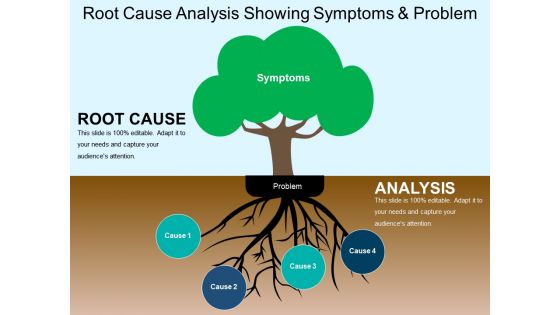
Introducing Root Cause Analysis Showing Symptoms And Problem slideshow. Showcase the process of identifying root causes of problems and an approach for responding to them with the help of this issue map PowerPoint layout. Discuss the components of root cause analysis by utilizing herringbone diagram PPT layout. Steps to perform the root cause analysis can also be discussed. Discuss five whys in root cause analysis technique that determine the root cause of a defect or problem by repeating the question “why. Take the assistance of this problem-solving PPT graphic, to discuss root cause analysis tools which are fishbone diagram, Pareto chart, the five whys. Highlight the uses of root cause analysis such as in IT operations, industrial process control, telecommunications, accident analysis, etc. Describe how the Ishikawa diagram helps to analyze the problem by breaking down root causes that potentially contribute to a particular effect. Thus, find the root cause and ways to prevent the problem by downloading this ready-to-use Ishikawa diagram PPT presentation.
People who downloaded this PowerPoint presentation also viewed the following :
Root cause analysis showing symptoms and problem with all 5 slides:
Foil attempts at creating chaos with our Root Cause Analysis Showing Symptoms And Problem. Beat back divisive forces.




FAQs for Root cause analysis showing
So basically, don't just patch the symptom - dig deeper to find what actually caused it. Keep asking "why" about 5 times until you hit the real issue. Talk to the people doing the actual work because they usually know what's up better than management does. Honestly, I've seen so many "fixes" that just create new problems because nobody bothered with this step. Get some data first instead of guessing. Focus on fixing the broken system, not pointing fingers at whoever was unlucky enough to be there when it failed. Otherwise you'll just be dealing with the same mess again in a few weeks.
So RCA is basically the whole approach to figuring out what went wrong - like your game plan for investigating stuff. 5 Whys and Fishbone are just specific tools you'd grab from that toolbox. Honestly, I usually go with 5 Whys when it's a straightforward chain of events (like A caused B caused C). Fishbone's better when you're dealing with something messier and need to map out all the different things that could've contributed. Just depends on your situation really. Both work, you just gotta pick what fits.
Honestly, data collection is make-or-break for root cause analysis. Start gathering everything right after something goes wrong - incident reports, system logs, witness statements, photos, measurements. Cast a wide net at first because you can narrow down later. Without solid data, you're basically just guessing what happened based on people's fuzzy memories. Multiple sources are key here. I've seen too many analyses fall apart because someone skipped this step and went straight to assumptions. The more thorough you are upfront, the better your chances of finding the actual problem instead of just band-aiding symptoms.
Honestly, just make root cause analysis part of your regular routine instead of treating it like some special event. When stuff breaks or goes wrong, use the 5 Whys method to dig past the obvious fix. Don't just slap a band-aid on it. Build this into your project templates so it's automatic—nobody's got time to remember extra steps. Document what you find and share it with other teams. I learned this the hard way after watching my old team fix the same database issue like three times. Short retrospectives work great for this too.
Don't stop digging when you hit the first thing that looks like a root cause - keep asking "why" until you get to the real systemic problem. Blame games kill these discussions instantly, so avoid those at all costs. People just start covering themselves instead of being honest about what went down. Get actual data, not assumptions. Oh, and this might sound obvious but involve the people who were actually there when it happened. They know way more than anyone gives them credit for. Write everything down as you go or you'll forget your reasoning later (trust me on this one).
Depends on your budget really. Lucidchart and Visio are great for visual stuff like fishbone diagrams. Draw.io is free and works fine too. If you're doing heavy data analysis, Minitab or JMP will handle that. But honestly? Some of my best root cause work happened with just sticky notes on a wall - no joke. Remote teams should check out Miro or Mural for those 5 Whys sessions. Don't overthink it though. Whatever your team will actually stick with is better than some fancy tool that collects dust.
Just keep asking "why" until you find something you can actually control and fix. The 5 Whys thing is stupidly simple but it really works. Watch out for answers that blame people - like "John forgot to check the system." That's usually pointing to crappy processes or training gaps, not the real issue. You'll know you've hit the actual root cause when fixing it would stop similar problems from happening again. Oh, and definitely run your solution past the team. They'll tell you pretty quickly if it would actually prevent this mess from repeating.
Dude, you need different departments in the room from day one. Operations sees process breakdowns, IT catches system glitches, customer service knows exactly what's pissing people off. Each group brings their own angle - kinda like having multiple witnesses to an accident, you know? Someone always remembers that one tiny detail everyone else missed. Plus here's the thing - when people help find the problem, they actually want to fix it instead of just complaining later. I'd grab at least 3-4 different teams right off the bat. Trust me on this one.
Yeah, root cause analysis works everywhere - you just tweak what you're looking at. Manufacturing tracks defects through production lines and supply chains. Healthcare focuses on patient safety stuff, med errors, whatever went wrong. IT guys use it for outages, security mess-ups, performance problems. The basic process doesn't change though. Gather your data, keep asking "why," map out what contributed. Honestly, it doesn't matter if you're dealing with broken parts or crashed systems - the systematic approach just works. Pick whatever method fits your field best: 5 Whys, fishbone diagrams, fault trees.
Honestly, once you start fixing root causes instead of just patching symptoms, it's like a weight lifts off your shoulders. Problems stop bouncing back every few weeks. Your team can actually plan ahead rather than scrambling to put out fires constantly. Sure, it takes more effort upfront, but the payoff is insane - way fewer headaches, lower costs, happier customers. I'd definitely start tracking which issues keep repeating. You'll probably be shocked at how much time you get back once you actually implement those findings properly. Plus your whole organization just... breathes easier, you know?
Make it feel safe, not like a blame game - that's the key thing. Focus on "what broke in our process" instead of pointing fingers. People will actually speak up instead of covering their ass. Build RCA into stuff you're already doing - sprint retros, team meetings, whatever. Honestly, the best part is when your team starts catching issues before they explode. Just grab one recent problem this week and try the "5 whys" exercise together. Short sentences work. Don't overthink it - start small and it'll become habit pretty quickly.
Track recurrence rates first - same issues coming back means your RCA isn't working. Then look at resolution times for future incidents (good analysis should make fixes faster). I'd also measure how often you're finding actual root causes vs just surface-level stuff. Cost savings from prevented incidents is probably the metric executives care about most, honestly. Don't forget to check if your corrective actions actually get done on time. Monthly dashboard review keeps you on top of trends without drowning in data.
Start with templates that cover the basics - what happened, investigation steps, root cause, fixes. Include timelines and who did what. Honestly, I've watched so many incident reports become totally worthless because someone forgot to document the obvious stuff. You'll want everything searchable later, so tag by incident type or department. The real payoff happens when you start seeing patterns across different cases. Oh, and don't skimp on evidence details - future you will thank you when you're trying to remember why something broke six months ago. Consistency matters more than being fancy.
Look for people who won't just accept the obvious answer - you want the ones who keep digging. Get them trained on something systematic like 5 Whys or fishbone diagrams (honestly any method works as long as they stick to it). Communication skills matter huge since they'll be talking to everyone and explaining what went wrong. Having someone who knows your industry helps, though sometimes an outsider catches stuff you missed. Oh and definitely practice on smaller problems first - don't throw them into the deep end right away. Get some formal training if you can swing it.
Think of root cause analysis as your crystal ball for preventing future disasters. Instead of just putting band-aids on problems, you're actually figuring out why stuff keeps breaking in the first place. Once you spot those patterns, your risk assessments get way more accurate - you'll know exactly which weak spots need beefing up. Honestly, I've seen too many teams waste months fixing the same issues over and over. The real magic happens when you use those insights to build preventive measures that target the actual source of problems, not just whatever's on fire today.
-
Great experience, I would definitely use your services further.
-
Good research work and creative work done on every template.