


Root cause analysis ppt summary




Try Before you Buy Download Free Sample Product
 Impress Your
 Audience
 100%
100% Editable
 Save Hours
 of Time


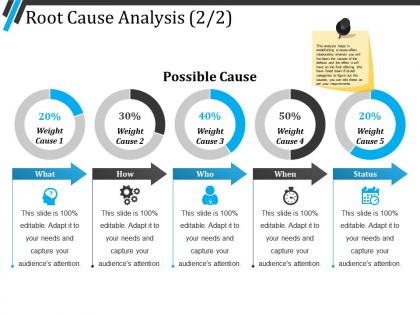
Understand a problem completely and derive the proper solution to it with the help of Root Cause Analysis PPT Summary. Gather different problem-solving methods by using a divergent thinking presentation template. You can identify the main cause of the issue with the aid of this problem-solving PowerPoint graphic. Explain why it is important to conduct the root-cause analysis using problem statement PPT slideshow. Employ the creative-problem solving PowerPoint layout to highlight the benefits of the root-cause method and thus grab the attention of your audience. Take the assistance of problem-structuring methods to discover numerous problems and solve them efficiently. You can outline the key steps in this RCA PPT visual that help you to perform successful root-cause analysis. There are various high-quality icons that make your presentation simple and easy to understand. You can uncover all the major business-related issues by downloading our ready-to-use root-cause analysis PowerPoint theme.
People who downloaded this PowerPoint presentation also viewed the following :
Root cause analysis ppt summary with all 5 slides:
Evaluate the financial impact with our Root Cause Analysis Ppt Summary. Highlight important economic indicators.



FAQs for Root cause
So you've got a few solid options here. Start with the 5 Whys - literally just keep asking "why" until you dig down to what actually caused the problem. Fishbone diagrams work great too, they help you map out every possible cause visually. For really complex stuff, there's fault tree analysis, though honestly I find that one kind of tedious. Oh, and failure mode analysis exists but it's way overkill unless you're dealing with something super critical. The whole point is being methodical instead of just blaming the first thing that seems obvious. Pick whatever feels right for your situation's complexity.
So basically, root cause analysis is like being a detective instead of just slapping a quick fix on things. Regular problem-solving stops at "okay, this broke, let me patch it up." RCA keeps digging until you find what actually caused the mess. It's the difference between taking aspirin for a headache vs figuring out you need glasses, you know? Most people hate doing it because it takes longer, but honestly it saves you from dealing with the same crap over and over. Try the "five whys" thing next time - just keep asking why until you can't anymore.
Think of data analysis like being a detective - you're hunting for real patterns instead of just going with your gut. Pareto charts show you which problems pop up most often. Control charts catch when things go sideways. Correlation analysis tells you if two things are actually connected or just look that way by accident. Honestly? Half the time we're all just guessing without solid data backing us up. Statistical significance testing confirms whether you've found something real or if it's random noise. Oh, and collect clean data first - garbage in, garbage out, you know? Let the numbers guide your investigation instead of jumping straight to conclusions.
So the 5 Whys is like being a detective with your problems. You ask "why" to whatever issue you're facing, then ask "why" to that answer, and keep going until you hit the real cause. Usually takes about 5 rounds - that's where the name comes from. Most people quit after the first why and just slap a band-aid on things. I've watched entire teams burn weeks doing this. The trick is pushing past those obvious surface answers that feel "good enough." Actually had to use this last month on a project that kept failing. Try it next time something breaks - you'll probably find the real culprit isn't what you initially thought.
Don't just do RCA when everything's on fire - build it into your regular reviews, like monthly or quarterly. Track patterns across incidents because honestly, most problems aren't as random as they seem. I'd set up something simple to capture root causes and solutions, then use that data to spot bigger systemic stuff. The real trick is actually following through on fixes instead of letting your analysis collect dust. Oh, and definitely don't treat each problem like it's totally separate - you'll miss the connections that way. Makes a huge difference once you get into the habit.
Honestly, the biggest mistake is giving up too soon. Like you'll think "oh Sarah screwed up" and call it a day, but that's just scratching the surface. Keep digging - what system let Sarah mess up in the first place? Also don't walk in already "knowing" what happened (I've watched teams argue for hours defending some random theory). Get everyone involved to weigh in instead of doing it solo. Oh and actually do the five whys thing - sounds cheesy but it works. Most people stop at like two whys and wonder why problems keep happening.
Okay so first thing - make sure everyone brings actual data, not just their hot takes. Get someone to run the meeting or it'll go nowhere fast. Pull in people who actually deal with this stuff day-to-day, not just the managers who heard about it through the grapevine (honestly that's where most teams screw up). Try something structured like 5 Whys so people dig deeper instead of throwing out random solutions. Nobody can be afraid to say what really happened - blame games kill these discussions. Oh and don't forget to end with who's doing what next, otherwise it's just expensive venting.
Culture is huge for RCA - honestly, it's probably the biggest factor. When people are scared they'll get blamed, they just clam up or give you the most obvious answer to get it over with. You'll never find the real issues that way. But flip it around? Make people feel safe to actually talk about what happened without getting thrown under the bus? Same exact process suddenly works amazing. Leadership has to genuinely care more about fixing things than finding someone to blame. Next time you're doing an RCA, just watch - are people being real with you or just going through the motions?
Honestly, tech makes RCA so much faster and you'll catch stuff you'd totally miss otherwise. Data visualization tools are great for spotting patterns, and AI can dig through huge datasets to find connections. Digital fishbone diagrams help organize your thoughts way better than scribbling on whiteboards. Real-time collaboration platforms are a game-changer too - no more endless email threads that go nowhere. I'd start simple though, maybe Miro for visual stuff or basic data tools. Don't overthink it and jump straight into some crazy enterprise system.
Toyota's "5 Whys" thing is a perfect example - they figured out their equipment wasn't breaking because the machines sucked, but because workers weren't trained properly on maintenance. Saved them tons of money. NASA did something similar after Challenger, realizing it wasn't just a technical failure but organizational pressure from higher-ups. Hospitals use this approach too when they look beyond "human error" - usually there's something deeper going on. The trick is not stopping at the obvious answer. You should try it on smaller team problems first, honestly. The patterns that show up might surprise you.
Start by figuring out what actually went wrong and when it began. Who got hit by it? For small one-off issues, don't go overboard with the investigation. But if customers are complaining or it keeps happening - yeah, dig deeper. I always think about what happens if we totally miss the real problem here. That usually tells me how wide to cast the net. Look at connected systems too, obviously. The trick is going broad enough to actually find the root cause without making this analysis drag on forever. You want to wrap it up while the details are still fresh, you know?
So root cause analysis is massive in healthcare, manufacturing, aviation, and IT. These industries can't just slap a band-aid on problems - one tiny failure can snowball into something catastrophic or cost millions. Hospitals use it when patients get hurt, factories when products are defective. Aviation's obvious - nobody wants planes falling out of the sky! IT folks are probably the most obsessed with RCA though, especially when servers crash at 3am. The thing is, all these fields deal with super complex systems where everything's connected. Learning stuff like 5 Whys or fishbone diagrams will honestly make you way more valuable if you're in any of these areas.
Start with analytical thinking - you've gotta dig past the obvious stuff to find what really caused the problem. Interview skills matter tons since you're dealing with different people who all have their own version of events. People get weird and defensive when you're poking around their mistakes, so patience is huge. Learn the basic methods like fishbone diagrams and 5 Whys. Project management basics help too, otherwise these investigations drag on forever. Take a formal RCA course first, then practice on smaller incidents. Oh, and facilitation skills - forgot that one but it's pretty critical.
So root cause analysis is basically playing detective with your work problems. Don't just slap a quick fix on stuff and call it done - dig into what's *actually* causing the mess. Maybe it's bad training, maybe your process is garbage, who knows. The whole point is stopping the same crap from happening over and over. I swear, most places just treat symptoms and wonder why nothing improves. You'll save yourself so much headache if you document when things go wrong and look for patterns. Way better than constantly firefighting the same issues every month.
Track the main stuff that made you do the RCA in the first place - defect rates, downtime, complaints, whatever. But also watch for early warning signs that might predict if things go sideways again. Process compliance, training completion rates, system performance trends - that kind of thing. I'd probably do weekly check-ins for the first month, then switch to monthly. Oh, and make sure someone actually owns tracking this long-term or it'll just die on the vine. Most people forget this part and then wonder why problems come back six months later.
-
Great designs, Easily Editable.
-
Qualitative and comprehensive slides.