

Sales and logistics process flow




Try Before you Buy Download Free Sample Product
 Impress Your
 Audience
 100%
100% Editable
 Save Hours
 of Time


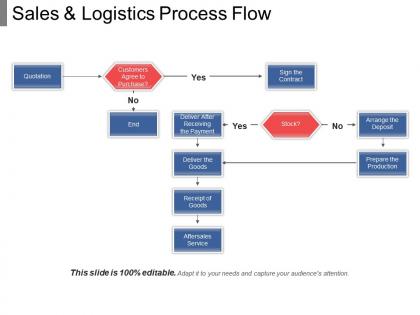
Introducing Sales And Logistics Process Flow that helps you to deliver the right quality of the products to your customers. Improve collaboration with your suppliers and generate value for your company with the help of this global supply chain management presentation template. In the service chain optimization PowerPoint graphic, you can determine the different components of the supply chain like planning, information, source, inventory, production, location, transportation, and return of goods. Use logistics management PPT slideshow to highlight some key goals such as to achieve efficient fulfillment of demand, drive consumer value, enhance organizational responsiveness, facilitate finance success, and build network resiliency. Employ the demand chain management PowerPoint layout to raise the productivity of a particular item that helps to boost the cooperation within the staff and the organization. There are certain high-quality icons present in the slide which makes your presentation reliable and engaging. Hence, balance the activities of supply and demand by downloading our ready-to-use supply chain management PPT visual.
People who downloaded this PowerPoint presentation also viewed the following :
Sales and logistics process flow with all 5 slides:
Our Sales And Logistics Process Flow are an asset worth having. They augment your ability to function.



FAQs for Sales and
So you'll want to nail down inventory management, order processing, and how you get stuff to customers. Forecasting demand is honestly the hardest part - I've seen so many businesses mess this up. Map out your current process first and see where orders are getting stuck, that's where you'll find quick wins. Supplier relationships matter way more than people think, plus you need decent warehousing and a solid delivery setup. Oh and don't skip the returns process - customers will definitely send things back. Track your data so you can catch problems early instead of scrambling later.
Look, your logistics basically make or break the whole customer experience. Get deliveries right, send the correct stuff, make returns painless - boom, loyal customers. Screw it up though? They're gone, doesn't matter how good your actual product is. I've watched solid companies completely implode because their shipping was trash. The key thing is keeping people in the loop about their orders. Nobody likes wondering where their package went or why it's three days late. Communication covers up a lot of other sins, honestly.
Look, tech is what makes or breaks sales logistics these days. Your CRM talks to warehouse systems, AI figures out demand patterns, and your sales team can check inventory instantly on their phones. Without it? You're basically guessing at everything. The trick is making sure all your tools actually work together - I've seen companies blow tons of money on software that doesn't sync up. Map out where you're struggling most right now, then find tech that fixes those specific headaches first. Don't try to overhaul everything at once.
Dude, supply chain issues will absolutely wreck your sales flow. You can't ship products, customers get pissed, revenue tanks - it's a nightmare. I learned this the hard way honestly. Don't put all your eggs in one supplier basket, that's suicide. Get visibility into what's happening upstream so problems don't blindside you. Stock up on your most critical stuff and just be upfront with customers when delays happen. Moving some suppliers closer to home isn't a bad idea either. The whole game is building flexibility before shit hits the fan, not scrambling after.
Ok so first thing - actually use your sales data for forecasting instead of just winging it. Most people totally bomb this part. Set up automatic reorder points so you're not panicking when stuff runs out. ABC analysis helps you figure out which items matter most (saves tons of time). Oh and cycle counting sucks but you gotta do it regularly or everything falls apart. The biggest thing though? Get your sales and warehouse people actually talking to each other. Seriously, when they don't communicate it screws up your numbers faster than anything else. Also keep some safety stock around just in case.
Honestly, data analytics is a game changer for spotting issues before they tank your sales. Track your delivery times, order accuracy, and customer satisfaction first - that's your baseline. From there you'll see patterns like which routes work best and when demand spikes are coming. I've seen companies avoid major bottlenecks just by catching the red flags early. You stop guessing and actually know what's driving performance. It helps optimize inventory too, plus you can predict which customers will reorder. Way better than flying blind with gut decisions.
Oh man, sales logistics is all about juggling! Communication's probably your biggest asset since you're always caught between sales teams, warehouses, and cranky customers. Data analysis comes up constantly too - inventory tracking, demand forecasting, route optimization. Problem-solving becomes second nature because trust me, stuff breaks down daily. Being detail-oriented helps, plus you gotta get comfortable with logistics platforms. SAP and Oracle are the big ones if you're thinking about jumping in. Honestly though? Learning to keep your cool under pressure might save your sanity more than anything else. It gets hectic fast.
Honestly, you've gotta be way more flexible these days. Track your delivery data religiously and give people options - same-day, pickup, curbside, whatever they're actually asking for. That whole universal approach? Totally dead now. Survey your customers first to see what they hate about current delivery, then watch their ordering patterns for trends. Real-time tracking is non-negotiable too. People lose their minds if they can't see where their stuff is. Oh, and be upfront about delays before customers have to ask. Start small though - maybe just test a few different fulfillment methods with your regulars first.
Honestly, inventory management is gonna be your biggest pain. Stock too much and you're bleeding cash. Run out and customers bail - it's brutal. Demand forecasting? Good luck with that one - customers say they want something then buy completely different stuff. Getting deliveries coordinated across channels while keeping costs down is its own special hell. Your sales team overpromises, logistics can't deliver, everyone's pissed. Here's what actually works though: get sales and logistics in the same room regularly. When those two teams sync up properly, most of this chaos disappears.
Look, your distribution choice is huge for managing costs and getting products out there efficiently. Going direct-to-consumer means you control everything but honestly, building fulfillment from scratch is a nightmare. Retail partnerships let you tap into their existing networks - way cheaper upfront. Amazon and similar platforms handle the logistics headache but they'll eat into your profits pretty hard. I'd say figure out what you can actually handle in-house right now versus what you need to outsource. Don't bite off more than you can chew, especially early on.
Track four things that actually move the needle: order accuracy, delivery times, inventory turnover, and cost per shipment. The first two are no-brainers - customers get pissed when orders are late or wrong. Inventory turnover shows if you're sitting on too much stuff (been there). Cost per shipment catches where you're hemorrhaging money. Most companies go overboard tracking everything under the sun and miss what counts. Start with these four, build some baseline data. You can get fancy later. Pick whichever one's burning you right now and fix that first. Way more effective than trying to boil the ocean.
Working closely with your suppliers is a total game-changer for sales logistics. You'll get way better visibility into inventory levels, lead times, and potential problems before they mess with your customers. Share your demand forecasts and sales data with them - I swear it's like having a crystal ball sometimes. They can actually adjust their production schedules around your needs. This cuts down on stockouts and speeds up deliveries. Plus you can pivot faster when the market shifts (which happens more than you'd think). Start with regular check-ins with your main suppliers and share monthly projections.
Dude, e-commerce totally changes everything about how you handle logistics. Traditional retail means shipping big pallets to stores, but now you're dealing with thousands of tiny orders going straight to people's houses. Last mile delivery becomes this massive pain (and crazy expensive too). Your warehouse setup has to completely change - instead of bulk picking for stores, you're fulfilling individual orders all day. Oh, and customers expect perfect inventory tracking plus super fast shipping. Honestly, most companies are doing hybrid models now where they're selling in stores AND direct to consumer. You really need to figure out that fulfillment strategy sooner than later.
Honestly, you'll want to focus on three main things: documentation, training, and audits. Your team needs to know the regs for your specific industry - compliance changes constantly, which is annoying but whatever. Document everything from shipping to customs declarations. When regulations shift, update your processes immediately. I do quarterly reviews where I literally walk through procedures with someone who hasn't seen them before. Fresh perspective helps catch stuff. Companies mess up by assuming they're good without actually verifying. Oh, and set up regulatory alerts so you're not scrambling when new rules drop.
AI forecasting and real-time inventory tracking are huge right now. Everyone wants Amazon speed deliveries - which is kinda insane but here we are! You'll definitely need predictive analytics to stay ahead of what customers want. Mobile platforms are becoming a must-have since your team needs data access anywhere. Honestly, automated order processing will save you tons of headaches too. Don't try to do everything at once though. Pick one automation tool first and build from there - way less overwhelming that way.
-
Good research work and creative work done on every template.
-
Very unique and reliable designs.