

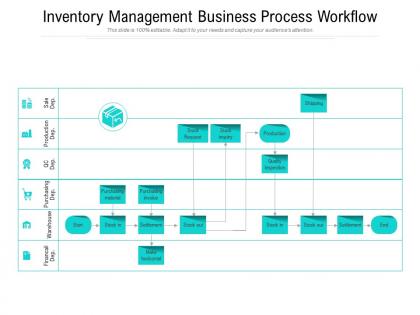
Inventory management business process workflow




Try Before you Buy Download Free Sample Product
 Impress Your
 Audience
 100%
100% Editable
 Save Hours
 of Time


Our Inventory Management Business Process Workflow are topically designed to provide an attractive backdrop to any subject. Use them to look like a presentation pro.
People who downloaded this PowerPoint presentation also viewed the following :
Inventory management business process workflow with all 2 slides:
Use our Inventory Management Business Process Workflow to effectively help you save your valuable time. They are readymade to fit into any presentation structure.
FAQs for Inventory management
Okay so track your inventory turnover ratio first - that's how many times you cycle through stock each year. Stock-outs are killer too, nobody wants empty shelves. Days sales outstanding matters, plus carrying costs as a percentage of your total inventory value. Oh and definitely watch order accuracy rates and supplier lead times. Honestly though? If you're drowning in numbers, just focus on turnover ratio and stock-out frequency to start. Pick maybe 2-3 things that actually move the needle for your business. Check them weekly and you'll catch problems before they get expensive. Way better than trying to track everything at once.
Dude, you should totally look into AI for inventory stuff. It can crunch way more data than you'd ever want to - seasonal patterns, weather, customer habits, all that. The crazy part? These systems actually learn from their mistakes and get better over time. I've seen some that are honestly creepy accurate at predicting demand. They'll even auto-adjust for holidays or when your supplier inevitably screws something up. My advice? Don't try to fix everything at once. Figure out what's driving you nuts with forecasting right now, then find tools that tackle those specific problems first.
JIT cuts holding costs by keeping way less inventory around. You order stuff right when you need it instead of stockpiling tons of products. Warehouse costs drop. Insurance gets cheaper. Your money isn't just sitting there tied up in inventory - which honestly feels great once you see the difference. Less spoilage too since nothing's gathering dust on shelves. You'll need suppliers who actually show up on time though. I'd test it out with your most predictable products first, see how it goes before expanding.
Honestly, start planning like 3-6 months before your busy season hits. Look at last year's sales data but also check what's trending now - and don't forget about any promos you're running. I totally bombed my first holiday rush by waiting too long! Stock up on your bestsellers for sure, but skip going overboard on the slow stuff or you'll be stuck with it forever. Try to get supplier deals where you can tweak orders later if needed. Oh, and set up those low-stock alerts so you're not scrambling when everything's sold out.
Honestly, you need better tracking first - ditch those annual counts and do cycle counts throughout the year instead. Way easier to catch problems early. Lock down your stockroom access too, not everyone needs to be wandering in there. Security cameras help but don't go overboard with the Big Brother vibe. Train your team properly because so much shrinkage is just people screwing up basic procedures. If you're still tracking stuff manually... yeah, time for barcodes or RFID. Check your processes every quarter and fix issues right away. Trust me, waiting until year-end to discover problems is brutal.
So retail's all about chasing seasonal trends and moving stuff fast. Manufacturing? They're laser-focused on getting raw materials just when they need them - can't have production lines sitting idle. Healthcare gets crazy strict with expiration dates and regulations (honestly, rightfully so). Food companies are obsessed with keeping things fresh and that whole cold chain thing. Tech's weird though - they're constantly worried about parts becoming obsolete overnight. Really, you've got to figure out what headaches your specific industry deals with first. Then build around those instead of copying what everyone else does.
Dude, the accuracy alone is worth it - no more miscounting stuff by hand all the time. Real-time stock tracking means you won't run out of popular items or have dead inventory eating up your money. The auto-reordering thing is pretty sweet too, kicks in when you hit those minimum levels. You'll spot theft and mistakes way quicker than those random manual checks. Oh, and start with your big money makers or fast sellers first - that's where you'll actually notice the difference right away. Trust me, once it's running you'll wonder how you managed before.
Look at your actual sales data instead of guessing - that's where the magic happens. Calculate those carrying costs first (storage, insurance, all that boring stuff) because they're probably way higher than you think. Most people stock too much since running out feels worse than paying to store everything. ABC analysis works great here - keep more buffer for your moneymakers and less for slow stuff. Your reorder point should factor in lead times and seasonal patterns, not just gut feelings. Those carrying costs really do add up quick! Start there and work backwards to figure out smarter reorder levels.
Ugh, e-commerce inventory is such a pain. Online customers are way more unpredictable than in-store shoppers, so forecasting demand is brutal. You'll be syncing stock across your site, Amazon, eBay - whatever platforms you're using - and it's constantly getting out of whack. Storage costs add up quick if stuff sits there forever. Don't even get me started on suppliers changing lead times every other week lately. Honestly though, decent inventory software saves your sanity. Get something that shows real-time numbers and handles reorders automatically. Worth every penny.
Honestly, good inventory management is a game-changer for keeping customers happy. You know how annoying it is when you really want something and they're sold out? That's exactly what kills customer loyalty. When you've got your stock levels figured out, people can actually count on you having what they need. Fast shipping, fewer backorders, the whole deal. Over time this builds real trust - customers know you're reliable so they keep coming back instead of shopping around. Oh, and you won't be scrambling with expensive rush orders either (learned that one the hard way). I'd start by tracking which products fly off your shelves so you don't run out of the popular stuff.
Honestly, I'd do monthly spot checks if you can swing it - way better than waiting for quarterly deep dives. Pick random samples instead of counting everything; saves tons of time but still catches the weird stuff. Schedule during slow periods so your team isn't stressed about orders. Document as you go and compare against your system numbers. Major discrepancies? Jump on those immediately. The real trick is staying consistent with timing and process. Create a basic checklist so everyone follows the same steps. Trust me, it makes a huge difference when you're not reinventing the wheel every time.
So your inventory turnover basically shows how fast you're selling through your stock. Move it quicker? You free up cash and cut down on storage costs - plus you're making money faster. When stuff just sits there though, that's cash doing absolutely nothing for you. Honestly, I've seen too many businesses get burned by slow-moving inventory that becomes worthless. The ideal ratio depends on what you're selling, but faster is usually better for cash flow. Check it monthly and see how you stack up against competitors. That'll show you where you can tighten things up.
Ugh, supply chain chaos basically means throwing your old inventory playbook out the window. You're gonna need way more safety stock now because lead times are all over the place. Just-in-time? Forget about it. I learned this the hard way last year when our main supplier got completely backed up. Start diversifying your suppliers ASAP - don't wait until you're scrambling. Build in more buffer inventory even though it ties up cash. It sucks but it's better than being stuck with empty shelves when customers need stuff.
Hook your main vendors directly into your inventory systems - EDI or shared platforms work great. They'll see stock levels in real-time and can handle reorders without you constantly bugging them. Set automatic reorder points and share your demand forecasts with key suppliers. Most of them actually love the transparency since it makes planning way easier on their end. Just nail down clear communication rules and service agreements first. I'd start with your top 3-5 suppliers, get that dialed in, then roll it out to others. Way less headache once you get it running smoothly.
Dude, those corporate inventory meltdowns all have the same root problem - nobody's actually watching what's happening in real time. Target crashed hard in Canada because their systems couldn't track all the moving pieces, so customers found empty shelves constantly. Toyota's "just enough" strategy totally backfired during COVID when everything got weird with supply chains. Honestly, a little extra stock sitting around isn't the worst thing sometimes. You've got to audit regularly and know backup suppliers. Most companies think their computer knows what inventory they have, but reality? It's usually way off. Cross-train people too - when one person leaves, you don't want everything falling apart.
No Reviews