


Sales Team Training Plan To Improve Performance A Comprehensive Guide MKT SS V




Try Before you Buy Download Free Sample Product
 Impress Your
 Audience
 100%
100% Editable
 Save Hours
 of Time


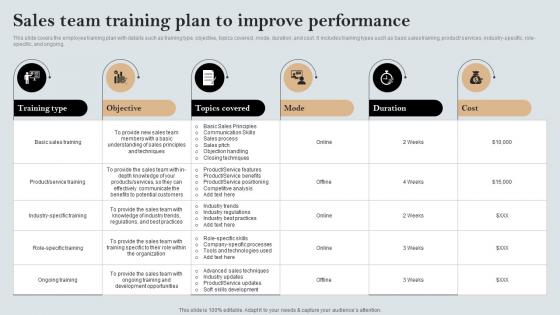
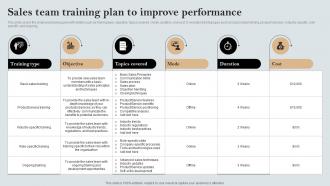
This slide covers the employee training plan with details such as training type, objective, topics covered, mode, duration, and cost. It includes training types such as basic sales training, product or services, industry specific, role specific, and ongoing.
People who downloaded this PowerPoint presentation also viewed the following :
Sales Team Training Plan To Improve Performance A Comprehensive Guide MKT SS V with all 6 slides:
Use our Sales Team Training Plan To Improve Performance A Comprehensive Guide MKT SS V to effectively help you save your valuable time. They are readymade to fit into any presentation structure.





FAQs for Sales Team Training Plan To Improve Performance A Comprehensive Guide
Honestly, I'd hammer three things with your sales team. First - listening skills, because most reps just wait for their turn to talk instead of actually hearing what the prospect needs. Handle objections without getting all weird and defensive about it. And build real relationships, not just feature-dumping on people. Role-playing helps a ton for practice. Obviously cover product knowledge too, but the soft skills? That's what separates mediocre salespeople from the ones who actually crush their numbers. Sometimes I think we overcomplicate sales training when it's really about being genuinely helpful to people.
Honestly, role-playing is a game changer for sales teams. Your people get to mess up and figure things out without losing actual deals - way better than just talking at them about techniques. They can practice handling those nightmare objections we all know too well. Have different team members play difficult customers, work on closing strategies, whatever. The cool thing is everyone picks up tricks from watching each other work. I'd set up regular sessions using scenarios your team actually runs into. Trust me, they'll be so much more confident when real prospects start throwing curveballs.
You'll want both the obvious stuff and the behind-the-scenes metrics. Revenue per rep, conversion rates, deal cycles - yeah, track those but they're backwards-looking. The real juice is in activity stuff while training's happening: call volume, follow-ups, how fast deals move through pipeline. Run quick knowledge checks and actually listen to their sales calls to see if anything's sticking. Customer feedback helps too, though that takes longer to get. Honestly, I'd just throw it all on one dashboard so you can see patterns. Makes it way easier to fix things before they become problems.
Oh totally, just build it right into your regular sales training. During role-plays, have them actually log the calls and update leads in the CRM instead of doing it on paper or whatever. Most systems have those practice environments anyway. We started doing entire mock sales cycles in our CRM and honestly it was way better than the old way. Your new hires can set up workflows that basically walk them through each step. The whole point is making it feel normal, not like some annoying extra thing they have to do after they're done selling. Way more effective that way.
Map out a solid 30-60-90 day plan hitting product knowledge, sales process, and whatever CRM you're using. Pair them with your best rep for call shadowing - honestly way more valuable than boring training videos. Do weekly check-ins so bad habits don't stick. Role-play the objections they'll actually hear, not textbook scenarios. You want them practicing real situations. Balance formal training with hands-on stuff so they're not drowning when they start working their own leads. Oh, and make sure the buddy system person actually wants to mentor - reluctant trainers are the worst.
Figure out each person's style first - some people hate being put on the spot in groups, others live for it. The analytical types want concrete examples and step-by-step breakdowns. But the relationship people? They connect way better with stories and the emotional side of things. Honestly, I've watched so many trainings crash because the trainer just did their standard spiel for everyone. Switch it up: give the detail lovers written guides, throw in workshops for hands-on people, videos for the visual learners. Maybe start with a quick personality thing so you know what you're working with.
Training definitely helps with morale - people feel appreciated when you actually invest in them. Shows you care about more than just sales numbers, you know? Learning new stuff keeps things interesting instead of doing the same boring pitch forever. When reps start closing more deals because of what they learned, that's when you see real confidence building. But here's the thing - it has to be relevant to what they're actually struggling with, not some generic sales seminar BS. I'd start by just asking them what they want to get better at. You'll probably be surprised by their answers.
Check your CRM and call recordings first - that's where the good stuff is hiding. Lost deal reports too. See where your reps keep hitting walls, like maybe they're terrible at handling price objections or they can't close to save their lives. Build training around those specific problems instead of some cookie-cutter sales course. Role-play the actual scenarios your team bombed on. Customer feedback works great for this too since it's real situations they'll face again. Way better than generic training that doesn't fix anything.
Honestly, most training fails because people do it once and think they're done. You need monthly refreshers - seriously, I've watched entire teams forget everything in like 3 weeks without follow-up. Role-playing scenarios work great for practicing new stuff. Also throw in some peer mentoring if you can swing it. What really works though is weaving the concepts into your regular sales meetings instead of treating training like this separate thing. Quick reference sheets help too - something they can actually pull up during calls. Oh and celebrate when you catch them using what they learned! That reinforcement makes all the difference.
Dude, you really can't wing it when selling stuff you don't understand. Your team needs to know the product inside and out - otherwise they're just stumbling through conversations hoping for the best. When someone actually gets how the product works, they can answer tough questions without panicking and tailor their pitch to what each customer actually cares about. Customers smell BS from a mile away too. Honestly, I've seen way too many reps lose deals because they couldn't explain basic features convincingly. Get your team doing product deep-dives and have them practice explaining everything in normal human language, not corporate speak.
Honestly, cross-departmental training is a game changer for sales teams. Your reps get the full picture of how everything connects - marketing campaigns, customer support issues, product development. Makes them sound way smarter on calls and they'll actually know how to handle those curveball objections. The silo thing drives me nuts at most companies, but this fixes it. Suddenly your salespeople are catching upsell opportunities they'd totally miss otherwise. Plus they collaborate better on bigger deals since they actually understand what other teams need. I'd start simple - have your best reps shadow different departments for like half a day each quarter. It's not rocket science but it works.
Honestly, ditch the boring lecture approach and use real customer stories instead. Like when Sarah dealt with that client who complained about pricing being too high - tell that story rather than just explaining "objection handling techniques." Stories stick in people's heads way better. Get your trainees sharing their own experiences too, the good and the messy ones. Makes everything feel less theoretical, you know? I'd start your next session with a quick 2-minute story about an actual customer situation. Way more engaging than slides.
Honestly, coaching is what makes training actually work - without it, you're basically wasting everyone's time. Think about it: you can't just throw people into a workshop and expect them to nail everything afterward. It's like learning to drive in theory then getting behind the wheel solo! Regular one-on-ones let your reps practice the new stuff in real situations. They get feedback right away and figure out all the weird edge cases that come up. I've seen so many companies skip this part, then wonder why their expensive training programs don't stick. Most concepts just disappear within a few weeks otherwise. Schedule those follow-up sessions to review specific techniques from your last training.
Honestly, ditch the PowerPoint death-by-slides approach. Go for role-playing in breakout rooms instead - way more engaging. Record actual customer calls for case studies, super helpful. Keep sessions short though, like 30-45 minutes max because nobody can focus on Zoom longer than that anyway. Video training's clutch since people can rewatch the confusing parts later. Give your reps time to practice pitches with each other too. Oh, and set up some kind of shared folder afterward with all the scripts and objection-handling stuff. Trust me, they'll actually use it if it's organized right.
Honestly, time's your biggest enemy here. Your sales reps will fight you on training because they think it's cutting into their selling time. Different skill levels make it tricky too - newbies need basics while veterans get bored easily. Budget's always tight, especially for external trainers or those expensive platforms. Measuring ROI is basically impossible, but don't tell management I said that. Start small with quick modules and get your top performers on board first. They're way better at convincing the skeptics than you'll ever be.
-
The pricing page of this website is very sorted. I felt no pain while buying the PPTs.
-
The slides come with appealing color schemes and relevant content that helped me deliver a stunning presentation without any hassle!