


Sales Territory Strategy Powerpoint Ppt Template Bundles






Try Before you Buy Download Free Sample Product
 Impress Your
 Audience
 100%
100% Editable
 Save Hours
 of Time


Our Sales Territory Strategy Powerpoint Ppt Template Bundles are topically designed to provide an attractive backdrop to any subject. Use them to look like a presentation pro.
People who downloaded this PowerPoint presentation also viewed the following :
Sales Territory Strategy Powerpoint Ppt Template Bundles with all 25 slides:
Use our Sales Territory Strategy Powerpoint Ppt Template Bundles to effectively help you save your valuable time. They are readymade to fit into any presentation structure.
-

Sales Territory Strategy
-
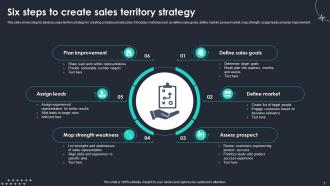
Six steps to create sales territory strategy
-
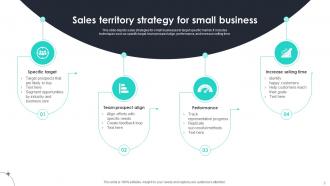
Sales territory strategy for small business
-
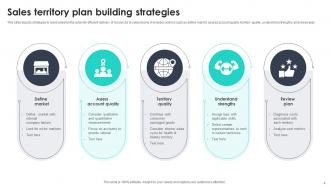
Sales territory plan building strategies
-
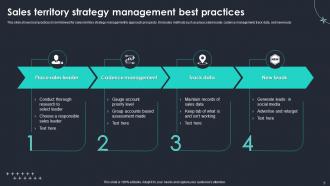
Sales territory strategy management best practices
-
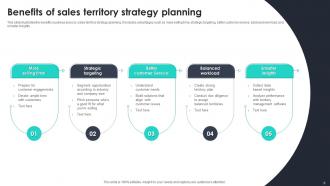
Benefits of sales territory strategy planning
-
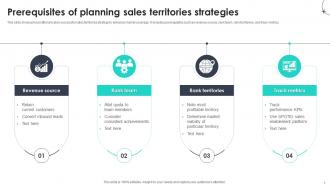
Prerequisites of planning sales territories strategies
-
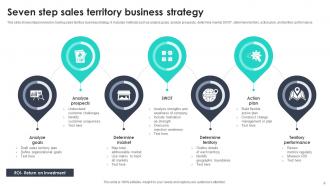
Seven step sales territory business strategy
-
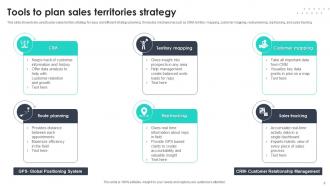
Tools to plan sales territories strategy
-
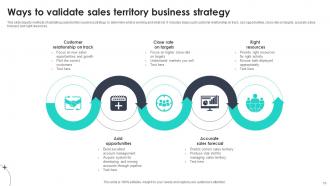
Ways to validate sales territory business strategy
-
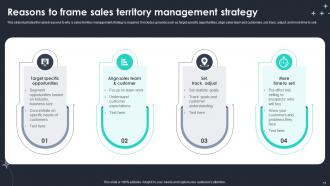
Reasons to frame sales territory management strategy
-
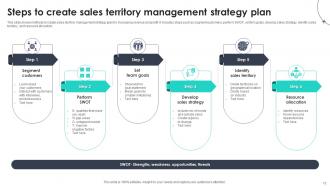
Steps to create sales territory management strategy plan
-
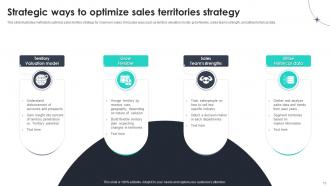
Strategic ways to optimize sales territories strategy
-
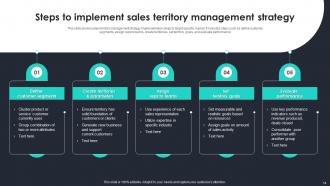
Steps to implement sales territory management strategy
-
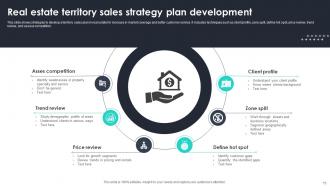
Real estate territory sales strategy plan development
-
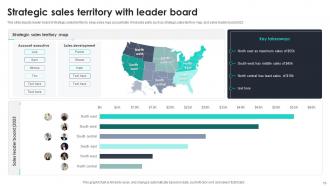
Strategic sales territory with leader board
-
Sales territory strategy map icon
-
Town sales territory strategy icon
-

Business sales territory strategy icon
-

Thanks for watching
-

-

-

-

-

FAQs for Sales Territory Strategy Powerpoint
Focus on three big things: geographic boundaries, customer segments, and market potential. Pull your customer data first - revenue, industry size, buying patterns, all that stuff. Then build territories that balance opportunity with workload. Geography's huge too (nobody wants reps driving forever between meetings). Consider each rep's strengths and current relationships - that matters more than people think. Run different scenarios in your CRM before you commit to anything. Trust me, it's way easier to tweak things digitally than deal with angry salespeople later. You want roughly equal revenue potential per territory.
Look, territory design basically makes or breaks your sales numbers. Balanced territories mean reps can actually cover their accounts without driving themselves crazy, plus they get to know their customers well enough to catch real opportunities. Mess this up though? Your team's either stretched too thin and burning out, or they're sitting pretty with tiny patches getting lazy. Neither works. You want each territory to have similar potential and workload - sounds obvious but most companies screw this up. Map what you've got now against actual revenue potential, not just how it looks on paper.
Track revenue per territory and conversion rates first - those are your bread and butter. Sales cycle length matters too, plus how much you're spending on customer acquisition. Territory penetration shows if you're actually winning market share or just spinning your wheels. Rep productivity stuff like calls per day and quota hits are solid indicators. Oh, and sales velocity - basically how fast deals move through your pipeline by region. Pull this data monthly and you'll spot the problem territories pretty quick. Honestly, the patterns jump out once you start looking at it regularly.
Dude, territory management software is a total game changer. CRM systems and mapping tools can show you exactly where your customers are clustered - way better than staring at spreadsheets all day. Your reps can update everything from their phones, and the analytics actually help you spot when territories are getting lopsided. AI even flags accounts that need attention (though honestly, sometimes it's a bit overeager). Real-time performance tracking is clutch too. I'd say figure out what's driving you crazy with your current setup first - that's where you'll see results fastest.
Think of customer segmentation as your starting point for territory design - you've gotta group similar customers together first. Size, industry, buying patterns, revenue potential - all that stuff matters when dividing up your sales team. Your enterprise guy shouldn't be chasing mom-and-pop shops across half the country, you know? Balance territories by actual value and opportunity instead of just drawing random lines on a map. Map out your current segments first, then look for the messy overlaps in existing territories. Trust me, there's always weird gaps when you dig into it. Makes way more sense than just going by zip codes.
Don't just count accounts - that's rookie mistake territory. Revenue potential matters way more, plus you've got to think about geography and industry mix. A Fortune 500 account obviously isn't the same workload as some tiny local shop. Get mapping software to actually see the imbalances (trust me, it's eye-opening). Factor in your reps' experience levels too. Set up a scoring system that weighs all this stuff, then review quarterly. When things get lopsided, redistribute. Your team will respect the transparency if you're upfront about how you're dividing everything up.
Track your performance data first - revenue per rep, customer density, travel times. If one person's crushing quota while another's drowning, time to rebalance those boundaries. Most companies drag their feet on this stuff way too long, tbh. Split territories when they get massive, merge the underperforming ones. You can also shuffle accounts based on who knows what industry best. Don't wait for annual planning - check this quarterly. Start with your biggest problem areas and work from there. It's honestly not as complicated as people make it.
So basically, map out where your customers are first - you'll spot clusters pretty quickly. Population density and income data help you draw territories that actually make sense. Don't have your sales rep driving 3 hours between meetings (learned that the hard way). Look at competitor locations too, since that affects territory balance. The whole point is finding natural boundaries based on travel time and workload. You can identify gaps where nobody's really covering potential customers. Honestly, most companies just wing it, but the geographic data shows you patterns you'd totally miss otherwise.
Oh man, biggest mistake is definitely carving up territories by geography alone - you'll get some rep covering half of Wyoming while another handles downtown Manhattan. Total nightmare. Don't keep reshuffling things every quarter either when numbers look bad. Your reps will lose their minds and honestly, it just tanks momentum. Actually dig into the data instead of going with your gut (I learned this one the hard way). But here's what really matters: talk to your sales team first. They know which accounts are goldmines and which ones are time-wasters way better than any spreadsheet will tell you.
Okay so here's the thing - sales and marketing need to actually talk to each other about territories. Marketing has all this data about which campaigns are hitting in different regions, plus they know where leads are quality vs just noise. Use that intel to map your territories around actual hotspots instead of just splitting things up randomly. Also, they can spot areas that aren't performing well and might need different messaging. I swear, most territory problems happen because these teams never sync up. Just start doing regular check-ins where you review performance together and tweak things based on what's actually working. Way better than guessing.
Honestly, it's all about figuring out what makes your specific territory work. Industry types, company sizes, how fast people make decisions - that stuff matters way more than most people think. When I switched from enterprise to SMB, I totally bombed at first because I kept using the same approach everywhere. Rural areas? You're gonna be on the phone building relationships for months. Urban spots move faster - quick coffee chats, shorter sales cycles. Dig into your win/loss data hard. Then tweak everything - your outreach timing, how you demo, even your pitch. Each territory is basically its own little world.
Honestly, territory design can make or break your sales team's relationships with customers. Good design means balancing workload, geography, and how complex each account is - so your reps actually have time to build real relationships instead of just blasting through calls. I've seen too many teams where some reps are completely swamped while others are barely busy. That's a recipe for disaster. You want each person managing a reasonable number of high-value accounts they can actually invest in. First step? Audit what you've got now and see who's drowning.
Look, you've gotta match your training to how territories actually work. Geographic ones? Focus on travel tricks and local market knowledge. Industry territories need deep dives into sector pain points - compliance stuff, technical details, all that. Account-based is honestly where most people crash and burn because strategic selling across big orgs is tough. Product territories are all about nailing competitive positioning and killer demos. Start by figuring out what skills each type actually demands. Then build training modules you can swap around depending on what your team needs. Way more effective than one-size-fits-all garbage.
Give them 2-3 weeks heads up so they're not blindsided. Don't sugarcoat why you're doing it - growth, performance issues, whatever. Just be straight with them. You'll want both team meetings and individual convos since some people will freak out about losing their best accounts (totally get that). Make sure you've got clean territory maps ready to go. Here's the thing though - talk money first. That's what everyone's really worried about and honestly where most of the drama comes from. I've watched managers dance around comp changes and it always backfires.
Your reps are out there talking to customers daily, so they'll catch stuff you miss from the office. They spot territory gaps, awkward overlaps where two people are calling the same accounts, and routes that waste hours in traffic. I'd set up monthly check-ins to get their input - maybe quarterly reviews too. They know when workloads are uneven or when a territory's potential has shifted. Honestly, waiting too long to collect this feedback is how small issues turn into major headaches. Create some basic forms or just ask during your regular meetings. Trust me, they see problems brewing way before you do.
-
SlideTeam is my go-to resource for professional PPT templates. They have an exhaustive library, giving you the option to download the best slide!
-
The quality of PowerPoint templates I found here is unique and unbeatable. Keep up the good work and continue providing us with the best slides!