


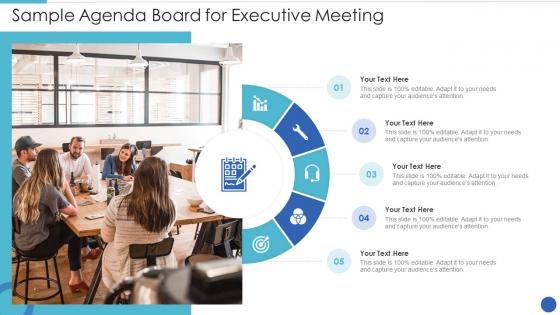
Sample agenda board for executive meeting infographic template




Try Before you Buy Download Free Sample Product
 Impress Your
 Audience
 100%
100% Editable
 Save Hours
 of Time


This Sample Agenda Board For Executive Meeting Infographic Template is a professionally drafted slide that can be deployed by managers, executives, owners, consultants, and other individuals to make their presentation more visually appealing. This layout helps the viewers gain quality information in less amount of time, thus conveying your message in the best possible manner. It reinforces the topics presented and makes their explanation more simplified, which is why this infographic template will suit any professional domain. Its vivid colors, graphics, design, etc., not only increases the aesthetics of the slideshows but also initiates immediate action. One of the advantages of downloading this PowerPoint design is that it can be reproduced as PNGs, JPGs, and PDFs that can be stored for further application. Hence, without indulging in a vigorous brainstorming session, download this layout now.
People who downloaded this PowerPoint presentation also viewed the following :
Sample agenda board for executive meeting infographic template with all 6 slides:
Use our Sample Agenda Board For Executive Meeting Infographic Template to effectively help you save your valuable time. They are readymade to fit into any presentation structure.





FAQs for Sample agenda board for executive
Honestly, start with the big stuff only executives can handle - strategic decisions, financial updates, major operational fires. Put action items from last meeting right at the top so nothing gets forgotten. Cross-departmental updates are clutch so everyone knows what other teams are doing. Definitely include time for reviewing metrics because execs are obsessed with their dashboards lol. But seriously, keep it tight - 90 minutes tops or they'll zone out on their phones. Send the agenda 48 hours ahead so people can prep instead of winging it.
Honestly, a good agenda stops your execs from just rambling forever without getting anywhere. You want to be super specific - like is this agenda item just an update, or do we actually need to decide something before leaving? Time limits help too. I always put the heavy decision-making stuff early when people aren't brain-dead yet. Nobody's making smart budget calls at 4:30pm, trust me. The whole point is getting people to show up with the right info already in hand. When they know exactly what you're trying to accomplish, meetings actually work.
Hit the big stuff first - revenue decisions, anything needing exec sign-off. People's brains work best early on. After that, tackle things where you need everyone's input. Then do updates (seriously, half your attendees probably don't need to be there for those anyway). I always use "decide, discuss, or inform" to sort everything beforehand. Time-sensitive beats nice-to-have, obviously. Group similar topics so you're not ping-ponging all over the place. Oh, and end with quick wins or good news - keeps people from leaving totally drained. Works every time.
Start reaching out to department heads and project leads about a week before - people have zero memory otherwise. I always send a simple form asking for topics, context, and how much time they need. Your exec assistant is clutch here too since they usually know about stuff that's bubbling up before anyone else does. Honestly, being proactive saves you from that awful last-minute panic when someone's like "oh wait, didn't we need to talk about the budget mess?" Much better than scrambling around trying to piece together an agenda the day before.
Oh totally - time management makes or breaks exec meetings. Block out realistic chunks for each topic and put the big stuff first. I swear I've watched leadership teams spend forever arguing about catering while million-dollar decisions get five minutes at the end. So frustrating! Build in some buffer time between topics, and definitely use start/end times. Also try a "parking lot" for random stuff that comes up - saves you from those awkward derailments. Their time costs serious money so don't waste it on fluff.
Honestly, just pick whatever platform your execs already live in - don't try to reinvent the wheel here. Notion and Microsoft Teams are solid for building agendas together so stuff doesn't fall through the cracks. The real game-changer though? You can send agendas ahead of time, see who actually looked at them, and auto-generate action items after. Way better than those endless email threads we all hate. Calendar integration is clutch too - just attach the agenda right to the meeting invite. Once they see how much time it saves, you can always add more bells and whistles later.
Definitely send that agenda 24-48 hours ahead - trust me on this one. I've watched too many meetings go sideways because execs got the agenda like 30 minutes before and just winged it. Attach whatever docs they need to review and be super clear about what needs decisions vs just updates. Oh, and number everything with time estimates so you don't go off the rails. People's inboxes are chaos though, so I always send another reminder the morning of with the agenda attached again. Honestly saves so much hassle.
Put a "Follow-Up Items" section right after your opening remarks - honestly, this is where most meetings go to die because nobody tracks this stuff. List each item with who owns it, the due date, and current status. Mark overdue items clearly and actually ask why they're delayed. Send the follow-up list to everyone 24 hours before so they can prep updates instead of fumbling around during the meeting. Trust me, keeping this stuff visible makes people way more accountable than burying it at the end where everyone's mentally checked out.
Honestly, clear objectives are what separate productive meetings from those soul-crushing "meeting about meetings" disasters. Define what you actually want from each agenda item - are you making a decision? Just sharing updates? Getting input? Without that clarity, you'll end up in those endless circular conversations that make everyone want to scream. Executives are busy people (obviously) and they can tell when you're just winging it. Ask yourself before adding anything: "What exactly are we trying to accomplish here?" Trust me, your meetings will actually get stuff done instead of just... existing.
Honestly, flip the usual approach - start with strategy when everyone's brain actually works, then do ops stuff after. I'd go like 70/30 split there. The operational updates will just drain everyone if you lead with those, and then your big decisions suffer. Have people send written summaries beforehand for the routine stuff, then only talk about problems that actually need the group's input. Maybe do deep strategy sessions quarterly and lighter check-ins monthly? Oh, and definitely timebox everything - seriously, get someone to be the bad guy who cuts people off. Otherwise you'll spend forty minutes on expense reports or whatever.
Oh man, the worst thing people do is jam like 10 topics into one meeting. Executives will literally zone out. Stick to maybe 3-5 things max and give time estimates upfront. Also don't save your biggest item for the end - I learned that one the hard way lol. Be super specific too, not just "marketing update" but what you actually need from them. Send it out a day or two before so people aren't walking in blind. Honestly though? Lead with your most important thing when everyone's still paying attention.
Definitely keep your agenda flexible, but don't let it become a free-for-all. Make people run new items by you or your assistant first - seriously, this saves so much headache. I've watched meetings completely fall apart when everyone starts adding their "super quick" things. If something urgent pops up, just ask for context and timing. You can always push less important stuff to next time. The trick is staying in control without being totally rigid about genuine emergencies. Trust me, people will respect the structure once they see meetings actually end on time!
Honestly, I just track a few simple things to see if my agenda's actually working. Meeting duration is huge - if we're constantly running over, the agenda was probably too ambitious or poorly planned. Decision completion rate matters too, like are we actually finishing what we set out to discuss? Also worth checking: do people complete their follow-ups, and are we rehashing the same decisions every meeting? That's super annoying when it happens. I'll sometimes survey people about whether the agenda was clear, but don't overthink it. Pick maybe 2-3 of these metrics and track them for a month. You'll spot patterns pretty quickly once you start paying attention.
Honestly, agendas are game-changers for this. Write down who's doing what and when it's due - boom, instant accountability. People can't pretend they forgot when their name is literally next to a task. I've seen teams completely turn around just by doing this one thing. Follow up with emails referencing those commitments, and suddenly everyone's actually finishing stuff. The trick though? You gotta send out that agenda with assignments within 24 hours, or people's brains just... reset. It's wild how fast we forget what we agreed to do in meetings.
So basically, look at your last meeting notes and grab anything that still needs attention. Follow up on those action items people committed to. Bring back topics that got cut short - you know how it is, time always runs out on the good stuff. This way your team actually feels heard instead of just ignored. Plus you won't keep rehashing the same issues every single time because nothing ever gets resolved. It builds momentum too since you're continuing conversations rather than starting over from zero each meeting. Honestly, it's such a simple thing but makes a huge difference.
-
Great designs, really helpful.
-
Great product with effective design. Helped a lot in our corporate presentations. Easy to edit and stunning visuals.