

Sap center of excellence ppt ideas




Try Before you Buy Download Free Sample Product
 Impress Your
 Audience
 100%
100% Editable
 Save Hours
 of Time


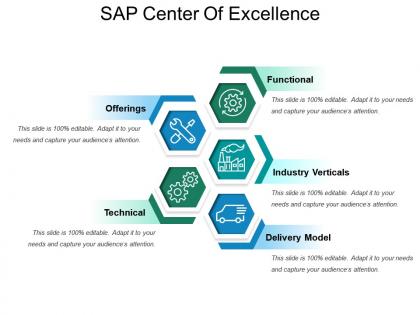
Here is our Sap center of excellence PPT ideas design. Companies that effectively run SAP continue to be focused on utilizing SAP to drive business value beyond their actual implementation goals. The center of excellence PowerPoint presentation is one of the best practices to drive and achieve continued business value. This business intelligent PPT helps your audience understand to improve your organization’s value focus and establish the roles and responsibilities, processes and tools. Project managers, business professionals, technology specialists use this PPT design to highlight the center of excellence roles and responsibilities to their team members. You can define SAP center of excellence structure with this powerful PPT design. Design is useful for software testing, evaluate competency, center of excellence organizational structure for your business. The design structure is powerful and perfect for your business requirements. So, without any wait, download this Sap center of excellence PPT ideas presentation template and use in your upcoming presentations. Earn a favourable judgement with our Sap Center Of Excellence Ppt Ideas. Convince the board to allocate funds.
People who downloaded this PowerPoint presentation also viewed the following :
Sap center of excellence ppt ideas with all 5 slides:
Assess the applicability of the concept with our Sap Center Of Excellence Ppt Ideas. It helps analyze the interpretation.


FAQs for Sap center of
So basically, the CoE is like your company's SAP command center. They make sure everyone's using it the same way instead of each department doing whatever they want - which trust me, gets messy fast. They handle the boring stuff like upgrades and training, plus they're the ones who decide if your team's crazy customization idea is actually worth doing. Short version: got SAP problems? These are your people. Just don't wait until you're already in crisis mode to call them.
So basically you get one team that becomes your SAP experts instead of everyone figuring stuff out separately. They standardize how things work and share knowledge across departments. Really cuts down on wasted time and duplicate efforts. These people become your internal consultants - they'll catch improvements others miss and handle all the governance headaches. Plus training and keeping up with new SAP features (honestly there's always something new). Your ROI improves because you're not constantly reinventing processes. I'd start by finding whoever's already good with SAP in your company and make it official.
Start with your executive sponsor - you need them for budget and political backing. Then grab business process owners from Finance, HR, Supply Chain, whoever knows where things are broken. IT leadership and technical architects are must-haves too (learned this the hard way on my last project). Change management people help, plus those super users who actually get people to adopt new stuff. Map out who controls budget, processes, and people first. Keep the group small enough to move fast but make sure you've got all the major players covered. Honestly, getting the right people upfront saves so much headache later.
Honestly, think of a Center of Excellence as your SAP troubleshooting headquarters. Your team gets together there to figure out what's working, what sucks, and how to fix the mess. Best practices get shared, processes become less chaotic across departments - you know how it is. Innovation happens because people actually have time to test new SAP features without breaking production (been there). They can pilot cool tech and build custom stuff for your weird business quirks. Oh, and someone's finally keeping track of SAP's roadmap instead of everyone just winging it. My advice? Write down everything that's currently driving you nuts. That's your CoE's starting point.
Honestly, I'd focus on mixing technical stuff with business impact. Track your system uptime and how fast people adopt new features - that's the basics. But the real money metrics are where you'll prove value: cost savings from streamlining processes, faster deployment times, actual ROI numbers. User satisfaction scores matter way more than people think though. I've seen perfect technical setups crash and burn because users hated the experience. Training completion rates tell a similar story. My advice? Pick 3-4 metrics that actually align with what your bosses care about. Don't get caught up measuring every little thing - you'll just drown in data.
honestly, get your CoE leaders into those real strategy meetings where stuff actually gets decided - not just the dog and pony quarterly reviews. I've watched so many centers turn into tech bubbles that completely miss what the business actually needs. Every project should tie back to specific business metrics, and review that connection monthly (sounds boring but it works). Oh and rotate different business people through your governance board regularly. Fresh eyes catch things you'll miss when you're too deep in it. The whole point is staying connected to what matters right now, not what seemed important six months ago.
Focus on three key areas: technical training, process stuff, and change management skills. Get your team the right SAP certifications based on their roles - functional folks need totally different training than developers. Set up workshops covering best practices, system admin, integrations. But honestly? The soft skills matter just as much since your CoE will be selling new processes to everyone. I'd pair up senior SAP people with newer team members for mentoring. Mix formal courses with hands-on labs and real project work. Build both technical chops and business sense so they can actually get people to adopt what you're rolling out.
So an SAP Center of Excellence is basically your company's go-to team for anything SAP-related. They're like the internal experts who've already figured out what works and what doesn't. These guys create templates and best practices so each department doesn't have to start from scratch - honestly saves so much time and headaches. They'll have governance rules too, which sounds boring but trust me, it prevents teams from going rogue and breaking things. My advice? Hit them up early when you're planning any SAP project. They've probably seen your exact problem before and can steer you away from common pitfalls.
Honestly, the hardest part is just getting people to care. Different departments get super protective of how they've always done things - it's like asking someone to change their coffee order after 10 years. Standardizing anything across teams becomes this whole political thing. Plus everyone expects dedicated support from your CoE but won't spare their good people to actually help build it. Resource fights get ugly fast. Start with some easy wins first though. Once you've got a couple success stories, suddenly people listen. Then you can slowly take on bigger stuff without as much pushback.
So your SAP CoE is basically like having a solid change management team built right in. They standardize everything and create training that actually works across different teams. What I really like about them is how they handle user adoption - they've got communication plans and will walk people through transitions instead of just throwing them into the deep end. They keep all the best practices and knowledge in one place too, which honestly saves so much time later. Oh, and they're great at spotting potential issues before they blow up. Definitely get them involved early on any big SAP project - trust me on this one.
Start with Solution Manager for lifecycle management - that's your bread and butter. SAP Enterprise Architecture Designer handles system landscapes, while Cloud ALM works great for cloud stuff. Honestly, automation tools will save you so much headache on repetitive tasks. Analytics Cloud gives solid performance insights, and Integration Suite connects everything together nicely. You'll definitely need version control and DevOps pipelines too. Oh, and check what licenses you already have first - might save some budget there. Focus on the biggest gaps in your toolkit rather than trying to fix everything at once.
Your CoE needs to stop hiding in the tech corner and actually work with business teams. Finance, HR, operations - they'll tell you what problems really need solving instead of you guessing. Way better SAP solutions come from understanding actual workflows, not just making something technically perfect. Plus those departments become your biggest fans when it's time to fight for budget (trust me on this one). Regular workshops are gold - just get everyone in a room and let them complain about their pain points. That feedback loop is everything. Business users feel heard, you build stuff they'll actually use.
Honestly, your SAP CoE is dead in the water if people aren't sharing what they know. I've watched teams completely bomb because everyone kept their knowledge locked up like some secret recipe. The good ones? They make sharing part of the culture - weekly sessions where people talk through wins AND failures, proper documentation (yeah I know, boring but necessary), and they actually tie it to performance reviews. Otherwise you're just paying a bunch of smart people to solve the same problems over and over. Set up those regular forums where teams can present stuff. Trust me, once people start seeing the value, it becomes second nature.
Honestly, start by figuring out where you're bottlenecked right now - that's your biggest priority. Don't feel like you need a team of full-time SAP wizards either. Mix in contractors and pull people from other departments when projects ramp up. Standardize everything you can and build templates you can actually reuse. I can't tell you how many teams I've seen rebuild the same processes over and over - it's maddening. Train your current people instead of constantly hiring from outside too. Way cheaper and they already know your business. The governance stuff matters more than you'd think. Set up frameworks that won't break when things get crazy busy.
So basically, your SAP CoE becomes this innovation hub where teams can mess around with new tech without getting in trouble if stuff doesn't work out. Different departments start collaborating naturally on SAP projects - it's pretty cool to watch actually. You'll want to set up some kind of innovation lab for prototyping. The sandbox environments are where the magic happens, honestly. Teams build up real expertise fast and can pivot when SAP drops new features or the market shifts. Oh, and definitely do regular pitch sessions where people can propose SAP improvements and actually get funding to test their ideas. Works way better than you'd think.
-
Enough space for editing and adding your own content.
-
Excellent work done on template design and graphics.
-
The content is very helpful from business point of view.
-
Use of icon with content is very relateable, informative and appealing.