


Sensor Networks IT Powerpoint Presentation Slides




Try Before you Buy Download Free Sample Product
 Impress Your
 Audience
 100%
100% Editable
 Save Hours
 of Time


Grab our insightfully designed Sensor Networks IT template, which provides an overview of conventional wireless sensor networks, the challenges they face, and how cognitive radio technology can overcome these challenges. It also covers the global market size and growth factors for cognitive radio technology. Our Sensor Networks deck includes an introduction to cognitive radio, its characteristics, types, and advantages, as well as the architecture, functional blocks, and spectrum management of cognitive radio. It also explains spectrum sensing techniques, classification, signal processing, and cooperative sensing techniques. Furthermore, our Cognitive Sensors PPT explores various cognitive radio access paradigms and models, such as dynamic spectrum mental, interference temperature cognitive, and cognitive cooperation models. Moreover, it discusses the integration of cognitive radio with wireless sensor networks and applications in different areas. Lastly, our Cognitive Wireless Sensor Networks module offers a consolidated approach to implementing cognitive radio technology, including a budget, timeline, roadmap, and dashboard for tracking spectrum consumption. The template is fully customizable and compatible with Google Slides.
People who downloaded this PowerPoint presentation also viewed the following :
Content of this Powerpoint Presentation
Slide 1: This slide introduces Sensor Networks (IT). Commence by stating Your Company Name.
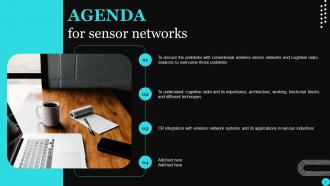
Slide 2: This slide depicts the Agenda of the presentation.
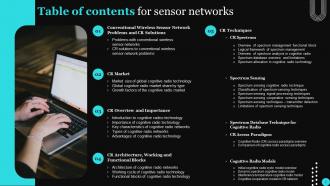
Slide 3: This slide incorporates the Table of contents.
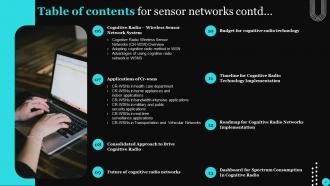
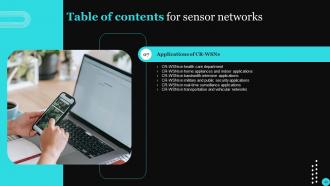
Slide 4: This is yet another slide continuing the Table of contents.
Slide 5: This slide shows the Title for the Topics to be covered further.
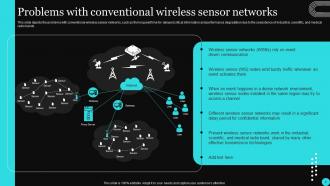
Slide 6: This slide depicts the problems with conventional wireless sensor networks.
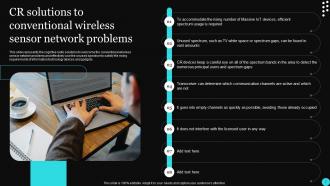
Slide 7: This slide represents the CR solutions to conventional wireless sensor network problems.
Slide 8: This slide mentions the Heading for the Contents to be covered in the following template.
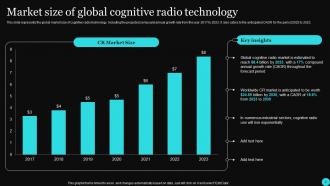
Slide 9: This slide reveals the Market size of global cognitive radio technology.
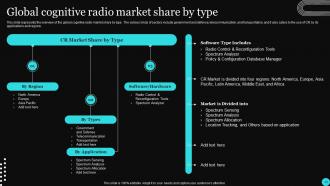
Slide 10: This slide highlights the Global cognitive radio market share by type.
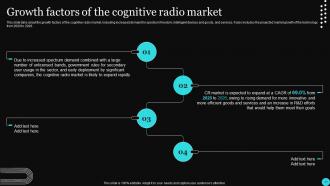
Slide 11: This slide talks about the growth factors of the cognitive radio market.
Slide 12: This slide mentions the Title for the Ideas to be discussed further.
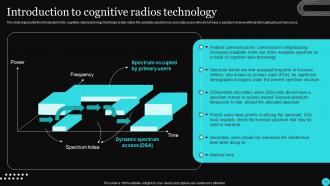
Slide 13: This slide represents the introduction to the cognitive radio technology.
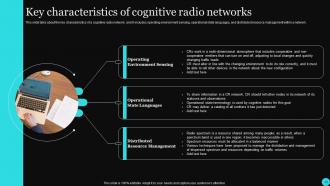
Slide 14: This slide states the Key characteristics of cognitive radio networks.
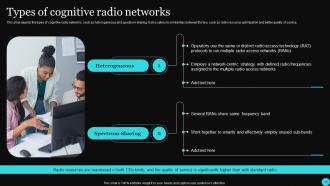
Slide 15: This slide depicts the types of cognitive radio networks, such as heterogeneous and spectrum-sharing.
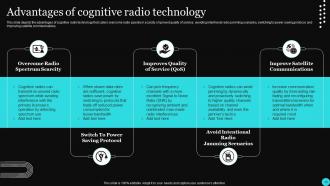
Slide 16: This slide reveals the Advantages of cognitive radio technology.
Slide 17: This slide indicates the Hedaing for the Ideas to be covered next.
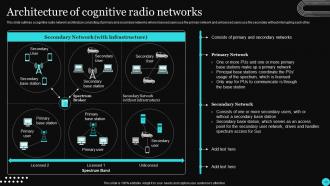
Slide 18: This slide outlines a cognitive radio network architecture.
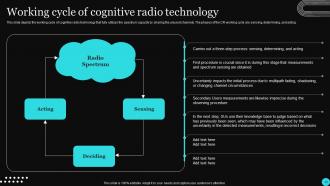
Slide 19: This slide depicts the working cycle of cognitive radio technology.
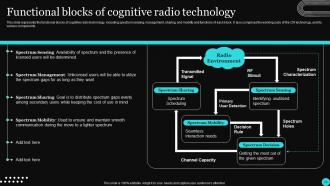
Slide 20: This slide represents the functional blocks of cognitive radio technology.
Slide 21: This slide shows the Title for the Contents to be discussed further.
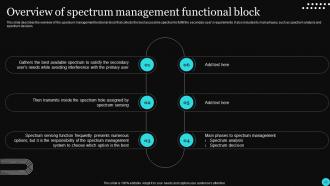
Slide 22: This slide describes the overview of the spectrum management functional block.
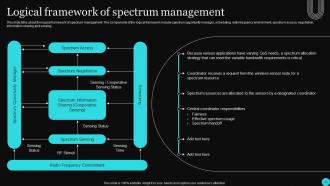
Slide 23: This slide talks about the logical framework of spectrum management.
Slide 24: This slide depicts the overview of spectrum analysis in cognitive radio technology.
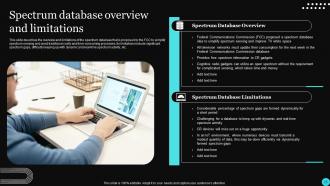
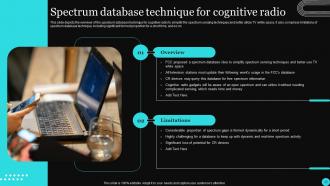
Slide 25: This slide describes the Spectrum database overview and limitations.
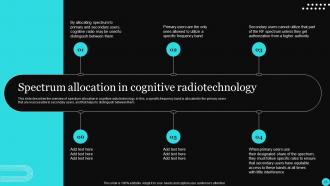
Slide 26: This slide displays the overview of spectrum allocation in cognitive radio technology.
Slide 27: This slide includes the Heading for the Topics to be covered in the following template.
Slide 28: This slide represents the Spectrum sensing cognitive radio technique.
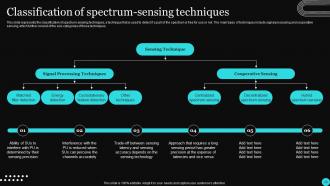
Slide 29: This slide highlights the Classification of spectrum-sensing techniques.
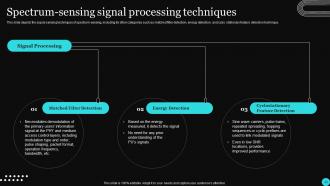
Slide 30: This slide depicts the signal sensing techniques of spectrum-sensing.
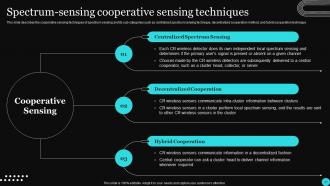
Slide 31: This slide describes the cooperative sensing techniques of spectrum sensing and its sub-categories.
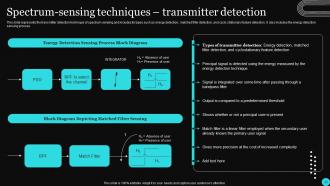
Slide 32: This slide represents the transmitter detection technique of spectrum-sensing.
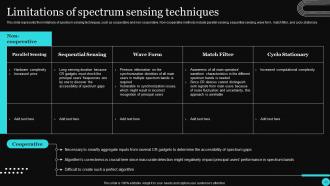
Slide 33: This slide shows the limitations of spectrum sensing techniques, such as cooperative and non-cooperative.
Slide 34: This slide displays the Title for the Topics to be discussed further.
Slide 35: This slide depicts the overview of the spectrum database technique for cognitive radio.
Slide 36: This slide reveals the Heading for the Contents to be covered in the following template.
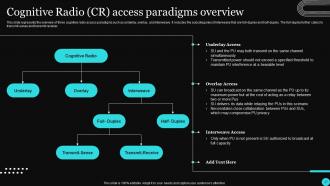
Slide 37: This slide represents the overview of three cognitive radio access paradigms.
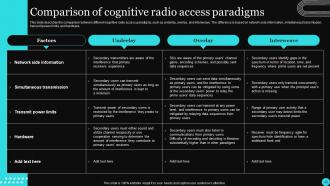
Slide 38: This slide describes the comparison between different cognitive radio access paradigms.
Slide 39: This slide presents the Title for the Ideas to be discussed next.
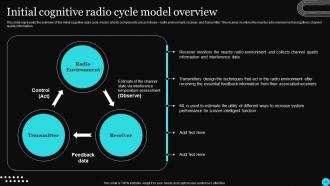
Slide 40: This slide shows the overview of the initial cognitive radio cycle model.
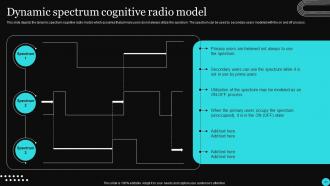
Slide 41: This slide depicts the dynamic spectrum cognitive radio model.
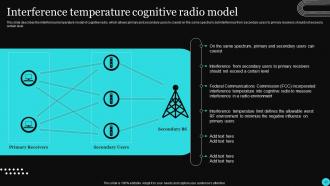
Slide 42: This slide describes the interference temperature model of cognitive radio.
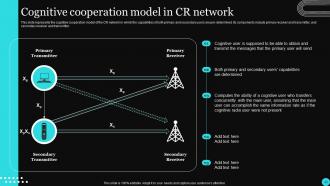
Slide 43: This slide showcases the Cognitive cooperation model in CR network.
Slide 44: This slide contains the Heading for the Ideas to be covered further.
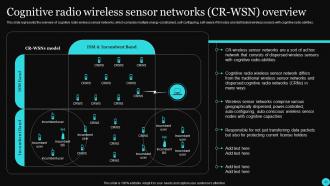
Slide 45: This slide represents the overview of cognitive radio wireless sensor networks.
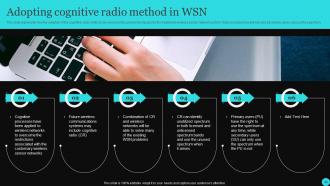
Slide 46: This slide deals with Adopting cognitive radio method in WSN.
Slide 48: This slide displays the Title for the Contents to be discussed in the upcoming template.
Slide 49: This slide shows how the application of CR-WSNs in the healthcare department is advancing the medical field.
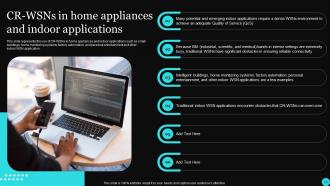
Slide 50: This slide highlights the CR-WSNs in home appliances and indoor applications.
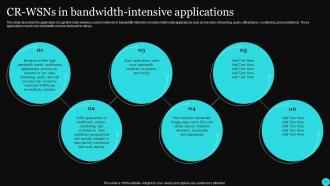
Slide 51: This slide describes the application of CR-WSNs in bandwidth-intensive applications.
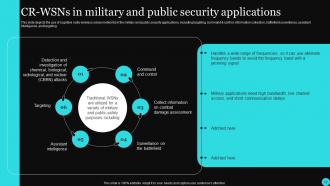
Slide 52: This slide depicts the use of cognitive radio wireless sensor networks in the military and public security applications.
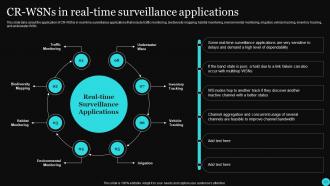
Slide 53: This slide talks about the application of CR-WSNs in real-time surveillance applications.
Slide 54: This slide portrays the CR-WSNs in transportation and vehicular networks.
Slide 55: This slide includes the Heading for the Topics to be covered next.
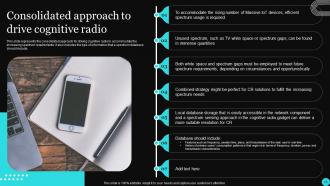
Slide 56: This slide represents the consolidated approach for driving cognitive radio to accommodate the increasing spectrum requirements.
Slide 57: This slide indicates the Title for the Ideas to be discussed further.
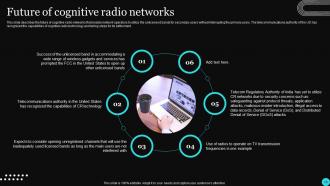
Slide 58: This slide describes the future of cognitive radio networks.
Slide 59: This slide indicates the Hedaing for the Ideas to be covered next.
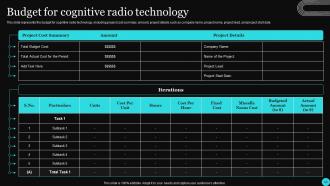
Slide 60: This slide reveals the budget for cognitive radio technology.
Slide 61: This slide presents the Title for the Contents to be coveerd in the following template.
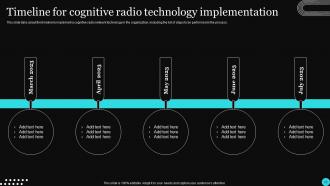
Slide 62: This slide talks about the timeline to implement a cognitive radio network technology in the organization.
Slide 63: This slide highlights the Heading for the Topics to be discussed next.
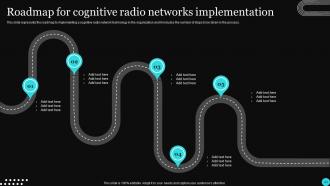
Slide 64: This slide represents the roadmap to implementing a cognitive radio network technology in the organization.
Slide 65: This slide reveals the Title for the Contents to be coveerd in the following template.
Slide 66: This slide depicts the dashboard for spectrum consumption in cognitive radio.
Slide 67: This is the Icons slide containing all the Icons used in the plan.
Slide 68: This slide is used for elucidating some Additional information.
Slide 69: This is Our team slide. State your team-related information here.
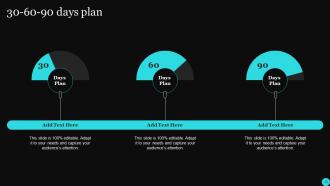
Slide 70: This is the 30-60-90 days plan slide for effctive planning.
Slide 71: This is the Quotes slide for motivation.
Slide 72: This slide showcases the SWOT analysis.
Slide 73: This slide reveals the Company's Location.
Slide 74: This is the Venn diagram slide.
Slide 75: This slide contains the Post it notes for reminders and deadlines.
Slide 76: This is the Thank You slide for acknowledgement.
Sensor Networks IT Powerpoint Presentation Slides with all 81 slides:
Use our Sensor Networks IT Powerpoint Presentation Slides to effectively help you save your valuable time. They are readymade to fit into any presentation structure.























FAQs for Sensor Networks IT
So basically you've got three pieces to work with. First are the actual sensor nodes - they're out there collecting all your data. Then there's the communication stuff (wireless or wired, whatever works for your situation). Finally you need somewhere central to crunch all that info. The nodes chat with each other and pass data along - kinda like telephone but actually works lol. They shoot everything to gateways or base stations, which then push it up to your main server or cloud thing. Just make sure you've got decent coverage and backup routes. That way if one node craps out, the others can handle it no problem.
Motion sensors are basically your early warning system - they catch stuff happening before anything else does. But here's the thing: combine them with temperature and humidity data, and suddenly you're getting the full picture instead of just fragments. Temperature drops + motion? That's different from heat spikes + movement, right? Each sensor tells part of the story, but together they give you context that actually means something. Your setup stops just reacting to individual triggers and starts predicting patterns. I'd map out what each sensor type is telling you first, then figure out how those data points connect to solve whatever you're actually trying to fix.
So you've got four main options: Zigbee, WiFi, Bluetooth/BLE, and LoRaWAN. WiFi's the obvious choice if you need high bandwidth and already have the infrastructure, but it'll drain batteries like crazy. Zigbee does mesh networks really well with low power - solid middle ground honestly. For short-range stuff, Bluetooth/BLE works great with phones but coverage is pretty meh. LoRaWAN's your long-distance champion with crazy low power consumption, though data speeds are glacial. Really depends what you're prioritizing - range, battery life, or data throughput.
Sleep mode is your best friend here - can literally cut power by 90%. Radio transmission kills batteries faster than anything else, so bundle your data and send less frequently. Pick low-power components from day one, it'll save you headaches later. Solar panels work great if you're outdoors. Honestly though? The game-changer is ditching continuous operation. Set up smart wake schedules based on when you actually need readings. Most sensors don't need to be chattering 24/7. Also try data compression - every bit you don't transmit extends runtime.
Honestly, sensor networks are a nightmare security-wise. Your nodes are just sitting out there exposed where anyone can mess with them. They've got terrible processing power for decent encryption too. Wireless signals? Yeah, those get intercepted pretty easily. I'd start with lightweight crypto protocols since these devices can barely handle regular encryption anyway. Set up proper key management and maybe some intrusion detection if you can swing it. Oh, and definitely encrypt your most critical stuff first - don't try to do everything at once. Network segmentation helps too, though that's more of a nice-to-have.
Weather will absolutely wreck your sensor setup if you're not careful. Heat kills batteries fast, and humidity corrodes everything. I learned this the hard way on my first outdoor project - lost half my nodes to a surprise cold snap because I cheaped out on weatherproofing. Wind shakes things loose, dust clogs sensors, and don't even get me started on electromagnetic interference from power lines. You'll want ruggedized gear rated for whatever conditions you're expecting. Deploy extras as backups and plan maintenance schedules around seasons.
So sensor networks are like the foundation that feeds data into IoT systems. You've got all these sensors collecting info, then gateways bundle it up and send it to cloud platforms through WiFi, cellular, or LoRaWAN. From there you can do remote monitoring, predictive stuff, automated responses - works for smart buildings, industrial gear, whatever. Honestly the protocols are pretty standardized now so it's not as messy as it used to be. Just figure out what data you actually need first and how often you'll pull it. That'll help you pick the right connectivity option based on power limits and range requirements.
Dude, sensor networks in cities are actually pretty crazy right now. Air quality sensors can tell you which blocks to avoid when you're running - super helpful for my allergies tbh. There's smart parking that leads you straight to open spots instead of driving in circles like an idiot. Cities are also tracking flood levels in storm drains and monitoring noise around schools. Oh, and sensors that alert crews when trash bins are full. What's neat is how planners can see everything happening in real-time across the whole city. If you're pitching this stuff, just pick one specific problem and show how sensors would fix it.
So basically you'll want to do the data fusion at intermediate nodes instead of dumping everything on the base station. Radio transmission absolutely kills your battery - like seriously, it's the biggest power drain. Try averaging or median filtering first, maybe weight things based on which sensors you trust more. Cluster heads work pretty well too - they grab data from nearby sensors, crunch the numbers, then send summaries up the chain. Honestly the tricky part is balancing accuracy with not burning through power too fast. I'd start simple with basic averaging and see how that performs for your setup.
So basically, edge computing does all the quick stuff right at your sensors - cuts way down on lag and saves bandwidth. It's like having a bouncer at the door before data floods your system. Then the cloud handles everything else: storing tons of data, running complex analytics, machine learning across your whole setup. Honestly, it's a pretty sweet combo. You get instant responses for urgent stuff locally, but you've still got that massive cloud horsepower for the deep-dive analysis. The real challenge? Deciding what needs immediate processing vs what can sit in a queue for batch runs later.
ML works really well for cleaning up sensor data - you can filter noise, spot weird readings, and fill in gaps when sensors crap out. Neural networks and random forests are solid for catching patterns that basic filters miss. Honestly the improvement is night and day once you get it dialed in. Clustering helps group sensors that behave similarly, and time-series stuff predicts missing points. Just make sure you train on good historical data first. I'd start simple with outlier detection, then get fancy with the predictive models later.
Honestly, those industrial sensor setups aren't cheap - you're looking at $50-500 per node, which adds up fast. Six figures for full coverage is pretty normal. Don't forget about networking gear, data systems, and maintenance contracts on top of hardware costs. Installation will probably double what you spend (found that out the fun way). The good news? Most places see payback in 2-3 years from maintenance savings alone. My advice - just start small with your most critical equipment first. Prove it works there, then expand. Way less risky than going all-in from day one.
Honestly, the regulatory stuff is gonna be your biggest headache upfront. Privacy laws like GDPR are no joke, plus you'll need permits for any installations. People get weird about being monitored - even for legit things like traffic data or air quality sensors. I'd suggest checking local rules first before you get too far into planning. Keep data collection minimal and be super transparent about what you're doing and why it benefits everyone. Oh, and definitely loop in community groups early - they can make or break your project. The ethics part is tricky but doable if you're upfront about everything.
So there's some pretty cool stuff happening with sensor networks right now. AI/ML integration is getting massive - basically sensors can think for themselves now instead of just dumping data to the cloud. Edge computing is what's making this possible. 5G and IoT are exploding too, which means we're gonna see way more connected devices everywhere. Energy harvesting is improving, so less battery changes (thank god). Oh, and everyone's pushing for greener sensors now. Honestly? If you're planning anything, learn edge AI frameworks first. That's where the money is.
Definitely try simulation tools before you blow your budget on hardware - NS-3, OMNET++, or COOJA are solid options. Test different topologies and routing protocols virtually first. Way smarter than buying hundreds of sensors only to discover your design is trash! Battery life predictions are surprisingly accurate in these sims too. I'd start simple with just your core functionality, then add complexity until it mirrors your real setup. Oh, and don't skip testing network failures - that's where most designs fall apart. You'll save yourself major headaches by validating coverage areas and protocols upfront.
-
You can rely on SlideTeam whenever you run out of designs for your presentation. Thank you so much SlideTeam!
-
The slides come with appealing color schemes and relevant content that helped me deliver a stunning presentation without any hassle!