

Cybernetics Powerpoint Presentation Slides





Try Before you Buy Download Free Sample Product
 Impress Your
 Audience
 100%
100% Editable
 Save Hours
 of Time


Explore the interdisciplinary field of cybernetics with our comprehensive Cybernetics PowerPoint presentation. Coined by Norbert Wiener in 1948, cybernetics is a study of the interaction between technology, biology, and society. This Information theory PPT provides an overview of cybernetics, delving into its core concepts. Discover the power of feedback, where systems receive information about their performance and use it to make adjustments and improvements, benefiting various fields like economics, psychology, and management. Dive into the study of complex systems, including ecosystems and social networks, to grasp how different elements interact and give rise to emergent properties and behaviors. The Control systems presentation also includes a market study and growth analysis of cybernetics, offering valuable insights into its trajectory. Additionally, explore the realm of control systems and the role of artificial intelligence AI in creating intelligent machines capable of human-level tasks. Download this 100 percent editable and customizable template, compatible with Google Slides, to embark on an enlightening journey through the fascinating world of cybernetics.
People who downloaded this PowerPoint presentation also viewed the following :
Content of this Powerpoint Presentation
Slide 1: This slide introduces Cybernetics. Commence by stating Your company name.
Slide 2: This slide depicts the Agenda of the presentation.
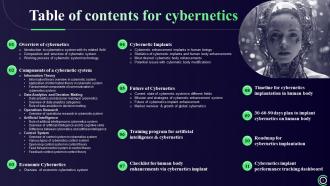
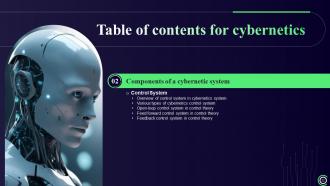
Slide 3: This slide includes the Table of contents for cybernetics.
Slide 4: This slide highlights the Title for the Topics to be discussed further.
Slide 5: This slide reveals the Introduction to cybernetics system with its related field.
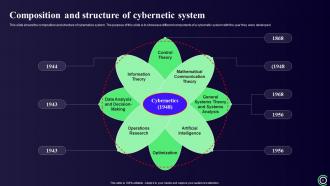
Slide 6: This slide presents the Composition and structure of cybernetic system.
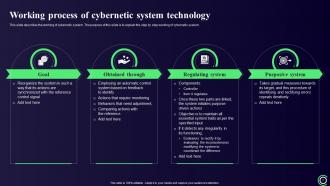
Slide 7: This slide describes the working of cybernetic system.
Slide 8: This slide states the Heading for the Contents to be covered in the upcoming template.
Slide 9: This slide shows the Information theory overview in cybernetic system.
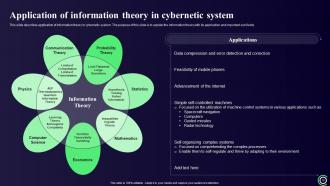
Slide 10: This slide shows the Application of information theory in cybernetic system.
Slide 11: This slide portrays the Fundamental components of communication in cybernetics system.
Slide 12: This slide includes the Title for the Ideas to be discussed further.
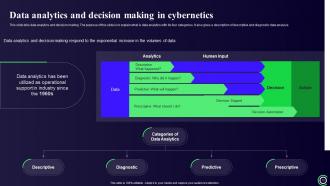
Slide 13: This slide tells data analytics and decision making.
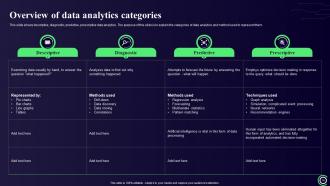
Slide 14: This slide shows descriptive, diagnostic, predictive, prescriptive data analytics.
Slide 15: This slide explains data analytics for decision making.
Slide 16: This slide exhibits the Heading for the Ideas to be covered in the upocming template.
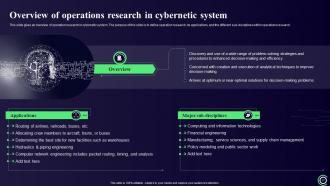
Slide 17: This slide reveals the Overview of operations research in cybernetic system.
Slide 18: This slide contains the Title for the Contents to be discussed further.
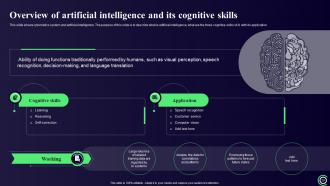
Slide 19: This slide highlights the role of artificial intelligence in cybernetic system.
Slide 20: This slide shows cybernetics system and artificial intelligence.
Slide 21: This slide explains the difference between cybernetics and artificial intelligence.
Slide 22: This slide presents the Heading for the Topics to be covered in the upocming template.
Slide 23: This slide gives an overview of control system in cybernetics.
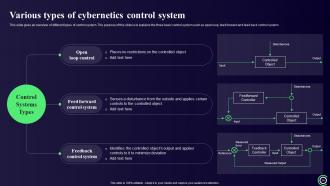
Slide 24: This slide states the Various types of cybernetics control system.
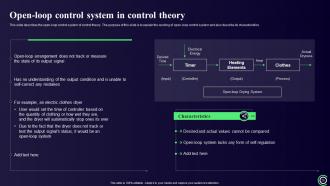
Slide 25: This slide describes the open-loop control system of control theory.
Slide 26: This slide shows feed forward control system in control theory.
Slide 27: This slide displays the Feedback control system in control theory.
Slide 28: This slide includes the Title for the Topics to be discussed next.
Slide 29: This slide portrays the Overview of economic cybernetics system.
Slide 30: This slide mentions the Heading for the Contents to be covered in the upcoming template.
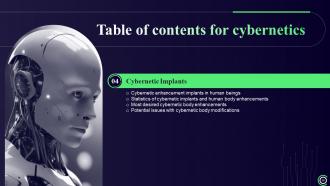
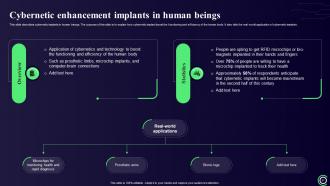
Slide 31: This slide describes cybernetic implants in human beings.
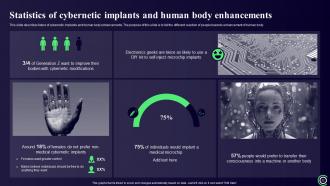
Slide 32: This slide presents future of cybernetic implants and human body enhancements.
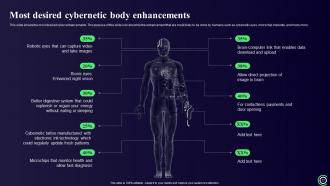
Slide 33: This slide exhibits the Most desired cybernetic body enhancements.
Slide 34: This slide talks about Potential issues with cybernetic body modifications.
Slide 35: This slide depicts the Title for the Ideas to be discussed next.
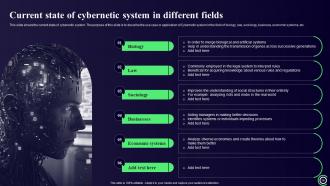
Slide 36: This slide shows the current state of cybernetic system.
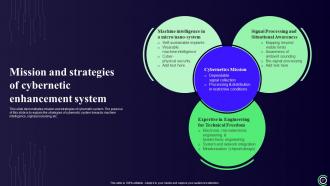
Slide 37: This slide demonstrates mission and strategies of cybernetic system.
Slide 38: This sldie outlines the Future of cybernetics implant enhancement.
Slide 39: This slide gives an idea of the future growth of the market of cybernetics.
Slide 40: This slide displays the Heading for the Ideas to be covered in the upocming template.
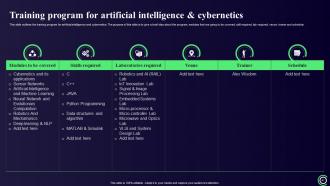
Slide 41: This slide outlines the training program for artificial intelligence and cybernetics.
Slide 42: This slide represents the Title for the Contents to be discussed further.
Slide 43: This slide explains the checklist for human body enhancements.
Slide 44: This slide contains the Heading for the Topics to be covered in the next template.
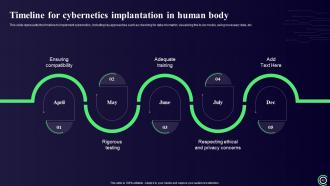
Slide 45: This slide presents the timeline to Implement cybernetics.
Slide 46: This slide reveals the Title for the Topics to be discussed further.
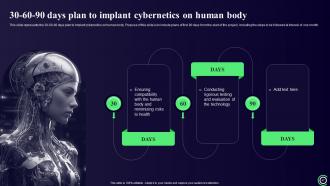
Slide 47: This is the 30-60-90 days plan slide for effective planning.
Slide 48: This slide displays the Heading for the Contents to be covered in the upcoming template.
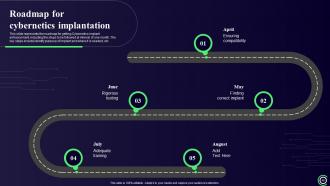
Slide 49: This slide represents the roadmap for getting Cybernetics implant enhancement.
Slide 50: This slide states the Title for the Ideas to be covered next.
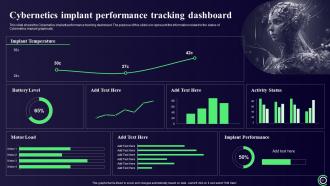
Slide 51: This slide shows the Cybernetics implant performance tracking dashboard.
Slide 52: This is the Icons slide containing all the Icons used in the plan.
Slide 53: This slide is used for depicting some Additional information
Slide 54: This slide portrays information related to the team-members.
Slide 55: This is the Idea generation slide for encouraging fresh ideas.
Slide 56: This slide contains the Post it notes for reminders and deadlines.
Slide 57: This is the Puzzle slide with related imagery.
Slide 58: This is the Venn diagram slide.
Slide 59: This is the Thank You slide for acknowledgement.
Cybernetics Powerpoint Presentation Slides with all 64 slides:
Use our Cybernetics Powerpoint Presentation Slides to effectively help you save your valuable time. They are readymade to fit into any presentation structure.




























FAQs for Cybernetics
Cybernetics is basically about feedback loops, communication, and control in systems. Your thermostat does this - it adjusts temperature based on what it senses. Companies do it too when they shift strategies after seeing market reactions. Feedback is where the magic happens since that's how systems learn and self-regulate. When I'm looking at any system, I always map out the feedback first. That's honestly the best way to spot where things might break or where you can make improvements. Works for everything from supply chains to software design - just trace how information flows between the parts.
So cybernetics basically treats living things like feedback systems - you know, instead of just studying parts separately. Your body's temperature control? That's literally just a biological thermostat doing its thing. Pretty cool how that works. What I find crazy is how this shows you that organisms are constantly adjusting based on info from their environment. It's all communication and control mechanisms. You start noticing these same patterns in both living systems and stuff we build. Honestly, try sketching out whatever biological process you're working on like it's a control system. You'll probably spot regulatory stuff you missed before.
So feedback is like the nervous system for any cybernetic setup - it tells the system what's actually happening so it can adjust. Your system spits out results, then feedback loops carry that info back to compare against what you wanted. Classic example is a thermostat constantly checking temp and tweaking the heat. Without it? You're flying blind with zero ability to self-correct. The cool part is negative feedback creates stability while positive feedback drives change. Oh and make sure your feedback is fast and accurate - I've seen systems tank because the feedback was too slow or crappy.
So cybernetics is changing how we approach AI - it's all about feedback loops and self-regulation. Think of your thermostat constantly checking the temp and adjusting itself. Modern AI works similarly now. Instead of just following code, these systems watch their own performance and adapt on the fly. Pretty crazy stuff honestly. We're moving away from rigid programming toward true autonomous learning. Oh and if you're doing any AI work yourself, definitely try building in some feedback mechanisms - makes a huge difference in how well things perform.
So cybernetics is basically this framework for looking at how social systems work - think feedback loops, how info flows around, all that stuff. You map out how different parts of your organization or whatever actually connect and mess with each other. Like when one policy change totally screws up three other departments (been there lol). Once you start noticing these patterns, you'll see them literally everywhere. The big thing to get is that groups aren't just random people thrown together - they're these weird dynamic networks that do their own thing. Start by figuring out the main feedback loops first. That's where you can actually make stuff happen.
So info theory is like the math backbone that makes cybernetics actually work. Cybernetics is all about communication and control between system parts, right? Info theory gives you the tools to measure and optimize those channels - stuff like signal quality, noise, bit rates. Shannon basically invented this whole field and honestly his work was genius. You'll want to learn about entropy too if you're getting into this. Oh and channel capacity - that's huge for understanding how cybernetic systems process control info. It's way more interesting than it sounds once you dig into it.
So homeostasis is basically how systems keep themselves balanced through feedback loops. Your body does this constantly - sweating when hot, shivering when cold. Pretty clever if you ask me. Same concept works for designing anything really - thermostats, algorithms, even how companies run. You just need to figure out what should stay stable, then build in ways to detect problems and fix them automatically. Oh, and this applies to troubleshooting too. Just ask yourself: what's the target state here, and where are my feedback mechanisms? It's cybernetic thinking at its core.
Dude, cybernetics is everywhere now. Healthcare's probably the coolest - prosthetics that read your brain signals, interfaces helping paralyzed people control computers. Surgery robots too. Manufacturing has these smart factories that basically fix themselves when something goes wrong. Cars are obvious (Tesla's autopilot stuff). Finance uses it for trading algorithms and catching fraud. Oh, and farming - they've got automated crop monitoring now which is pretty sick. If you're thinking career change, honestly I'd go healthcare. That's where all the money and interesting work is. My cousin just got into that field actually.
So basically cybernetics is all about feedback loops - your system watches what it's doing, checks if it's working, then adjusts itself. Way cooler than a thermostat though. Picture AI that actually learns from how you use it, or smart home stuff that adapts to your habits over time. The key is mapping out your inputs and outputs first (kinda boring but necessary). It's perfect for accessibility tools since they really need to evolve with users. Instead of building something static, you're creating tech that gets smarter. Pretty wild honestly.
Honestly, you're gonna run into three big problems: privacy, autonomy, and who gets left behind. These systems hoover up tons of personal data and can mess with how people behave - that's a consent nightmare right there. Then there's the whole "digital divide" thing getting worse. Rich people get the cool upgrades while everyone else doesn't? Not great. Oh, and once these systems start making decisions on their own, humans basically get pushed out of the loop. Build in ways for people to see what's happening under the hood. Also - audit for bias constantly because it creeps in everywhere.
Think of it like a thermostat for your business - you set up monitoring systems that catch problems before they blow up. Instead of waiting months to realize something's broken, you get real-time alerts when metrics drift from your targets. The whole feedback loop thing actually works pretty well once you dial it in. Start with just one process that's been giving you headaches. Set up automated monitoring there first. Honestly, it beats the old "hope and pray" method most companies use. You'll spot issues early and can course-correct fast instead of scrambling during crisis mode.
Dude, cybernetics is a nightmare right now honestly. Technical complexity alone will kill your budget - we're talking insane costs just to get basic systems working. Then you've got the whole creepy factor where people think you're building terminators or something lol. Integration between biological and artificial parts? That's where most projects die. Safety regs are basically nonexistent so expect years of approval hell. Privacy concerns are huge too since you're literally messing with people's bodies. Seriously though, don't try to reinvent the wheel. Start with basic prosthetics first - way less controversial and you'll actually learn something useful before going full cyborg.
So basically cybernetics is about creating these feedback loops between humans and machines - like you're actually having a back-and-forth conversation instead of just barking orders at your computer. Both sides learn from each other constantly and adapt. It's pretty wild when you think about it. This makes interfaces way more intuitive, helps prosthetics respond to your brain signals, and AI gets better at figuring out what you actually want. If you're building any human-computer stuff, focus on those two-way communication channels where both you and the machine can influence each other. Game changer honestly.
Oh man, this stuff goes way back! Wiener coined "cybernetics" in 1948 - that's basically where it all started. The Macy Conferences in the late 40s/early 50s brought together people like von Neumann and Shannon to figure out feedback loops. Grey Walter's robot tortoises were actually pretty cute for 1940s tech, but they nailed autonomous behavior. Ashby's "Design for a Brain" in '52 was huge, then Beer's viable system model hit in the 70s. Honestly, Wiener's original book is way more readable than you'd expect - I'd start there if you're curious.
So cybernetics is all about feedback loops that cut waste and optimize resources. Smart grids automatically balance energy demand, and precision agriculture adjusts water/fertilizer based on real-time soil data. It's way better than just crossing your fingers and hoping environmental policies work, you know? The whole thing relies on sensors and automated responses making systems self-regulating. Pretty neat stuff actually. For your project, I'd look at where you're wasting the most resources first. Then see if you can build some kind of feedback system there - that's usually the best starting point.
-
Commendable slides with attractive designs. Extremely pleased with the fact that they are easy to modify. Great work!
-
“There is so much choice. At first, it seems like there isn't but you have to just keep looking, there are endless amounts to explore.”