


Risk Assessment Flowchart For Cyber Security Management




Try Before you Buy Download Free Sample Product
 Impress Your
 Audience
 100%
100% Editable
 Save Hours
 of Time


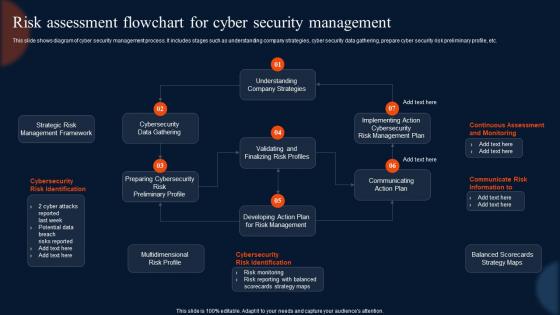
This slide shows diagram of cyber security management process. It includes stages such as understanding company strategies, cyber security data gathering, prepare cyber security risk preliminary profile, etc.
People who downloaded this PowerPoint presentation also viewed the following :
Risk Assessment Flowchart For Cyber Security Management with all 6 slides:
Use our Risk Assessment Flowchart For Cyber Security Management to effectively help you save your valuable time. They are readymade to fit into any presentation structure.





FAQs for Risk Assessment Flowchart For
So basically you've got four things to tackle: figure out what could go wrong, find your weak spots, assess how screwed you'd be, and estimate the odds of it actually happening. Map out your most critical stuff first - makes everything less overwhelming honestly. Don't forget you probably already have some protections in place that count for something. Think short and long-term damage, plus any compliance headaches. Being methodical beats just crossing your fingers and hoping for the best. Also worth considering regulatory stuff if that applies to your situation.
Look, quantitative gives you actual numbers and stats you can point to. Great for when you've got solid data and need to back up decisions with real figures - probabilities, dollar amounts, that kind of thing. But qualitative? That's more about expert judgment and gut feelings, which honestly works way better for messy stuff like reputation damage or weird new threats that don't fit neat categories. Most people I know just mix both approaches anyway. You get the number-crunching credibility plus the real-world context. Start with whatever data you actually have, then figure out your method from there.
You definitely need stakeholder input - these people actually know where stuff goes wrong day-to-day. Talk to folks from different departments since they all see different problems. Finance catches compliance issues, operations knows when equipment breaks, IT spots cyber stuff. Honestly, if people help identify the risks themselves, they're way more likely to actually follow whatever plan you come up with later. Don't just interview the managers either - that's a mistake I see a lot. Cast a wide net and schedule those conversations early. Oh, and take good notes during interviews because you'll forget half of it otherwise.
Start by brainstorming everything that could screw up your business - cyber attacks, supply chain issues, whatever. Make a simple grid with impact vs probability and score each risk. High impact + high chance of happening? Those are your priorities. Don't get too fancy with this initially, just focus on stuff that would either cost you big money or completely shut you down. Honestly, most people overthink this step way too much. Rank everything and tackle the worst ones first. Oh, and review this every quarter since new problems always pop up.
Honestly, if you've got the budget, go with ServiceNow or Archer - those GRC platforms handle everything from risk ID through reporting. MetricStream's solid too. But if money's tight? Don't sleep on Excel templates or something like Riskalyze. I've seen companies run decent risk frameworks entirely on spreadsheets (kind of wild but it works). FAIR-U is great for quantitative stuff, and there's always NIST if you're dealing with cyber risks. Here's the thing though - pick whatever your team will actually stick with. The best tool is useless if nobody opens it.
Annually at minimum, but that's honestly pretty bare-bones. Big business changes? New regulations? Update immediately - don't wait around. I've watched companies get blindsided because they treat it like some yearly paperwork drill. Your environment shifts constantly, so your risk picture should too. Calendar reminders work for annual reviews. But also set up triggers for major changes (new locations, staff changes, whatever). Way better to stay ahead than scramble after something goes sideways.
So basically, risk assessment is like doing your homework before making any big moves. You gotta figure out what could go wrong and how bad it'd be - then rank everything by likelihood and impact. Without that groundwork, you're just throwing darts blindfolded honestly. The assessment data tells you which risks to dodge completely, which ones to just accept, and what needs serious mitigation. I've watched teams skip this step and regret it later. Map each risk from your assessment to a specific action plan. Short version: assess first, then build your management strategy around the biggest threats you found.
So regulations basically force your hand on risk assessments - they tell you what to check, how often, and what paperwork to keep. SOX, GDPR, all those fun acronyms literally dictate your whole framework. Can be annoying but keeps things consistent I guess. First step is figuring out which rules actually apply to you (harder than it sounds sometimes). Then build your risk process around those requirements. Way easier than trying to jam compliance in afterward. Your timelines, categories, documentation - everything gets shaped by whatever regulatory mess you're dealing with.
Oh man, the biggest thing is don't tunnel vision on just the obvious stuff. Teams always miss those weird interconnected risks that end up causing real headaches later. Past experience can actually screw you over here - I've watched people dismiss new threats just because "that's never happened to us." Super frustrating to watch honestly. Get different people involved in the process, not just the usual suspects. And please validate your risk scores with actual data instead of just going with your gut. Oh, and stick to whatever process you set up even when deadlines are breathing down your neck.
Honestly, risk assessment is just about catching stuff before it becomes a total nightmare. You map out what could go wrong and where you're most vulnerable - usually wherever you depend on something critical. That way you can actually plan ahead instead of scrambling when things hit the fan. Short bursts work better than long sentences sometimes. It's like being prepared without being paranoid, you know? Focus on your biggest operational weak spots first - those are gonna be your real trouble areas. The whole point is bouncing back faster because you've already gamed out different scenarios beforehand.
Oh man, culture totally changes how people see risks! Like, some cultures think you can control everything while others are more "whatever happens, happens." Trust in authority varies wildly too - and honestly, that makes sense given different historical experiences. Risk-averse vs risk-taking attitudes are huge. Then there's the individual vs group thing - what threatens the community matters way more in some places. Even what counts as "good enough" proof differs. When you're analyzing risks, you've gotta think about who you're talking to. Something that freaks out one group might barely register with another.
Honestly, these new technologies are making traditional risk assessment pretty much obsolete. AI systems that keep learning? IoT networks with infinite failure points? The old "what could go wrong" checklist just doesn't cut it anymore. You're dealing with completely new risks too - algorithmic bias, data poisoning attacks, stuff we never had to worry about before. Short sentences don't always work here because these systems are so interconnected that one failure cascades everywhere. My advice? Don't try predicting everything upfront. Build in continuous monitoring and scenario planning instead - way more realistic approach.
Honestly, just focus on the basics first. Track your risk reduction percentages and how often incidents happen before vs after you implement stuff. Cost-benefit ratios are huge too - gotta know if you're actually getting bang for your buck. Response times matter, especially if things move fast in your industry. Here's something most people overlook though - measure whether people actually follow your risk plans. Best strategy in the world won't help if your team ignores it. Also track how many risks you predicted correctly versus the ones that blindsided you. I'd check these monthly so you can spot what's working and what isn't pretty quickly.
Honestly, skip the jargon completely - nobody wants to decode technical mumbo jumbo. Make dashboards with clear colors (red = bad, green = good, you know the drill). Charts beat boring reports every single time. Here's the thing though: always tie it back to what they actually care about - lost money, damaged reputation, operations going sideways. Focus hard on the "so what?" What decisions do they need to make? What happens if they just sit there? Give them 2-3 things they can do tomorrow, not some vague roadmap.
Think of risk assessment as your game plan for when stuff hits the fan. Figure out what's most likely to break and how screwed you'd be if it happens. That way you're not scrambling around like headless chickens during an actual incident (been there, not fun). Start with your 5 most critical systems - what would make your boss panic if it went down? Map out realistic attack scenarios and their business impact. This also makes budget conversations way easier since you can point to actual risks instead of just saying "we need more security stuff." Don't try to boil the ocean though, just focus on the big threats first.
-
The PPTs are extremely simple to modify. Thank you for providing the slides that are ready to be used. They assist me in saving a lot of time.
-
Requested a complete pitch deck. Delivered immediately and with high quality well researched content.