


Cybersecurity Risk Analysis And Management Plan Powerpoint Presentation Slides




Try Before you Buy Download Free Sample Product
 Impress Your
 Audience
 100%
100% Editable
 Save Hours
 of Time


Risk assessment and management plan can help the organization identify the cybersecurity threats and implement a plan to mitigate the risks. Here is an efficiently designed template on Cybersecurity Risk Analysis and Management Plan. It will help a company to safeguard information and critical data of organizational assets. This presentation covers different types of cybersecurity threats faced by firms worldwide and the process of managing the information security risks. A major chunk of the presentation covers an information security risk management plan that can help to identify assets vulnerable to information security risks. It also covers the assessment of information security risks through vulnerability rating and risk assessment matrix. It also showcases mitigation plans that can help an organization resolve information security risks promptly and strategies to avoid information breaches. This presentation also shows training that can help the organization train employees to respond and manage the information security threat. This presentation also covers the roles and responsibilities of the risk management team and budget allocation for managing cybersecurity risks. At last, this presentation highlights the impact of a risk management plan on the information security capabilities of the organization. Get access to our powerful cyber security ppt templates now.
People who downloaded this PowerPoint presentation also viewed the following :
Content of this Powerpoint Presentation
Slide 1: This slide introduces Cybersecurity Risk Analysis and Management Plan. State your company name and begin.
Slide 2: This slide states Agenda of the presentation.
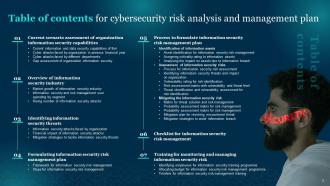
Slide 3: This slide presents Table of Content for the presentation.
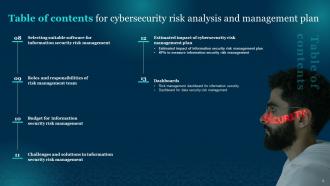
Slide 4: This is another slide continuing Table of Content for the presentation.
Slide 5: This slide highlights title for topics that are to be covered next in the template.
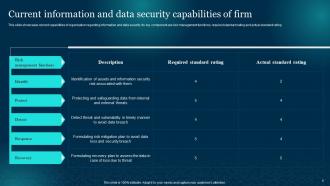
Slide 6: This slide shows Current Information and Data Security Capabilities of firm.
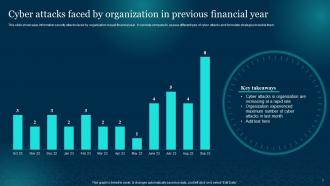
Slide 7: This slide presents Cyber Attacks Faced by Organization in Previous Financial Year.
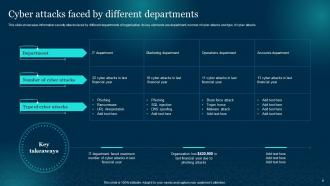
Slide 8: This slide displays Cyber Attacks Faced by Different Departments.
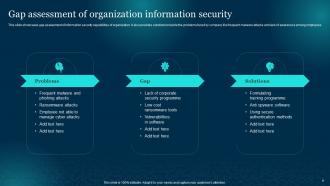
Slide 9: This slide represents Gap Assessment of Organization Information Security.
Slide 10: This slide highlights title for topics that are to be covered next in the template.
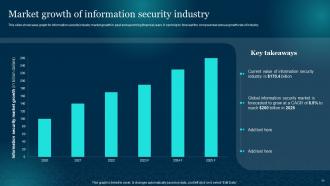
Slide 11: This slide showcases Market Growth of Information Security Industry.
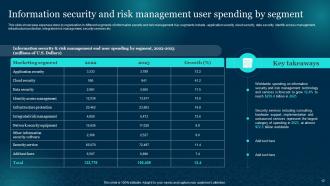
Slide 12: This slide shows Information Security and Risk Management User Spending by Segment.
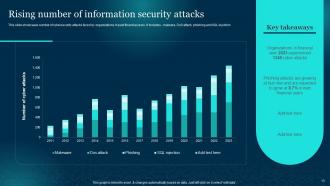
Slide 13: This slide presents Rising Number of Information Security Attacks.
Slide 14: This slide highlights title for topics that are to be covered next in the template.
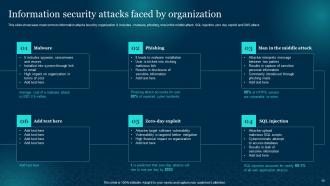
Slide 15: This slide displays Information Security Attacks Faced by Organization.
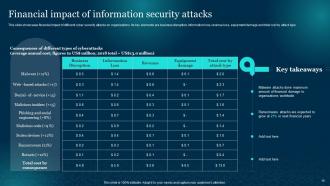
Slide 16: This slide represents Financial Impact of Information Security Attacks.
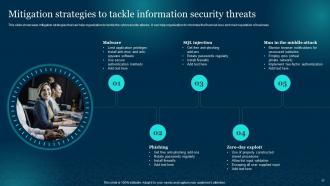
Slide 17: This slide showcases Mitigation Strategies to Tackle Information Security Threats.
Slide 18: This slide highlights title for topics that are to be covered next in the template.
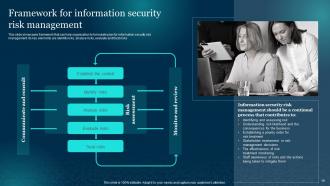
Slide 19: This slide shows Framework for Information Security Risk Management.
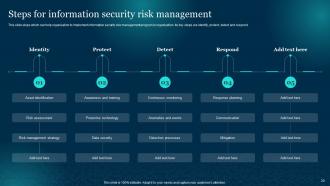
Slide 20: This slide presents Steps for Information Security Risk Management.
Slide 21: This slide highlights title for topics that are to be covered next in the template.
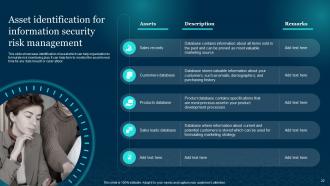
Slide 22: This slide displays Asset Identification for Information Security Risk Management.
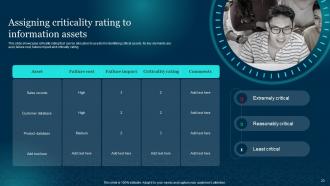
Slide 23: This slide represents Assigning Criticality Rating to Information Assets.
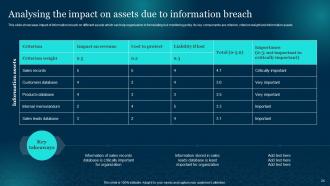
Slide 24: This slide showcases Analyzing the Impact on Assets due to Information Breach.
Slide 25: This slide highlights title for topics that are to be covered next in the template.
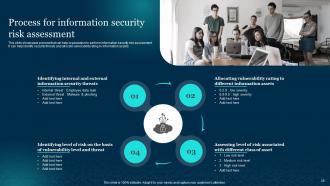
Slide 26: This slide shows Process for Information Security Risk Assessment.
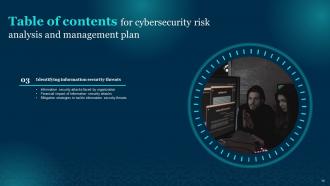
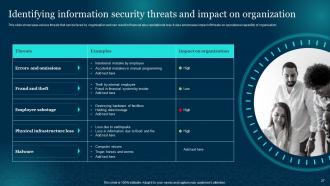
Slide 27: This slide presents Identifying Information Security Threats and Impact on Organization.
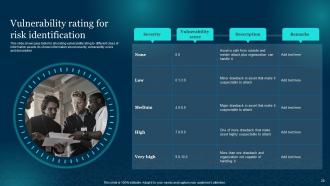
Slide 28: This slide displays Vulnerability Rating for Risk Identification.
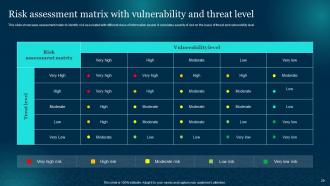
Slide 29: This slide represents Risk Assessment Matrix with Vulnerability and Threat Level.
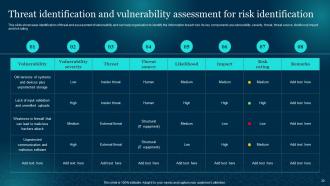
Slide 30: This slide showcases Threat Identification and Vulnerability Assessment for Risk Identification.
Slide 31: This slide highlights title for topics that are to be covered next in the template.
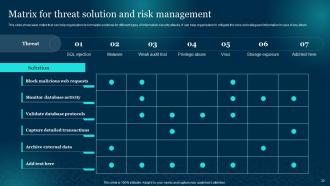
Slide 32: This slide shows Matrix for Threat Solution and Risk Management.
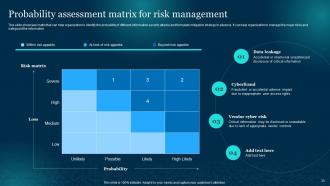
Slide 33: This slide presents Probability Assessment Matrix for Risk Management.
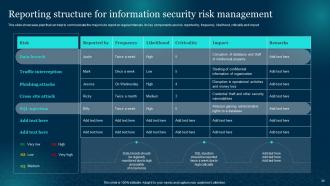
Slide 34: This slide displays Reporting Structure for Information Security Risk Management.
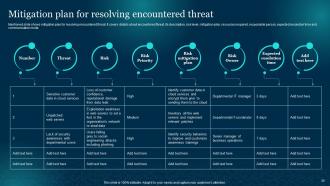
Slide 35: This slide represents Mitigation Plan for Resolving Encountered Threat.
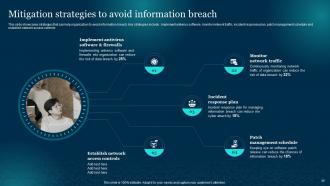
Slide 36: This slide showcases Mitigation Strategies to Avoid Information Breach.
Slide 37: This slide highlights title for topics that are to be covered next in the template.
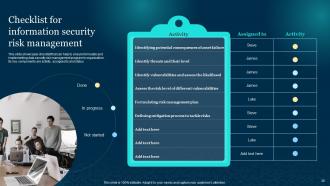
Slide 38: This slide shows Checklist for Information Security Risk Management.
Slide 39: This slide highlights title for topics that are to be covered next in the template.
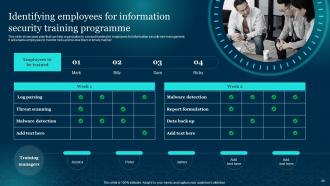
Slide 40: This slide presents Identifying Employees for Information Security Training Programme.
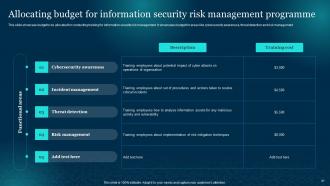
Slide 41: This slide displays Allocating Budget for Information Security Risk Management Programme.
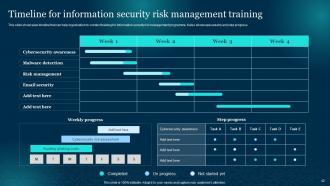
Slide 42: This slide represents Timeline for Information Security Risk Management Training.
Slide 43: This slide highlights title for topics that are to be covered next in the template.
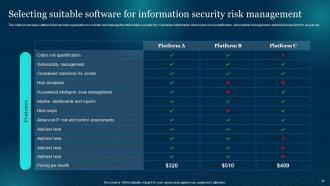
Slide 44: This slide showcases Selecting Suitable Software for Information Security Risk Management.
Slide 45: This slide highlights title for topics that are to be covered next in the template.
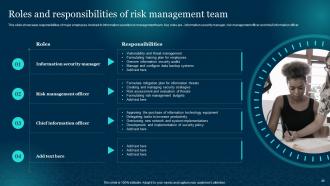
Slide 46: This slide shows Roles and Responsibilities of Risk Management Team.
Slide 47: This slide highlights title for topics that are to be covered next in the template.
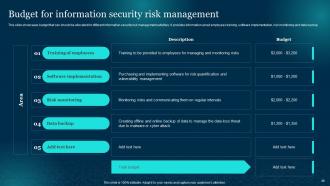
Slide 48: This slide presents Budget for Information Security Risk Management.
Slide 49: This slide highlights title for topics that are to be covered next in the template.
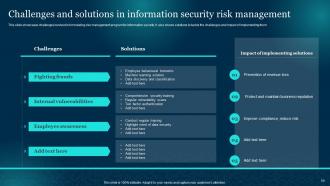
Slide 50: This slide displays Challenges and Solutions in Information Security Risk Management.
Slide 51: This slide highlights title for topics that are to be covered next in the template.
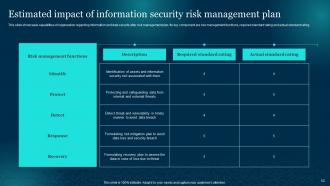
Slide 52: This slide represents Estimated Impact of Information Security Risk Management Plan.
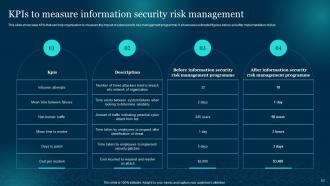
Slide 53: This slide showcases KPIs to Measure Information Security Risk Management.
Slide 54: This slide highlights title for topics that are to be covered next in the template.
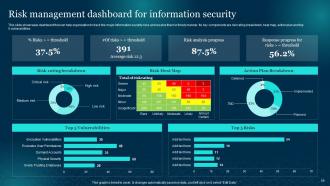
Slide 55: This slide shows Risk Management Dashboard for Information Security.
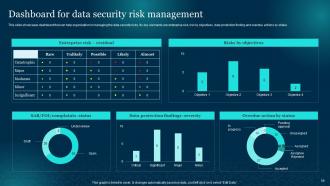
Slide 56: This slide presents Dashboard for Data Security Risk Management.
Slide 57: This slide contains all the icons used in this presentation.
Slide 58: This slide is titled as Additional Slides for moving forward.
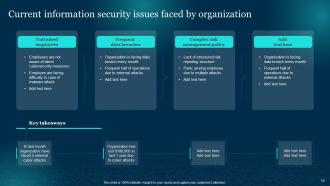
Slide 59: This slide presents Current information security issues faced by organization.
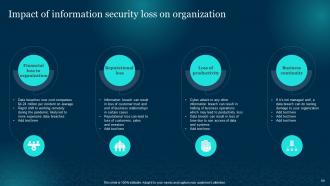
Slide 60: This slide displays Impact of information security loss on organization.
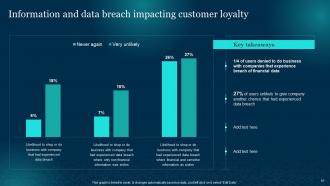
Slide 61: This slide represents Information and data breach impacting customer loyalty.
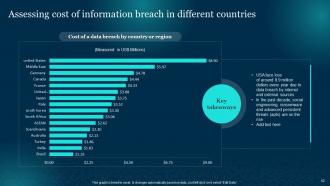
Slide 62: This slide showcases Assessing cost of information breach in different countries.
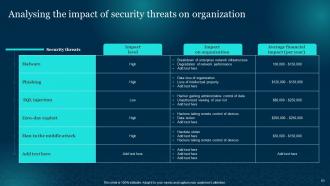
Slide 63: This slide shows Analysing the impact of security threats on organization.
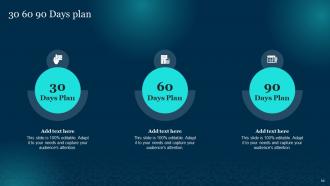
Slide 64: This slide provides 30 60 90 Days Plan with text boxes.
Slide 65: This slide showcases Magnifying Glass to highlight information, specifications etc
Slide 66: This is a Financial slide. Show your finance related stuff here.
Slide 67: This slide contains Puzzle with related icons and text.
Slide 68: This slide depicts Venn diagram with text boxes.
Slide 69: This slide shows Post It Notes. Post your important notes here.
Slide 70: This slide presents Roadmap with additional textboxes.
Slide 71: This slide shows SWOT describing- Strength, Weakness, Opportunity, and Threat.
Slide 72: This is a Thank You slide with address, contact numbers and email address.
Cybersecurity Risk Analysis And Management Plan Powerpoint Presentation Slides with all 77 slides:
Use our Cybersecurity Risk Analysis And Management Plan Powerpoint Presentation Slides to effectively help you save your valuable time. They are readymade to fit into any presentation structure.








FAQs for Cybersecurity Risk Analysis And Management Plan
Okay so you need five main things: figure out what you're actually protecting, assess threats, find your weak spots, evaluate real risk levels, and plan how to respond. Catalog everything first - your data, systems, people, whatever. Most places honestly just wing the threat modeling part and it bites them later. Look for both outside hackers and internal problems. Once you know your vulnerabilities, figure out which scenarios actually matter risk-wise. Then build your defenses - prevention stuff, detection systems, response plans. Don't treat it like a one-and-done thing though. Review quarterly when new threats pop up.
Start by mapping out everything you've got - all your systems, data, processes. Once that's done, do some threat modeling to figure out what could realistically go wrong. Honestly, pretending to be a hacker is kind of entertaining. Run vulnerability scans and pen tests to spot your weak points. Third-party vendors are usually where companies get burned, so don't skip those. The biggest thing though? Make it ongoing. Set up regular reviews and update everything when you add new tech. One-and-done assessments are basically useless.
Dude, seriously - train your people. Like 95% of breaches happen because someone screwed up, so fix that first. Yeah, firewalls are nice and all, but they're useless if Karen from accounting clicks some random link. Your team needs to recognize phishing emails and actually use decent passwords. Run quarterly training sessions and throw in some fake phishing tests to keep them sharp. Track who's doing the training too - you'll be shocked how many people skip it. Oh, and make sure they know who to call when weird stuff happens. It's honestly your best bang for buck security-wise.
Start with the big ones - SOX for financial stuff, GDPR if you deal with EU customers, HIPAA for healthcare. ISO 27001 is basically what everyone expects now, auditors eat that up. NIST isn't required but gives you a decent framework to work with. Oh, and don't forget industry-specific ones like PCI DSS for payments or FedRAMP if you want government contracts. Honestly, just map out what kind of data you're actually handling first. That'll tell you which regulations you need to worry about instead of stressing over everything at once.
So threat intelligence is basically your cheat sheet for what hackers are actually up to right now. Instead of guessing what might happen, you get real data on which vulnerabilities they're exploiting and what methods are hot. Honestly, some of these attack trends are pretty wild when you see the patterns. Your industry probably has specific feeds you should subscribe to - that's where I'd start. Then set up alerts so you're not constantly checking manually. The whole point is focusing your security spending on actual threats instead of spreading it thin across every possible scenario.
Look, ransomware's probably your worst nightmare - can shut you down completely overnight. Phishing emails are getting insanely good too, like fake invoices or "urgent" CEO messages that totally fool people. Your employees are honestly the weakest link here. Then hackers take stolen passwords from other breaches and try them on your stuff. Multi-factor authentication everywhere is a must. Oh, and they're hitting vendors now to get to bigger targets - supply chain attacks are becoming huge. Train your team to spot sketchy emails, it's way cheaper than dealing with a breach later.
Ugh, third-party vendors are such a pain for security. You're basically only as safe as whatever company you're working with has the worst protection. Your cloud provider gets hacked? You're screwed too. Payment processor has garbage security? Same problem. I swear it's the hardest part of managing risk because you can't really see what they're doing behind the scenes. You'll want to demand security assessments from every vendor upfront. Also make sure your contracts include requirements for how they handle incidents – trust me on that one.
Honestly, most places just panic about whatever threat made the news that week, but you gotta be smarter than that. Start with a simple risk matrix - plot impact vs likelihood. High impact AND high probability? That's where you focus first. Don't forget about compliance stuff either, that'll bite you if ignored. The real trick is staying systematic instead of just reacting to every shiny new threat. Oh, and document your reasoning so when executives ask why you're not freaking out about ransomware-of-the-month, you can actually show them the logic.
Track both types of metrics - the predictive stuff (training completion, patch speeds, assessment frequency) and the actual incidents that happen after. Recovery costs, detection times, breach frequency - that's your reality check. Here's the thing though: zero incidents might just mean nobody's tried hacking you yet, not that your security is bulletproof. Dashboard everything monthly and stack it against industry standards. But honestly? Don't just report these numbers upward. Actually use them to figure out where to spend your security budget next.
Honestly, cyber insurance is kinda weird - it can mess with your whole security mindset. Some companies get lazy and think "eh, we're covered" instead of actually fixing their vulnerabilities. But here's the thing: most insurers won't even touch you unless you've got basic security stuff in place first. So it forces you to do the work anyway. The real benefit? You get financial backup to actually invest in prevention instead of just crossing your fingers and hoping hackers ignore you. Just don't treat it like a magic shield - more like a safety net while you build real defenses.
Think of your incident response plan as the game plan that kicks in when risks actually blow up. Start by checking your current risk register - you'll probably find some obvious gaps. Map each risk to specific response steps, then set up clear escalation paths that match your risk ratings. Everything has to connect smoothly because I've watched way too many companies fumble around with disconnected systems when crisis hits. Test your plans against your biggest risks regularly. Oh, and definitely update both frameworks after real incidents - that's where you get the best intel on what actually works.
Honestly, AI in cybersecurity is wild right now. You can use it to catch threats way faster than humans ever could - it spots weird patterns and automates responses instantly. But here's where it gets messy: hackers are using the exact same tools against us. They're cranking out super convincing phishing emails and deepfakes that are honestly getting scary good. Plus they can launch attacks that actually learn and adapt as they go. Don't even get me started on how AI systems themselves become targets - like data poisoning attacks. You've gotta beef up your AI defenses while also protecting the AI itself.
Dude, you NEED continuous monitoring. Hackers don't clock out at 5pm - they're hitting systems 24/7. My old company learned this lesson the expensive way when we only checked quarterly. We'd miss attacks for months! Real-time visibility is everything. You'll catch weird activity immediately instead of finding out weeks later during some scheduled review. Honestly, flying blind is just asking for trouble. Set up automated alerts for your key metrics and actually check those dashboards daily. It's boring but worth it.
Honestly, culture makes or breaks cybersecurity in practice. Blame-heavy environments? People hide incidents instead of reporting them fast. I've watched risk-averse companies lock down access so tight nobody can work, while startups ignore basic protocols completely. Both approaches backfire hard. Leadership sets the tone - if execs don't care about security, why would anyone else? You need people feeling safe to speak up about weird emails or potential threats. Nobody should worry about getting yelled at for asking questions. That psychological safety thing isn't just HR buzzwords, it actually matters for keeping systems secure.
Honestly, start with the boring stuff first - decent passwords, keep software updated, and train people about phishing emails. Multi-factor authentication is absolutely essential now, can't skip that one. Your team needs regular security checks and solid backups too. Oh, and have some kind of plan for when things go wrong (because they will). The training thing is actually pretty critical since employees mess up constantly, but they're also your first line of defense if you do it right. Don't go crazy trying to implement everything at once though - you'll just stress everyone out.
-
Excellent design and quick turnaround.
-
Awesome use of colors and designs in product templates.