


Cyber Security Attacks Response Plan Powerpoint Presentation Slides V




Try Before you Buy Download Free Sample Product
 Impress Your
 Audience
 100%
100% Editable
 Save Hours
 of Time


Cyber security incident management is designed to quickly and effectively respond to and resolve cyber security threats or incidents. Grab our insightfully designed Cyber security attacks response plan. It highlights the challenges businesses face due to the increasing number of cyber security incidents, such as ransomware attacks, malware attacks, insider threats, and phishing attacks. Our Cyber attacks management deck covers the cyber security incident management process and provides a checklist for incident response. It further shows the best practices for managing cyber security risks and a flow diagram of cyber security events. Moreover, our Computer issues management PPT explains the roles and responsibilities of the cyber security incident management team, the budget allocated for user training and awareness programs, and the impact of cyber security incident management on business operations before and after implementation. Lastly, it outlines how incident management can reduce and minimize the effects of cyber security attacks on the organization. Get access to this powerful deck now.
People who downloaded this PowerPoint presentation also viewed the following :
Content of this Powerpoint Presentation
Slide 1: This slide introduces Cyber Security Attacks Response Plan. Commence by stating Your Company Name.
Slide 2: This slide depicts the Agenda of the presentation.
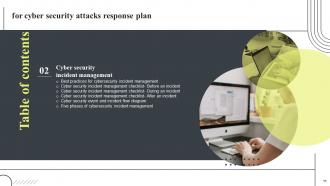
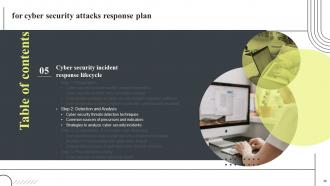
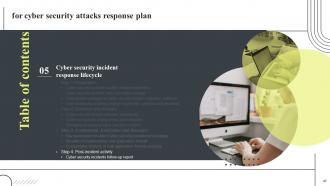
Slide 3: This slide incorporates the Table of contents.
Slide 4: This slide highlights the Title for the Topics to be covered further.
Slide 5: This slide indicates the Key issues faced by organization due to cybersecurity incidents.
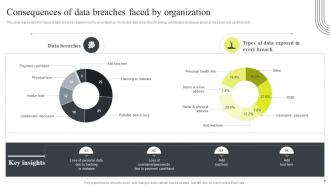
Slide 6: This slide represents the impact of data breaches experienced by an enterprise.
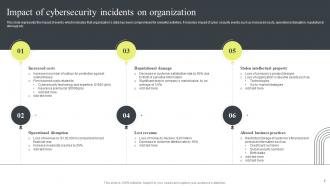
Slide 7: This slide reveals the Impact of cybersecurity incidents on organization.
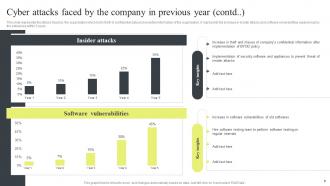
Slide 8: This slide highlights the Cyber attacks faced by the company in previous year.
Slide 9: This slide continues the attacks faced by the organization.
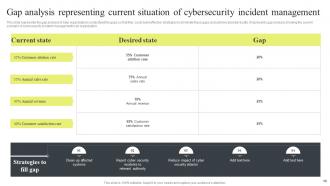
Slide 10: This slide exhibits the Gap analysis representing current situation of cybersecurity incident management.
Slide 11: This slide displays the Heading for the Contents to be discussed further.
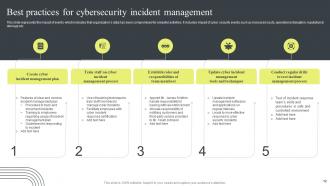
Slide 12: This slide shows the impact of events which indicates that organization’s data has been compromised for unlawful activities.
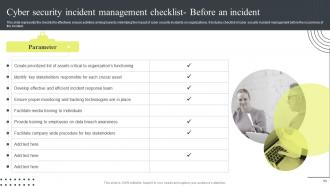
Slide 13: This slide illustrates the Cyber security incident management checklist-Before an incident.
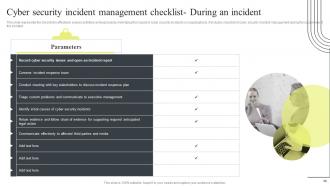
Slide 14: This slide reveals the Cyber security incident management checklist- During an incident.
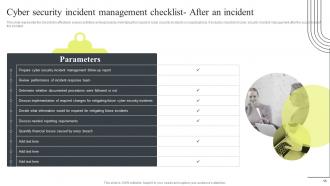
Slide 15: This slide portrays the Cyber security incident management checklist-After an incident.
Slide 16: This slide represents the flow diagram showing the procedure of managing cyber security incidents to minimize its impact on business operations.
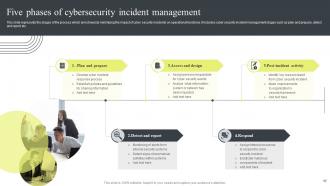
Slide 17: This slide depicts the Five phases of cybersecurity incident management.
Slide 18: This slide mentions about the Title for the Ideas to be covered in the following template.
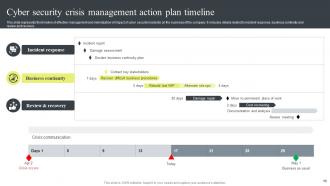
Slide 19: This slide illustrates the Cyber security crisis management action plan timeline.
Slide 20: This slide includes the Heading for the Ideas to be discussed further.
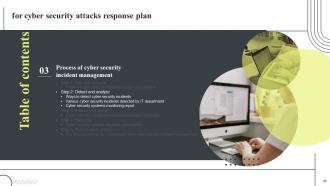
Slide 21: This slide showcases the Ways to detect cyber security incidents.
Slide 22: This slide represents the Various cyber security incidents detected by IT department.
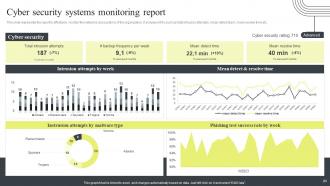
Slide 23: This slide outlines the report to effectively monitor the networks and systems of the organization.
Slide 24: This slide covers the Title for the Contents to be discussed in the next template.
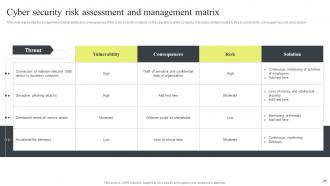
Slide 25: This slide shows the assessment of vulnerability and consequences of the cyber security incidents on the company operations.
Slide 26: This slide includes the Heading for the Topics to be covered in the following template.
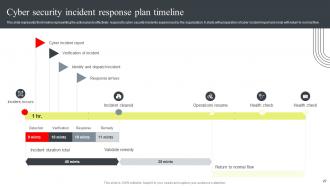
Slide 27: This slide reveals the timeline representing the action plan to effectively respond to cyber security incidents experienced by the organization.
Slide 28: This slide incorporates the Title for the Ideas to be covered in the following template.
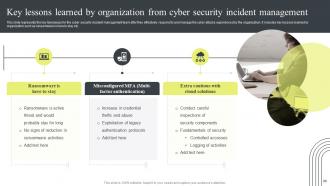
Slide 29: This slide represents the Key lessons learned by organization from cyber security incident management.
Slide 30: This slide highlights the Heading for the Contents to be discussed further.
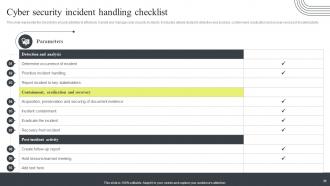
Slide 31: This slide reveals the checklist to ensure activities to effectively handle and manage cyber security incidents.
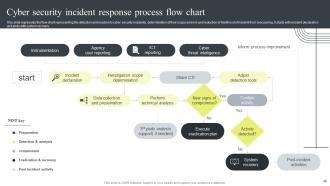
Slide 32: This slide illustrates the Cyber security incident response process flow chart.
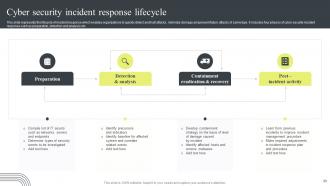
Slide 33: This slide showcases the Cyber security incident response lifecycle.
Slide 34: This slide exhibits the Title for the Ideas to be covered in the following template.
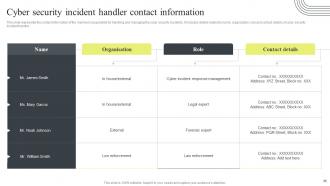
Slide 35: This slide represents the contact information of the members responsible for handling and managing the cyber security incidents.
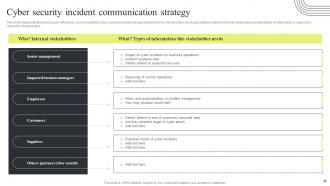
Slide 36: This slide shows the techniques to effectively communicate the cyber security incident management plan to key stakeholders.
Slide 37: This slide illustrates the Comparative analysis of cyber security incident mitigation software.
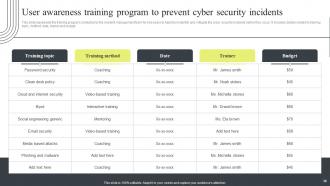
Slide 38: This slide highlights the User awareness training program to prevent cyber security incidents.
Slide 39: This slide depicts the Heading for the Ideas to be discussed further.
Slide 40: This slide represents the strategies to help incident management team to effectively detect the incidents faced by the organization.
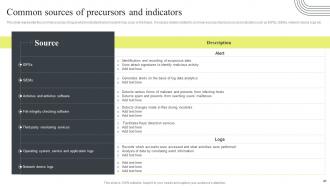
Slide 41: This slide exhibits the Common sources of precursors and indicators.
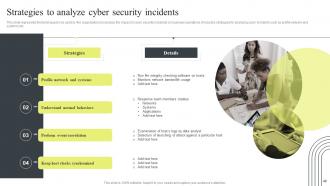
Slide 42: This slide states the Strategies to analyze cyber security incidents.
Slide 43: This slide contains the Title for the Contents to be covered in the following template.
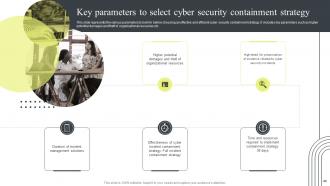
Slide 44: This slide portrays the various parameters to look for before choosing an effective and efficient cyber security containment strategy.
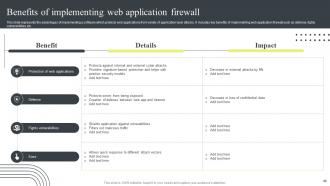
Slide 45: This slide presents the advantages of implementing a software which protects web applications from variety of application layer attacks.
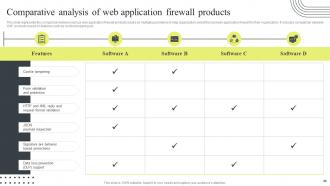
Slide 46: This slide displays the Comparative analysis of web application firewall products.
Slide 47: This slide depicts the Heading for the Topics to be discussed in the upcoming template.
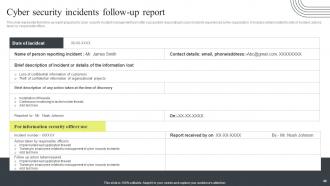
Slide 48: This slide outlines the Cyber security incidents follow-up report.
Slide 49: This slide presents the Title for the Topics to be covered in the upcoming template.
Slide 50: This slide represents the org chart of team which is responsible for minimizing and managing cyber security incidents.
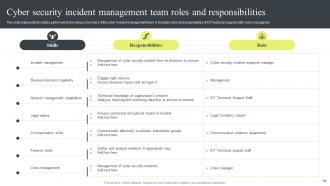
Slide 51: This slide highlights the duties performed by the various members of the cyber incident management team.
Slide 52: This slide indicates the Heading for the Contents to be discussed next.
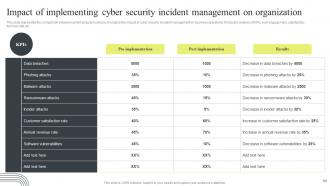
Slide 53: This slide reveals the Impact of implementing cyber security incident management on organization.
Slide 54: This slide displays the Title for the Ideas to be covered in teh forthcoming template.
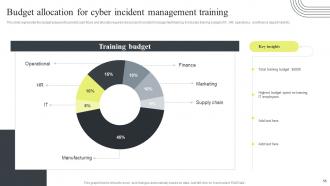
Slide 55: This slide talks about the Budget allocation for cyber incident management training.
Slide 56: This slide depicts the Heading for the Ideas to be discussed further.
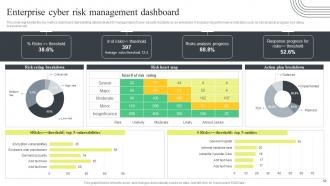
Slide 57: This slide represents the key metrics dashboard representing details related to management of cyber security incidents by an enterprise.
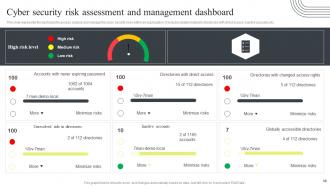
Slide 58: This slide illustrates the Cyber security risk assessment and management dashboard.
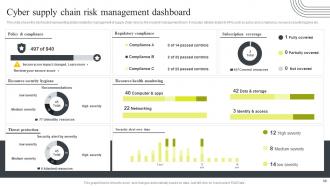
Slide 59: This slide shows the dashboard representing details related to management of supply chain risks by the incident management team.
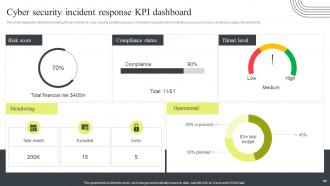
Slide 60: This slide represents dashboard showing the key metrics of cyber security incident response.
Slide 61: This is the Icons slide containing all the Icons used in the plan.
Slide 62: This slide is used for displaying some Additional information.
Slide 63: This is the About us slide containing comapny-related information.
Slide 64: This is Our team slide. State your team-related information here.
Slide 65: This slide contains the Post it notes for reminders and deadlines.
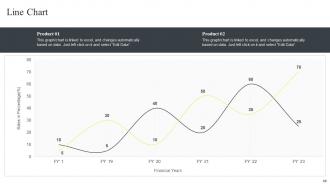
Slide 66: This slide presents the Line Chart.
Slide 67: This is the Puzzle sldie with related imagery.
Slide 68: This is the Thank You slide for acknowledgement.
Cyber Security Attacks Response Plan Powerpoint Presentation Slides V with all 73 slides:
Use our Cyber Security Attacks Response Plan Powerpoint Presentation Slides to effectively help you save your valuable time. They are readymade to fit into any presentation structure.






















FAQs for Cyber Security Attacks Response Plan Powerpoint
Ok so you'll need six main things. Start with clear roles - who's doing what when stuff hits the fan. Detection procedures come next so you can spot threats fast. Communication is huge - both keeping your team coordinated and letting stakeholders know what's happening. Containment strategies stop attacks from spreading (and trust me, they spread FAST). Recovery procedures help you get systems back up safely. Oh, and document everything you learn afterward. Honestly though? Test your plan with tabletop exercises regularly. I've seen too many companies with "perfect" plans that fell apart during actual incidents because nobody had practiced using them.
Honestly, tabletop exercises are your best bet here. Get your security team, IT folks, and key stakeholders together for realistic attack simulations. I'd start small - maybe a phishing scenario next quarter to see how it goes. Time everything and watch where people get lost or confused. Those breakdowns? That's where you need to fix stuff. Don't forget to check if your contact lists are actually current - nothing worse than calling someone who left six months ago during a real incident. Your playbooks probably need updating too. Run these drills regularly and document what went wrong.
Training your team is huge - probably the most important thing you can do. People need to spot threats fast and know who to call right away. All those fancy security tools? Useless if someone clicks a sketchy link or finds a USB in the parking lot (which happens more than you'd think). Run regular sessions on reporting procedures and evidence handling. Don't skip the tabletop exercises either - you want people practicing their roles before chaos hits. Trust me, when something actually goes down, you'll be glad everyone knows what they're doing.
Business impact first - shut down anything threatening critical ops or customer data right away. Revenue systems, compliance stuff, you know the drill. Honestly? Having a priority matrix ready beforehand is a lifesaver when everyone's losing their minds screaming that their thing is "mission critical." Stop the bleeding first, worry about the root cause analysis later. Get someone documenting everything though - future you will thank present you when legal comes knocking or you're doing post-mortems. I learned that one the hard way. Focus on containment, then forensics and comms can follow.
Okay so for small companies, you really just need 3-4 people with one IT person running the show - they'll handle detection, containment, all that stuff. Mid-sized places should go for 5-8 specialists with actual roles like incident commander and forensics analyst. Big enterprises obviously need 10+ people with whole sub-teams for different attacks. I've totally seen startups freak out thinking they need some massive enterprise setup from day one. Don't do that. Start small, then grow it out. Just make sure everyone knows their role ahead of time, even if Sarah from IT is wearing like five different hats initially.
Oh man, get your templates ready NOW before anything goes sideways. Pick different people to talk to employees vs customers vs media - they all need totally different info. Honestly, practicing this during tabletop exercises is a game changer because trust me, you don't want to craft your first crisis message while everything's falling apart. Always tell people what you actually know and what you don't. Update them regularly even when nothing's happening - radio silence freaks everyone out. Also set up backup communication that works if your main systems get hit.
Honestly, start with a solid SIEM like Splunk or Microsoft Sentinel - that's gonna be your command center for everything. Then grab an EDR solution, CrowdStrike's pretty solid but Carbon Black works too. Network monitoring is huge (learned that the hard way last year, ugh). Nessus for vulnerability scanning will catch stuff before the bad guys do. Oh, and don't sleep on threat intelligence feeds - they're clutch for staying ahead of new attacks. Build out your SIEM first though, everything else feeds into it anyway.
Okay first things first - pull those compromised systems offline ASAP and cut their network access. Figure out what data got exposed and how sensitive it is. But honestly? Don't start frantically moving stuff around, that'll just make everything worse. Document what you're seeing before you touch anything. Your legal team needs to know about this immediately - some regulations have crazy tight notification deadlines. Oh, and preserve any forensic evidence while you're locking things down. Focus on containment first. The endless paperwork can wait a bit.
Honestly, you've got to build the legal stuff into your plan right from the start - don't wait until you're scrambling during an actual breach. Data breach notification laws have crazy tight deadlines for reporting to both authorities and customers. Plus if you're in healthcare, finance, or handle credit cards, there's extra hoops to jump through with HIPAA, SOX, PCI DSS. GDPR's another beast entirely if you deal with international data transfers. Map out all your notification timelines now and work with legal to draft template communications. Trust me, figuring out evidence preservation requirements while your systems are on fire is not fun.
Honestly, you need to run tabletop exercises and full simulations on a regular basis - like quarterly or so. They're absolute lifesavers for catching holes in your response plan before stuff hits the fan. I've watched teams completely fall apart during a fake ransomware drill because nobody knew who was supposed to call who. It's kind of brutal but necessary. Mix up different attack scenarios each time and get everyone involved - IT, legal, PR, the whole crew. Document everything that goes sideways during these drills, then fix your playbooks and retrain people. Trust me, finding out your communication is a mess during practice beats discovering it during an actual breach.
Track your speed metrics first - MTTD, MTTR, and recovery time. But honestly, containment effectiveness matters way more than people think. How fast did you actually stop it from spreading? Don't ignore the business impact stuff either. Downtime, data loss, compliance hits - all that feeds into whether your plan actually worked. Oh, and grade how well your team followed each playbook step. Here's the thing though - you need baselines before shit hits the fan. Run these measurements during your next tabletop exercise so you know where you're starting from.
After every security incident, set up a real post-mortem where you actually dig into what happened. Document everything in a knowledge base people can find - not some buried SharePoint folder. I've watched teams make the identical mistakes over and over because insights just disappeared into meeting notes. Short sentences work. Update your playbooks based on what you learn, then train everyone on the changes. Run tabletop exercises that test scenarios from your past screw-ups. The key thing? Don't let this become a one-and-done activity.
Okay so first thing - isolate those infected systems ASAP before this spreads everywhere. Then you gotta do a deep dive forensic analysis to figure out exactly what got hit and how bad it is. Document literally everything (I know it's tedious but you'll thank me later when insurance or compliance asks). After that, restore from your clean backups, patch everything that needs updating, and reset any passwords that might've been grabbed. Oh and keep everyone in the loop throughout - people hate being left in the dark. Once it's all sorted, do a proper debrief meeting to figure out how this happened and beef up your response plan.
Bare minimum? Once a year. But honestly, quarterly makes way more sense given how crazy fast threats change now. Major system updates should trigger a review too. Same goes for any actual incidents - even the small annoying ones teach you something. New industry regulations are another reason to dust it off and update things. I learned this the hard way when our "current" plan was basically useless during a real situation. Set a recurring reminder or you'll totally forget. Your response plan is worthless if it's outdated.
Document everything while it's happening - timestamps, who did what, screenshots, the whole deal. I know it's annoying when you're already stressed, but trust me on this one. Keep it factual, no speculation about blame or whatever. Grab logs and evidence before you start fixing things. Store it somewhere secure that investigators can actually get to later. This stuff becomes huge for forensics and compliance. Honestly, if there's no paper trail, it's like it never happened legally. Make note-taking automatic - you'll thank yourself later when lawyers start asking questions.
-
Qualitative and comprehensive slides.
-
The templates you provide are great! They have saved me tons of time and made my presentations come alive. Thank you for this awesome product. Keep up the good work!