


Sequoia investor funding elevator pitch deck ppt template





Try Before you Buy Download Free Sample Product
 Impress Your
 Audience
 100%
100% Editable
 Save Hours
 of Time


Sequoia is a venture capital that focuses on multiple startups and helps them generate funds for the organization. Here is an efficiently designed pitch deck on Sequoia Company Investor Funding that is helpful for organizations and entrepreneurs intending to raise funds through multiple funding rounds and increased revenues. We have covered the following key areas in our presentation the purpose of the company, the problem that has disrupted the market, solution provided by the organization, the reason why investors should consider investing, understanding the market size, competitive analysis, in-depth product knowledge, business model canvas, critical members of the team, an overview of the financial and the vision and mission. One can present various problems that the company is facing right now, such as the need for digital transformation, increasing cost and wastage of money, etc. After mentioning issues, proposed solutions can be exhibited in the software for transformation deck, virtual representation of the product, etc. Firms can even display graphs and reasons for investing in our company, some of them being, increase in safety, productivity, etc. Customize this 100 percent editable pitch deck. Get access now.
People who downloaded this PowerPoint presentation also viewed the following :
Content of this Powerpoint Presentation
Slide 1: This slide displays title i.e. 'Sequoia Investor Funding Elevator Pitch Deck' and your Company Name.
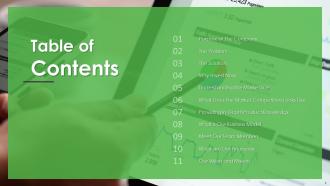
Slide 2: This slide presents table of contents.
Slide 3: This slide we have provided key details of the organization such as the year it was founded in, the global locations, total number of employees etc.
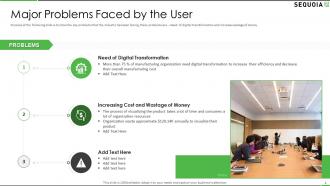
Slide 4: This slide show the key problems that the Industry has been facing.
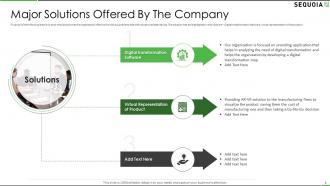
Slide 5: This slide show the Solution that the organization offers to the various problems that the Industry has been facing.
Slide 6: This slide displays how the manufacturing Industry has been transformed with the implementation of AR-VR.
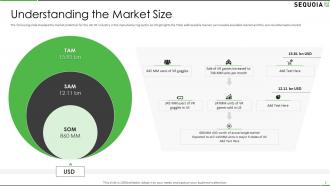
Slide 7: This slide displays the market potential for the AR VR industry in the manufacturing sector as it highlights the TAM, SAM & SOM.
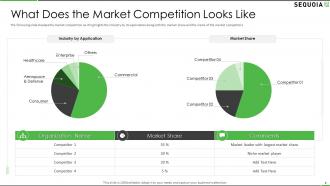
Slide 8: This slide displays the market competition as it highlights the Industry by its application.
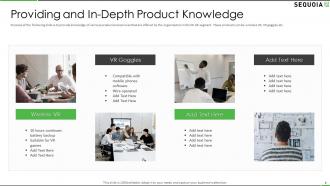
Slide 9: This slide provide knowledge of various product and services that are offered by the organization in the VR AR segment.
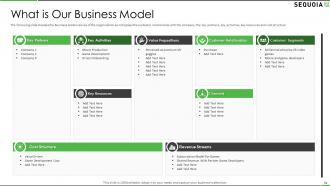
Slide 10: This slide displays the Business model canvas of the organization as it displays the customer relationship with the company, the key partners, etc.
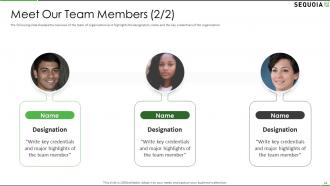
Slide 11: This slide displays the overview of the team of organization as it highlights the designation, name and the key credentials of the organization.
Slide 12: This slide presents continued content.
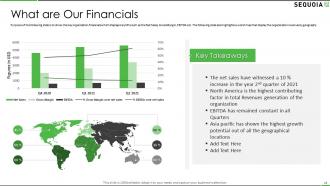
Slide 13: This slide show the key organization financials which displays key KPIs such as the Net Sales, Gross Margin, EBITDA etc.
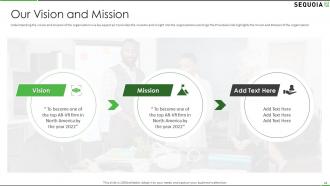
Slide 14: This slide highlights the Vision and Mission of the organization.
Slide 15: This is the icons slide.
Slide 16: This slide presents title for additional slides.
Slide 17: This slide presents your company's vision, mission and goals.
Slide 18: This slide displays Venn.
Slide 19: This slide exhibits yearly timeline.
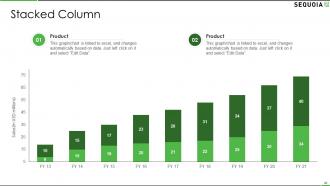
Slide 20: This slide exhibits yearly sales stacked column charts for different products. The charts are linked to Excel.
Slide 21: This slide shows targets of your company.
Slide 22: This slide depicts posts for past experiences of clients.
Slide 23: This slide depicts 30-60-90 days plan for projects.
Slide 24: This slide exhibits ideas generated.
Slide 25: This slide exhibits monthly line charts for different products. The charts are linked to Excel.
Slide 26: This slide shows magnifying glass.
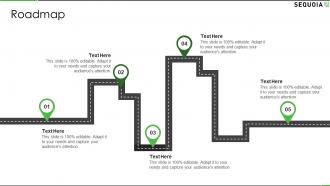
Slide 27: This slide shows roadmap.
Slide 28: This is thank you slide & contains contact details of company like office address, phone no., etc.
Sequoia investor funding elevator pitch deck ppt template with all 28 slides:
Use our Sequoia Investor Funding Elevator Pitch Deck Ppt Template to effectively help you save your valuable time. They are readymade to fit into any presentation structure.









FAQs for Sequoia investor funding elevator pitch
Look, Sequoia decks absolutely crush it because they tackle problems that literally keep founders awake at night - massive, urgent stuff. The numbers don't lie either. They show real traction, not vanity metrics. Plus their teams are already executing at an insane level. Here's the thing though - timing is everything. They're obsessed with proving why now makes sense when five years ago would've flopped. Honestly, their storytelling puts most movies to shame. Your deck can't just be another nice feature. You need something people will kill for. Show them you're not hoping for success - make it feel inevitable. The market has to be huge and you've got to own it.
Dude, you've got literally 30 seconds before they move on - Sequoia sees hundreds of these things. Hit them with your value prop in the first 2-3 slides, no exceptions. Start with the problem and why it's urgent NOW, then jump straight to your solution. If you can't nail it in one sentence, you're not there yet honestly. Don't just be a little better than competitors - you need to be 10x different. Oh and definitely back it up with real numbers or customer quotes. They eat up actual traction data way more than fancy projections.
Sequoia's obsessed with data - they'll tear apart your metrics. Focus on unit economics, growth rates, and retention patterns through cohort analysis. Month-over-month growth, CAC, LTV - all that stuff matters. Your TAM better be rock solid too (seriously, everyone claims trillion dollar markets). Pick maybe 3-5 key metrics that actually tell your story instead of overwhelming them with numbers. They're gonna drill down hard on every data point, so make sure you can defend what you're showing. Oh, and cohort retention is huge for them - shows you're not just acquiring users who disappear.
Dude, forget those generic "trillion dollar market" slides - Sequoia sees those all day. Start with the specific slice you can actually own, then map out how you'll expand from there. What matters isn't just size, it's showing you truly get the market dynamics. Why is NOW the perfect moment? What's about to shift that creates your opening? Here's where most founders screw up though - their go-to-market doesn't match the opportunity they're pitching. Make sure those pieces actually fit together. Sequoia wants to see that defensible wedge first, not some hand-wavy TAM math.
Start with a problem story that hits different - make investors actually feel what your customers go through. The before/after thing works really well, plus throw in real testimonials if you've got them. Numbers are cool but stories stick in people's heads way longer. Position your startup as the guide in their hero's journey, you know? Most decks I see are just boring feature dumps tbh. Keep everything tied to one main thread: problem leads to solution leads to huge opportunity. Each section needs a "so what?" moment that builds up to your ask. Don't overthink it.
Sequoia cares way more about the team than anything else - they literally invest in people first. Show off your domain expertise and any exits you've had. But don't just dump boring job titles on them. Instead, prove why your specific mix of skills can actually pull this off. Got someone who worked at a unicorn? Call it out. Deep industry connections? Mention those too. The whole slide should scream "we have unfair advantages." Honestly, half the battle is showing complementary skills across tech, business, and market knowledge. Make it obvious you're the only ones who can solve this.
Don't overthink it with fancy graphics or buzzword soup - Sequoia just wants to understand your business clearly. Make sure you can actually defend your unit economics because I've watched so many founders get destroyed on that. Your market size needs to be realistic too, not some made-up trillion dollar TAM that makes no sense. Oh and never say you have zero competition - that's basically telling them you didn't do your homework. Just tell a clean story: here's the problem, here's how we solve it, here's our traction. Keep it simple and match your funding ask to where you actually are.
Dude, Sequoia decks need to be super clean - they look at your key metrics first, so make those numbers jump out. White space is your friend here. Stick to maybe 2 fonts max and use color strategically. Your charts? They better tell the story in like 10 seconds because that's literally all you get per slide. Honestly, I'd skip any fancy animations - they're just distracting. Focus on simple data viz that shows your growth trajectory. Every single thing on there should either prove you're gaining traction or make complicated stuff easier to digest. Keep it minimal but impactful.
Sequoia's basically looking for three main things: solid ARR growth, decent unit economics (your LTV/CAC ratio), and a realistic timeline to profitability. Hockey stick revenue growth is what they want to see, but it needs real fundamentals behind it - not just flashy numbers that don't mean much. Burn rate matters, sure, but they're way more interested in how efficiently you're scaling. Show them 3-5 year projections you can actually defend when they start poking holes. Your TAM sizing better be believable too. Honestly, I've seen too many founders oversell their market size and it backfires. Lead with the revenue story, then back it up with strong unit economics.
Okay so map out your competitors but be smart about it. Don't just make a boring list - actually show you get the market and where you belong. Build a simple chart with stuff like pricing, features, who they target. Here's what I learned though: never badmouth other companies because VCs probably already know them and you'll look like an amateur. Yeah, mention what competitors do well, but then hit hard on what makes you different. Why will you crush it with certain customers? Oh and don't forget - include direct competitors AND the other random solutions people might pick instead of you.
Keep it to 10-12 slides tops with Sequoia - they hate long decks. Hit the basics: problem, solution, market size, business model, traction, team, competition, financials. Don't get fancy with the format honestly, they've seen every gimmick out there. Clear story beats flashy design every time. Make each slide focused on one main point. Practice walking through it in 8-10 minutes since they'll grill you with questions after. Oh and make sure your data actually backs up what you're claiming - they'll call out weak numbers immediately.
Look, Sequoia wants to hear you're building something that'll completely reshape an industry - think massive scale. But here's the thing: they've heard a million founders talk big with zero clue how to actually get there. Dream huge, then immediately prove you're not delusional. Show them your realistic 18-month plan with actual milestones. Be honest about where you're struggling right now. They want moonshot vision paired with someone who won't crash and burn because they skipped the boring execution stuff. Start with the big picture, then get granular fast.
Definitely look at Airbnb's original deck - crazy to think they got funded for what seemed like "just couch surfing" back then. Buffer and Mixpanel also have solid examples online. They all follow Sequoia's basic structure: problem, solution, market size, product demo, business model, competition. The key thing I noticed? They kept slides super clean instead of shoving every feature in there. Honestly, the storytelling matters way more than perfect data. I'd pick 2-3 of these decks, study how they flow, then steal their approach but obviously for your business.
Dude, Sequoia invests everywhere so they're super picky about cultural awareness. Show them you actually get your target markets - like, really get them. Don't be one of those Silicon Valley founders who thinks what works in Palo Alto automatically works in Mumbai or São Paulo. They see that lazy thinking constantly and it's an instant red flag. Your deck should prove you understand local user behavior, competition, and how you'll actually sell in different regions. Oh and if you're planning international expansion, make that cultural homework obvious. They want founders who dig deep into market nuances, not just copy-paste the same strategy everywhere.
Honestly, find people who'll actually grill you - not just your co-founder being nice. Recording yourself is awkward but you'll catch so much stuff. Sequoia's obsessed with timing, so practice with a stopwatch religiously. Get those brutal questions about competition and unit economics down cold. Mock pitches with other founders who've done this dance before are gold - they spot blind spots immediately. Your first 2 minutes? Perfect those until you could do them hungover at 3am. That opening either makes or breaks everything, no joke.
-
Thanks for all your great templates they have saved me lots of time and accelerate my presentations. Great product, keep them up!
-
Excellent Designs.
-
Excellent Designs.
-
Unique design & color.