

Six months video game development and testing roadmap




Try Before you Buy Download Free Sample Product
 Impress Your
 Audience
 100%
100% Editable
 Save Hours
 of Time


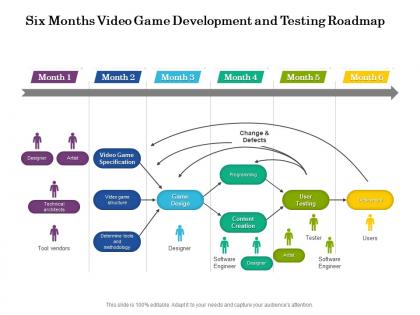
The success rate of business plans is hugely dependent on the plan of action, and this editable Six Months Video Game Development And Testing Roadmap rightly serves the purpose. Encapsulate all the information related to the project in a well structured manner to obtain maximum efficiency by incorporating our stunning PowerPoint theme. State the critical deliverable, steps involved, time frame, workforce allocation, and lots more in an easy to understand manner by utilizing this pre designed roadmap PowerPoint layout. You can also prioritize your tasks and discuss the problem areas with your colleagues by incorporating this tailor made PPT layout. Empower your work plan by employing this professionally designed PPT theme. Entrepreneurs can download Six Months Video Game Development And Testing Roadmap as a beneficial communication tool that facilitates in collaborating with different tasks and achieve targets.
People who downloaded this PowerPoint presentation also viewed the following :
Six months video game development and testing roadmap with all 2 slides:
Use our Six Months Video Game Development And Testing Roadmap to effectively help you save your valuable time. They are readymade to fit into any presentation structure.

FAQs for Six months video game development
So there's basically three main phases - pre-production, production, and post-production. Though honestly they kind of blend together more than you'd think. Pre-production is where you nail down your concept and create prototypes. Production's where the actual magic happens - building assets, coding, putting everything together. Post-production covers testing and launch prep. Oh, and most teams add a fourth phase now for live ops if you're doing updates. But seriously, don't rush the pre-production part. I learned this the hard way - all that planning upfront saves you from wanting to throw your computer out the window later when everyone's pulling all-nighters.
Honestly, I'd start by looking at your game's mechanics and figuring out who'd actually want to play it. Check out similar games and see what their audiences look like - age ranges, platforms, how much they spend. Steam reviews are pure gold for this stuff, people don't hold back there lol. Social media convos too. Build some player personas from all that data - experience levels, what makes them hit "buy now," the works. Oh and definitely test your assumptions with surveys before you go too deep into development. Trust me on that one.
Think of prototyping as your safety net before diving deep into development. Test your core mechanics first - is that combat system actually fun? Does the puzzle logic click with players? I've watched teams skip this and kick themselves later (learned that one the hard way). Keep prototypes super rough and disposable so you won't feel bad ditching terrible ideas. Paper prototypes work great, or basic digital mockups. Focus on one mechanic at a time though - don't get distracted by making things pretty yet.
Dude, start with a one-pager that covers the basics - core gameplay, who's playing it, and your main loop. Don't try to document everything right away, that's where teams mess up. I've literally watched people write these massive 50-page docs that just sit there collecting dust. Focus on what actually matters: mechanics, player experience, technical stuff you need to know. Throw in some diagrams and flowcharts too - way easier to understand than paragraphs of text. The key thing is treating it like it's alive, you know? Keep updating it as you build and test things out.
Honestly, figure out your hard limits first - budget, timeline, what your team can actually pull off. Then work backwards from there. I've had some of my coolest breakthroughs when I was stuck with awful memory constraints, weirdly enough. Don't let limitations kill your vibe though. Maybe you can't do realistic graphics, but that simple art style could end up being what makes you stand out. Prototype the scary technical stuff early so you know what'll actually work. Once you've got those boundaries locked down, your creative people can go nuts within them. It's like solving a puzzle.
Honestly, it depends on what you're making and your team size. Unity's pretty solid for beginners - especially if you're doing 2D or mobile stuff. Unreal's better for 3D games, and those visual blueprints are actually amazing if coding isn't your thing. I always forget about Godot but it's free and works well too. Pick one engine and stick with it though - don't jump around like I did when I started, total waste of time. For art stuff, Blender's your best bet for 3D models. Photoshop or GIMP work fine for 2D assets. The communities around Unity and Unreal are huge so you'll find help easily.
Yeah agile definitely works for game dev! Short sprints are key though - like 2 weeks max. Focus each sprint on getting something actually playable rather than just checking off feature boxes. Daily standups help too, obviously. The weird thing is you can't really A/B test games like you would a website or whatever, but the feedback loop is still super important. Get players testing early, even if it's rough. I'd start with a basic vertical slice and just keep iterating. Sprint planning around gameplay milestones makes way more sense than traditional feature deadlines. Trust me on this one.
Dude, biggest mistakes? Adding features constantly - like "oh this would be cool too!" Don't. Scope creep will destroy your timeline. Also teams skip the boring stuff like actually defining what they're building. I swear I've watched projects pivot like 4 times because nobody agreed on the basics first. Lock down your audience and core vision before you write a single line of code. Over-communicate everything because people will nod along but have totally different ideas in their heads. Stick to your scope once it's set - seriously, fight that urge to keep expanding.
Start with super short daily standups - seriously, 15 minutes max or people just check out mentally. Get everyone clear on their roles from day one. Slack works well for quick stuff, then use Jira or Notion to track everything across teams. The biggest thing though? Make sure your artists feel comfortable calling out problems to the programmers without it turning into some weird territorial thing. Schedule regular cross-team check-ins so designers and devs aren't just doing their own thing in isolation. Oh, and document decisions somewhere accessible - you'll thank yourself later when someone asks "wait, why did we do it this way again?"
Dude, start building hype way before you're even done - like months ahead. Social media, Discord, dev blogs, all that stuff. The games that actually take off? People are already obsessed before release day. Get streamers who dig your genre to check it out early. Steam wishlists are weirdly important for their algorithm too. Oh and indie journalists love a good story, so hit them up. Document everything you're doing now - you can turn that into marketing content later instead of scrambling. Gaming showcases and events help too, even the online ones.
Dude, VR and AR totally flip game design on its head. You're not dealing with flat screens anymore - everything's in 3D space now. UI placement, movement, all of it changes. The tech side is brutal though, you need like 90fps minimum or players get nauseous. Testing becomes this whole ordeal since you can't just stare at your monitor and debug anymore (learned that one the hard way). But honestly? The gameplay possibilities are insane. You can do stuff that was literally impossible before. My advice - don't go crazy building something massive from scratch. Take an existing project and just mess around with VR features first.
Start with retention - daily/weekly/monthly users show if people actually come back. Revenue stuff like ARPU and conversion rates matter obviously, but don't forget session time and how often they play. That tells you way more about engagement than downloads ever will. Crash reports are huge too - nothing kills a game faster than bugs. Honestly, player reviews and social media chatter might be the most important thing to watch. People will roast you there before they'll email support. Set up some kind of dashboard so you're not scrambling to find this stuff when things go sideways.
Set up feedback sessions at your major milestones - alpha, beta, that stuff. Surveys are fine I guess, but watching people actually play is where you'll strike gold. See where they get stuck or rage quit, you know? Direct observation beats post-game interviews every time. Don't feel like you have to implement every single suggestion though - players will ask for weird stuff sometimes. Build this into your timeline from the start so you're not scrambling later. Get input early and keep it coming rather than waiting until you're almost done.
Think about player well-being and data privacy from the start. How might your game mechanics mess with people's mental health? Don't create addictive patterns that hook players unhealthily. Be upfront about what data you're collecting. Give players actual control over their info. The whole loot box mess should've been a wake-up call for everyone. Also consider who's represented in your world and who can actually access your game. Honestly, accessibility gets overlooked way too much. Build these conversations into your design reviews - don't just tack them on later.
Dude, indie dev is all about being scrappy with what you've got. Focus on nailing the core gameplay first - graphics can wait. Unity or Godot won't cost you anything upfront, which is clutch. Online communities are honestly better than expensive QA anyway, people will roast your game for free lol. Most of us just bootstrap everything ourselves at first, though Kickstarter can work if you've got something solid. Your biggest advantage? You can actually move fast without some corporate committee analyzing every decision to death. Start tiny, see if people actually want what you're making, then put any money back into the project.
No Reviews