

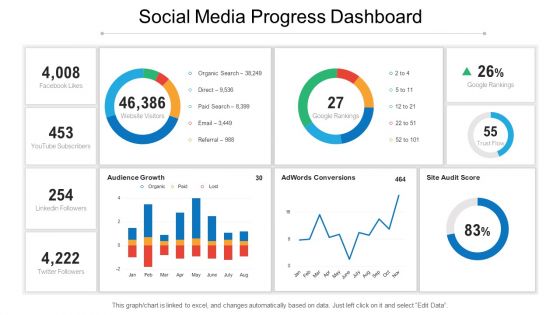
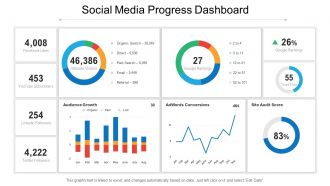
Panel de progreso de las redes sociales





Try Before you Buy Download Free Sample Product
 Impress Your
 Audience
 100%
100% Editable
 Save Hours
 of Time


Siga su propio ADN con nuestro Panel de progreso de las redes sociales. Comenzará a sentirse conectado.
People who downloaded this PowerPoint presentation also viewed the following :
Panel de progreso de las redes sociales con las 6 diapositivas:
Nuestro panel de progreso de las redes sociales realmente se preocupa mucho. Están totalmente comprometidos con su avance.
FAQs for Social media
Honestly, engagement rate is where you should start - just divide your likes, comments, and shares by your follower count. Way better than obsessing over how many followers you have. I'd also watch your reach (how many people actually see your stuff) and click-through rates if you're sending people somewhere. Oh, and conversion rates obviously if you're selling anything. Most people I know get totally overwhelmed trying to track everything though. Pick like 3-4 things that actually matter for your business and stick with those. You can always add more later once you've got the basics down.
Honestly, analytics are a game-changer because they show what people *actually* care about vs what you assume they want. Check your top 5 posts from last month - look for patterns in timing, topics, format. The demographic stuff is super helpful too. You'll see when your audience is online, their age ranges, interests beyond your brand. Different platforms love different content (LinkedIn posts will totally flop on TikTok, trust me). Focus on whatever gets the most engagement - likes, shares, comments - then create more of that. It's way better than just guessing what works.
Honestly, just start with Google Analytics 4 and whatever free tools each platform gives you - Facebook Insights, Twitter Analytics, all that stuff. Hootsuite's pretty solid for managing everything in one place instead of switching between like ten different tabs (which gets old fast). If you've got the budget, Sprout Social is actually worth it - their reports are so much cleaner than piecing things together yourself. I'd avoid going crazy with too many tools at first though. Pick one main dashboard and set up some automated reports so you're not manually pulling numbers every month. Way less headache.
So Instagram usually gets you 1-3% engagement, Facebook's pretty weak at 0.5-1%. LinkedIn can actually be solid for business stuff - like 2-5%. TikTok though? Totally different game. Their algorithm pushes engagement way higher, often 5-9%. Twitter's back down around 0.5-1%. Here's the thing - don't compare your Instagram numbers to LinkedIn. Different crowds, different vibes entirely. Better to check industry averages for each platform and track your own patterns over time. That'll show you what's actually clicking with your audience instead of just guessing.
So sentiment analysis shows you whether people are talking about your brand positively, negatively, or just meh. Goes way beyond counting mentions - you actually get the emotional vibe behind what they're saying. Think of it like a mood ring for your audience (okay that's cheesy but whatever). You can catch PR disasters before they blow up and see which campaigns people actually care about. Don't get hung up on every single bad comment though. The real value is watching sentiment trends over time. Set up alerts for major drops so you're not caught off guard when things go sideways.
Honestly, forget about follower counts - that stuff doesn't pay the bills. First thing is figuring out what actually counts as a "win" for your business, then set up conversion tracking to see which posts drive real results. Facebook's built-in analytics are pretty solid for this, but definitely connect everything to Google Analytics too. ROI formula is simple: (revenue made - what you spent) / what you spent x 100. I know it sounds boring, but once you start seeing which content actually makes money vs just gets likes, it's like a lightbulb moment. Work backwards from your goals.
So first, figure out who you're actually competing against. Then grab Hootsuite or Sprout Social to track their stuff - or just use Facebook's free insights if you're being cheap about it. I'm honestly obsessed with checking this data way too often lol. Check what content gets them the most engagement and when they post. Export everything monthly and throw it in a basic spreadsheet. Focus on engagement rates over follower counts though - that's what actually drives sales. Oh, and set a reminder or you'll totally forget to pull these reports regularly.
So you'll want to dig into your demographic data first - see who's actually engaging with your stuff. Age, location, interests, all that. Then spot your top 2-3 segments that convert best. That's where you focus your energy. Tailor everything for each group - messaging, timing, even visuals. The targeting options now are honestly insane. Like, I can target weekend coffee drinkers in their late twenties living in Seattle. Wild, right? Create separate content strategies for your best segments. Don't try to speak to everyone at once - it never works.
Ugh, the follower obsession is so real but totally backwards - engagement rates actually tell you way more. Also watch out for assuming correlation equals causation just because two numbers move together. I used to do this all the time! Don't cherry-pick your best posts and pretend that's normal performance either. You need actual benchmarks to compare against, not just your own old data. Oh and figure out what "success" even means to you first. Otherwise you'll waste months tracking random metrics that don't matter for your goals.
Oh dude, seasonality totally screws with your social media numbers! Like, people scroll way differently during summer vacation vs the January grind - makes sense, right? Don't freak out when your engagement drops 20-40% during certain months. Your strategy isn't broken. Compare this December to last December, not to March (learned that the hard way). Holiday periods and back-to-school seasons create weird patterns. Set seasonal benchmarks so you're not stressing when things look off. Year-over-year comparisons are your friend here.
Dude, lead with your best numbers right away - don't make them sit through boring methodology stuff first. Pick maybe 3-5 metrics that actually connect to what they care about. Conversion rates, engagement quality, that kind of thing. Not just follower counts (those are basically useless anyway). I made this mistake SO many times - executives would literally zone out during my marathon presentations. Tell them what the numbers mean for business, not just "here's a pretty graph." Oh, and always end with one solid recommendation they can actually do something with. That's what separates good reports from forgettable ones.
Honestly, social media analytics are like a cheat code for customer service. Set up alerts for negative mentions - you'll catch complaints before they spiral out of control. The data shows which topics make people mad and how fast you're actually responding. What's really cool is seeing which support responses work vs. the ones that just piss people off more. Track your resolution rates and watch how sentiment changes after interactions. I check response times weekly, but that might be overkill. Monitor sentiment patterns too - they'll show you where customers hit their breaking point.
Honestly, video is still king - you'll get like 2-3x more engagement than regular posts. Instagram loves carousels and Reels obviously. LinkedIn is weird though, even super basic "here's what I learned" posts do crazy well there, plus any professional hot takes. Twitter's all about timing and those thread breakdowns of complicated stuff. Oh, and definitely try behind-the-scenes content - people are obsessed with that authentic stuff. User-generated content works too. I'd just throw different post types at the wall and track what sticks in a basic spreadsheet. Your audience might be totally different than everyone else's.
Honestly, A/B testing your social posts is a game changer. Pick one thing to test - maybe your caption style or posting time - and see what actually moves the needle on engagement. Don't try testing everything at once though, you'll have no clue what worked. The analytics setup is kinda boring but super important - use the platform's built-in stats plus UTM codes if you're driving traffic somewhere. I've seen people skip this step and then wonder why their data's all over the place. Once you find what's working, just roll those elements into your next posts. Way better than throwing stuff at the wall and hoping.
Honestly, start with getting real consent - not just buried in terms nobody reads. Strip out anything that could identify people personally. Mental health stuff and political posts? Be extra careful there. Document why you're making each choice because you'll need to justify it later. The thing is, most users have zero clue how deep this analysis actually goes. Could your findings hurt certain groups or make existing biases worse? That's worth thinking through. Oh, and audit your process regularly - it's easy to drift from your original ethical standards without noticing.
No Reviews