

Social Media Sentiment Interpretation Dashboard




Try Before you Buy Download Free Sample Product
 Impress Your
 Audience
 100%
100% Editable
 Save Hours
 of Time


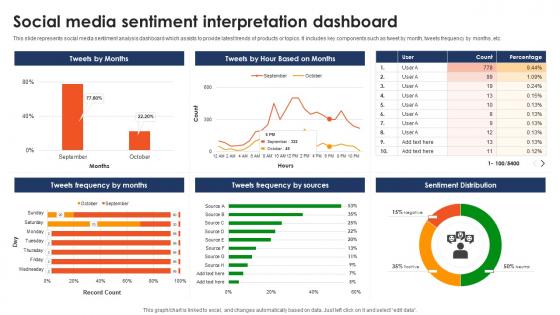
This slide represents social media sentiment analysis dashboard which assists to provide latest trends of products or topics. It includes key components such as tweet by month, tweets frequency by months, etc.
People who downloaded this PowerPoint presentation also viewed the following :
Social Media Sentiment Interpretation Dashboard with all 10 slides:
Use our Social Media Sentiment Interpretation Dashboard to effectively help you save your valuable time. They are readymade to fit into any presentation structure.








FAQs for Social Media
Hey! So for sentiment tracking, you'll want to watch sentiment polarity (positive/negative/neutral percentages) and sentiment scores (usually -1 to +1 scale). Volume of mentions matters too, plus engagement rates on those sentiment-tagged posts. Twitter's always more negative than Instagram btw - no surprise there lol. Track trends over time and definitely compare your sentiment share of voice against competitors. Most tools auto-generate this stuff, but honestly? Set up custom dashboards so you can catch sentiment shifts early before they blow up into real problems.
So basically, NLP crushes those old keyword systems because it actually gets context. Like when someone says "not good" - keyword matching would just see "good" and mess up completely. NLP catches sarcasm too, which is huge for social media stuff. It handles all the messy real-world text - typos, slang, weird abbreviations people use. The preprocessing does help focus on words that matter. Honestly though? Don't build this from scratch - just grab BERT or RoBERTa and save yourself the headache. Way better starting point.
Ugh, sarcasm is the worst - algorithms see "oh great, another meeting" and think it's positive because of "great." Context trips them up constantly too. Same words mean totally different things depending on what's happening in your industry or the news cycle. Then there's all the emoji combos and internet slang that evolves way faster than any model can handle. Honestly, I've seen sentiment tools completely butcher obvious sarcasm. Your best move? Mix automated analysis with human reviewers, especially for anything customer-facing or important business stuff.
Yeah, cultural differences will totally screw up your sentiment analysis. Like, Germans being direct sounds normal to them but would seem rude to Japanese users. Your English-trained models won't catch sarcasm or politeness cues from other cultures either. Even that upside-down smiley emoji means completely different things depending on where you are - kinda wild when you think about it. I'd honestly just get region-specific training data or work with local teams who actually know the cultural context. Way better than guessing and getting it wrong globally.
Okay so for sentiment analysis - if you've got money, Brandwatch and Hootsuite Insights are your best bet. They handle all the major platforms pretty seamlessly. MonkeyLearn's decent for API stuff if you're more budget-conscious, and Google's Natural Language API actually works better than you'd expect for basic analysis. Though it does miss some of the weird social media slang sometimes. VADER's solid too and it's free - specifically designed for social text so it gets the casual tone better. Oh and Lexalytics is worth checking out. Definitely test whatever you pick with your actual data first because results can be all over the place depending on your niche.
Honestly, sentiment analysis is a game changer for tracking how people actually feel about your brand on social. When negative vibes start spiking around a product or campaign, you can jump on it fast with targeted responses. The flip side? Find your happiest customers and amplify their posts or turn them into killer case studies. I'd start simple - manually track your brand mentions for a week and see what patterns emerge. Sentiment trends show you what messaging hits vs. what totally bombs. Then you can look into automated tools once you get the hang of it.
Oh man, this totally screwed me over when I first started! Traditional models completely whiff on stuff like "sick" meaning cool instead of literally sick. Same with emojis - that crying-laughing one gets read as sadness when it's obviously joy. Super frustrating honestly. You really need models trained on social media data, or at least preprocess everything first. Like convert the slang and emoji meanings before you run analysis. Context is everything too. I learned this the hard way after getting completely bizarre results on what should've been straightforward sentiment scoring.
So sentiment analysis tracks how people feel about your brand on social media in real time. You'll spot negative trends before they blow up into actual PR nightmares. Plus it shows which campaigns are crushing it vs the ones that totally bombed - I've seen some wild surprises there. Set up alerts for your brand mentions and competitors, then build response plans based on those sentiment scores. Oh, and start with your recent campaigns to find patterns. Trust me, the data tells stories you wouldn't expect.
Retail and hospitality companies get the most value from this stuff - they're constantly watching what people say about their products and competitors. Tech companies are pretty much addicted to it (sometimes to a weird degree honestly). Hotels jump on bad reviews super quick, and restaurants do the same thing. Financial services are finally getting into it more for reputation stuff. Healthcare too, though they're being more careful about it. My advice? Don't overthink it at first. Just pick Twitter or wherever your customers hang out and start tracking mentions of your brand. You'll figure out what matters pretty quickly once you see the patterns.
Honestly, sentiment analysis is a game changer for catching what people really think about your brand before things go sideways. Track audience reactions to your content and see what actually hits vs. what bombs. Way faster than those ancient focus groups we used to rely on. You can spot brewing PR nightmares early and find people already hyping your brand organically. I'd start monitoring your current stuff first - you'll probably discover some weird patterns you never noticed. Use it to test different campaign angles too. Double down on whatever's working best.
Okay so first thing - consent is huge here. People didn't post expecting researchers to analyze their stuff, you know? Your models can get super biased too and end up reinforcing stereotypes or completely missing sarcasm (which honestly happens to humans half the time anyway). Definitely anonymize everything and be transparent about your methods. Context is tricky - what seems obvious to you might not translate. And think about whether your findings could actually hurt people if they get taken the wrong way. I'd say just be really upfront about your limitations from the start.
So basically people vent online way before they actually stop buying stuff or switch brands. I've noticed this pattern where social media blows up with complaints about a company, then like 1-2 weeks later their stock tanks or sales drop. Pretty wild honestly. You can track this by watching for sudden spikes in negative chatter around specific brands or products. It's like getting a heads up on market shifts before they actually happen. The reverse works too - when everyone's hyping something up online, sales usually follow. Just gotta pay attention to the volume changes, not just random complaints here and there.
Honestly, automated sentiment analysis is pretty hit-or-miss. It'll totally whiff on sarcasm - like "great, another Monday meeting" gets flagged as positive when it's obviously not. Cultural stuff and industry slang? Forget about it. Mixed emotions in one post confuse the hell out of these tools too. Someone might love your product but absolutely hate how slow shipping was, and the algorithm just... can't handle that complexity. That said, you can blast through thousands of mentions super fast. I'd say use it for the heavy lifting, but don't trust it with anything crucial without having actual humans double-check first.
Yeah, so Twitter's crazy condensed because of character limits - emotions hit way harder there. Facebook gives people room to ramble, so you get more complex feelings mixed together. Instagram's weird since you're analyzing captions but also need to consider what's actually in the photo. LinkedIn stays pretty sanitized and professional (boring, honestly). Reddit? That's where people get real - lots of sarcasm that'll mess with your tools. TikTok comments are basically a different language with all the slang and random emojis. You'll definitely want separate models for each platform instead of trying to force one approach everywhere.
Oh totally! Starbucks does this really well - they watch Twitter for complaints and jump on them fast. Netflix actually uses social media reactions to decide what shows to make, which is kinda genius when you think about it. JetBlue tracks when people start getting pissed about delays so they can get customer service ready. And remember Coca-Cola's "Share a Coke" thing? They were watching how people reacted in real-time across different countries. Honestly, I'd say just pick one platform first and focus on stuff you can actually act on instead of trying to do everything.
-
Professional and unique presentations.
-
I can always count on your designs for my professional needs. I believe I found a one-stop-shop for PPTs.