


Dashboard To Track Sentiment Analysis Process




Try Before you Buy Download Free Sample Product
 Impress Your
 Audience
 100%
100% Editable
 Save Hours
 of Time


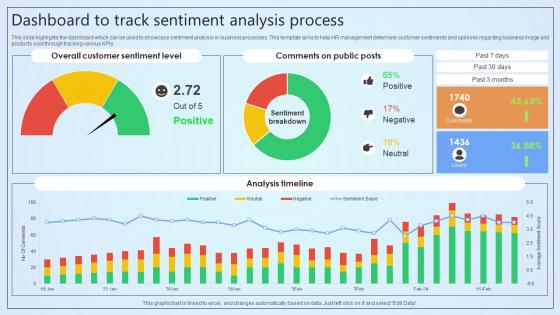
This slide highlights the dashboard which can be used to showcase sentiment analysis in business processes. This template aims to help HR management determine customer sentiments and opinions regarding business image and products sold through tracking various KPIs.
People who downloaded this PowerPoint presentation also viewed the following :
Dashboard To Track Sentiment Analysis Process with all 10 slides:
Use our Dashboard To Track Sentiment Analysis Process to effectively help you save your valuable time. They are readymade to fit into any presentation structure.








FAQs for Dashboard To Track
Start with sentiment trends over time - that's your bread and butter right there. Volume of mentions matters too, plus breaking down sentiment by product or category. I'd throw in top positive/negative keywords and where the chatter's coming from (social, reviews, news sites). Response time metrics are clutch if you're doing customer service stuff. Oh, and set up alerts when sentiment tanks below your comfort zone - honestly that's probably the most useful feature. Nothing worse than finding out about a PR nightmare three days late. Get those automated notifications running so you can actually do something about problems.
Dude, this stuff is game-changing. You'll catch PR disasters before they blow up instead of scrambling weeks later when it's too late. Same with product features - you can actually see what customers love in real time and tweak your marketing campaigns while they're running. Honestly? Once you start using it, you get kinda hooked on having that constant pulse on customer mood. Pro tip though - set up alerts for when sentiment tanks so your team can jump on issues fast. Way better than letting small problems snowball into massive headaches.
So there are basically three main types you'll run into - dictionary-based ones that use word lists with sentiment scores, machine learning models trained on data, and hybrids that mix both approaches. Most dashboards just use pre-built stuff like VADER or TextBlob since they're crazy fast to set up. You don't need a bunch of training data either. Some fancier systems use BERT and those transformer models, but that's honestly way too much for most business stuff. I'd go with VADER if you're starting out - works great on social media text and you can literally have it running in an hour.
Dude, trust me on this - charts are a game changer for sentiment data. You'll actually see what's happening instead of drowning in spreadsheet hell. Line charts show if things are going up or down over time, heat maps highlight your worst days (like when that product launch went sideways lol). Bar charts work great for comparing different topics too. I was totally blind to patterns before we started visualizing this stuff. Your boss will finally understand what you're trying to tell them. Start simple with a basic time series - you can get fancy later.
So NLP is what makes your sentiment analysis dashboard actually work - it reads through all that text and figures out if people are happy, pissed off, or just meh about your stuff. These algorithms have gotten scary good at picking up on language patterns and emotional cues. Without it, you'd just have a fancy word counter that tells you nothing useful lol. The accuracy rates vary wildly between platforms though, so definitely dig into that when you're shopping around. Some dashboards are way better at catching sarcasm and context than others.
So basically you'll want to tweak your data sources and keywords based on what actually matters for your field. Retail companies should track product reviews and social media buzz. Healthcare's totally different though - patient feedback and regulatory stuff is way more important. Custom sentiment categories are clutch here. Like "product quality" for online stores or "service reliability" if you're SaaS. Oh and most platforms let you add your own industry terms, which honestly bumps up accuracy like crazy. I'd start simple - pick your top 3-5 areas that could make or break your business and build everything around those.
Just focus on where your customers actually complain or rave about you. Twitter and Facebook are usually the big ones, plus Google Reviews obviously. Maybe add whatever review site matters for your industry. But seriously, don't try to track everything right away - I made that mistake once and got buried in useless data. Pick like 2-3 sources max at first. You can always add more later when you've figured out your system. The whole point is monitoring places where what people say actually affects your business, not just collecting random opinions from everywhere.
Honestly, sentiment analysis is a game changer for CRM stuff. It lets you catch unhappy customers before they bail, plus you can find your biggest fans for upsells. Instead of just reacting to problems, you're actually predicting them based on how people feel about your brand. Pretty cool, right? The mood data helps you figure out which accounts need your attention ASAP versus the ones doing fine. I'd start by adding sentiment scores to whatever customer health tracking you're already doing - it'll give you so much more context for your outreach. Way better than flying blind.
Honestly, sentiment scores are kinda deceiving - like a 70% positive score doesn't tell you *why* people are happy or pissed. Your dashboard will totally miss sarcasm too. I found out the hard way that cultural stuff matters when dealing with international customers - same words, completely different meanings. Volume spikes will mess with your baseline numbers as well. Short bursts of complaints can make everything look way worse than it actually is. Always dig into the actual comments behind those nice looking charts. Numbers lie sometimes, but the raw feedback usually doesn't.
So there's a few ways to hook this up - APIs, embedded widgets, or just connecting directly to your database. Most BI tools like Tableau or Power BI already have connectors built in, which is pretty convenient. The tricky part is getting your sentiment data flowing into the same warehouse as everything else. Honestly took me way longer than expected when I first did this setup. But once it's working? You'll see customer satisfaction right next to your sales data and support tickets. Pretty neat actually. I'd start by seeing what connectors your current platform already has available.
Honestly, sentiment analysis is like having a crystal ball for your business. Track how people feel about your brand over time - when those feelings start tanking, you'll usually see sales drop a few weeks later. Works the other way too. If your competitor's sentiment suddenly spikes, they're probably about to eat into your market share. I've noticed it's super helpful for catching seasonal trends early. Don't just look at one-off snapshots though - you need the whole timeline to spot real patterns. Set up some alerts so you're not constantly checking manually.
Dude, first thing - get proper consent before analyzing anyone's emotions. That's just basic decency. Anonymize everything because nobody wants their bad mood plastered on a team dashboard, trust me. Those sentiment models are pretty biased too, especially with different cultures and communication styles. Don't let managers use it as some weird emotional surveillance tool - that'll kill morale fast. Keep stuff aggregated when you can. Honestly, I'd flip out if my boss was monitoring my text tone all day. Set boundaries upfront about how this data gets used, or it'll backfire hard.
So basically you need to check three main things. Test your model against manually labeled data monthly (or weekly if you can swing it). Also train it on your specific industry language - generic models totally miss the mark on context. Then set up human review for weird edge cases. Honestly, sentiment is so subjective anyway, so having multiple people review helps cut down on bias. I'd start by figuring out your current accuracy rate first, then create a feedback system where your team flags wrong classifications. The whole thing's trickier than it seems but doable.
Netflix tracks social media reactions to their shows through sentiment dashboards - helps them decide what to renew or cancel. Pretty smart actually. Airbnb does something similar with host/guest feedback and cut complaints by 30%. Buffer (smaller company) monitors brand mentions to guide product updates. Retail companies are crushing it with this stuff though. If you're thinking about trying it, just start simple - maybe Twitter mentions or customer reviews first. You can always add more later once you see if it's actually useful for your situation.
So sentiment analysis tracks what people actually say about your brand on social media, reviews, all that stuff - but in real-time without you having to scroll through everything manually. It sorts feedback into positive, negative, or neutral automatically. Pretty handy for catching problems before they blow up. You can also find your biggest supporters for partnerships and see which campaigns people actually care about. Oh, and definitely set up alerts for negative spikes - way easier to fix things when they're small. Honestly saved me so much time when I was doing social media management.
-
SlideTeam is my one-stop solution for all the presentation needs. Their templates have beautiful designs that are worth every penny!
-
They had the topic I was looking for in a readymade presentation…helped me meet my deadline.