


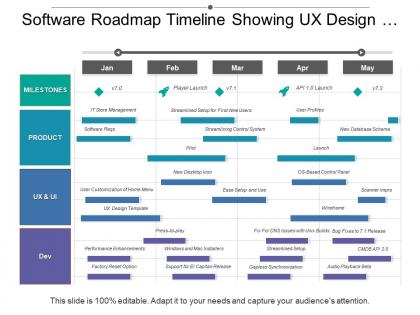
Software roadmap timeline showing ux design and wireframe




Try Before you Buy Download Free Sample Product
 Impress Your
 Audience
 100%
100% Editable
 Save Hours
 of Time


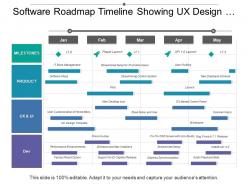
Let your designers to create a solid user experience with our software roadmap timeline showing UX design and wireframe PowerPoint slide. This presentation slide of user experience wire framing has been designed by our team of professional designers and helps you present insights into the topic of UX wire framing, tools and tips on design workflow. Our user interface design PPT layout can be used to lay out content and functionality on a page which can map out user needs and their journeys. This slideshow is useful in displaying the early development of process to establish the basic structure of a page before visual design or content is added. With the help of this product roadmap presentation slide you can show what behind what you’re building .This template allows you to display strategic document for executing the plan such as facilitate discussion of scenario planning, communicate to external stakeholders, including customers. Our Software Roadmap Timeline Showing Ux Design And Wireframe enable depth of coverage. They dig out the deepest detail.
People who downloaded this PowerPoint presentation also viewed the following :
Software roadmap timeline showing ux design and wireframe with all 5 slides:
Engage the competition till the end with our Software Roadmap Timeline Showing Ux Design And Wireframe. You will be able to endure the long haul.
FAQs for Software roadmap timeline showing ux
Honestly, you need five main things for a solid roadmap. Clear goals, prioritized features with realistic timelines, and resource allocation - that's the foundation. Dependencies are huge though - I can't tell you how many projects I've watched crash because people ignored that part. Build in buffer time too, because something always goes sideways. Success metrics matter so you actually know if you're winning. Oh, and don't forget stakeholder communication plans and regular check-ins. The timeline doesn't need to be perfect, just realistic for what your team can actually handle.
Start by figuring out which features actually matter to users and your business goals. Score everything on effort vs impact - sounds boring but it works. Don't forget dependencies and tech debt, that stuff will bite you later. Customer feedback is gold, way better than guessing what people need. For timelines, I always work backwards from big dates but pad everything because projects are like home renovations - they take twice as long as you think. Be upfront about trade-offs with your team. Things move fast so revisit monthly.
Honestly? Every quarter works for most teams, but I've seen some go monthly when they're in crazy growth mode. Thing is, your roadmap needs to actually match reality - priorities change, users complain about stuff you didn't expect, technical debt bites you in the ass. Three months is probably the max though. Any longer and you're basically writing fantasy fiction instead of planning. I always just throw it on my calendar as a recurring thing, same as any other meeting. Trust me, stakeholders would way rather get regular updates than be blindsided later when everything's different.
Honestly, stakeholder feedback is what separates good roadmaps from total disasters. Without it, you're basically guessing at what people actually want. I've watched teams build entire features nobody asked for - it's painful to see. Get feedback from everyone: customers, sales folks, support teams, whoever touches your product. Do surveys, interviews, quick check-ins, whatever works. Then prioritize based on what'll actually move the needle. Oh, and set up those quarterly reviews to course-correct when needed. Trust me, your roadmap will thank you later.
So roadmaps are basically your team's compass - they turn big business goals into actual dev work with deadlines. Without one, everyone just builds whatever sounds fun (trust me, been there). Each sprint connects to real stuff like revenue or user growth instead of random features. When your boss asks "why this over that?" you can point to clear business impact. Honestly, most teams skip this step and wonder why their releases feel scattered. Start by looking at your backlog and match each item to a business outcome. You'll probably spot some obvious gaps pretty quick.
So basically, short-term roadmaps cover like 1-3 months and get super specific - actual features, bug fixes, stuff your team can realistically ship. Long-term ones are more about 6-12 months out with bigger picture goals. Think "redesign the checkout flow" instead of "fix that annoying validation error on the payment page." You know? Keep your short-term roadmap pretty locked down since you're already building that stuff. Long-term though? Way more flexible. Honestly, I've never seen a long-term roadmap that didn't change at least three times. Focus on outcomes for the big picture stuff, not specific features.
Honestly, roadmaps are so much better when they're visual. People can actually scan timelines and see what's coming up without getting lost in spreadsheet hell. Color-code different teams, use swim lanes - whatever works. I've sat through too many meetings where someone's reading bullet points off a slide and everyone's eyes are glazing over. You'll catch conflicts and gaps way faster with visuals too. ProductPlan is solid if you want something fancy, but even a basic Gantt chart beats a wall of text every time.
ProductPlan, Roadmunk, and Aha! are solid if you want something built specifically for roadmaps - they've got nice stakeholder sharing stuff. But honestly? Most teams I've worked with just stick to Notion or Google Sheets and they're doing fine. The real trick is finding something everyone will actually update. I'd probably start with ProductPlan's free tier or throw together a basic Notion setup. Oh, and don't get stuck choosing the "perfect" tool for weeks like my last team did. Getting people to buy in and stay consistent matters way more than having fancy features.
Honestly, the best thing I did was stop treating roadmaps like they're carved in stone. Focus on themes and outcomes rather than specific features - way more wiggle room that way. Buffer time is your friend too, trust me on this one. We got burned last year when everything had to shift in Q3 and there was zero breathing room. Monthly check-ins help catch problems early. Your stakeholders won't panic about changes if you explain upfront why flexibility matters. Oh, and customer feedback will definitely throw curveballs at you. Just roll with it - that's literally the point of staying flexible.
Honestly, you gotta measure two things - are you actually shipping stuff on time, and is that stuff even working? The delivery part is pretty straightforward: hitting milestones, staying in scope, basic project management stuff. But here's what really matters - is anyone using what you built? Check adoption rates, customer happiness scores, revenue impact, whatever makes sense for your product. Oh and track how much you're changing direction too. A little pivoting is normal but if you're constantly rewriting the roadmap, something's broken in your planning process. Both sides matter, start tracking now.
Talk about results, not features - trust me on this one. What problems are you solving and when will they see the payoff? That's your opening. Don't get into the technical weeds. Their eyes will glaze over faster than you think. Instead, show them user benefits and revenue impact with a simple timeline. Real dates, not "sometime next quarter." Everything needs to connect back to what keeps them up at night - customer complaints, budget pressure, whatever. Oh, and always build in time for questions. They'll have plenty, and being upfront about what you don't know yet actually builds credibility.
Ugh, scope creep is the worst - stakeholders always want "just one tiny thing" added mid-project. Timelines get completely unrealistic too. Your priorities will shift constantly, especially if leadership pivots or market stuff changes. Technical debt always bites you harder than expected during planning. Oh, and good luck getting everyone to agree on what "done" actually looks like - that's weirdly harder than it sounds. I'd say pad your timeline from day one and do frequent check-ins to re-prioritize. Don't feel bad about pushing back when expectations get nuts.
Your roadmap is basically your game plan for everything - sprint planning, releases, even who to hire next. It keeps stakeholders from throwing random feature requests at you mid-sprint (trust me, this saves your sanity). You'll reference it for big architecture decisions too since you can see what's coming down the pipeline. Honestly, I used to think roadmaps were just busy work until I realized they help prioritize features and allocate resources way better. Just don't set it in stone - treat it more like a living doc that evolves with your product.
Honestly, you've gotta listen to your users or you'll end up building features nobody cares about. Trust me on this one - I've watched teams spend months on "brilliant" ideas that totally bombed because they never asked actual users what they wanted. Set up some basic feedback channels like user interviews or surveys, then actually use that data when planning your next sprint. Even analyzing support tickets helps spot patterns you'd miss otherwise. Don't overthink it though - just pick one feedback method and review it monthly during roadmap sessions. Your future self will thank you when features actually get adopted.
Dude, don't get super specific with dates early on - you'll just move stuff around constantly and piss everyone off. Talk to actual users first (crazy concept, right?). Focus on the problems you're solving instead of just throwing features at people. I see so many roadmaps turn into these massive wish lists because someone important asked for their pet feature. Total waste. Keep it updated or nobody will trust it anymore. Oh, and start with big themes first, then drill down when you're actually ready to build something.
-
Attractive design and informative presentation.
-
Helpful product design for delivering presentation.