


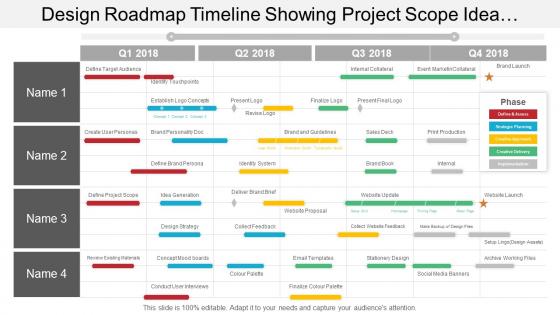
Design roadmap timeline showing project scope idea generation





Try Before you Buy Download Free Sample Product
 Impress Your
 Audience
 100%
100% Editable
 Save Hours
 of Time


Initiate striking conversations through our, design roadmap timeline showing project scope idea generation PowerPoint designs. Develop a stable project state statement to ensure all of the required work is accomplished before the deadline. We have shown the visuals of a PPT datasheet conceptualized in four quarters to elaborate your plans. Various phases are shown here in different colors to display carefully creative approach and tasks implementation. Conceptualized on a flat design, we have included striking color combinations in this PPT design to make it easier for the observer to understand the motive of the presentation. Initiate for an exciting experience which is bound to last, just click on the download button to apply our, design roadmap timeline showing project scope idea generation PowerPoint designs in your business meetings. They will be the ideal fit for the most prominent ideas. Initiate interested joggers with our Design Roadmap Timeline Showing Project Scope Idea Generation. Instruct them correctly from the beginning.
People who downloaded this PowerPoint presentation also viewed the following :
Design roadmap timeline showing project scope idea generation with all 5 slides:
Our Design Roadmap Timeline Showing Project Scope Idea Generation ensure folks take off their hats. Admiration comes from all around.
FAQs for Design roadmap timeline showing project
Honestly, start with research and strategy - figure out what users actually need and what the business wants. Then comes planning (this is where everything gets chaotic, but roll with it). Map out your initiatives and timelines, though half of it will probably change anyway. Get stakeholders on board super early or you'll hate your life later. Regular check-ins are crucial since priorities shift constantly. My advice? Don't try to plan a perfect year-long roadmap right away. Start quarterly and see how it goes. Way less overwhelming.
Honestly, user research is everything for your design roadmap. You'll think you know what people want, but you're probably wrong (I always am). Run usability tests and watch how users actually behave - that data becomes your next quarter's priorities. Pain points turn into urgent fixes, requests show you what features matter. The trick is making feedback constant, not just a one-time thing. Monthly interviews work great, or just throw feedback tools directly in your product. Way better than building stuff nobody uses.
Yeah, you definitely need those other teams involved from the start. Engineering will tell you what's actually buildable (and what'll take forever). Product managers know the business priorities, and marketing has all the user data you'll need. Trust me, planning solo is a nightmare - I've watched so many roadmaps fall apart because nobody checked if the ideas were even realistic. Get everyone in a room early and keep talking throughout the process. The best roadmaps happen when all that expertise gets mixed in upfront, not as an afterthought.
Honestly, ditch the rigid timeline approach and build flexibility right in. Short sprints work way better—like 2-4 weeks max. I've watched so many teams crash and burn with those crazy 6-month plans that become useless after week 3. Regular checkpoint meetings are clutch, but you've gotta actually be willing to axe features that aren't hitting. Don't just go through the motions. Your roadmap should evolve with real user feedback, not sit there like some sacred document you can't touch. Market stuff changes fast these days.
Track both user stuff and internal team metrics - you need the full picture. User satisfaction, task completion rates, how much easier things got. For internal: are you shipping faster? Less design debt? Better delivery timelines? Honestly, stakeholder happiness matters more than people admit - keeps projects running smooth. Don't go crazy though, pick like 3-4 metrics that actually connect to your business goals. I've seen teams drown in data they never use. Set up something simple you can review monthly. That's it.
First thing - map everything back to what users actually need and your business goals. That's your anchor point. I throw together a quick impact vs effort matrix, though let's be real, effort estimates are basically fiction half the time. Still helps you see what's worth doing though. Technical dependencies matter too, obviously. Get your devs involved early because they'll catch stuff you totally missed. Oh and team capacity - don't forget that one. The hardest part? Saying no to shiny features that won't actually move anything forward. Be brutal about it.
Ugh, don't make your roadmap super rigid - I learned this the hard way. Everything takes way longer than expected, so build in buffer time. Also, get stakeholders on board early or you'll be redoing everything when they inevitably change their minds. Feature planning is cool but don't forget about technical debt and user research - that stuff eats time like crazy. Keep checking with your team and users regularly. Oh, and honestly? Most timelines are just fancy guesses anyway. Stay flexible and you'll be fine.
Honestly, color coding is your best friend here - use it for different product areas or priorities. Icons help people spot feature types instantly without squinting at tiny text. I'd sketch out your main points first before getting fancy with design tools (saves so much time). Swimlanes work great for separating teams, and timeline bars show what's happening when. People's eyes glaze over with text-heavy slides anyway. Don't cram everything together - whitespace keeps it from looking like a hot mess.
Honestly, Figma's been my go-to for most design roadmaps lately - the collaboration features are solid. Miro works great too if your team's already using it. Roadmunk and ProductPlan are better for timeline-heavy stuff, though they're probably overkill if you're just starting out. Don't sleep on simple options like Google Slides or Notion either. I've seen teams waste weeks debating tools when they could've just used what everyone already knows. Pick whatever your stakeholders can actually access and comment on without needing a tutorial. You can always switch later if you need fancier features.
Quarterly updates are the bare minimum, but honestly? It really depends on your product's pace. Fast-moving or brand new stuff might need monthly check-ins. I've watched teams get way too married to their original plans and completely miss good opportunities - don't be those people. User feedback, business changes, and random technical stuff will always mess with your timeline anyway. Just set up a recurring meeting with your stakeholders to look it over. When priorities shift or you learn something new, don't hesitate to pivot. Flexibility beats stubbornness every time.
Look, your design roadmap needs to actually support what the business is trying to do. Otherwise you're just making stuff look pretty for no reason - trust me, I've wasted months doing exactly that. Start with your company's goals. Trying to boost user retention? Then prioritize features that'll actually help with that specific problem. Map each design project back to real outcomes - revenue, cutting costs, whatever metrics you're tracking. Before starting anything, ask yourself "how does this help us hit our quarterly targets?" Sounds boring but it works. Your roadmap becomes this bridge between company strategy and actual design work instead of random pretty projects.
Don't just dump the roadmap on people after you've made it - that's asking for trouble. Get everyone together upfront to hash out what success looks like and what matters most. I swear, this saves so much drama later when someone goes "wait, that's not what we agreed on." Monthly check-ins work great too. Show them the messy work-in-progress stuff and let them complain early before things get crazy. Honestly, people just want to feel heard. Set up some shared doc where they can drop comments between meetings - makes them feel like actual partners in this thing instead of just getting talked at.
You've gotta speak their language, honestly. Execs just want the bottom line and when stuff will happen - skip all the nitty gritty details. But your designers and researchers? They're dying to know the methodology and user insights that shaped everything. Developers are different too - they care about technical stuff and what depends on what. I end up making like 3 versions of the same roadmap which is kinda annoying but whatever, it works. Visuals are huge since people's brains work differently. Oh and definitely save time for questions because someone always brings up some weird edge case you forgot about.
Honestly, tech constraints are gonna make or break your design roadmap. Start by figuring out what your current tech stack can actually handle - then map that against what you're trying to build. Don't promise features that won't be possible for years (learned this the hard way). It's like designing a spaceship when you're not even sure the rocket fuel exists yet. Check what's emerging in your space too. Your team's skill level matters just as much as the tech itself. Short version: audit your gaps first, then plan around what's actually doable.
So basically a design roadmap keeps your brand from looking schizophrenic over time. You map out where your visuals should go in the next 2-3 years instead of just winging it every time something needs updating. Like when to tweak your logo or how new design elements should roll out. Honestly, it saves your ass when clients or bosses ask "why does this look like this?" - you've got actual reasoning instead of just shrugging. I'd start with your big picture brand vision first, then figure out what design steps will get you there. Way better than scrambling last minute.
-
Very unique and reliable designs.
-
Use of different colors is good. It's simple and attractive.