

1 year business achievement timeline example of ppt




Try Before you Buy Download Free Sample Product
 Impress Your
 Audience
 100%
100% Editable
 Save Hours
 of Time


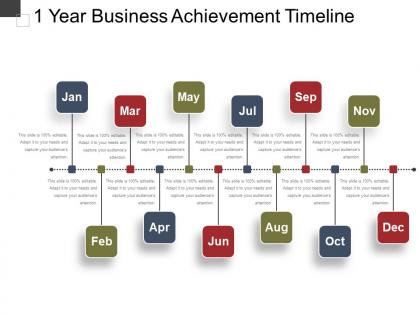
Use this 1 Year Business Achievement Timeline Example of PPT to evaluate the productivity of your work. Calculate the efficiency of your business over a span of 12 months. A yearly company achievement PPT timeline can benefit your employees as well as your investors to get an overview of your business. Motivate and value the efforts your team has put in your project to meet the set goals. Articulate the details of your business milestones and achievements on a time-based roadmap. Highlight the areas that need to be emphasized to meet the set goals. With a strategic roadmap for business achievement, keep the team in sync for efficient working of the business. Attract more investors to invest in your organization with company achievement PPT slide. Give a periodic and easy to understand representation of all the accomplishments you have attained at your workplace. Along with the easy analysis, it provides a visually appealing presentation. Evaluate your company’s yearly performance with this business achievement PowerPoint roadmap.
People who downloaded this PowerPoint presentation also viewed the following :
1 year business achievement timeline example of ppt with all 5 slides:
Put a halt to all your doubts with our 1 Year Business Achievement Timeline Example Of Ppt. They ensure you cease to fret.
FAQs for 1 year business achievement timeline
Start with the big milestones - when you founded, major funding, product launches. Revenue numbers and customer growth definitely belong in there too. Awards and certifications are actually pretty huge for credibility, way more than I used to think. Don't skip partnerships or acquisitions either. If you pivoted at some point, that's worth mentioning since it shows how you got here. Keep everything in order timeline-wise. Focus on stuff that actually moved the needle for growth. Just start writing it out and you'll see what story comes together naturally.
Visuals are honestly a game-changer for timelines - way better than boring text blocks. Icons work great for different milestones, and color coding helps show your progress phases. Charts or graphs can highlight key metrics too. Before/after photos are my personal favorite though - they really show off the transformation. Progress bars are solid, team photos from big moments add personality, or just simple illustrations that capture what each achievement meant. Oh, and match your visuals to the emotional story you're telling. Pick your biggest wins first, then find visuals that make those moments pop.
Honestly? Start with Notion or Airtable if you want something that can handle both timeline views and all your project details. People get way too caught up in fancy features though - I've watched colleagues spend entire weeks just setting things up! Canva's got solid timeline templates for simpler stuff. Google Sheets works too if you mess around with conditional formatting. Oh, and if your team's already on Monday.com or Asana, they've got timeline features built right in. Just pick whatever everyone will actually stick with. The fanciest tool means nothing if it just sits there unused.
Honestly, just make a visual timeline with all your big wins - revenue jumps, new hires, product launches, that kind of stuff. Way better than dumping spreadsheet data on people (trust me on this one). Mix in the numbers stuff like "doubled revenue" with the softer wins too - partnerships, team milestones, whatever. Investors eat this up because they can actually see your momentum at a glance. Oh, and definitely lead with your biggest accomplishments first. The whole chronological thing just makes sense - shows where you've been and hints at where you're going next.
Ugh, the timeline thing gets everyone - I swear I still do this sometimes. You think something will take a week and suddenly it's been three because your designer got sick and the API broke. Buffer time is your best friend, seriously. Also make your milestones super specific - not "improve user experience" but like "reduce checkout abandonment by 15%." Vague goals are impossible to track. Dependencies will destroy you if you don't map them out first. And definitely schedule check-ins so you can pivot when (not if) things go sideways.
Dude, you gotta switch up your timeline based on who's looking at it. Executives want the big wins - revenue jumps, major milestones, strategic stuff. Your team needs the nitty-gritty details and challenges they remember dealing with. Investors? Show them growth numbers and market validation. I've watched people bomb this by using the exact same timeline for everyone - such a waste. Oh, and customers actually want to see product launches that affected them. Short version: just think about what each group really cares about and tailor accordingly.
Think of metrics like GPS for your business goals - they show you if you're actually getting somewhere or just spinning your wheels. Without them, you're basically flying blind and hoping that "great quarter" was real progress, not just good vibes. Pick 3-5 metrics that actually connect to your milestones, not just numbers that sound impressive at parties. I'd set up a simple monthly check-in system so you can catch problems early. Honestly, most people track way too much stuff and then ignore it all anyway. Focus on what directly tells you if you're winning or need to switch things up.
Honestly? I'd say every quarter for sure, but monthly check-ins are way better if you're in something that moves fast. Market stuff changes constantly - like, your priorities from January might be totally different by March. Don't let it become one of those documents you write once and forget about (we've all been there). Monthly pulse checks work great - just 30 minutes to see if your milestones still make sense. Then do deeper quarterly reviews when you really dig into resources and opportunities. Trust me, keeping it current saves you so much headache later.
Honestly, less is more here - pick 3-5 big wins that actually matter for your pitch. I'd start with where you are now and work backwards to show momentum building. Revenue numbers are great, but don't forget the juicy stuff like major partnerships or product launches that tell your growth story. Each milestone should connect to why they should bet on you going forward. Oh, and please use a clean horizontal timeline graphic instead of boring bullet points - it's way easier to follow. Investors eat that visual storytelling up.
Look at your last 3-5 similar projects and map out their key phases. Seriously, it's like being a detective - you'll spot patterns in how long things actually took vs what you planned. Check where delays usually hit and what caused them. Resource crunches? Seasonal stuff? Market weirdness? Plot those timelines out and see what keeps repeating. Maybe you always underestimate testing phases or clients go radio silent in December. Once you've got those patterns down, apply them to forecast your next milestones. Way more accurate than just guessing, trust me.
Look at how Apple does it - they show everything from that first chunky Mac to the iPhone launch. Pretty smart stuff. Starbucks pulls the same move, going from one tiny Seattle shop to world domination. Tesla's timeline hits different though, especially how they own up to those early production nightmares (honestly kind of refreshing). The thing is, these work because they're actual stories, not just boring milestone lists. Pick maybe 5-7 moments that actually mattered to your customers. Skip the internal stuff nobody cares about and focus on the wins that show real growth.
Oh this is smart! Drop testimonials right next to the milestones they relate to - like that amazing review after you hit 1000 customers, or feedback from your product launch. Makes it way more authentic than just random quotes floating around. I'd do callout boxes or quote bubbles next to the achievements. Short punchy ones work best honestly. You could even add special "customer milestone" markers for your biggest testimonials or case studies. Just make sure they actually match up with that time period in your business or it'll feel forced and weird.
Dude, forget what big companies do with their fancy 2-year plans. You're bleeding cash every month, so sprint mode is your only option. Get your MVP out in 3-6 months max - I've seen too many startups spend 18 months "perfecting" something nobody wants. Pivot every quarter based on what users actually tell you, not what you think they want. Short sprints, quick validation, then adjust. Don't fall in love with your timeline either, it'll change constantly. Oh, and build in extra time for when everything goes sideways (because it will).
Honestly, social impact milestones are a game changer for your business. People - investors, employees, customers - get way more excited working with companies that actually give a damn about something beyond profits. It's become huge in competitive markets where everyone cares about social stuff now. Plus it keeps you honest, you know? Like, are you actually doing good things or just putting nice words on your website? I'd pick 2-3 specific social goals and make them measurable. That way you can track if you're making real change happen.
Your timeline is honestly like proof that you're not just talking out your ass when you say "we're innovative." Pick the moments that actually show your values in action - those struggles and wins tell a way better story than bland marketing speak. Customers eat that stuff up because it's real. You can drop these achievements into your website, pitches, whatever. Way more convincing than saying "trust us, we're great." It's basically your brand's origin story, and everyone loves a good comeback or underdog moment. Just don't go overboard with every tiny milestone.
-
Great experience, I would definitely use your services further.
-
Presentation Design is very nice, good work with the content as well.