


Business achievement milestone roadmap template good ppt example




Try Before you Buy Download Free Sample Product
 Impress Your
 Audience
 100%
100% Editable
 Save Hours
 of Time


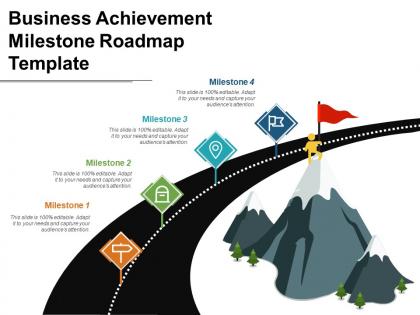
Generate a classy yet casual presentation with business achievement milestone roadmap template good PPT example. Created as a collective design, this success achievement PowerPoint template can accommodate any time-related progress concept. Edge out your report with this classic layout of milestones on the road to success presentation graphic to captivate the attention of the audience. One may use this PPT to talk about the subjects related to travel and leisure, business or career. Make way to a beautiful timeline or project planning by the use of this roadmap of milestones PPT graphic. This PowerPoint visual can even be used to symbolize landmarks and achievements at a personal level. The user can also label his goal or target near the flag on top of the mountain. Our Business Achievement Milestone Roadmap Template Good Ppt Example bring excellent fringe benefits. Your thoughts will acquire an expansive appeal.
People who downloaded this PowerPoint presentation also viewed the following :
Business achievement milestone roadmap template good ppt example with all 5 slides:
Acquire a global attitude with our Business Achievement Milestone Roadmap Template Good Ppt Example. Get a good dose of all different cultures.

FAQs for Business achievement milestone roadmap template
First year? Get your legal stuff done early - trust me, it's annoying but you'll thank yourself later. Build an MVP that people actually use (not just something that looks pretty). Talk to real customers constantly and listen to what they're saying about product-market fit. Money-wise, whether you're bootstrapping or chasing seed funding, try to hit some revenue milestone. Even tiny amounts count. Also set up basic financial tracking because tax season is brutal without it. Honestly, proving demand matters way more than having a perfect product. IP protection too if that's relevant for your space.
Honestly, I'd start by figuring out where you're bleeding customers in your journey - that's usually where the big wins are hiding. Work backwards from your main goal too. Like if you want to hit X revenue, what has to happen 6 months before that? Pick milestones that actually make you money, kill major risks, or unlock your next growth phase. Don't fall for the shiny metrics that just look good on paper (learned this the hard way). Keep it to 3-5 max, and each one needs someone owning it with a real deadline. Otherwise you'll just have a pretty list that goes nowhere.
So many good options! Asana, Monday.com, or Trello are solid for visual milestone mapping. Roadmunk and ProductPlan are more strategic - built specifically for this stuff. Honestly though? A simple spreadsheet works fine when you're starting out. I always forget about templates but HubSpot and Microsoft have decent free ones you can tweak. The real trick is finding something your team will actually stick with. I'd say start basic with whatever feels right, then level up later. No point getting fancy software that sits unused - been there before.
Check your roadmap monthly if possible, quarterly at bare minimum. Things move way too fast now - honestly, three months feels like forever in today's market. Think of it more like GPS directions than some carved-in-stone plan. When you hit major market changes, funding shifts, or keep missing deadlines repeatedly, that's your cue to pivot. I'd start by looking at where you actually ended up versus where you thought you'd be. Then figure out what's actually doable going forward. No point pretending everything's on track when it clearly isn't.
Think of KPIs like a GPS for your milestones - they show you exactly where you are vs where you need to be. Pick maybe 2-3 metrics per milestone that actually matter, like revenue growth or customer acquisition. Don't go overboard though. I've watched teams get buried under too many metrics and completely lose their way. Check your numbers weekly or monthly against your deadlines. That way you can pivot early instead of panicking later when you're way behind schedule. The trick is focusing on metrics that genuinely impact your goals.
Honestly, chunk those big goals into smaller wins your team can actually celebrate. Think video game checkpoints - way better than staring at some impossible finish line for months. Each milestone should be specific and about team achievements, not just hitting revenue targets. Pizza parties, team shoutouts, whatever vibes with your culture - just acknowledge the wins. People need to see how their daily work connects to these markers. Oh, and set up something simple to track progress visibly. Regular updates keep everyone motivated instead of wondering if they're making any difference.
Honestly, the worst thing you can do is make your milestones super vague. Like saying "increase revenue" instead of "hit $50K monthly recurring revenue by March." Be specific with actual numbers and dates. Also don't cram everything into tight timeframes - I learned this the hard way lol. Stuff always takes way longer than expected. Build in buffer time for when things go sideways. Make sure each milestone actually connects to your bigger picture instead of just random tasks. Oh, and assign clear ownership so nobody's confused about who does what. Start small with fewer milestones first.
Your industry's biggest headaches become your roadmap's biggest constraints, honestly. Tech moves fast with constant user feedback, so you need flexible milestones that can shift. Healthcare is brutal - regulatory stuff will add months you didn't expect. Manufacturing? Supply chains create deadlines that are absolutely non-negotiable. Figure out what typically screws up timelines in your field first. Then build extra time around those specific problems. I learned this the hard way when I copied a generic template once. Each industry has its own weird quirks that'll bite you if you don't plan for them upfront.
Talk differently to different people - execs want the big picture stuff, your team needs the nitty-gritty details. Visuals are your friend here, way better than walls of text that nobody reads anyway. Pick a rhythm and stick with it, whether that's weekly check-ins or monthly presentations. Honestly, celebrating small wins makes such a difference in keeping people invested (learned this the hard way). Always tell them what's coming next and where you're actually stuck - but only if they can help fix it. Oh, and make it a conversation, not just you talking at everyone.
Honestly, most roadmaps I've seen are just glorified to-do lists. Make sure each milestone actually ties back to your big company goals - not just whatever feels urgent this week. I'd review it quarterly against your vision and ask "does this still make sense?" Get your key stakeholders involved upfront so you're not fighting about priorities later. Oh, and create a simple one-pager showing how each major milestone supports your 3-5 year vision. Trust me, it'll save you so many headaches down the road.
Honestly, skip the boring team dinner thing. What about making like a mini museum of your journey? Throw in photos, old prototypes, customer reviews - whatever tells your story. Or here's something wild: host a "failure party" where you actually celebrate all the screwups that got you here. Sounds backwards but trust me, it's weirdly therapeutic. VR experiences are cool too if you're into that. You could plant a tree together or commission some custom art. Oh, and charitable stuff always hits different when it matches what your company actually stands for. Just make it personal to your team's vibe, you know?
Look, investors want to see you're not just winging it. Milestone roadmaps prove you've got a real plan with actual deadlines and goals you can measure. Get specific - like "hit 10K users by Q2" or "break even in 18 months." That stuff gets them excited because they can track if you're BS-ing or actually delivering. It shows you know your market and aren't delusional about timelines. Honestly, the revenue-focused milestones work best - investors care way more about money coming in than vanity metrics. Just don't make promises you can't keep because they'll definitely remember.
Honestly, I'd go with Agile - Scrum or Kanban work really well when stuff keeps changing. You can shift priorities between sprints pretty easily. Rolling wave planning is another good option where you nail down the next few milestones but leave the far-out ones vague until you know more. Monthly reviews are clutch for this - just sit down and figure out what's actually working based on real data, then adjust from there. OKRs are solid too, though they can feel a bit corporate sometimes. The main thing is having those regular checkpoints so you're not flying blind for months at a time.
Look, market trends are basically like weather for your business - they'll mess with your timeline whether you like it or not. When AI suddenly blew up, it completely wrecked our roadmap and we had to scramble. Your milestones need to bend with what's happening out there. I'd say pick 2-3 industry indicators to watch and check your goals every quarter. Sometimes you gotta speed up product launches or totally pivot. Honestly, it's way better to adapt than stick to some outdated plan that made sense six months ago but doesn't anymore.
Don't just slap feedback sessions onto your timeline as an afterthought - weave them right into each milestone. Pick three upcoming milestones and block out time for customer input this week. Surveys, calls, user testing - whatever works for your situation, just stay consistent with it. Each milestone should have a "check with customers first" step before moving ahead. Here's the thing though: you've got to ask smart questions at every stage and actually be ready to change course. I've seen too many people collect feedback then ignore it completely. The willingness to pivot based on what you hear? That's where the magic happens.
-
Wonderful templates design to use in business meetings.
-
Great designs, Easily Editable.