


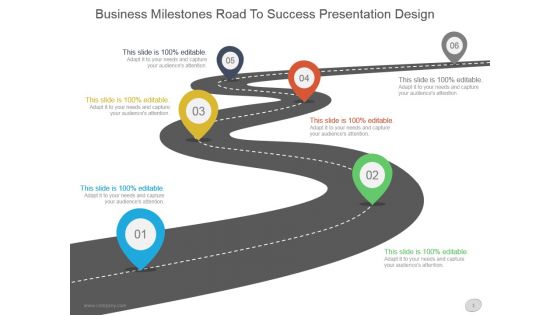
Business milestones road to success presentation design





Try Before you Buy Download Free Sample Product
 Impress Your
 Audience
 100%
100% Editable
 Save Hours
 of Time


Our Business Milestones Road To Success Presentation Design exemplify aesthetic appeal. Created to ensure an exquisite display.
People who downloaded this PowerPoint presentation also viewed the following :
Business milestones road to success presentation design with all 5 slides:
Inject fresh confidence with our Business Milestones Road To Success Presentation Design. Folks will develop greater conviction.

FAQs for Business milestones road to
Honestly, focus on the big stuff first - project kickoff, when requirements are locked down, major deliverables done, and launch day. Those are your non-negotiables. I made the mistake once of not setting a proper requirements milestone and wow, that came back to bite me. Also throw in external dependency completions and budget checkpoints. Testing phases too if they're major ones. But here's the thing - don't just pick random dates because they look nice on a calendar. Figure out what could actually tank your project, then build milestones around solving those problems first. Way more effective.
Set super specific criteria upfront - like "website mockups approved" instead of fuzzy stuff like "design progress." Use whatever project tool your team actually touches (not that expensive one collecting dust lol). Traffic light status updates are honestly the best - red, yellow, green that everyone gets immediately. Weekly or bi-weekly milestone check-ins work well depending on your timeline. Everyone needs to know what "done" means before you start though. That's huge. Start tracking day one, not when everything's already falling apart.
Honestly, milestones are lifesavers for catching problems early. Instead of waiting until everything's on fire, you get these regular check-ins to spot budget issues or timeline problems while you can still fix them. I learned this the hard way on my last project - wish I'd set better checkpoints. Each milestone forces you to step back and ask "okay, what's actually working here?" The smart move is leaving some wiggle room after the big ones. That way when stuff inevitably goes sideways, you're not completely screwed and can actually adjust your approach.
You want everyone to actually see the progress happening, so set up some kind of shared tracker. Honestly, celebrating the small wins matters more than people think - don't skip that part. Give each milestone a clear owner with real deadlines. Then do check-ins where people have to report back to the group. There's something about making your commitments visible to others that just works, you know? The accountability piece is huge. Oh, and keep it simple - maybe start with 3-4 major milestones for whatever you're working on right now. Makes everything feel less overwhelming.
Okay so the non-negotiables are concept validation, MVP, beta launch, and your actual market launch. Those will make or break you. Technical stuff like prototype approval and design freeze matter too, plus funding rounds if you're going that route. Honestly though, it really depends on what you're building and how big your team is. The main thing is defining what "done" actually looks like before you hit each milestone - otherwise you'll just be moving goalposts forever. Write it down so everyone's on the same page. Trust me, winging it never works out.
Honestly, visual timelines are a game changer. People actually pay attention to them instead of skimming past bullet points like they always do. You'll spot bottlenecks way earlier when everything's laid out visually. Dependencies become super obvious too - no more trying to figure out what depends on what in your head. I've noticed stakeholders engage way more in meetings when they can see the timeline instead of just hearing about it. Gantt charts work great, or even basic horizontal timelines with different colors for each phase. Trust me, it makes such a difference for keeping everyone on the same page.
Honestly, just make your milestones SMART - you know, specific, measurable, all that stuff. Break big goals into 2-4 week chunks so people don't get overwhelmed. I totally bombed a project last year by setting crazy unrealistic targets, so learn from my mistake lol. Each milestone should actually move you toward your end goal (sounds obvious but you'd be surprised). Get your team involved in planning them - they'll tell you what's actually doable. Oh, and don't be stubborn about adjusting as you go. Things change.
Honestly, it depends so much on what industry you're in. Tech moves super fast - they're hitting sprint goals and pushing out new features like every couple weeks. Healthcare? Totally different beast. You're looking at clinical trials and FDA stuff that drags on for years because everything's so regulated. Construction is probably the easiest to track since it's all physical - foundation's done, framing's up, inspections passed. The tricky part is that each industry cares about different things. Tech users want new features, patients need safety, building owners want it done on time. So you've got to think about your industry's typical timeline and what regulations you're dealing with when you set these up.
Honestly, you've got so many choices it's almost annoying. Asana and Trello are solid for visual stuff and team collaboration. Monday.com too. Sometimes though? Just use Google Sheets or Excel - they work fine and everyone knows how to use them already. Microsoft Project is powerful but kinda overkill unless you're dealing with crazy complex dependencies. Smartsheet's nice, Notion's trendy. TeamGantt makes really clean timeline visuals. But here's the thing - pick whatever your team will actually keep updated. The fanciest tool is useless if nobody touches it after week one.
Honestly, milestones are game-changers for team communication. You get these natural check-in points where everyone has to actually talk to each other instead of disappearing for weeks. Way better than those awkward meetings where nobody knows what anyone's doing. Issues get caught early since there's more visibility across the board. Everyone starts using the same language around deadlines too, which is surprisingly helpful. I'd suggest doing weekly milestone check-ins - have each person share where they're at with their specific stuff. Makes everything way less chaotic, trust me.
Honestly, the worst part is when stakeholders keep adding "just one more feature" mid-project - drives me crazy. Timeline expectations are usually completely unrealistic too. Poor communication between teams means your milestones end up being total fantasy. You'll plan for five developers but get stuck with three (classic). Dependencies get forgotten, so when one thing falls behind, everything else crashes. Oh, and scope creep - did I mention that already? Anyway, my advice: pad your timeline with buffer time and make people actually sign off on milestone definitions upfront. Trust me on this one.
Honestly, milestone reviews are where the magic happens for getting better at this stuff. They make you stop and look at what actually went right or wrong while you still remember the details. I used to totally blow off the whole "lessons learned" thing - seemed like busy work, you know? But now I get it. You start seeing these patterns, like how we always lowball testing time or Sarah ends up with way too much on her plate. Write down both your wins AND your screwups, then actually use that info when planning the next project. The trick is making it a real conversation with your team, not just going through the motions.
So basically, deliverables are the actual stuff you create - like reports, prototypes, whatever you're building. Milestones are more like checkpoints when you finish those big deliverables or hit major moments in your project. I always think of it as deliverables being the actual work, and milestones being when you get to celebrate finishing them (or at least crossing them off your list). Sometimes milestones happen when deliverables are done, but they can also mark other big things like getting approvals or launching something. Honestly, using both together helps you track what you're making AND when the important stuff happens.
Get your stakeholders involved from day one - seriously, don't wait until the last minute. Send them stuff to review beforehand, like draft deliverables or whatever metrics matter most. Then structure meetings where everyone knows exactly what feedback you need from them. Generic "status update" meetings are basically death by PowerPoint, but people actually pay attention when you ask specific questions. Oh, and use shared docs or dashboards so they can check progress without bugging you constantly. The whole point is making them feel like they own part of the evaluation process, not just sitting there listening to you talk.
Oh man, the Sydney Opera House is like the perfect disaster story here - went 10x over budget and took 14 years instead of 4 because they had zero milestone discipline. Complete mess. NASA's Apollo program though? They nailed it by breaking the moon landing into super clear checkpoints that kept everyone on track. Spotify does something similar now with their sprint milestones to ship stuff consistently. Honestly, it's pretty straightforward - just set concrete deadlines and actually review your progress against them regularly. Don't let scope creep destroy everything like Sydney did.
-
Amazing Art
-
Professional and unique presentations.
-
Design layout is very impressive.