

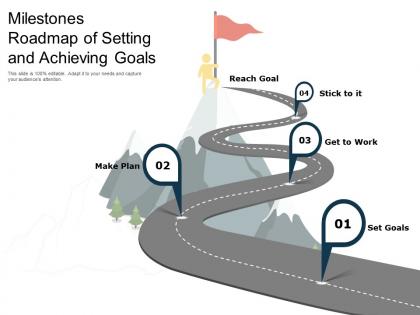
Milestones roadmap of setting and achieving goals




Try Before you Buy Download Free Sample Product
 Impress Your
 Audience
 100%
100% Editable
 Save Hours
 of Time


In need of a stellar presentation? Our Milestones Roadmap Of Setting And Achieving Goals are out of this world.
People who downloaded this PowerPoint presentation also viewed the following :
Milestones roadmap of setting and achieving goals with all 2 slides:
In the boardroom design can help sell your next big idea. Use of Milestones Roadmap Of Setting And Achieving Goals to give a design boost to your next presentation.
FAQs for Milestones roadmap of setting
Milestones are your project checkpoints - honestly, they're lifesavers for tracking progress and spotting issues before they explode. You'll want to place them at key deliverable points, not random dates. They give you natural moments to pause, celebrate wins, and fix what's broken. Stakeholders eat this stuff up because they can see project health without drowning in daily task chaos. Plus they help keep everyone aligned on direction - kind of like GPS waypoints but for work. Set them when you hit major completions or need to make big decisions. Trust me, future you will thank present you.
Honestly, milestones are a game-changer because your team stops wandering around aimlessly wondering if they're actually getting anywhere. People naturally don't want to be the bottleneck slowing everyone down - it's like peer pressure but in a good way. You'll want to make them super specific though, none of that "wrap up phase one" nonsense. I learned this the hard way on a project last year. Break your big stuff into weekly chunks so people get those little dopamine hits from checking things off. Short wins keep everyone motivated. Course corrections happen way faster too when you're not waiting months between check-ins.
So basically short-term ones are like your quick wins - stuff you can knock out in a few weeks or months. Project deadlines, quarterly numbers, that kind of thing. Long-term milestones? Those are your big hairy goals that take forever, like launching something completely new or hitting major revenue targets. Here's the thing though - you've gotta break those massive long-term ones down into bite-sized pieces or you'll just stare at them feeling paralyzed. The short ones keep you sane when everything's chaos, plus they actually move you toward the bigger picture stuff.
Honestly, just stick to what they actually need to know - the big picture stuff. Weekly updates work best for me. I do this simple "Done/Doing/Blockers" format because who has time for anything fancier? Always be straight about delays though. Trust me, they'd rather hear bad news early than get blindsided later. Connect everything back to business impact so they get why it matters. Oh, and set up some shared dashboard they can peek at whenever - saves you from random "how's it going?" messages. Don't overthink it.
Oh man, so many options! Asana and Monday.com are really visual with their timelines - I love seeing those progress bars fill up. Trello's solid too if you like the card system. Microsoft Project is overkill unless you're doing serious Gantt charts (which honestly most people don't need). Excel works fine for simpler stuff, don't let anyone shame you for using spreadsheets lol. Notion and ClickUp are decent if your team wants everything in one place. Definitely try the free versions first though - no point paying for features you won't use.
Don't make your milestones super vague like "improve user experience" - that's just a goal, not something you can actually check off. You want concrete stuff like "wireframes approved" or "API integration done." Spacing them too far apart kills all your momentum (I learned this the hard way). Every 1-2 weeks max works way better for catching problems early. Oh and resist cramming a bunch of deliverables into one milestone just because they're happening around the same time. Each one should focus on a single clear output that actually moves things forward.
Honestly? Drop everything and look at your milestones right now. Figure out which ones still make sense with your new direction - some might be totally useless now. I've watched teams waste weeks chasing milestones that didn't even matter anymore, which is just painful to see. Scrap what doesn't work and create new markers that actually fit your updated goals. Then tell everyone what changed. Don't try cramming old milestones into your new plan - it'll just create more headaches later.
Match the celebration to what you actually accomplished - quick shoutouts work great for small wins. Bigger stuff deserves more effort, like team lunches or maybe even a half day off. Honestly, I always go straight to food celebrations because who doesn't love that? But whatever fits your team's vibe. Don't wait too long to celebrate or you'll lose that good momentum. Make sure you call out individual people while still celebrating everyone together. Oh, and definitely take photos or something - you'll want those memories when the next crunch time hits and morale tanks.
Oh man, this is so true! Like, Americans go crazy for 21st birthdays while Europeans are like "cool, you've been drinking for years already." Some cultures celebrate group wins way more than personal achievements too. Religious stuff totally changes everything - what seems huge to one family might not even register for another. I've noticed retirement is weird this way. Some places treat it like you've earned wisdom and respect, others act like you're just... done? Honestly, best move is just asking people what actually matters to them instead of guessing based on your own experience.
Pick metrics that actually show if you hit what the milestone was supposed to do - not just busy work numbers. Go for stuff like adoption rates, revenue changes, or how much of a feature you actually finished. Skip the vanity metrics like meeting counts or logged hours. Honestly, I've watched so many teams throw parties for "done" milestones that changed absolutely nothing. Figure out your success metrics when you're setting up the milestone, not after. Make sure everyone's on the same page about what winning looks like before you dive in.
Honestly, milestones are like your project's smoke detector - they catch problems before everything's on fire. You pause at each one to check if you're still on track with timing, budget, whatever. Way better than discovering you're screwed at the very end, right? Each checkpoint should have clear criteria you can actually measure. Short ones work better than long ones, I've found. Set them up at those big decision moments where things could go sideways. If something's weird, you've got time to pivot instead of panicking later.
Think of milestones as your reality check moments - that's when you actually see if your resource guesses were way off. Hit a milestone behind schedule? Time to either grab more people or push deadlines back. Don't just cross your fingers hoping things'll magically speed up (spoiler: they won't). You can reassess priorities at these natural breakpoints without everyone thinking you're flip-flopping constantly. Plus they're perfect decision gates. Way better than realizing you're screwed three weeks before launch when it's too late to fix anything.
Work backwards from your big goals - that's the trick. Figure out what success actually looks like first, then create checkpoints that feed into those outcomes. Don't just pick random deadlines because they sound nice. I've seen too many teams do this and it's basically just busywork at that point. Each milestone should connect to something your organization actually needs to hit its strategy. Make them measurable too. Otherwise you're just checking boxes instead of tracking real progress toward stuff that matters. It sounds obvious but honestly most people skip this step.
So agile milestones are way more chill than waterfall ones - think checkpoint parties instead of do-or-die deadlines. I usually set mine around big deliverables or when features actually launch. Honestly, the flexibility is the best part. Your priorities change mid-sprint? No biggie, just adjust. They're great for showing stakeholders you're not just spinning your wheels, plus your team gets those little celebration moments. Oh, and sprint reviews make natural milestone points too. Just focus on wins that actually matter to users rather than arbitrary dates.
Honestly, milestones are game-changers for keeping everyone on the same page. Break your project into chunks where multiple people have to contribute - that way nobody can just disappear into their own bubble. Each milestone becomes this natural pause where you can see what's working and what isn't. Way better than staring at some massive deadline months away (which just makes everyone panic at the end anyway). The key is actually stopping to review at each one. Don't just check boxes. Look at what you learned and tweak your plan. It keeps people invested in the bigger goal instead of getting lost in their tiny piece of it.
No Reviews