

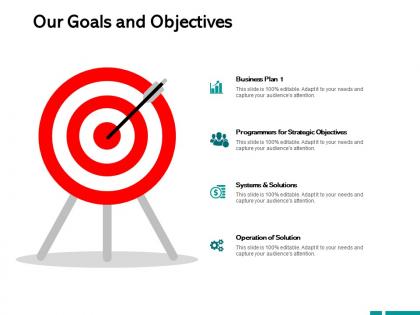
Our goals and objectives operation of solution ppt powerpoint presentation icon influencers




Try Before you Buy Download Free Sample Product
 Impress Your
 Audience
 100%
100% Editable
 Save Hours
 of Time


Gain entry into elite groups with our Our Goals And Objectives Operation Of Solution Ppt Powerpoint Presentation Icon Influencers. Be able to enter any clan.
People who downloaded this PowerPoint presentation also viewed the following :
Our goals and objectives operation of solution ppt powerpoint presentation icon influencers with all 5 slides:
Avoid flip-flops with our Our Goals And Objectives Operation Of Solution Ppt Powerpoint Presentation Icon Influencers. Keep advancing steadily ahead.

FAQs for Our goals and objectives operation of solution ppt powerpoint
So basically, goals are your big picture stuff - like "I want to grow my business" or whatever. Pretty vague, right? But objectives are the actual concrete steps with real numbers and deadlines. Like instead of just saying "increase market share," you'd say "get 15% market share in the Northeast by Q3 2024." Goals give you direction and keep you motivated (even though they're kinda fuzzy sometimes). Objectives are what you actually measure and track. My approach is usually 2-3 main goals, then break each one into maybe 3-5 specific objectives that hit all the SMART criteria. Makes everything way more manageable.
So SMART goals are basically Specific, Measurable, Achievable, Relevant, and Time-bound - sounds boring but they actually work. Like instead of "improve sales," you'd say "boost Q3 sales 15% with email campaigns by Sept 30th." Honestly, I used to think this was corporate nonsense until I saw how many projects crash because someone just said "make it better." That tells you literally nothing! You need something concrete so you can track progress and know when you're done. Just take whatever vague goal you have and filter it through each letter.
So think of goals like your team's GPS - without them, everyone's just wandering around hoping they're going the right direction. People get way more motivated when they can actually see how their boring Tuesday tasks connect to something bigger. Short goals work better than those massive year-long things, honestly. You'll want to be super specific too, because "increase sales" means nothing but "get 50 new clients by March" gives everyone a clear target. Oh, and don't forget to celebrate the small wins! That stuff keeps people energized way longer than you'd think.
Honestly, just start by explaining what the company's actually trying to do this year - like really spell it out. Then sit down with each person and figure out 2-3 goals that tie into that bigger stuff. I know it sounds super basic, but most people don't connect the dots on their own. One manager I know literally draws it out on a whiteboard during meetings (kinda dorky but whatever works, right?). Don't assume they'll figure out how their job fits in. Oh and definitely do check-ins every few months because priorities change and you'll need to pivot.
Honestly, the biggest mistake is being way too vague with your goals. Like saying "improve customer satisfaction" instead of "boost satisfaction scores by 15% in 6 months." I've totally done this before - you set like 10 different objectives and then accomplish basically nothing because you're all over the place. Short, focused goals work better. Also, avoid goals that just sound fancy but don't actually help your business grow. Pick maybe 2-3 things max that'll genuinely make a difference for your team right now.
Honestly, visual templates are a game changer compared to those mind-numbing text docs nobody wants to read. You can break everything into bite-sized pieces, use colors to show what's urgent vs what can wait. The hierarchy thing actually works too - people can scan it quickly and get the main points. I mean, let's face it, everyone's attention span is shot these days. Clean visuals just get more people on board. Templates force you to cut the fluff and think logically about your objectives. Start with something basic like a goal pyramid - sounds fancy but it's dead simple. Your presentations will instantly look more professional and way easier to follow.
Honestly, regular check-ins are everything - I do mine weekly but monthly works too depending on your timeline. Track actual numbers, not just feelings about progress. Visuals help a ton - dashboards, spreadsheets, whatever clicks for you. Write down what's working and what isn't during reviews. Here's the thing though: call out problems early instead of pretending they don't exist until crunch time. That's saved me so many headaches. Just pick whatever method actually fits how you work and don't overthink it.
Start by figuring out who actually cares about this stuff - customers, your team, leadership, partners, whoever. Then talk to them early through surveys, interviews, or focus groups to see what success means to them. Honestly, I've watched so many goals crash because someone important got ignored from the start. Run some workshops where people can speak up about priorities and concerns. Write down what they say, then show them later how their feedback influenced the final goals. It's way easier to get buy-in when people see their fingerprints on the plan.
Okay so basically short-term goals are like your daily momentum builders - stuff you can knock out in weeks or months that keep you motivated. Long-term ones? Those are the big picture dreams that take years to pull off. But here's what I've learned the hard way - they only work if they're actually connected. Like, your small goals should feed into the bigger ones, otherwise you're just spinning your wheels. I'd probably start with 2-3 major things you want long-term, then figure out what you need to hit each quarter to get there. Makes it way less overwhelming honestly.
Build in review checkpoints from day one - I do monthly check-ins, some people prefer quarterly. COVID taught me this lesson brutally when literally half our goals became pointless overnight. Your core mission usually stays the same, but tactical stuff? That should absolutely shift when the market does. I always create "what if" scenarios during planning now. Honestly, pivoting fast when the data screams at you isn't failure - it's smart business. Don't wait for a crisis to make goal changes normal. Quick question though - are you dealing with this right now or just planning ahead?
Pick metrics that actually connect to your goal - like if you're chasing revenue growth, track MRR, conversion rates, customer acquisition costs. Make them measurable with whatever tools you've got now. Nobody wants to spend forever digging up data each month, trust me. I like mixing leading indicators (show progress early) with lagging ones (confirm what actually happened). Honestly, stick to 2-3 metrics per goal or you'll drown in numbers. Just throw together a simple dashboard or spreadsheet to check monthly.
Honestly, apps like Trello or Asana are game changers for keeping your goals on track. Break down big stuff into smaller tasks and you'll actually see progress happening. The visual element is everything - progress bars and those satisfying checkmarks really do keep you motivated (at least for me). Spreadsheets work too if you're not into fancy tools. Just pick whatever clicks with your brain and stick with it. Otherwise you'll end up with 15 different apps that you never touch. Oh, and the reminder notifications are clutch because I forget everything without them.
Honestly, the biggest thing is just being specific. Like, saying "get better" is pretty useless - your brain needs actual direction. Growth mindset helps too (cheesy but true) - basically believing you can actually improve instead of thinking you're stuck with what you've got. There's this weird psychology thing where we hate losing stuff more than we like gaining it, which totally applies here. You want goals that are challenging but not impossible - too easy gets boring, too hard makes you quit. I learned this the hard way lol. Just write down one specific goal with a real deadline. That's literally it.
First thing - make it super obvious who owns what. No vague "team goals" bullshit. Assign specific people to specific outcomes and check in regularly. I'd set up some kind of shared tracker where everyone posts updates. The peer pressure thing actually works pretty well. But here's what matters most: you gotta follow through. Celebrate the wins loudly, call out the misses directly. If you let stuff slide even once, people figure out accountability is just theater. Oh and start with leadership doing this first - can't expect others to buy in if the bosses aren't walking the walk.
Honestly, I check my short-term stuff monthly and bigger goals maybe every quarter or so. Just see what's actually working vs what's totally flopping. Look at your numbers, but also - has life completely changed since you set these? Because sometimes it does lol. When you adjust things, write down specifically what you're changing and why. That way you'll spot patterns later. And don't feel bad about completely ditching a goal if it doesn't fit anymore. That's not failing, that's just being smart about where you put your energy.
No Reviews