


Sponsorship Pitch Deck For Cultural Event Ppt Template




Try Before you Buy Download Free Sample Product
 Impress Your
 Audience
 100%
100% Editable
 Save Hours
 of Time


When it comes to organizing events, most event planners rank securing sponsors as one of the topmost challenging aspects of their job. Grab our professionally designed Sponsorship Pitch Deck for Cultural Event that will assist the event planners or event planning startups gain the interest of the best possible event sponsors. At first, event startups can develop the investors interest by using slides about us, our underlying magic, and social media reach. The event highlights section will assist the agencies in providing in-depth detail about their event, covering the event overview, target market, guest speakers, and timeline. Event planners can use slides to gain sponsors attention, namely sponsorship packages, benefits, and opportunities for sponsors. One can even present stats and info related to in-depth event details like guest speakers, VIPs, target market, etc. Firms can exhibit infographics for their social media reach using elements like followers, average clicks, post reach, post impressions, and more. Finally, agencies can use the contact us slide to display different channels and to connect with interested sponsors. Get access now.
People who downloaded this PowerPoint presentation also viewed the following :
Content of this Powerpoint Presentation
Slide 1: This slide displays title i.e. 'Sponsorship Pitch Deck for Cultural Event'. State Your Company Name and begin.
Slide 2: This slide presents table of contents.
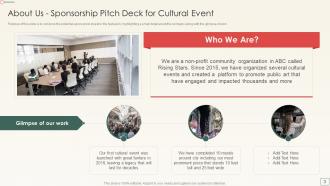
Slide 3: This slide convince the potential sponsors to invest in the festival by highlighting a small detail about the company.
Slide 4: This slide address audience about the magic behind the festival.
Slide 5: This slide illustrates the informational statistics highlighting the social media presence of the festival organized by the rising stars.
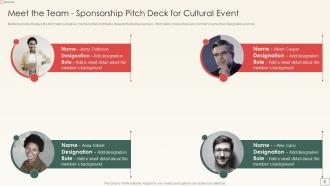
Slide 6: This slide displays the information about key members that contributes towards the festival success.
Slide 7: This slide displays information about the event highlighting details of hosting company.
Slide 8: This slide displays information about the target market for the festival.
Slide 9: This slide provide the information about the guest speakers and the VIPs who will be the part of festival.
Slide 10: This slide illustrates the event timeline of the festival covering details of pre-event and post-event activities.
Slide 11: This slide provides information about various event sponsorship packages along with the details of benefits.
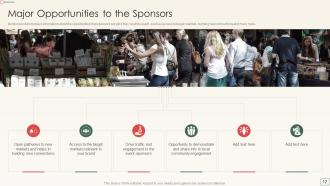
Slide 12: This slide displays information about the opportunities that sponsors will get if they host the event.
Slide 13: This slide presents contact details of company.
Slide 14: This slide displays Icons for Pitch Deck.
Slide 15: This slide is titled as Additional Slides for moving forward.
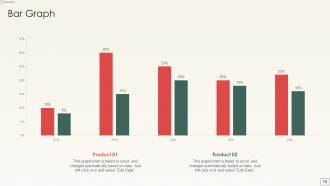
Slide 16: This slide presents Bar chart with two products comparison.
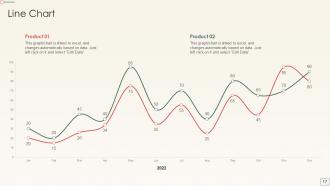
Slide 17: This slide describes Line chart with two products comparison.
Slide 18: This slide shows Post It Notes. Post your important notes here.
Slide 19: This is an Idea Generation slide to state a new idea or highlight information, specifications etc.
Slide 20: This is Our Target slide. State your targets here.
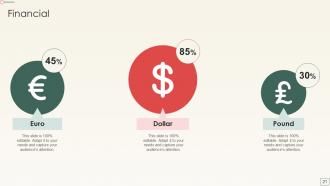
Slide 21: This is a Financial slide. Show your finance related stuff here.
Slide 22: This slide contains Puzzle with related icons and text.
Slide 23: This is a Location slide with maps to show data related with different locations.
Slide 24: This is a Thank You slide with address, contact numbers and email address.
Sponsorship Pitch Deck For Cultural Event Ppt Template with all 29 slides:
Use our Sponsorship Pitch Deck For Cultural Event Ppt Template to effectively help you save your valuable time. They are readymade to fit into any presentation structure.















FAQs for Sponsorship Pitch Deck For Cultural
Okay so first thing - get your audience numbers and event stats together, plus create those sponsorship tiers with actual benefits listed out. Sponsors basically just want proof you can get them eyeballs, so lead with your reach/engagement data. What kills most decks though? Hiding the ROI stuff on slide 8 or whatever. Put that money talk upfront with testimonials if you've got them. Oh and give them different partnership levels - some companies want to dip their toes in first. Keep it under 10 slides max and make it visual. The "why us" part is crucial too since everyone's pitching sponsors these days. Then follow up within 48 hours while you're still fresh in their minds.
Here's the thing - forget boring data dumps (save those for the appendix). Instead, tell a story where the sponsor is the hero solving your audience's problem. Paint the journey: where people are stuck now, where they want to be, and how this partnership gets them there. Weave your stats into emotional moments they can actually picture. Show real scenarios of their brand making a difference in customers' lives through your event. Honestly, sponsors eat this up way more than spreadsheets. End each story beat with a clear "so what" - like "Your brand becomes the reason 10,000 small businesses finally break through."
Dude, keep your deck super visual - tell the story through photos, not text blocks. I literally can't stand when people cram everything with data vomit! Use 2-3 brand colors max and make sure each slide has one main point. White space is your friend. Also, readable fonts only - none of that cursive nonsense that looks "artistic" but nobody can actually read. Oh, and test it on your phone first since that's probably where half the sponsors will see it anyway. Charts with real numbers are clutch for showing ROI potential.
Start with your best numbers right up front - audience size, engagement rates, actual conversions. Don't make sponsors hunt for the good stuff on slide 15, you know? Past performance is gold if you've got it: "last year's sponsors hit 40% brand awareness boost" or whatever your ROI was. Honestly, they'd rather see a simple bar chart than your fancy design work. Connect every stat back to what they actually want - more leads, better exposure, sales bump. Charts and infographics work great for making data easy to digest. Oh, and create a one-pager summary their boss can understand in 30 seconds.
Think of testimonials and case studies as your "receipts" - they prove you're not just making empty promises. Potential sponsors need to see you've actually delivered for other partners before. Case studies with real numbers are gold because they show measurable impact. Testimonials add that human touch and credibility factor. Honestly, without this social proof you're just another presentation full of wishful thinking and projections. Include 2-3 solid examples that match what your prospect wants to achieve. It's the difference between looking legit vs. looking like you're winging it.
Do your homework first - look up their brand values, recent campaigns, what they actually care about. Then speak their language throughout the whole presentation. Are they obsessed with sustainability? Start with your environmental impact numbers. Want Gen Z audiences? Show them demographic breakdowns and social stats. I swear, most people just copy-paste the same deck for everyone and act shocked when they get ghosted. Don't just list what you offer. Show how you'll solve their specific problems. After each section, tie it back to their goals explicitly. Makes all the difference.
Biggest thing? Don't make it all about YOU - focus on what you'll actually do for their brand and audience. Also, stop cramming every detail onto one slide lol. Skip those cheesy generic templates too, they look so amateur. You need real numbers and data, not just "we'll give you amazing exposure!" Keep it visual and clean - nobody wants to read paragraphs on slides. Oh and definitely customize each pitch! Sending the same deck to everyone is such a dead giveaway. Proofread twice because typos kill credibility instantly.
Don't just show follower count - that's honestly kinda useless now. Lead with your engagement stuff instead: likes, comments, shares, story interactions. Screenshots of your best posts work great too. Sponsors want to see people actually giving a shit about what you post, not just following and ignoring you. If you've got click-through rates or how long people watch your content, throw that in. Oh and demographics are clutch if you have them. Basically prove your audience actually does something when you post instead of just scrolling past.
Okay so first thing - lay them out side by side, bronze/silver/gold style. Don't use vague stuff like "brand visibility" though, get specific! Say "logo on 500 t-shirts" instead. I always do checkmarks for what's included because people scan that way faster. Price jumps should be obvious so sponsors can see the ROI progression easily. Lead with your highest tier on the left - it anchors their expectations higher. Keep descriptions short but detailed enough they know exactly what they're getting. Oh and definitely test different price points first. You'll probably be shocked which tier people actually pick most often. I was way off when I first tried this.
Okay so basically you gotta speak their language, right? Corporate types want formal stuff with ROI numbers and business speak. But local shops? Just be chill and talk about helping the community. Tech bros eat up data while creative agencies want the pretty storytelling angle. I totally bombed once pitching this brewery using corporate buzzwords - they looked at me like I had three heads lol. Stalk their website and socials first to see how they actually talk. Some want spreadsheets, others just the big picture. Always start with what they actually care about though.
Okay so here's the thing - without a solid call to action, your pitch just dies there. Sponsors won't magically know what to do next. Be super specific: "Can we schedule a call by Friday?" or "Please review this proposal and get back to me by the 15th." I swear, I've watched amazing pitches tank because they ended with wimpy stuff like "hope to hear from you soon." Give them concrete steps and deadlines. Put it on its own slide near the end, make it punchy. Honestly? Don't overthink it - just tell them exactly what you want and when.
Dude, visuals are a game changer for sponsorship pitches. Numbers on a chart just hit different than boring bullet points - like, executives actually pay attention. Growth charts and engagement graphs tell a story that sticks. Demographics work great as infographics too since they break down complex stuff easily. Most of these people are probably half-skimming your deck anyway (let's be real), so visuals grab them when walls of text don't. Just make sure each one actually backs up your ROI argument instead of being random eye candy. You want charts they can't ignore.
Honestly, interactive stuff is what saves these pitches from being total snoozefests. Ask them direct questions - like "What's your biggest headache with Gen Z right now?" - then actually wait for an answer. Props work amazing too. I saw this person bring actual product samples once and everyone perked up immediately. If you're doing it virtually, throw in some polls. Physical meetings? Hand them tablets with clickable mockups they can mess around with. The whole point is getting them involved instead of just talking at them for 20 minutes straight. Nobody wants to sit there listening to you drone on.
Definitely include current market trends that match your sponsorship opportunity. Like if you're pitching a virtual event platform, mention how remote work jumped 42% this year. Sustainability stats work great for eco-friendly brands too. I always add a "Why Now?" slide - sounds cheesy but it actually creates urgency. Connect those trends to bigger audience engagement or more brand visibility for sponsors. Only use fresh data (nothing over 12 months old, trust me on this). The whole point is showing them how partnering with you helps them ride these consumer behavior shifts. Make it super clear how the trends benefit them specifically.
Definitely put a timeline right in your deck - something like "proposal in 48 hours" or "follow-up call next Tuesday." Then map out your whole sequence: thank you email, customized proposal, relevant case studies, regular check-ins. Oh and I always drop social proof during follow-ups - "just closed Brand X last week" creates serious FOMO. Hit different channels too (email, LinkedIn, calls) but give them clear next steps each time. The trick is staying persistent without being that annoying salesperson nobody wants to deal with. Stay organized and you'll be fine.
-
Great quality product.
-
Great product with highly impressive and engaging designs.