

Staff Benefits And Incentives Powerpoint Presentation Slides





Try Before you Buy Download Free Sample Product
 Impress Your
Audience
 100%
Editable
 Save Hours
of Time


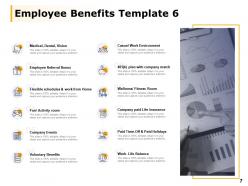
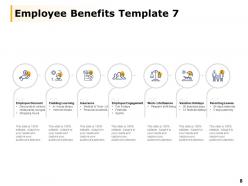
Retain competent employees in your organization by stating the various perks and benefits you offer using this Staff Benefits And Incentives PowerPoint Presentation Slides. Let your employees know about the valuable and coveted benefits your company is meant to offer with the help of this fringe benefits PPT slideshow. The primary purpose of every organization is to increase the economic security of its workforce which motivates them to stay. Discuss these benefits & perks such as pay raise, paid vacation, health insurance, meal breaks, flexible schedules, casual work environment, etc. using these professionally designed reward management PPT slides. You can also showcase the various fringe benefits that your organization offers to the staff members which is a prerequisite for its growth and expansion. Also, manage your payroll with the help of this fringe benefits PowerPoint presentation which is fit for every industry belonging to every niche. Hence, download it now to make the process of stating your organizational perquisites much simpler.
People who downloaded this PowerPoint presentation also viewed the following :
Staff Benefits And Incentives Powerpoint Presentation Slides with all 22 slides:
Use our Staff Benefits And Incentives Powerpoint Presentation Slides to effectively help you save your valuable time. They are readymade to fit into any presentation structure.






FAQs for Staff Benefits And Incentives
Flexible schedules and remote work options are honestly game-changers for morale. Way more than free pizza, anyway. Professional development stuff works great too - like covering conference costs or training. Recognition is huge, but it has to feel genuine, not just some corporate checkbox thing. Health perks are solid, though I'd focus on work-life balance first. Oh, and definitely ask your team what they actually want - I was shocked when our office said they'd rather have mental health days than a fancy coffee machine. Start with giving people more control over their time and you'll see the difference pretty quickly.
Oh totally, incentives work wonders for keeping people around and actually caring about their work. Bonuses are great but honestly? Sometimes just saying "hey you crushed that project" goes further than you'd think. Extra vacation days are clutch too - everyone's burned out these days. The trick is actually asking your team what they want instead of assuming cash fixes everything. I've watched companies throw money at retention problems while ignoring that Sarah just wants flexible hours and Mike wants mentorship opportunities. Survey your people first. Way too many places still act like a pizza party counts as meaningful recognition lol.
Honestly, wellness programs are a game-changer for keeping people happy at work. Employees feel way more valued when you offer stuff like gym memberships or mental health support - it shows you care about them as actual humans, not just productivity machines. Healthier workers are less stressed and call out sick way less too. But here's the thing - you can't just randomly pick programs and hope they work. Actually ask your team what they'd use! I've seen companies waste money on fancy meditation apps that nobody touches. Make it accessible and relevant, or you're basically throwing cash out the window.
Survey your team first - seriously, don't guess what they want. Younger folks usually care about student loan help and flexible time off. Parents? Childcare support and good family health plans. Older employees are thinking retirement and wellness stuff. Do a cafeteria-style setup where everyone gets points to spend on benefits that actually matter to them. It's way better than one-size-fits-all nonsense. You could even adjust things as people hit different life stages - new parents vs empty nesters need totally different support. Just send out a quick survey this quarter to see what they're prioritizing.
So first thing - get wage/hour laws, tax stuff, and anti-discrimination rules sorted. Performance bonuses can totally mess up overtime calculations if you're not careful. Plus they can't create unequal treatment based on protected characteristics. Honestly, the vague "discretionary bonus" language is where companies always screw themselves over. I've watched it happen so many times. Document everything clearly upfront. Oh, and definitely run it by legal first, especially with equity or deferred payments involved. Those get tricky fast.
Honestly, flexible benefits work because people feel like you actually get them as individuals. Someone might desperately need more PTO while their coworker cares way more about beefing up their 401k. Life's messy too - you have a kid, suddenly childcare benefits matter more than that gym membership you never used anyway. The trick is offering stuff people genuinely want, not just shuffling around the same boring options. When employees can adapt their package to what's happening in their actual lives, they're way less likely to jump ship. Makes them feel heard instead of just another cog in the machine.
BambooHR and Workday are lifesavers for this stuff - they'll automate enrollment and sync with payroll so deductions just happen. ADP's solid too. Honestly, the self-service portals are what employees love most. They can check their benefits anytime and make changes during open enrollment without bugging HR. The automated deadline reminders are clutch because people always forget that stuff. I'd start by looking at whatever manual tasks are driving you crazy right now and see which platform tackles those first. Way better than drowning in paperwork all year.
Honestly, start with participation rates - if people aren't using something, it's probably useless to them. Employee surveys work great for this, just ask directly about benefits satisfaction. Retention numbers tell you a lot too since good benefits should keep people from leaving. Exit interviews are where you get the real tea though. Also check if your benefits package is helping you hire faster. But here's the thing - you could be overthinking this. Just send out a quick survey asking what benefits actually matter to your team versus what you're giving them now. Sometimes the gap is bigger than you'd expect.
Don't hide this stuff in boring HR docs that nobody opens. Make a simple one-pager showing what's available, who can get it, and how to actually access everything. Your team will forget about benefits constantly - trust me on this one. Send reminders through whatever channels people actually check (Slack, team meetings, newsletters). Managers need to know the details too so they're not scrambling when someone asks. Start by figuring out what you currently offer, then blast that info through the communication methods your team uses most. Keep it consistent and visible.
Look, most companies budget around 25-30% of payroll for benefits and that works pretty well. Health insurance and 401k matching should come first - skip the fancy stuff until you nail those basics. Your employees will appreciate steady benefits way more than random perks anyway. Check what people actually use through surveys or just ask around. I've seen companies blow budgets on unused gym memberships while skimping on dental coverage everyone wanted. Keep maybe 5% extra for unexpected costs or when you get a brilliant idea halfway through the year. Trust me, you'll need it.
Honestly, equity is your secret weapon here - big corps almost never give stock options to junior people. Beyond that, you've got way more flexibility with perks. Unlimited PTO, remote work, professional development budgets. The fun stuff too - dog-friendly offices, sabbaticals, paying for conferences. Career growth happens crazy fast since everyone wears multiple hats on small teams. But here's what really matters: you can offer things corporate jobs can't touch. Real autonomy, seeing your work actually make a difference, building something from nothing. That startup energy hits different when you're not just another cog in a massive machine.
Oh man, benefits are tricky with global teams. Americans obsess over health insurance because their healthcare costs are insane, but Europeans already have that covered so they'd rather get extra vacation days. Family stuff like childcare really matters in some places, while other cultures are more focused on individual growth opportunities. Honestly, the whole thing is kind of a mess if you try to do one standard package for everyone. You've got to dig into what each region actually values and let people pick what works for them. Way more work upfront but saves you from offering useless perks.
Yeah, going overboard with incentives totally backfires. People start expecting those big rewards as normal, so regular recognition feels like nothing. Creates this weird competitive vibe too - I've literally watched teams argue over who deserves credit for stuff. Some people will game the system instead of actually performing well, which defeats the whole point. Budget-wise, you'll blow through money fast and can't keep it up long-term. Find that middle ground where rewards feel meaningful but don't become expected entitlements. Consistency matters more than flashy one-offs.
Good benefits show employees you actually give a shit about them. Healthcare, flexible time off, development money - that stuff builds real trust fast. Plus shared programs like wellness initiatives bring teams together naturally. I've seen companies totally miss the mark though by offering what looks impressive instead of what people want. Short sentences work. Survey your team regularly to find out what'd actually help their work-life balance. Don't just guess - you'll probably get it wrong and waste money on perks nobody uses.
Honestly, flexibility is everything right now. Companies are going all-in on hybrid schedules and four-day weeks because people still want that work-life balance from the pandemic days. Mental health stuff is massive too - therapy coverage, wellness apps, actual mental health days off. Retention bonuses are everywhere since everyone's still job-hopping like crazy. Meeting-free days are becoming a thing too, which thank god because who needs another Zoom call? You should definitely check what competitors are offering in your space, especially the flexibility perks. That's genuinely what people care about most now.
-
Attractive design and informative presentation.
-
Really like the color and design of the presentation.
-
Easily Understandable slides.