

Stakeholder matrix showing high influence and low influence
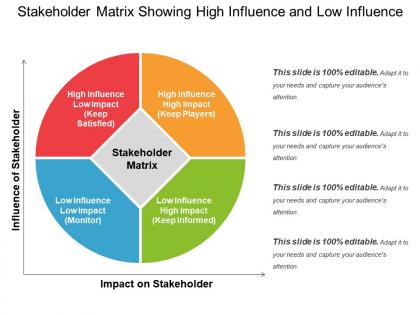




Try Before you Buy Download Free Sample Product
 Impress Your
 Audience
 100%
100% Editable
 Save Hours
 of Time


Be fast and accurate in drawing conclusions with our Stakeholder Matrix Showing High Influence And Low Influence. It will expedite investigations.
People who downloaded this PowerPoint presentation also viewed the following :
Stakeholder matrix showing high influence and low influence with all 5 slides:
Convince folks of your intense concern with our Stakeholder Matrix Showing High Influence And Low Influence. Indicate your genuine interest in them.


FAQs for Stakeholder matrix showing high influence
Okay so first thing - figure out everyone who's involved or affected by your project, even people on the edges. Map them on a simple grid based on how much power they have vs how interested they are. Some folks need constant updates, others just want the occasional heads up. Here's the thing though - you gotta understand how each person likes to communicate. My old boss loved those detailed email reports, but our CEO? Just wanted a quick chat in the hallway. Create a plan that matches what each group expects. Trust me, it saves you so much headache later when people aren't bombarding you with "wait, what's happening?" messages.
Okay so first thing - make a huge list of literally everyone who might care about your project. Customers, your team, bosses, vendors, maybe even some regulatory people if that's relevant. Don't worry about going overboard at first. Then sort them into a grid based on how much power they have versus how interested they are. The high power + high interest folks? Yeah, those are the ones you'll be talking to constantly. Low power + low interest people just need occasional updates. You can also bucket them as supporters, fence-sitters, or people who might push back. Honestly, doing this upfront saves you so much headache later when you're trying to figure out who actually matters for getting approval.
Honestly, most people just use the stakeholder influence-interest matrix - it's like a 2x2 grid where you plot people based on their power vs how much they actually care about your project. Super simple but works really well. You can literally make it in anything - Excel, Miro, or hell, even sticky notes if that's your vibe. There are fancier tools like Lucidchart or PM software with templates built in. But I'd just start basic with a simple grid and see what patterns show up first. You can always upgrade later once you figure out what you're dealing with.
Okay so stakeholder analysis is basically figuring out who actually has power over your project and what they give a damn about. You want to map this stuff out early - trust me on this one. Otherwise you'll be halfway through and suddenly discover the CFO thinks your whole approach is garbage. List everyone who could mess with your project or get affected by it, then rank them by how much influence they have and whether they care. Oh and it makes communicating way easier because you know what each person wants to hear. The whole point? You can spot trouble coming and get the right people on your side before things go sideways.
Honestly, the trickiest part is figuring out who all your stakeholders actually are from the start. Most people miss like half of them initially - it's wild how many random people end up having opinions about your project. Then you've got folks changing their minds halfway through, or different groups wanting completely opposite things. Plus getting people to tell you what they really think? Good luck with that, especially when office politics get involved. Oh, and their influence levels are never what you'd expect. Start this stuff early and keep checking back on it. Just ask people straight up what they're worried about - works better than you'd think.
From day one, map out who needs what kind of updates - some stakeholders want weekly check-ins, others just care about big milestones. Mix formal reports with quick calls because honestly, nobody reads those massive status documents anyway. Be proactive about reaching out instead of waiting for them to bug you. Oh, and always circle back when people give you feedback - even if you can't use it, they'll appreciate knowing you heard them. Natural project phases are perfect moments to reconnect. It's way easier than scrambling to manage cranky stakeholders later.
Communication is basically everything in stakeholder analysis. You can't just guess what people want - you have to actually talk to them through interviews and surveys to figure out their real concerns. I've watched projects completely blow up because teams thought they knew what stakeholders needed without asking. Building relationships is huge too, and you'll need different approaches for different groups. Your CEO doesn't want the same updates as your end users, obviously. Oh and definitely prioritize your high-influence people first when setting up regular check-ins. Skip the communication part at your own risk!
Honestly, I'd start by figuring out who can actually kill your project versus who just gets impacted by it. Map out their decision-making power - can they approve budgets, block resources, mess with your timeline? The sneaky ones are high-power people who don't seem to care much... until they suddenly do. Make a quick grid plotting influence against interest levels. Check how these same people handled similar projects before - that'll tell you tons. High-influence folks get your attention first, especially anyone who's undecided. Those fence-sitters can make or break you depending which way they lean.
Honestly, surveys and feedback scores are your best bet for tracking this stuff. Meeting attendance tells you a lot too - if people keep skipping, that's a red flag. I'm obsessed with response times though, like how fast stakeholders get back to you when you ask for something. That really shows their engagement level. Net Promoter Score works well - just ask how likely they'd be to recommend your project. Also watch complaint frequency and whether people bring you ideas or just problems. Oh, and don't try measuring everything. Pick 2-3 metrics that actually matter for your specific group.
Oh man, this tripped me up so much when I started doing international work! You'll totally misread who matters if you don't get the culture first. Like, I was laser-focused on individual executives in Southeast Asia when decisions actually happened through group consensus - whoops. Some cultures are brutally direct while others drop hints you'll completely miss. The people with real influence might not even be on your org chart. Honestly, save yourself the headache and find local teammates who can decode the actual power structure for you. They know which relationships you actually need to build.
So primary stakeholders are basically anyone who's directly in the mix - customers, employees, investors, suppliers. These folks can literally tank your project if you mess up. Secondary ones are more on the sidelines, like community groups or media outlets. They seem less important day-to-day, but honestly? I've seen them flip to primary status super fast when drama hits. My advice is map out your primaries first since they're your bread and butter. Then figure out the secondaries because they're your insurance policy against things blowing up later. Don't sleep on either group.
Honestly, you'll want to check in on this stuff at major milestones - quarterly is usually solid. But if your project's only 6 months? Monthly makes way more sense. Things change fast - new people pop up, priorities get shuffled around, someone who had zero influence suddenly becomes your biggest advocate (or worst nightmare). I always build it into my regular project reviews because I've learned the hard way that people you ignore early can torpedo you later. Basically anytime there's a big scope change or team shake-up, revisit who matters and how much power they actually have.
Make a visual map plotting everyone by influence vs interest - way easier to see the big picture. Track their role, how they like to communicate, what drives them. Oh and definitely add when you last talked to them because I swear you'll blank on that stuff later. Note their meeting preferences and any touchy subjects. Honestly, stakeholder drama is the worst when you miss those red flags. Put it all in a shared spreadsheet so your team can update it too. Just don't let it become one of those docs you make once and never touch again.
Honestly, tech makes stakeholder analysis way less painful. CRM systems help you track who you've talked to and when. Survey tools let you gather feedback from tons of people without losing your mind. The mapping software is pretty cool too - it creates those stakeholder matrices that actually update automatically instead of you having to redo everything manually. Social media monitoring gives you real insights into what people actually think (beats playing guessing games). Oh, and collaboration platforms mean your whole team can add input at once rather than everyone working separately. I'd start with whatever fixes your biggest headache first - probably data collection or making those visual maps.
Don't share sensitive stuff about people without asking first - basic respect, you know? Also watch out for your own biases when figuring out who has power. I've literally watched teams crash because they wrote off certain groups as unimportant. Include quiet voices, not just whoever yells loudest. Think about what happens if your analysis gets out - could it mess up relationships? Write down how you did everything so people can question your logic later. Oh, and treat these folks like actual humans with real concerns, not just pieces on a board you're trying to manipulate.
-
Unique and attractive product design.
-
Great designs, Easily Editable.