

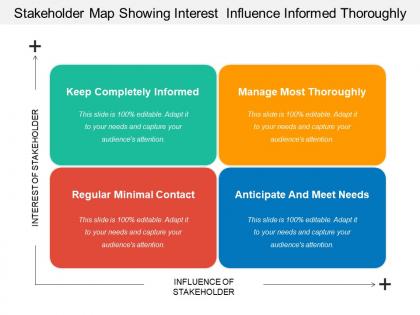
Stakeholder map showing interest influence informed thoroughly




Try Before you Buy Download Free Sample Product
 Impress Your
 Audience
 100%
100% Editable
 Save Hours
 of Time


Our Stakeholder Map Showing Interest Influence Informed Thoroughly excel from every conceivable angle. It has all the ingredients.
People who downloaded this PowerPoint presentation also viewed the following :
Stakeholder map showing interest influence informed thoroughly with all 5 slides:
Identify external influences with our Stakeholder Map Showing Interest Influence Informed Thoroughly. Equip folks to cater for the impact.
FAQs for Stakeholder map showing interest
Start by listing everyone who's got a stake in your project - basically anyone who can influence it or gets impacted by it. Plot them on a simple grid showing how much power they have versus how interested they are (honestly, this step always feels like guesswork to me). Focus on the high-priority ones first and figure out what actually matters to each group. After that, create targeted ways to keep those key stakeholders engaged. The whole point is doing your homework early so you don't get blindsided later when some VIP crawls out of the woodwork demanding updates.
Oh man, stakeholder mapping is seriously a lifesaver once you get the hang of it. List out everyone who could mess with your project or get affected by it. Then figure out their power level - sounds dramatic but you know what I mean. Plot them on one of those power/interest grids so you'll know who needs constant updates vs. who's fine with just the occasional heads up. It stops you from accidentally pissing off the big decision-makers or wasting hours updating people who honestly couldn't care less. Trust me, it beats treating everyone exactly the same.
So basically you wanna look at two things: how much power they have over your project, and how much your project affects them. The heavy hitters with lots at stake? Those are your VIPs - they need tons of attention. I also think about whether they're gonna fight me on stuff or not, because dealing with someone powerful who hates your project is a totally different game than managing a supporter. Just map everyone out on a simple grid or whatever. Focus on the high-influence people first since they can literally kill your project if they want to.
Okay so first, map out the obvious people. Then ask yourself "who else gets screwed over by this?" Check the ripple effects - anyone losing resources or getting their workflow messed up. Talk to people you already know about who they work with daily or report to. I swear, the biggest troublemakers always show up late to the party when you least expect it. Coffee chats are honestly your secret weapon here - way better than formal interviews. People spill everything when it feels casual. Oh and don't forget to peek at org charts for random departments that might care, even if it seems like a stretch.
Start with a stakeholder mapping matrix - seriously, this thing will change how you see your project. Just grab Miro or throw it in a spreadsheet, then plot everyone based on their influence vs how much they actually care. RACI matrices are solid for figuring out who does what too. Oh, and stakeholder personas are clutch - sounds fancy but it's just understanding what drives people so you're not shooting in the dark with your approach. Honestly though, pick one method and stick with it. I've seen too many people get lost switching between different frameworks when a basic influence/impact grid would've done the job perfectly fine.
So stakeholder analysis is basically figuring out what each person actually wants to hear instead of blasting everyone with the same info. Some people need all the technical details, others just want the big picture. Plus you'll figure out who likes email vs who wants to meet face-to-face. Honestly, once you start doing this it makes such a difference - you can focus your energy on the people with real influence while just keeping everyone else in the loop. Oh and map out their communication styles first, that's probably the most helpful part. Trust me on this one.
Honestly, stakeholder engagement can totally make or break your project. Get them involved early and you'll have way fewer scope changes and better requirements overall. The thing is, engaged stakeholders actually become your biggest supporters instead of fighting you every step. They spot risks you'd miss, give solid feedback, and help when things get messy during implementation. I've watched so many projects crash just because communication was garbage from day one - it's painful to see. Map out who actually matters upfront and keep talking to them. Sounds obvious but you'd be surprised how often people skip this step.
Look, stakeholder analysis is like your project radar - it spots trouble before it finds you. Map out everyone who's got skin in the game or could mess with your plans. We're talking angry customers, penny-pinching executives, regulators who love red tape. Once you know who these people are, you can actually get them on your side instead of having them work against you. It's way easier to deal with conflicts and resource issues when you see them coming. Honestly, I've seen too many projects crash because someone ignored the "unimportant" stakeholders. Start simple - just list anyone who could impact your project or get impacted by it.
Dude, cultural stuff totally messes with projects if you're not careful. Like, your "reasonable" deadline might seem crazy rushed to stakeholders who need time for group consensus. Direct feedback? Could come off as super rude depending on their background. I've watched so many projects blow up over this kind of thing - it's honestly painful. Some cultures hate uncertainty, others are all about hierarchy. Oh, and communication styles are wildly different too. Do yourself a favor and research their cultural norms first. You'll thank me later when everything actually runs smoothly.
Honestly, surveys are probably your easiest bet for getting feedback from a bunch of people at once. But if you want the real tea, interviews with key stakeholders will give you way more detail. Focus groups can be amazing when people start riffing off each other's ideas - though sometimes they totally derail. Coffee chats work too if you want something super casual. I've even seen people just sit in on existing meetings to hear what stakeholders actually think (sneaky but effective). Really depends on how much time people have and what kind of info you're after.
Check in every 2-3 months, or whenever something big shifts. New people jump in, priorities change - that "supportive" exec might suddenly become your worst enemy. Been there, right? I always build these reviews into my regular project schedule so I don't forget. Honestly, politics can sneak up on you fast. Better to catch changes early than realize you've been building something nobody wants anymore. Short stakeholder reviews work fine - just make it a regular thing and you'll save yourself headaches later.
Honestly, you'll always miss someone important at first - it's just how it goes. The tricky part is dealing with conflicting interests and those weird power dynamics where the person shouting isn't actually calling the shots. Start by getting your whole team to brainstorm stakeholders together. Map out who influences who. Update this stuff regularly, especially after big milestones, because projects change fast. Oh, and create a simple stakeholder register - sounds boring but review it monthly. Trust me on this one. The loudest voice usually isn't the one you need to worry about most.
Honestly, ditch those nightmare spreadsheets and get some actual stakeholder management software. You can track who's influential, how they like to communicate, plus all your past interactions in one spot. Social media tools are clutch for spotting new players and seeing what people actually think about your project. I'd start basic though - just build a simple database first. Collaboration platforms help when you need your team's input on who matters most (because let's be real, you can't know everyone). The automated reporting stuff is pretty sweet too - shows you patterns over time without the manual work.
Dude, stakeholder analysis is seriously worth doing upfront. Map out who's got influence and who might fight you on changes - trust me, there's always someone you don't expect who'll throw a wrench in things. I learned this the hard way on my last project. List everyone affected, then figure out their power level and how they feel about your change. Some will be champions, others total roadblocks. This tells you exactly where to spend your time and who needs extra convincing. Way better than stumbling around blind and getting blindsided later.
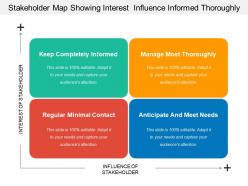
Honestly, stakeholder mapping grids are a lifesaver for this stuff. You just plot everyone on a 2x2 grid - influence vs interest. Creates four boxes that tell you who needs close management, who to keep happy, who to watch, and who just needs updates. Executives love these because they get the whole picture instantly. Network diagrams work too if you need to show connections between people. Don't go crazy with colors though - I've seen way too many rainbow charts that just confuse everyone. Always add names and quick descriptions so it's obvious what you're showing.
-
Enough space for editing and adding your own content.
-
Informative presentations that are easily editable.