

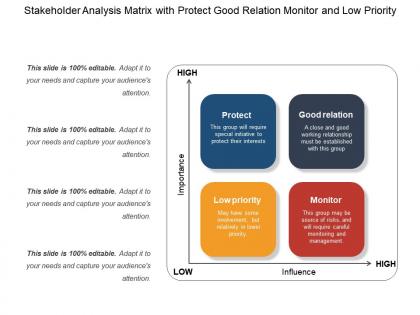
Stakeholder analysis matrix with protect good relation monitor and low priority




Try Before you Buy Download Free Sample Product
 Impress Your
 Audience
 100%
100% Editable
 Save Hours
 of Time


Handle ineffectual effort with our Stakeholder Analysis Matrix With Protect Good Relation Monitor And Low Priority. Bring about changes that derive the desired impact.
People who downloaded this PowerPoint presentation also viewed the following :
Stakeholder analysis matrix with protect good relation monitor and low priority with all 5 slides:
Display good etiquette with our Stakeholder Analysis Matrix With Protect Good Relation Monitor And Low Priority. Your conduct will be flawless.


FAQs for Stakeholder analysis matrix with protect good relation monitor
Honestly, just start by figuring out who actually matters for your project. Map everyone out - executives, users, plus that random accounting person who somehow controls everything (you know the type). Then rank them by how much they can help or hurt you. Communication is huge though. Send updates regularly, but tailor what you're saying to what each person cares about. Nobody wants generic mass emails. Listen when they complain or give feedback too. Most crucial thing? Set expectations super early. Surprises will kill your relationships fast. Make a simple stakeholder chart this week - it'll save you headaches later.
Honestly, just start by listing everyone who might care about your project - go broad at first. You'll be surprised who pops up. Then figure out who has actual power vs. who just has opinions (there's usually a big difference). Talk to the important people early instead of assuming what they want - I've been wrong about that more times than I'd like to admit. Sort them into buckets like "manage closely" or "just keep them in the loop." The key thing? Make different communication plans for each group. Oh, and update this thing regularly because people's attitudes change as your project moves along.
Start by mapping out everyone who touches your project - internal people like finance and legal can totally blindside you if you're not careful. I always use the power/interest grid thing where you plot people based on how much influence they have vs how much they actually care. High power + high interest = your VIPs who need constant updates. Also look at urgency and authority levels when you're figuring out who matters most. The influence/impact matrix is solid too. Honestly? Just pick your top 5-7 people and get some one-on-ones scheduled this week. That'll give you a real sense of the landscape.
Dude, stakeholder engagement is seriously everything. Get them involved early and you'll have way fewer headaches later - better requirements, less scope creep, the whole deal. They actually become your allies instead of working against you. Honestly, I've watched technically solid projects crash and burn just because someone important felt ignored. It's kinda wild how that works. On the flip side, even okay projects can win when people feel heard and invested. My advice? Figure out who matters most right away and don't let communication drop off. Trust me on this one.
Honestly, the worst part is dealing with everyone's conflicting priorities and terrible communication. Scope creep happens because literally everyone thinks their feature is "critical." Oh, and people change their minds constantly - drives me insane. Here's what actually works though: Figure out who your real stakeholders are early on and what they actually need (not what they think they want). Document everything because they'll 100% forget what they agreed to later. Regular check-ins help catch problems before they explode. I always start projects with an alignment meeting now - gets everyone talking through the messy stuff upfront instead of pretending it'll work itself out.
Oh man, cultural stuff is way more complex than just time zones. Some cultures want you to chat and build rapport before any business talk - honestly, Americans are terrible at this. Others expect super formal emails and structured meetings. Hierarchy matters too. In some places, you can't just message the decision-maker directly without going through channels first. I'd definitely ask your stakeholders how they prefer to communicate. Most people actually respect when you acknowledge their style instead of assuming everyone works like you do. Makes such a difference.
Dude, tech is literally everything for stakeholder management these days. CRM systems map out all your relationships, while social listening catches drama before it explodes. Collaboration platforms keep everyone updated too. The analytics part is actually pretty cool - you can measure engagement and spot potential troublemakers early. I honestly don't know how people did this job before all these tools existed! Oh, and collaboration platforms are clutch for keeping teams aligned. Start by looking at what you're already using, then figure out where the biggest gaps are in your current setup.
Okay so here's what I do - make a simple 2x2 grid with power vs interest. High power/high interest people are your VIPs, obviously they need the most attention. For the others, just score them 1-10 on stuff like decision-making authority and budget control. I've seen people go overboard with complicated weighted matrices but honestly? The basic grid works fine for most projects. Oh and definitely update it regularly since people's influence changes as things progress. Sometimes the quiet person in accounting ends up having way more sway than you'd expect.
Honestly, it all comes down to doing what you say you'll do. Check in regularly - not just when stuff hits the fan. I learned this the hard way watching colleagues crash and burn because they overpromised constantly. Give people a heads up about problems early, before they blow up. Different stakeholders want different things too. My boss loves bullet points, but our client prefers detailed explanations. Set up regular touchpoints with your key people. Even grabbing coffee once a quarter helps way more than you'd think. Oh, and map out how each person likes to communicate - saves you tons of headaches later.
Get feedback loops going from day one - seriously, don't wait. Figure out which people actually matter for each phase, then schedule regular check-ins. Could be surveys, quick meetings, whatever works. The brutal truth? You'll get input you hate hearing, but that's usually the stuff you need most. Keep a simple log of what people suggest and how you respond. Show them their ideas actually changed something (even small tweaks count). Oh, and I learned this the hard way - being transparent about your process makes stakeholders way less annoying to deal with later.
Honestly, email updates are still your best bet for detailed stuff. Dashboard tools like Asana give everyone real-time visibility, which is pretty clutch. Weekly meetings work great when you need actual back-and-forth discussion - just don't overdo it or people start zoning out. Slack's perfect for quick questions and updates. Here's the thing though: executives want those short one-pagers, not your 5-page novel about project details. They'll just skim it anyway. Pick whatever method matches how each stakeholder actually likes to communicate. Some people are email people, others live in Slack.
Honestly, start by figuring out where people's priorities clash - marketing always wants the cool stuff while IT freaks out about security holes. Get everyone talking about these tensions early, even if it's awkward. Trust me, I've watched projects crash because nobody wanted those uncomfortable conversations. Document everything so people can't backtrack later (you know how that goes). When fights break out, redirect to what everyone actually cares about - the project succeeding. Oh, and schedule regular check-ins. Catching problems early beats putting out fires later.
Look, being transparent with stakeholders isn't just nice to have - it's everything. People can smell BS from miles away, and once you lose their trust, good luck getting it back. Share the messy stuff along with the wins. Nobody expects perfection, but they do expect honesty. When you keep people in the loop, they actually want to help instead of working against you. I've seen too many projects crash because someone thought they could hide problems until later. Bad idea. Regular updates, even when things suck, will save you so much drama down the road.
Look, ethics basically means you can't just kiss up to whoever's writing the biggest checks. You've got to actually listen to everyone who'll be affected - even the people not sitting at your table. Yeah, it's messier than just pleasing your top donors or whatever, but honestly? Building those real relationships pays off way more long-term. Map out who your decisions actually impact. Be upfront about the trade-offs you're making. Sometimes you'll have to disappoint powerful people to do right by communities. It's tougher in the moment but creates way more sustainable partnerships down the road.
Honestly, I'd focus on just 2-3 things instead of trying to track everything. Start with engagement scores and how often people actually show up to meetings or reply to your emails - if those numbers suck, that's your first red flag. Stakeholder satisfaction surveys work too, but response rates for feedback tell you more than you'd think. Oh, and definitely track how long it takes to resolve their concerns because that gets political fast. One thing I learned the hard way - make sure you're mapping influence correctly. Are you talking to people who actually make decisions? Relationship quality scores help there. Pick what matters most for your specific situation and stick with it.
-
Wonderful templates design to use in business meetings.
-
Excellent Designs.