


Stakeholders project engagement and involvement process complete deck





Try Before you Buy Download Free Sample Product
 Impress Your
 Audience
 100%
100% Editable
 Save Hours
 of Time


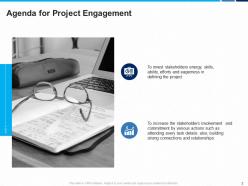
The agenda for this PowerPoint presentation is to invest the stakeholders energy, skills, ability, efforts, and eagerness in defining the project and, to increase the stakeholders involvement and commitment by various actions such as attending to every task detail. also, building strong connections and relationships. This PPT starts with the project description including an overview and scope of the project, further, it talks about the common hurdles in the project management plan such as lack of stakeholders interest or lack of stakeholders control over a project. Next, it covers solutions to bridge the gap between stakeholders and project management plan and setting objectives such as maximizing project success rate, improving quality of project deliverables, etc. This presentation covers stakeholders project engagement and involvement plan including Consulting Methods that are Considered for creating Stakeholders Group. further, the plan covers the identification of potential stakeholders then Assessment and Registration of those Stakeholders after that Prioritising Project Stakeholders, and lastly Bifurcation in internal-external Stakeholders. Further, this PowerPoint presentation also includes Mapping Stakeholders strategy, Relationship Between Stakeholder Influence or Power, Project Engagement Process, phases, approaches, and plan along with communication methods. Lastly, this PPT covers Stakeholders Risk and Engagement Level Matrix, Stakeholders Engagement Budget, project timelines, and roadmaps along with Monitoring And Reporting Dashboards.
People who downloaded this PowerPoint presentation also viewed the following :
Content of this Powerpoint Presentation
Slide 1: This is the cover slide of Stakeholders Project Engagement and Involvement Process PowerPoint Presentation.
Slide 2: This is an Agenda for Project Engagement Slide.
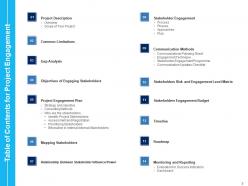
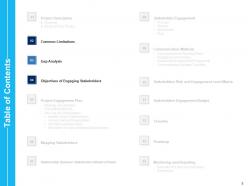
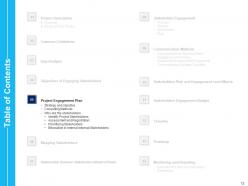
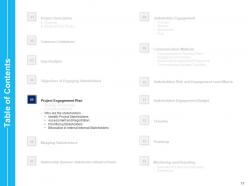
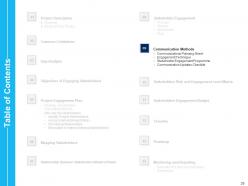
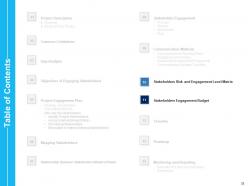
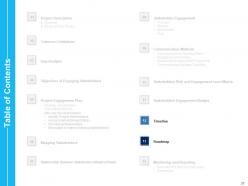
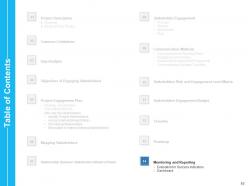
Slide 3: This is the Table of Contents for Project Engagement slide that lists out all the essential elements covered in the deck.
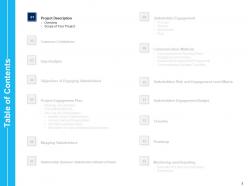
Slide 4: This slide introduces Project Description.
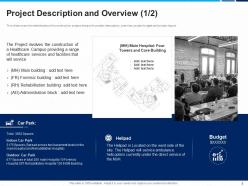
Slide 5: This slide covers the details about the construction project along with project description, overview, project budget and project layout.
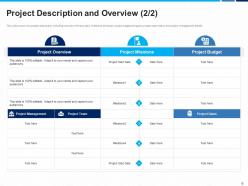
Slide 6: This slide covers the project description including overview of the project, milestone achieved, project budget and gains, project team status and project management details.
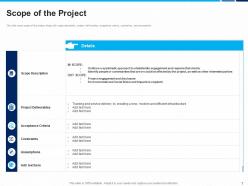
Slide 7: This slide covers scope of the project along with scope description, project deliverables, acceptance criteria, constraints, and assumptions
Slide 8: This slide introduces Common Limitations Gap Analysis and objectives of engaging stakeholders.
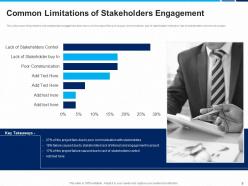
Slide 9: This slide covers the problems with stakeholders engagement plan due to which project fails such as poor communication, lack of stakeholders interest or lack of stakeholders control over project
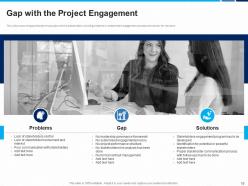
Slide 10: This slide covers the gap between the project and the stakeholders including problems in stakeholders engagement process and solution for the same
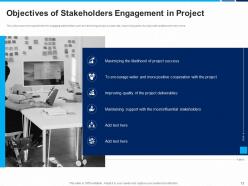
Slide 11: This slide covers the requirements for engaging stakeholders such as maximizing project success rate, improving quality of project deliverables and many more.
Slide 12: This slide introduces Project Engagement Plan.
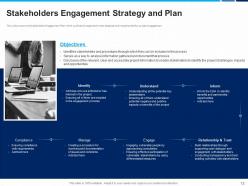
Slide 13: This slide covers the Stakeholders Engagement Plan which outlines the approach to be adopted and implemented for project engagement
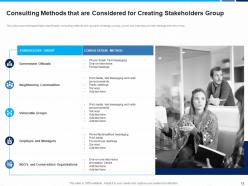
Slide 14: This slide covers the stakeholders identification consulting methods such as public meetings, surveys, one on one interviews, formal meetings and many more.
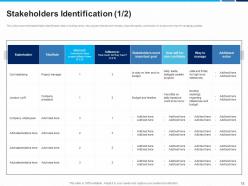
Slide 15: This slide covers the stakeholders identification plan including name, role, project interest and interest, important goals, contribution in project and may of managing updates
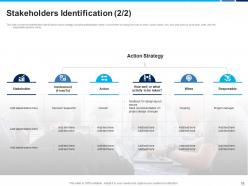
Slide 16: This slide covers the stakeholders identification action strategy including stakeholders name, involvement covering from who to whom, action taken, how and what activity to be done, when and the responsible persons name.
Slide 17: This slide presents Project engagement plan.
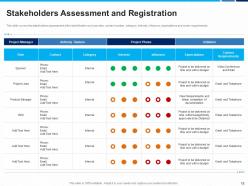
Slide 18: This slide covers the stakeholders assessment after identification such as roles, contact number, category, interest, influence, expectations and comm requirements
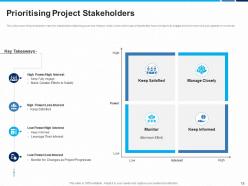
Slide 19: This slide covers the prioritization matrix for stakeholders depicting power and interest. It also covers which type of stakeholder has to be kept fully engage and whom are to be just updated or monitored
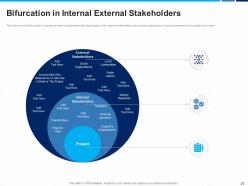
Slide 20: This slide covers the bifurcation of internal and external stakeholders after identification of the potential stakeholders such as social organizations, or anyone interested to have stake in the project
Slide 21: This slide presents relationship between stakeholder influence/power.
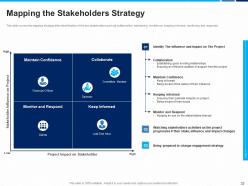
Slide 22: This slide covers the mapping strategy after identification of the key stakeholders such as collaboration, maintaining confidence, keeping informed, monitoring and responds.
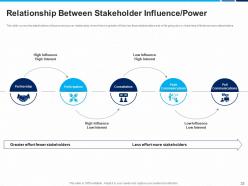
Slide 23: This slide covers the stakeholders influence and power relationship where there is greater efforts has fewer stakeholders and while going down where less efforts has more stakeholders
Slide 24: This slide presents stakeholders engagement.
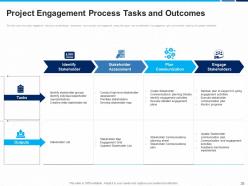
Slide 25: This slide covers the project engagement tasks such as identification, assessment, communication and engagement along with outputs such as stakeholders list, engagement grid, communication planning and updated stakeholder
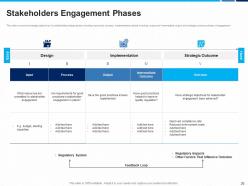
Slide 26: This slide covers the strategic objectives for stakeholders design phase including inputs and process, implementation phase including output and intermediate output and strategic outcome phase of engagement
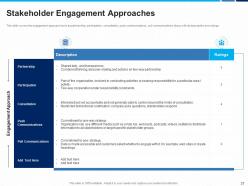
Slide 27: This slide covers the engagement approach such as partnership, participation, consultation, push communications, pull communications along with its description and ratings
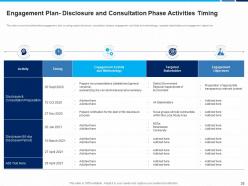
Slide 28: This slide covers the stakeholders engagement plan covering project disclosure, consultation phases, engagement activities and methodology, targeted stakeholders and engagement objectives
Slide 29: This slide presents Communication Methods.
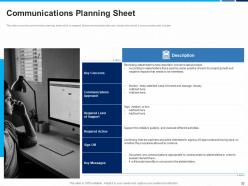
Slide 30: This slide covers the communication planning sheet which is prepared before communication plan and include what should a communication plan includes
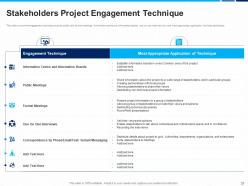
Slide 31: This slide covers the engagement technique such as public and formal meetings, information centre and information boards, one on one interview etc. and most appropriate application for these techniques
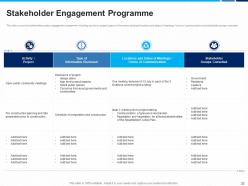
Slide 32: This slide covers the stakeholders project engagement programme including activity or project types of information disclosed locations and dates of meetings/ forms of communication and stakeholder groups consulted
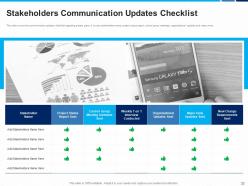
Slide 33: This slide covers the communication updates checklist regarding project plans, it covers stakeholders name, project status report, control group meetings, organizational updates and many more.
Slide 34: This slide presents stakeholders risk and engagement level matrix
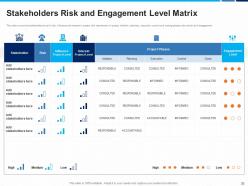
Slide 35: This slide covers the stakeholders level of risk, influence and interest in project with requirement in project initiation, planning, execution, control and closing phases also the level of engagement.
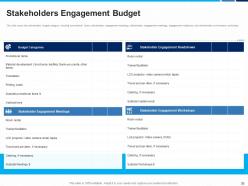
Slide 36: This slide covers the stakeholders budget category including promotional items, stakeholders engagement meetings, stakeholders engagement meetings, engagement roadshows and stakeholders involvement workshops
Slide 37: This slide presents stakeholders engagement budget.
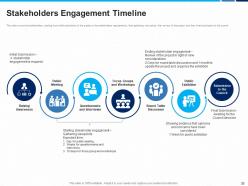
Slide 38: This slide covers the stakeholders starting from initial submission of the project to the stakeholders requirements, then gathering view points, then review of the project, and then final submission to the council
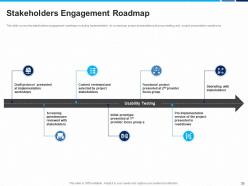
Slide 39: This slide covers the stakeholders engagement roadmaps including implementation at workshops, project presentations at group meeting and project presentation roadshows
Slide 40: This slide presents monitoring and reporting.
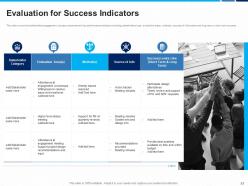
Slide 41: This slide covers the stakeholders engagement success measurement key performance indicators including stakeholders type , evaluation areas, methods, sources of information and long term or short term success
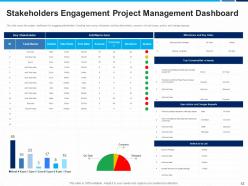
Slide 42: This slide covers the project dashboard for engaging stakeholders including task name, milestones and key deliverables, concerns risk and issues, actions and change requests
Slide 43: This is Icon Slide with various icons. Use as per need and requirement.
Slide 44: This slide is titled Additional Slides to move forward. Change/ alter content as per need.
Slide 45: This is an About Us slide. State company/team specifications etc. here.
Slide 46: This is a Timeline slide that can be used to present series of events.
Slide 47: This is a Post IT Notes slide that can be used to keep important information at one place
Slide 48: This is Target image slide to present product/ entity, information etc.
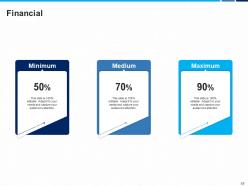
Slide 49: This is Financial scores slide. State your financial aspects etc. here.
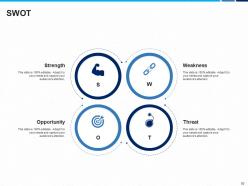
Slide 50: This is a SWOT Analysis slide that can be used to present your organization's strength and weakness.
Slide 51: This is a creative Puzzle image slide to state information, specifications etc.
Slide 52: This is a Thank You slide for acknowledgement.
Stakeholders project engagement and involvement process complete deck with all 52 slides:
Use our Stakeholders Project Engagement And Involvement Process Complete Deck to effectively help you save your valuable time. They are readymade to fit into any presentation structure.
FAQs for Stakeholders project engagement and involvement
So basically you want to map out who matters first - sponsors, users, whoever. Don't skip anyone or they'll get pissy later, trust me on that one. Figure out who needs constant updates vs those you can check in with monthly. Power players obviously get more attention. Then just stick to your plan but stay flexible since people's priorities change constantly. Oh and make it ongoing from the start - set up regular feedback sessions instead of treating it like a checkbox thing. Weekly calls for some, quarterly emails for others, whatever works.
Just list everyone your work touches - customers, employees, suppliers, regulators, investors, community groups, all of it. Make a simple grid: how much influence they have vs. how much your decisions affect them. Your high-influence, high-impact people? Those are your VIPs - big clients, key regulators, etc. Medium ones get regular check-ins. The low priority folks can just get general updates. It's way less overwhelming once you actually write the names down (seriously, I was dreading this exercise until I tried it). Don't just randomly reach out to people - having a system makes everything smoother.
Honestly, just start with a basic stakeholder mapping matrix. Plot people by influence vs interest - it's super helpful for seeing who actually matters. I usually throw together a simple spreadsheet first with names, roles, and how much pull they have. Once you've got the basics down, do some quick interviews to figure out what each person actually cares about. Those power-interest grids are clutch for messy projects too. Oh and if your team's into it, Miro or Lucidchart make the whole mapping thing way more collaborative. But don't get fancy right away - start simple and build up as you go.
Dude, you'll see project success jump like 30-40% with solid stakeholder engagement - the data's pretty clear on this. Getting people involved early means you catch problems before they blow up. Buy-in happens naturally when folks feel heard. Scope creep? Way less of a headache. Map out who matters from day one and actually talk to them regularly - not just those boring status emails nobody reads anyway. When things get messy (and they will), these people become your best allies. It's honestly one of those things that seems obvious but most PMs still skip it.
Look, you've got to stay in constant touch with your stakeholders or everything falls apart. Send weekly updates, do quarterly reports, whatever works - just don't go dark on them. I learned this the hard way honestly. Being transparent beats sugar-coating problems every time. Listen to what they're saying too, not just dump info on them. Ask for feedback and actually use it. Set up some kind of regular check-in schedule from day one and stick to it. Trust me, they'd rather hear bad news early than be blindsided later.
Build review checkpoints directly into your timeline and actually do something with the feedback you get. I'd schedule structured sessions at major milestones - waiting until the end is basically useless. Document everything in a shared tracker so people know you're listening. Here's what I've learned the hard way: tons of teams just collect feedback to say they did it, which pisses everyone off. You need to be transparent about prioritizing conflicting input and explain your decisions back to stakeholders. Oh, and figure out who your most critical people are first - then get those sessions on the calendar now.
Meet people where they actually are - use their preferred channels and timing instead of forcing your usual thing. Honestly, sometimes you need a mutual connection to vouch for you because cold outreach is rough. Listen first before you pitch anything - most resistance happens when people feel ignored. Address their specific concerns upfront and show real value, not just generic benefits. Persistence works, but there's this annoying fine line between helpful and pushy that's hard to navigate. Find incentives they actually care about - recognition, resources, or just making their day easier. Works way better than generic approaches.
Oh man, cultural stuff makes such a huge difference in stakeholder work. Some cultures are all about being direct and moving fast, while others need tons of relationship-building first - honestly, I learned this the hard way once. High-context cultures read between the lines and watch body language. Low-context ones? They want every detail spelled out super clearly. Don't even get me started on time differences - some groups show up exactly on time, others... well, you know. My advice? Research their cultural norms beforehand and just ask people how they prefer to communicate. Way easier than guessing.
Honestly, I'd focus on the stuff you can actually count first - meeting attendance, survey responses, how fast people get back to you. That's your baseline. But the real gold is in the softer metrics, which sounds cheesy but whatever. Track sentiment scores, see if you're actually solving their problems, measure trust levels. Are they genuinely influencing decisions or just going through the motions? Don't try tracking everything though - pick maybe 3-4 things that match what you're trying to accomplish. Way easier to manage.
Honestly, tech is a game-changer for stakeholder stuff. Real-time collaboration tools and virtual meetings are obvious wins. But automated updates? Total lifesaver - no more sending the same email to 20 people every week. Project dashboards give everyone transparency without you having to explain everything constantly. Mobile apps work great for quick feedback too. Some people love AI chatbots for basic questions, though half my stakeholders would revolt if they couldn't reach a human. Map out who needs what info first. Then pick tools that actually match how your people like to communicate - not just what's trendy.
Honestly, talking to your stakeholders regularly is like having a bunch of scouts out there spotting trouble before it hits. Customers will warn you about competitor moves. Suppliers catch supply chain issues early. Even community groups can give you a heads up about regulatory stuff coming down the pipeline. The trick is making it routine - not just scrambling when things go sideways. I've seen companies miss obvious red flags because they only reached out during emergencies. Set up regular check-ins and actually listen. Half the time they'll even suggest fixes you never thought of.
Ugh, the worst part is when everyone has different priorities and nobody's actually talking to each other. Plus people get so burned out from endless meetings - I swear half the room just zones out after the third one. First thing I'd do? Figure out who actually needs to be there and what they really want. Be super upfront about timelines and how decisions get made. Short, regular check-ins beat those awful 3-hour sessions every time. And here's the key - you've got to show people how you used their feedback. Otherwise they'll think you're just going through the motions. Oh, and keep some kind of simple tracker so you can tell when people are checking out.
Honestly, you've got to stay ahead of communication instead of playing catch-up. Regular check-ins are your best friend - schedule them and actually stick to them even when you're swamped. Always be upfront about setbacks because surprises will bite you later. Document everything too (trust me, six months from now nobody remembers who said what). Here's the thing people miss: don't just say you "considered" their feedback - show them how it actually changed things. Consistent communication channels work, but only if you use them religiously.
Look, you can't just create sustainability programs in a vacuum and expect them to work. Map out who your business actually affects - employees, customers, local communities, suppliers. Then get them involved early. Their feedback will catch problems you'd never see coming and honestly, people trust initiatives way more when they helped shape them. I learned this the hard way at my last job... we rolled out this whole green program nobody wanted. Set up regular check-ins with these groups. It's messy but way better than building something that just sits there looking pretty while solving zero real problems.
Getting different people involved is honestly a game-changer for coming up with creative solutions. You'll get customers, employees, maybe community folks all throwing in ideas you'd never think of alone. They push back on your assumptions too, which is super helpful even if it's annoying at first. Plus when people help create the solution, they actually want to see it work - go figure! My advice? Figure out who really cares about fixing this problem. Then give them real ways to share ideas throughout the whole process, not just at the end.
-
Visually stunning presentation, love the content.
-
It saves your time and decrease your efforts in half.
-
Easily Editable.
-
Great product with highly impressive and engaging designs.
-
Unique and attractive product design.
-
Enough space for editing and adding your own content.
-
Informative presentations that are easily editable.
-
Really like the color and design of the presentation.