

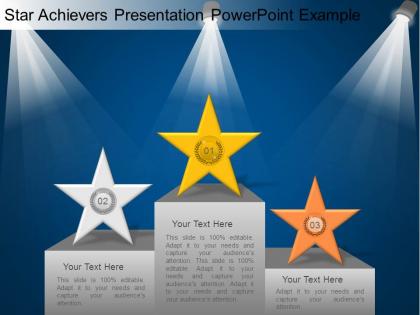
Star achievers presentation powerpoint example




Try Before you Buy Download Free Sample Product
 Impress Your
 Audience
 100%
100% Editable
 Save Hours
 of Time


Draw in the disinterested with our Star Achievers Presentation Powerpoint Example. Curiosity about your ideas will begin to grow.
People who downloaded this PowerPoint presentation also viewed the following :
Star achievers presentation powerpoint example with all 7 slides:
Being informal with our Star Achievers Presentation Powerpoint Example can be an advantage. It brings out the good in the jean clad.
FAQs for Star achievers
Look, being a star performer isn't about crushing your quota anymore. You've gotta roll with changes fast and actually care about helping people - both customers and teammates. The whole "I work alone" thing? Pretty much dead. What matters now is learning quickly, talking to people like a normal human, and staying curious even when you're already killing it. Oh and building real relationships - not just networking BS. Start by figuring out how your work actually moves the needle for the company. Sounds obvious but most people skip that part. Adaptability beats raw talent these days.
Honestly, just add a dedicated achievements section with bold headers and bullet points - makes everything pop way better. Keep your colors consistent with team branding but don't get too fancy with design. Focus on actual numbers and specific examples instead of fluffy language. Leave room for metrics, dates, maybe even photos if that makes sense. Short sentences work great. Then mix in some longer ones that flow naturally when you're describing bigger wins. Each person needs their moment to shine without making the whole thing look messy. I'd start super simple and just tweak it based on what people actually respond to. Templates are weird - sometimes the plainest ones work best.
Honestly, storytelling is what separates the memorable achievers from the forgettable ones. Dry accomplishments are just... boring. You've got to dig into the messy human stuff - their failures, those "aha" moments, what actually drove them to keep going. People connect with struggle way more than success (weird but true). I always look for 2-3 turning points in someone's journey and build everything around those. Skip the bullet points. Focus on moments that changed everything. Oh, and make sure it feels real - nobody wants another polished corporate story that sounds like everyone else's.
Dude, trust me on this - charts and visuals will save your presentation. Nobody wants to sit through another boring list of accomplishments. Show Sarah's 40% sales boost with an actual graph instead. Throw in some action shots of your team members doing their thing. Break down success strategies with infographics that don't suck. I mean, people literally zone out when they see wall-to-wall bullet points these days. But a timeline of Mike's project wins? Now you've got their attention. Your audience will actually remember this stuff and want to copy what worked.
Numbers first - that's what they want to see. Revenue growth, cost savings, productivity bumps with actual percentages. Then throw in context like timeframes and team size so they get the scope. Before/after comparisons really sell your impact too. Honestly, most people just list what they did instead of what actually changed - huge mistake. Include any awards or good feedback you got from higher-ups. Oh, and keep it concrete. Like instead of "improved efficiency," say "cut processing time by 30%." Makes all the difference when someone's skimming through dozens of these things.
Try Mentimeter or Kahoot for live polls about their achievements - those always get people engaged. Interactive timelines are solid too. Prezi works well, or just use PowerPoint animations to show career progression. Honestly, I get way too excited about well-done timelines lol. Short video testimonials hit different when they're embedded right in the presentation. You could make clickable "achievement badges" that show more details when tapped. The whole point is getting people involved instead of just sitting there. I'd start with one interactive thing per section, then add more as you get comfortable with it.
Look, high performers deal with serious burnout and imposter syndrome - plus they're constantly pressured to stay "on." Don't sugarcoat this stuff when you're talking to them. Being always-on actually backfires long-term, which is weird but totally true. Even your best people have bad days and don't know everything (shocking, I know). Just be real about it from the start. Creates way more trust than pretending everything's perfect. Make room in your regular check-ins for honest conversations about this. People need support, not judgment.
Definitely use actual quotes from people who helped you! Like grab specific advice that changed everything - "My mentor Sarah said focus on one skill at a time and it totally shifted my whole approach." Those moments when feedback kinda stung at first but ended up being gold? Perfect for presentations. Also throw in some testimonials from people you've worked with about how you've grown. Just ask permission first obviously. The generic "you're great!" stuff won't hit the same way. Focus on feedback that led to real changes in what you actually accomplished.
Honestly, the biggest thing I've noticed about really successful people is they actually believe their choices matter - like, they don't blame bad luck or other people when things go wrong. They're also weirdly good at waiting for payoffs instead of wanting instant results. Plus they stay just stressed enough to perform well without totally losing it. Most people either stress too much or not enough, you know? Oh, and here's what's cool - they don't necessarily grind harder than everyone else, but they bounce back from failures way faster. They'll literally reframe a screwup as a lesson within like 24 hours. Try connecting your daily stuff to bigger goals. Builds that control mindset fast.
Oh man, this is so true! Different cultures handle achievement talk completely differently in presentations. Americans? They're all about the "look what I did" approach - super direct about personal wins. But in collective cultures, people focus way more on team stuff and actually downplay what they personally contributed. Standing out feels wrong to them, you know? I've watched amazing presenters get totally overlooked because they were taught to be modest growing up. Some cultures care more about the process and relationships than just crushing numbers too. So when you're watching presentations - or giving one - definitely factor in where someone's coming from culturally.
Start with clean whitespace - your achievements need to breathe, not fight with cluttered backgrounds. Bold headers work great for titles, and make sure there's good contrast so people can actually read it. God, I've seen way too many templates that look ancient! Keep colors simple but punchy. Maybe throw in your brand colors if you have them. You'll want space for the basics: dates, descriptions, any important numbers. The whole thing should flow naturally top to bottom. Honestly? Just nail one solid template first, then worry about variations later.
Skip the boring talking heads thing - get your Star Achievers telling real stories about actual problems they faced. Way better than generic advice everyone's heard before. Have people submit questions early so you can mix those in throughout (saves you from that awkward Q&A at the end). Maybe throw in some live polls or quick partner discussions where folks can connect the stories to their own stuff. The whole point is making it feel like a conversation, not sitting through another lecture. Oh and definitely give people something concrete they can actually try afterward - otherwise what's the point?
Honestly, the biggest thing I've noticed about star achievers is they just keep showing up. Even on crappy days when they don't want to. They're weirdly obsessed with learning from their failures instead of hiding from them - which took me way too long to figure out myself. Building real relationships matters more than fake networking BS. Here's what's interesting though: they focus on helping other people first, then the success just kinda follows. My advice? Pick one thing you want to get better at. Spend 30 minutes on it daily and write down what you learn.
Dude, personal connection is everything. Without it, you're just rattling off boring facts and everyone zones out. I've seen people try to fake enthusiasm - it's painful to watch. Your audience will totally pick up on whether you actually care about what you're saying. When you're genuinely excited about the achievements, it shows in how you tell the stories and which details you focus on. That energy is infectious. Honestly, if nothing about the topic speaks to you right now, dig deeper first. Find something that clicks before you get up there.
Here's the thing - focus on effort and growth, not just who hit the biggest numbers. Nobody wants to feel like they're constantly being ranked against everyone else, you know? Recognition should include people, not accidentally spotlight who had better starting advantages. Look at the full story behind results instead of just the surface stuff. I always think it's better to frame things as team wins when you can. Everyone's coming from different places anyway, so celebrate the progress and learning happening. Short version: praise the journey, not just the destination.
-
Use of icon with content is very relateable, informative and appealing.
-
Great product with effective design. Helped a lot in our corporate presentations. Easy to edit and stunning visuals.