


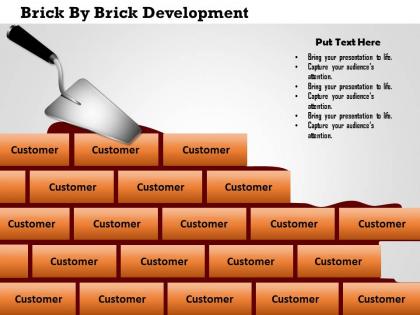
1214 brick by brick development powerpoint presentation




Try Before you Buy Download Free Sample Product
 Impress Your
 Audience
 100%
100% Editable
 Save Hours
 of Time


Be better by half with our 1214 Brick By Brick Development Powerpoint Presentation. Your thoughts will be excellent in comparison.
People who downloaded this PowerPoint presentation also viewed the following :
1214 brick by brick development powerpoint presentation with all 5 slides:
Your climb is bound to be faster with our 1214 Brick By Brick Development Powerpoint Presentation. You will achieve great heights.
FAQs for 1214 brick by brick
Honestly, it's all about taking baby steps instead of trying to do everything at once. Break your project into tiny pieces you can actually finish. Complete one thing fully before jumping to the next - I know it's tempting to start five things when you're feeling motivated, but don't. Keep your quality consistent throughout, and celebrate those small wins because they add up fast. Your team shouldn't be burning out either. The whole thing works because you're not rushing when everything's going smoothly. Find the smallest thing you can deliver that actually matters and crush that first.
Track small wins weekly - like getting login working, then profiles, then editing features. Each piece should actually matter to users, not just busy work. Visual stuff helps tons - I swear by simple task boards or those burndown charts (though honestly they can look intimidating at first). Break everything into these building blocks that stack on each other. The trick is starting measurements right away, even when progress feels super tiny. Weekly demos work great too. Just don't get caught up making milestones that don't actually move the needle forward.
Dude, you absolutely need your team talking constantly for Brick by Brick to work. Everyone's building these small connected pieces, so what you create becomes someone else's starting point. Daily check-ins are non-negotiable - I've watched teams completely implode when people went off doing their own thing. Map out who's responsible for which components first, then set up regular sync meetings. Honestly, the documentation part is kind of a pain but you'll thank yourself later when you're not dealing with integration disasters. Without tight coordination, the whole thing crumbles pretty quick.
Build risk checks right into each piece as you go. I learned this after getting burned on a project - wish someone had told me sooner! Before coding anything, just ask "what could break here?" Then code around those issues. Test for new problems your changes might create. Quick risk review before each deploy too, honestly it saves so much headache later. Don't overthink it with massive docs or anything. Keep a simple running list and update it as you build. Way better than trying to fix everything at the end.
Honestly, scope creep will kill you every time. Stakeholders always want "just one more tiny feature" and suddenly your simple brick is an entire wall. Integration is where things get messy too - everything works perfectly alone but then you connect them and it's chaos. What really sucks is time estimation becomes impossible since delays just cascade through everything. Oh, and testing how new stuff plays with existing components before you move on? Non-negotiable. Stay ruthless about keeping iterations actually minimal or you'll never ship anything.
So stakeholder feedback is like your GPS for each sprint - it tells you where to go next. After every delivery, collect their input and let that shape what you tackle in the next round. It's kinda like building something and people keep saying "oh wait, we need this instead" - way better to pivot early than finish the wrong thing entirely. The trick is setting up actual feedback loops, not just random comments flying around. Regular check-ins work best. Ask specific stuff about what's broken vs what's clicking. Trust me, vague feedback is useless feedback.
Honestly, just start with whatever your team's already using and build from there. Jira or Linear are solid for chopping features into tiny tasks you can actually track. Git with feature branches is a must - like, I literally can't picture doing this without proper version control. Notion or Monday help you see those "bricks" stacking up, which is pretty satisfying actually. Documentation-wise, Confluence works or even basic wikis to capture what each piece delivers. The key thing is making your progress super visible to stakeholders so they don't freak out about the slow-and-steady approach.
Oh totally! Software companies do this all the time - Google's always testing features with small groups, Netflix tries different interfaces on random users. Manufacturing does it too (Toyota's whole thing), retail obviously... Starbucks won't launch a new drink everywhere at once, they test it in like 50 stores first. Hospitals pilot new procedures in one department before going crazy with it. And pharma? That's literally their entire model with clinical trials - phase 1, 2, 3, etc. Just start small with whatever you're doing and see what happens before you go big. Way less risky that way.
Start with the foundational stuff that everything else depends on - sounds obvious but you'd be surprised how many people skip this step. I'd go 60% core features, 30% second-tier stuff, then save 10% for when things inevitably break or take longer than expected. Build your MVP first and don't get fancy too early (learned this the hard way). Track how fast you're actually shipping each sprint so you can shift resources around. The whole point is staying flexible while not screwing up your critical path. Oh and prioritize by what users actually want, not what seems technically cool.
Honestly, most retros are just checkbox exercises that accomplish nothing. Make yours actually matter by having your team try small experiments each sprint and see what sticks. People need to feel safe admitting when stuff didn't work - otherwise you'll never get real feedback. I've watched too many turn into finger-pointing disasters. Short sentences work. When someone tries something new, celebrate it even if it flops spectacularly. The magic happens when your team starts naturally reflecting and tweaking things without you having to force it. Track what's working though - that part's crucial.
You definitely need metrics or you'll never know if this stuff is actually working. Start with deployment frequency, lead time, and defect rates - basic tech health indicators. Team-wise, I'd watch cycle time and velocity, but honestly? Pay attention to your standups. If people sound miserable or stressed, that tells you more than any chart will. Feature adoption is tricky with smaller releases since things can get buried. Oh, and baseline everything first - otherwise you're just guessing if you're improving. Check monthly and see if the trends look good.
So basically, brick by brick means you build tiny pieces at a time and test each one as you go. Way better than waterfall where you plan everything upfront then cross your fingers it works. You get feedback constantly and can change direction when needed - I've seen too many waterfall projects crash and burn honestly. Instead of waiting months for some big reveal, you're shipping working stuff regularly. The whole point is staying flexible vs being stuck with your original plan. Oh, and start with the smallest thing that actually adds value first.
Okay so milestones are like your project GPS - they stop you from just wandering around building random stuff. When you're doing that incremental brick-by-brick thing, it's super easy to lose track of whether you're actually making progress or just... doing things that feel productive but aren't really. Been there way too many times honestly. You need those checkpoints to measure if each "brick" is getting you closer to your goal. Plus stakeholders love seeing concrete progress updates, and you'll catch problems early before they turn into disasters. Make them specific and measurable - seriously, future you will be grateful.
After each project phase, set up a quick repository for lessons learned. Document what worked and what bombed - but do it fast while your team still remembers the details. I've watched so many good insights vanish because teams procrastinated on this stuff. Tag everything by project type or challenge so you can actually find it later (nobody wants to dig through messy files). When you're starting something new, pull up similar past projects first. Honestly, it's such a simple step but it'll save you from making the same dumb mistakes twice.
Honestly, just set up your rhythms early and don't deviate. Daily standups during sprints, weekly updates for stakeholders, monthly retros to fix what's broken. Pick your tools - Slack OR email, not both randomly - and actually stick with them. The second you hit blockers, speak up immediately. I can't tell you how many projects I've watched implode because teams went dark when shit got messy. Document stuff as you go (future you will thank present you), throw up some dashboards so people can see progress, and when someone raises concerns? Actually respond to them. Super basic but somehow half the teams out there still mess this up.
-
Unique and attractive product design.
-
Enough space for editing and adding your own content.