Strategic action plan table with action steps

Slide 1 of 2
Favourites Favourites

Try Before you Buy Download Free Sample Product

Audience Impress Your
Audience
Editable 100%
Editable
Time Save Hours
of Time
The Biggest Sale is ending soon in
0
0
:
0
0
:
0
0
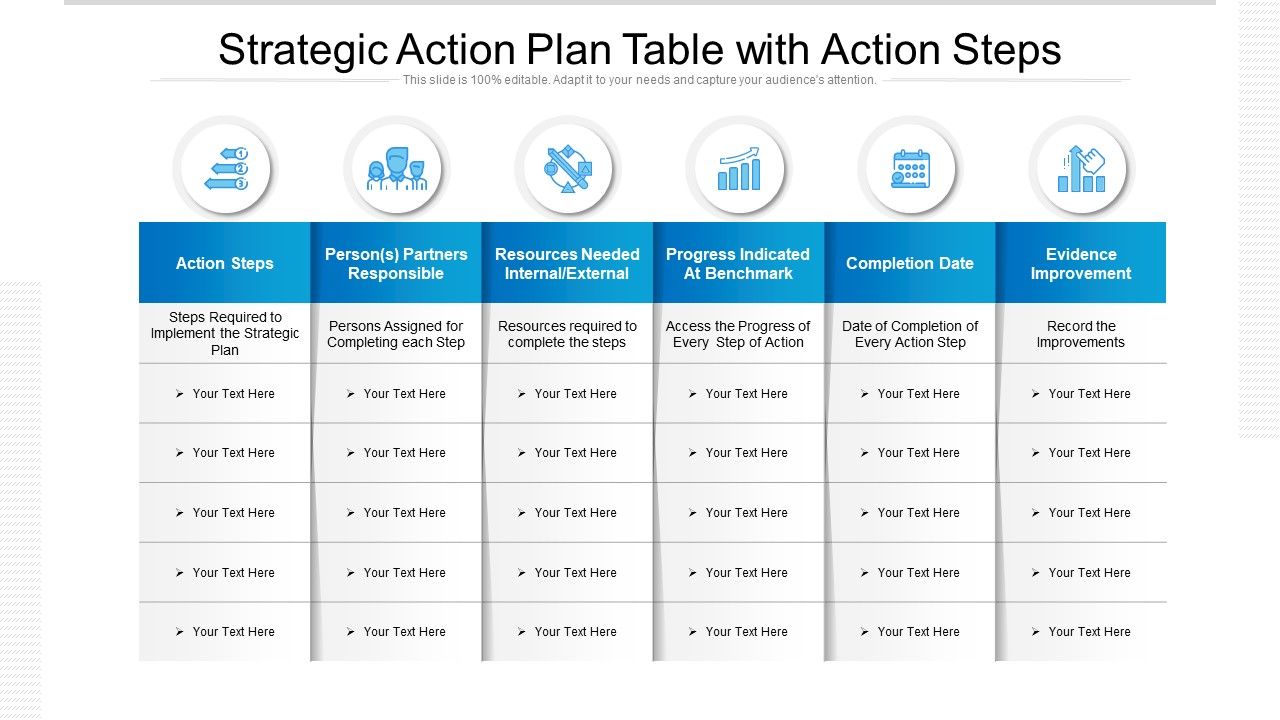
Presenting this set of slides with name Strategic Action Plan Table With Action Steps. The topics discussed in these slides are Action Steps, Persons Partners Responsible, Resources Needed Internal External, Progress Indicated At Benchmark, Completion Date, Evidence Improvement. This is a completely editable PowerPoint presentation and is available for immediate download. Download now and impress your audience.

FAQs for Strategic action plan table

Okay so you need five things to make this actually work. Clear objectives first - like, ones people can actually understand without decoding corporate BS. Set specific goals with real deadlines. Figure out who's doing what because honestly, without someone owning each piece, nothing happens. Map your budget and resources early so you're not scrambling later. Oh, and build in regular check-ins to adjust when stuff goes sideways (it always does). The accountability thing is huge - I've seen so many solid plans just die because nobody knew whose job it was to execute them.

Honestly, most teams mess this up by jumping straight into tactics without nailing down what they're actually trying to achieve first. Figure out your main business goals, then work backwards from there. Every project or initiative should clearly connect to those bigger targets - like, you should be able to draw a straight line from daily tasks to quarterly objectives. I'm a big fan of checking in every few months because things change fast and you don't want to be executing perfectly on the wrong priorities. Oh, and make everything measurable somehow - even the fuzzy stuff. Otherwise you're just guessing if anything's working.

There are a bunch of ways to tackle this. SWOT analysis is probably the most common - you just map out strengths, weaknesses, opportunities and threats. Super basic but it works. For goal-setting, try OKRs or SMART criteria to make sure you're not being too vague. Balanced scorecards are decent too if you want different angles on performance. Honestly? Most people I know just mix and match from different approaches instead of following one religiously. The key is picking something that actually fits how your team operates. Oh, and then you've gotta follow through - that's where most plans die anyway.

Honestly, just make a simple spreadsheet and score each initiative 1-5 on stuff like how well it fits your goals, potential ROI, timeline, implementation difficulty - you know, the basics. Yeah it feels kinda arbitrary at first, but it actually helps you think through things way better than just winging it. Pick your top 3-5 scoring initiatives instead of trying to do everything (learned that one the hard way). Also check if any of them depend on each other - sometimes you've gotta do A before B makes any sense.

Honestly, stakeholder engagement makes or breaks strategic planning. Without it, you're just creating expensive paperwork. Get people involved early - they'll catch problems you'd never think of and help you find opportunities hiding in plain sight. Here's the thing though: when people help build something, they actually want it to succeed. Weird concept, I know. Map out who matters first, then touch base with them throughout the whole process. Don't just show up at the end asking for approval. You'll thank me later when implementation doesn't suck.

Build your metrics right into each goal from day one - don't just slap them on later. Pick 2-3 concrete numbers that actually matter for each objective. Honestly, I've watched so many businesses track total nonsense that tells them nothing useful! Get your baseline data first, then set real targets. Check the tactical stuff monthly, bigger picture quarterly. Your metrics need to tie back to actual results, not just busywork. Oh, and schedule those review sessions now or they'll never happen. When the numbers show you're heading off course, pivot fast.

Honestly depends on your budget and how complex you want to get. Miro or Mural are solid for visual planning stuff, while Monday.com and Asana work better if you like structured project management. Don't sleep on Google Sheets though - seriously, a good spreadsheet can handle way more than people think when you're starting out. Tableau and Power BI are awesome for dashboards if you need fancy monitoring. Simpler tracking? Trello or Notion do the job. The real trick is finding something everyone will actually stick with. I'd say start with whatever tools you already have, then level up later.

Honestly? Monthly is ideal but quarterly works too if you're swamped. I mean, waiting a whole year is just asking to become obsolete lol. Do quick monthly check-ins on your numbers and progress. Then every quarter, dive deeper - that's when you actually tweak your tactics or shift priorities around. The trick is staying consistent with it. Block those review dates in your calendar right now and don't let anything else take priority. If monthly feels like too much, start quarterly. Just don't stretch it longer or you'll lose all momentum.

Oh man, don't make your goals super vague or crazy unrealistic - that's like setting yourself up to fail from day one. Talk to the people who'll actually DO the work before you finalize anything. I can't tell you how many gorgeous plans I've seen that nobody could actually execute because leadership didn't ask the right questions upfront. Build in flexibility too, because stuff will change (it always does). Maybe do check-ins every quarter? Also keep your timelines honest - better to underpromise than create this ambitious document that just sits there mocking you.

Look, market analysis is what keeps your strategic plan from completely flopping. Without it, you're basically guessing what'll work. Start by checking out your top 3-5 competitors - see what they're doing right and wrong. You'll spot market gaps, catch trends early, and figure out where to actually spend your money. Plus customers are always talking about what they want if you know where to listen. I learned this the hard way tbh. The data helps you set goals that aren't totally unrealistic and avoid nasty surprises down the road.

Don't just hand your team a finished plan - bring them into the actual planning process. When key people help make the decisions, they'll actually care about making it work. Also make sure everyone understands WHY you're doing each thing, not just what they need to do. I'd set up regular check-ins where people can speak up about problems or suggest changes. It's not just status updates - you want them staying invested. Oh, and celebrate the small wins! Sounds cheesy but it really does keep people motivated when things get tough.

First things first - get your leadership team aligned or you're basically screwed from the start. Mix up how you share it: all-hands, smaller team meetings, plus written stuff so it hits people different ways. Repetition is huge, but make it relevant to what each department actually does daily. Those slide presentations everyone sits through? Yeah, don't just do that and walk away. Give people simple reference docs they'll actually use, assign clear owners (someone's gotta be responsible), and check in regularly. Oh, and your managers better be able to explain how this impacts their specific teams.

So basically you want to think about what could go wrong *before* you start anything. Build your backup plans right into the original timeline - don't wait until you're panicking. I always tell people to spend like 15-20% of planning time on "what if this totally fails" scenarios. Sounds paranoid but trust me, it's not. Having Plan B ready to roll makes everything way less stressful. During your regular check-ins, make contingency stuff part of the agenda. Way better than scrambling when things inevitably get weird.

Honestly, digital transformation completely flips how you do strategic planning. Those old 3-5 year plans? Forget about them. Tech moves way too fast now. You need shorter cycles with constant feedback loops and data-driven pivots. The tricky part is you'll also be dealing with skills gaps, new tech costs, and figuring out how automation affects your team - which is honestly a headache in itself. But the real game-changer is building agility into everything. That way you're responding to changes instead of getting caught off guard every six months.

Set up monthly check-ins to see what's actually working - don't just write your plan and forget it exists. Get feedback from everywhere: customers, your team, the numbers. I learned this the hard way when I stuck to a plan way too long without adjusting. Monthly works better than quarterly honestly, things change too fast these days. Make a simple template for these reviews so you don't ramble for hours. Then actually change stuff based on what you learn! Most people skip that last part. Your plan should evolve as you go.

Ratings and Reviews

0% of 100
Review Form
Write a review
Most Relevant Reviews

No Reviews