


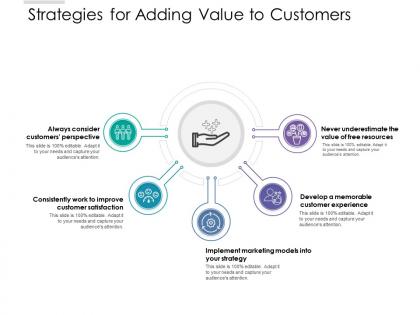
Strategies for adding value to customers




Try Before you Buy Download Free Sample Product
 Impress Your
 Audience
 100%
100% Editable
 Save Hours
 of Time


Generate a definitive influence with our Strategies For Adding Value To Customers. Bring about a change of attitude.
People who downloaded this PowerPoint presentation also viewed the following :
Strategies for adding value to customers with all 5 slides:
Bring about a change in attitude with our Strategies For Adding Value To Customers. You will generate a definite influence.

FAQs for Strategies for adding
Look, you need four main things: solid customer segmentation, value props that actually hit each group, pricing that feels fair, and feedback loops to track what's working. Most people screw up the segmentation though - they cast too wide a net and their messaging becomes bland mush that nobody cares about. Your value propositions should solve real problems for specific people. Price it so customers feel they got a steal, honestly. Oh and start by asking your best 20% of customers what they love most about you - that's pure gold right there.
Honestly, you're gonna need a few different approaches here. Start with some basic surveys - Net Promoter Score stuff works well, plus just ask them straight up about value vs price. People are surprisingly honest about money. Then dig into your actual data to see which features they're using and what they'll pay extra for. Focus groups are clutch too - that's where you'll catch those moments when you realize customers care about totally different things than you expected (happens more than you'd think). Main thing is mixing what people tell you with how they actually spend. Actions usually tell the real story.
Honestly, customer feedback is like getting the answers to the test beforehand. You're collecting real data on what people actually care about - not what you think they want. Surveys, reviews, support chats, whatever works. Look for patterns in complaints and praise. That's where you'll find the disconnect between your messaging and reality. I swear, half the time companies are solving problems nobody has. Use what you learn to tweak your features or completely reshape how you talk about your product. But here's the thing - don't just hoard the feedback. Act fast or it's worthless.
Honestly, segmentation is a game changer because you can actually speak to what each group cares about. Like, your penny-pinching customers want deals and efficiency. Meanwhile your high-end folks are all about quality and feeling special. I've watched so many businesses blow their budget on bland messaging that lands with nobody - it's painful to see. You gotta figure out your top 2-3 customer groups first, then map what "value" actually means to each one. Their pain points are totally different, so your approach should be too.
Honestly, tech just makes it way easier to help customers at every step. Like, you can personalize stuff for tons of people at once, and chatbots handle the basic questions so you're not stuck answering "what are your hours" all day. Data's pretty cool too - you'll actually know what people want before they complain about not having it. Self-service options are clutch because nobody wants to wait on hold for simple stuff. I'd map out your customer journey first and see where people get annoyed. That's where you want to focus your tech upgrades, not on flashy features that don't actually solve anything.
Here's what I'd do - take like 15-20% of your short-term profits and reinvest them in stuff that makes customers actually want to stick around. Better onboarding, loyalty perks, product improvements. Yeah, you still need to hit those quarterly targets, but I've watched so many teams get addicted to quick wins and then act shocked when people start leaving. Track your immediate revenue, sure, but also keep an eye on lifetime value and NPS scores. Figure out which customers are actually worth the long-term investment first - honestly, some just aren't - then build retention strategies around those specific segments.
Honestly, the biggest screw-up is thinking you already know what customers want without bothering to ask them. Teams get all hyped about fancy features while completely missing the basic stuff that's actually broken. I've watched this happen so many times - it's wild how businesses will copy their competitors instead of figuring out their own customers' problems. Plus, most companies never even check if their "improvements" actually help. Like, are people happier? Staying longer? Just ask your customers directly and track what moves the needle on satisfaction.
Oh man, this stuff is so interesting! Different cultures want totally different things. Japanese customers care way more about detailed service and respect than just cheap prices. Germans? They want things that work efficiently without the fluff. Some cultures are all about relationships first, others just want the best deal period. You really can't use the same pitch everywhere - what works in one place might totally bomb somewhere else. I'd definitely dig into the cultural research before you roll anything out. Time, hierarchy, decision-making styles... it all matters way more than you'd think.
Honestly, start with just 3-4 metrics or you'll go crazy trying to track everything. CLV and NPS are solid choices - they actually tell you if customers think you're worth it long-term. Retention rates and repeat purchases matter too. Customer acquisition cost is super important but calculating it accurately? Good luck with that mess, especially if you're running multiple campaigns. I'd also throw in some real customer feedback through surveys or just talking to people directly. Financial stuff only tells half the story anyway. Once you've got those basics down, then you can add more.
Dude, personalization is like having a friend who remembers exactly what you like. Netflix knows I'm obsessed with true crime docs, Amazon remembers I always buy the same coffee - suddenly these platforms feel way more useful. Your customers get that same feeling when you actually pay attention to what they want. Like, tailoring your emails or product suggestions based on what they've looked at before? Game changer. People stop feeling like just another number in your system. Oh, and you don't need to go crazy with it right away - start with simple stuff like segmenting your email lists.
Honestly, most businesses totally miss this - you gotta actually listen to what your customers want instead of assuming you know. Track how they behave on your site, ask them directly, pay attention to complaints. Small personal touches work wonders too. Like remembering someone's usual order or shooting them a birthday discount. After they buy something? That's your golden moment to stand out from the big guys who couldn't care less. Fix problems fast and throw in something extra when you can. Oh and consistency matters - can't be amazing one day then terrible the next, you know?
Honestly, ditch the pushy sales stuff and actually help people first. Look at how your customers behave, then give them recommendations that make sense for them specifically. Most loyalty programs are trash tbh, but the good ones use data to predict what you'll need next - like reminding you to reorder stuff or suggesting seasonal items. Every time someone interacts with your brand, they should walk away thinking "that was useful" not "ugh another sales pitch." Oh and definitely A/B test your messaging because what sounds good to you might totally flop with customers.
Here's what works: make everything easier for customers by cutting out pointless steps and waiting around. Use their data to personalize stuff - people love when you remember their preferences. Train your team well since they're literally your brand to customers. Map out the whole customer journey and find where you're accidentally pissing people off instead of helping. Small things matter too, like giving heads up about delays. I know it sounds basic, but removing friction is huge. Sometimes the tiniest improvements make customers feel way more valued than big flashy changes.
Honestly, brand loyalty is everything for your customer strategy. It keeps people from constantly shopping around for better deals. You'll spend way less on trying to attract new customers because your existing ones actually stick around. Here's the thing - loyal customers cut you slack when things go wrong. We all screw up sometimes, right? They also become your unofficial marketing team, telling friends about you without being asked. The trick is figuring out what makes YOUR customers loyal specifically. Is it your product quality? Super fast service? Something totally different? Once you know that, just keep delivering on it consistently.
Honestly, it's all about making people feel like you actually get them. Use their buying history to suggest stuff they'd genuinely want - not just random upsells. Remember what they like, send birthday discounts, that kind of thing. Tell stories that don't suck (customers eat up good brand stories). Building little communities around your product works surprisingly well too. And when someone complains? Actually listen and respond like a human being. Map out where customers interact with you and find spots to add personal touches. Oh, and be consistent - nothing kills trust faster than mixed messages across different channels.
No Reviews