


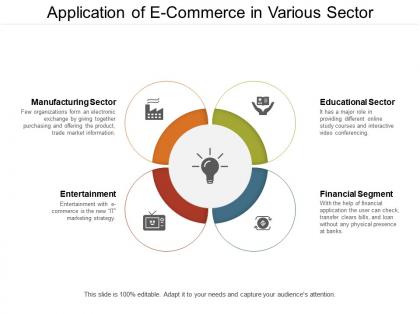
Application of e commerce in various sector




Try Before you Buy Download Free Sample Product
 Impress Your
 Audience
 100%
100% Editable
 Save Hours
 of Time


Handle difficulties with our Application Of E Commerce In Various Sector. They are bound to help find answers.
People who downloaded this PowerPoint presentation also viewed the following :
Application of e commerce in various sector with all 5 slides:
Handle dissent with our Application Of E Commerce In Various Sector. Disseminate your thoughts in a convincing fashion.



FAQs for Application of e commerce
Okay so first things first - you'll definitely need solid payment processing and search/filtering that doesn't suck. Mobile optimization is huge since everyone shops on their phone now. The checkout needs to be super smooth, and honestly, reviews are make-or-break because people are paranoid about buying stuff online without seeing what others say first. Your cart should remember what people added even if they leave (I hate losing my stuff). Oh and inventory management, order tracking, live chat support - the usual suspects. Fast loading too because patience is dead. I'd nail these basics before getting all fancy with extra features.
Dude, mobile optimization is absolutely critical for conversions. Fast loading times? Essential. Most of your traffic is probably mobile anyway - like 70% easily. I've watched engagement spike 40-60% just from fixing mobile issues. Poor experience means people bail immediately, but when navigation feels natural and checkout actually works, they'll complete purchases. Honestly, thumb-friendly design should be your top priority. Users get frustrated so quickly on mobile - way faster than desktop. Focus on streamlined checkout first, then worry about the fancy stuff. Your conversion rates will thank you later.
Honestly, AI is like having a really smart employee who works 24/7 and remembers everything about your customers. Product recommendations get scary accurate based on what people browse. Chatbots can handle most questions without sounding completely robotic - though they still mess up sometimes. Your search gets way better so people actually find stuff, plus it handles inventory predictions and catches fraud before it screws you over. Oh, and prices can adjust automatically which is pretty wild. Don't try to do everything at once though - start with recommendations and build from there.
Honestly, you just need your systems syncing constantly - not once a day like some businesses do (total disaster waiting to happen). APIs will save your life here because they update everything instantly when someone buys something. Whether it's your website, app, whatever. I'd start by checking how often your current system actually updates. If it's not immediate, fix that first. Set up webhooks between your platform and inventory system. TradeGecko or Cin7 are solid options - though I haven't used Cin7 personally. The goal is avoiding overselling because customers hate that.
Honestly, you can't go wrong with Stripe, PayPal, or Square. Stripe's my favorite for online-only stuff - their docs don't make you want to cry, which is weirdly refreshing. PayPal's solid because customers already trust it, even though the checkout process feels a bit dated. Square works great if you've got a physical store too since everything syncs up. They all handle the security headaches for you, so you don't have to worry about PCI compliance and fraud stuff. Start with Stripe unless you really need PayPal's brand recognition.
Okay so basically, bad UX kills your sales. People are impatient - if your site's slow or confusing, they're gone in seconds. Clean design makes people trust you more. Amazon's one-click thing exists for a reason, right? Most of your traffic is mobile now too, so that better work smoothly. Test different checkout flows and fix your search function (seriously, so many sites have terrible search). Small tweaks like moving buttons around can bump conversions 10-20%. Even reducing the number of clicks to buy something makes a huge difference.
Honestly, start with the basics - get HTTPS running and use something like Stripe or PayPal for payments since they handle the PCI compliance nightmare for you. Multi-factor authentication is a must these days. Then you'll want input validation to stop SQL injection attacks (learned that one the hard way). Regular security audits help catch stuff you missed. Session management matters too. GDPR is annoying but necessary if you've got EU customers. Don't put all your eggs in one basket though - layer everything together. SSL and payment security first, then build out the rest.
So basically, data mining shows you what customers actually do vs what they say they'll do (huge difference). Track your conversion rates by traffic source first - that's your quickest win. You can spot which products are about to blow up or completely flop, plus see exactly where people bail during checkout. Customer segments based on purchase history let you send way better targeted emails instead of blasting everyone. Oh, and real-time pricing optimization is clutch if you're competing on Amazon or whatever. Start simple with customer lifetime value calculations, then build fancier prediction models once you've got the basics down.
Dude, traffic spikes will absolutely wreck your servers first. Payment gateways start choking when everyone's hammering checkout - think Black Friday nightmare vibes. Your database gets sluggish, search breaks, and don't even get me started on shipping calculators crashing under load. Site speed goes to hell when product images overwhelm your CDN. Honestly, inventory systems are probably the worst offenders though. They just can't handle the sudden demand surge. Load testing beforehand is clutch, plus set up auto-scaling or you're gonna have a bad time when the rush actually hits.
Dude, social media integrations are a game-changer for e-commerce. People hate filling out forms, so when they can just login with Facebook or Google? Instant win. Way less cart abandonment. Your customers basically become your marketing team when they share stuff - which is honestly brilliant if you think about it. Reviews and user posts give you that social proof thing that makes new people actually trust you. Oh, and the targeting data you get is pretty solid too. I'd start with Facebook and Google logins first since they're super straightforward to set up.
Dude, start playing with AI personalization tools now - that's where you'll crush it. Voice shopping is still kinda meh but getting better fast. AR try-ons are finally going mainstream, which is wild. Social commerce keeps getting smarter too. Oh and sustainability stuff isn't optional anymore - customers expect it. Mobile-first? Nah, we're talking mobile-ONLY now. Plus everyone wants their stuff in like 15 minutes lol. Headless commerce architectures are huge if you're rebuilding anyway. Honestly there's so much happening it's hard to keep up, but the AI personalization thing is your best bet right now.
Honestly, just start with the basics - use what your app already knows about users. Their browsing habits, what they've bought before, that kind of stuff. Push notifications are gold when they're actually relevant (not just "hey buy something" spam). I'd segment users into groups first - new customers vs regulars, different age ranges, whatever makes sense. Then set up automated emails and homepage tweaks for each group. Product recommendations are probably the easiest win to start with. Once you see what clicks, you can get fancier with the targeting.
Dude, PWAs are seriously worth looking into if your mobile conversions suck. They load crazy fast and work offline, plus customers can install them straight from the browser - no app store BS. Push notifications help bring people back too. Honestly, I think they're way better than building separate native apps because you only deal with one codebase. Way less maintenance headaches. The user experience is just smoother, so conversion rates usually jump up. My buddy saw like a 30% increase after switching, though your mileage may vary. If you're getting mobile traffic but people aren't buying, definitely test one out.
Dude, customer feedback is honestly your best friend here. People will straight up tell you what sucks about your site - way better than guessing what they want. I've watched companies blow months on features nobody cares about because they didn't ask first. Grab feedback from reviews, support tickets, user testing, even random Twitter complaints. The magic happens when you actually fix stuff fast. Customers totally notice when you solve problems they complained about, and they'll love you for it. Trust me on this one.
Dude, start with your checkout - it's probably way too complicated. Strip out random steps and let people buy as guests without creating accounts. Show shipping costs upfront so there's no nasty surprises at the end. Those little security badges actually work because people get weird about typing in credit card numbers online. I'd set up abandoned cart emails that go out after like 2-3 hours with their stuff, maybe throw in a small discount. Oh and those exit popups when someone's about to leave? Annoying but they convert. Mobile checkout's huge too since everyone shops on their phone now. Honestly just fixing the checkout flow usually drops abandonment by 20-30%.
No Reviews