

Current Trends In Ecommerce Powerpoint Presentation Slides




Try Before you Buy Download Free Sample Product
 Impress Your
 Audience
 100%
100% Editable
 Save Hours
 of Time


In this age of digitization, it is not surprising that the world of e-commerce is growing day by day. Talk about current trends in eCommerce with our content ready current trends in eCommerce PowerPoint Presentation Slides. Learn and show new trends in e-commerce. Showcase emerging eCommerce latest trends. This is an effective design, helps to demonstrate the e-commerce latest trends. This online business model presentation templates comprise of e-commerce industry outline, e-commerce emerging trends, e-commerce business model, e-commerce marketing strategy, etc. The latest trends in e-commerce PowerPoint complete deck contains ready-to-use templates with all sorts of editable diagrams. The presentation is fully editable. You can modify, color, text, and font size. This includes infographics slides that help you to make an inclusive and comprehensive presentation. You can convey your message more convincingly with this visually strong and appealing new trend in e-commerce PowerPoint design. Highlight the contribution of your ancestors with our Current Trends In Ecommerce Powerpoint Presentation Slides. Elaborate on your cultural heritage.
People who downloaded this PowerPoint presentation also viewed the following :
Content of this Powerpoint Presentation
Slide 1: This slide introduces Current Trends in Ecommerce State Your Company Name and begin.
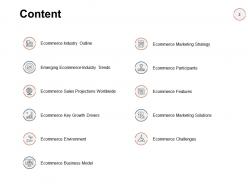
Slide 2: This slide shows Contents of the presentation.
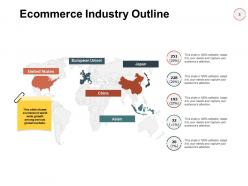
Slide 3: This slide presents Ecommerce Industry Outline to show world wide growth among various global markets.
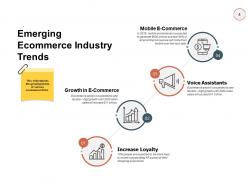
Slide 4: This slide displays Emerging Ecommerce Industry Trends to help in depicting the growing trends of various ecommerce firms.
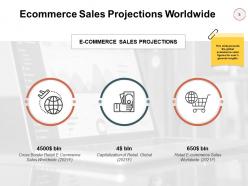
Slide 5: This slide represents Ecommerce Sales Projections Worldwide with sales figures for user’s general insights.
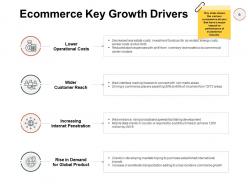
Slide 6: This slide shows the various E-commerce key growth drivers that have a major impact on performance of ecommerce industry.
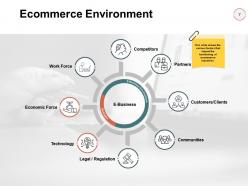
Slide 7: This slide showcases Ecommerce Environment to describe the various factors that impact the functioning of ecommerce industries.
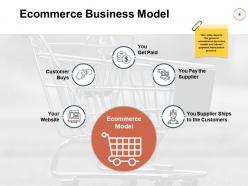
Slide 8: This slide depicts the general E-commerce business model and shows payment transaction process.
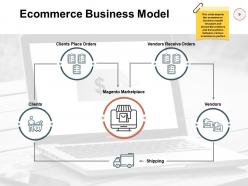
Slide 9: This is an optional slide for Ecommerce Business Model.
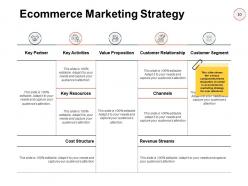
Slide 10: This slide shows the various components/elements/parties involved in an ecommerce marketing strategy for user reference.
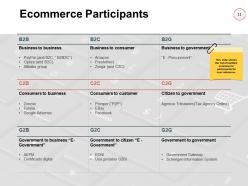
Slide 11: This slide presents the list of multiple ecommerce participants for user reference.
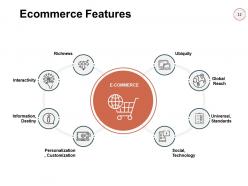
Slide 12: This slide displays Ecommerce Features describing- Richness, Interactivity, Information, Destiny, Personalization, Customization, Ubiquity, Global Reach, Universal, Standards, Social, Technology.
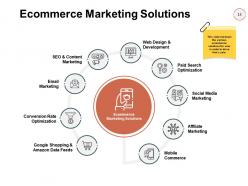
Slide 13: This slide list down the various ecommerce marketing solutions for user in order to drive firm’s sale.
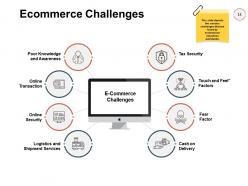
Slide 14: This slide depicts the various challenges that are faced by ecommerce industries worldwide.
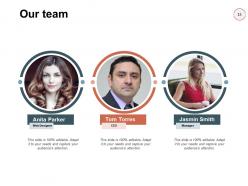
Slide 15: This is Our Team slide with names and designation.
Slide 16: This is a Timeline slide. Show information related with time period here.
Slide 17: This is a Target slide. State your targets here.
Slide 18: This is Our Mission slide with related imagery and text.
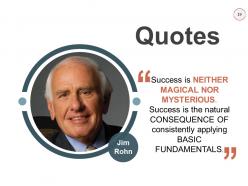
Slide 19: This is a Quotes slide to convey message, beliefs etc.
Slide 20: This slide is titled as Post It. Post your important notes here.
Slide 21: This is a Venn slide with additional text boxes.
Slide 22: This is a Thank you slide with address, contact numbers and email address.
Current Trends In Ecommerce Powerpoint Presentation Slides with all 22 slides:
Display belief in the concept of free speech. Demonstrate your deep faith with our Current Trends In Ecommerce Powerpoint Presentation Slides.
FAQs for Current Trends In Ecommerce
Honestly, the biggest stuff happening right now is AI personalization and voice shopping getting way better. Companies are finally using ChatGPT-type tools for recommendations that don't suck. AR is pretty cool too - you can try on clothes or see how furniture looks in your room before buying. Oh, and TikTok Shop is everywhere now, which is kinda scary how addictive it is. Voice shopping through Alexa actually works decent these days. If you're not trying at least one of these, your competitors probably are.
Dude, personalized shopping is crazy effective - like 15-20% more repeat customers when you nail it. Basically you're using their browsing history and past orders to show them stuff they actually want. Product recs, custom emails, even tweaking your site layout for different people. Honestly feels a bit creepy how well it predicts what someone's gonna buy before they know it themselves lol. I'd start simple though - maybe personalized email campaigns or just better product suggestions on your homepage. Way better than sending everyone the same generic stuff.
Dude, AI is seriously crushing it for inventory stuff. Demand forecasting is where I'd start - these systems analyze customer patterns, seasonality, all that data way better than old-school methods. You'll dodge those annoying stockouts and overstock nightmares since it auto-adjusts your reorder points. Plus it spots slow-moving products before they turn into dead weight (learned that one the hard way). The warehouse space optimization is pretty slick too. Honestly, the accuracy has gotten crazy good lately. Focus on forecasting first though - that's your biggest bang for buck.
Dude, social commerce is crazy - people literally buy stuff without leaving Instagram or TikTok now. Gone are the days of clicking through to websites. One tap on a Story and boom, they've bought that sweater. What's really changed is how much people trust what they see from actual users versus brands. Like, seeing your friend wear something in their regular posts hits different than a polished ad, you know? Your customers are basically impulse buying on steroids because everything's so seamless. You've gotta be where they're already scrolling instead of hoping they'll find you.
Honestly, start with your site speed - that's what kills conversions the most. Nobody's gonna wait around for pages to load anymore. Then streamline your checkout with guest options and stuff like Apple Pay. High-quality product images are crucial but they gotta load fast too. One-tap purchasing is pretty clutch if you can swing it, plus easy filtering so people can actually find what they want. Oh and AR try-on features are cool if they make sense for what you're selling - though I'd prioritize the speed thing first since that impacts everything else.
Dude, people are SO picky about sustainability now. Gen Z especially - they'll literally pay 15% more just for eco-friendly packaging. I've seen customers abandon entire carts when they can't find info about carbon-neutral shipping or ethical sourcing. Wild, right? They're reading every ingredient, hunting for certifications, even stalking supply chains for transparency. Honestly feels like everyone's become a detective. Your product pages better scream "green" or you're missing out on serious sales. Oh, and don't forget checkout pages too - that's where they make final decisions.
Honestly, it's all about making life easier for people - nobody wants to remember when they're running low on toilet paper or dog food. Companies love it because they get that steady monthly income instead of hoping customers come back. Once you're subscribed to something, you're way less likely to switch brands since canceling feels like a hassle. The data aspect is pretty wild too - they start predicting what you need before you do. My advice? Only do it for stuff people genuinely use on repeat. Don't be one of those companies trying to subscription-ize everything just because it's trendy.
Dude, checkout processes are getting insanely smooth these days. One-click buying, Apple Pay, those buy-now-pay-later buttons literally everywhere. Companies are obsessed with cutting cart abandonment - like if someone has to create an account or wait more than 30 seconds, they're gone. Biometric stuff is huge now too. Even crypto payments for Gen Z shoppers (though that's still pretty niche tbh). Voice payments are starting to pop up more. The whole game is just making it stupid easy to go from "want" to "bought" instantly. Your competitors are definitely already doing this if you're not.
Honestly, chatbots are pretty clutch for ecommerce support. They knock out maybe 80% of the basic stuff - order tracking, return policies, that kind of thing - so your actual human team can focus on the messy problems. Customers don't have to wait around for answers at 2am either, which is nice. You'll save money on support costs and people will be happier getting instant responses. The trick is making sure there's an easy way to talk to a real person when the bot can't help. Nothing's worse than being trapped with an unhelpful robot, trust me.
Honestly, most people are just throwing marketing money around and hoping something sticks. Data analytics will actually show you what's working though. Look at your conversion rates, where customers are dropping off, which products they browse together - all that stuff reveals your best segments and channels. I mean, it sounds basic but you'd be surprised how many businesses skip this step. First thing is making sure your tracking setup isn't garbage. Then test one thing at a time so you don't mess up your results. Customer behavior patterns don't lie.
Dude, you absolutely have to nail the local stuff first - payment methods, currencies, customer service in their language. Amazon isn't king everywhere. Places like Southeast Asia? Shopee totally dominates there. Social commerce is insane internationally, especially Asia where people literally buy through WeChat and TikTok. The logistics used to be a nightmare but it's way better now with regional warehouses and stuff. My advice? Pick like one or two markets where you know there's already demand. Don't spread yourself thin trying to conquer the world at once - learned that one the hard way!
Dude, AR lets people try stuff without actually having it. Your customers can see how that couch looks in their space, test out glasses, or figure out if a lipstick shade actually works. Honestly, it's pretty genius for solving the whole "will I hate this when it arrives?" problem that kills online shopping. Returns drop like crazy because people actually know what they're buying. My cousin's company started using it last year and saw a huge difference. If you haven't looked into AR options for your business yet, you're probably missing out on something big.
Dude, honestly? The whole fast/cheap delivery thing is killing everyone right now. Costs keep going up but customers still want that Amazon speed without paying for it. Last-mile delivery alone can wreck your profits - it's genuinely insane how expensive it gets. But there's good stuff you can do. Warehouse automation helps a ton, or just partner with logistics companies who know their shit. Curbside pickup is clutch too. Oh, and when things go wrong (they will), just tell people what's happening. Nobody expects perfection, but we all hate being left in the dark about our orders.
UGC is seriously a game-changer for sales. Like 92% of people trust other customers way more than whatever brands tell them. Makes total sense though - I always check reviews before buying anything online, even stupid stuff like phone cases. Real photos and honest reviews from actual buyers just kill all that "is this gonna suck?" anxiety. Products with reviews convert 3.5x better than ones without, which is pretty crazy when you think about it. So yeah, definitely get that review system going and put user photos front and center on your product pages. The social proof basically sells for you.
Honestly? Data privacy is huge right now - people are so done with companies being shady about their info. Sustainability matters too, like actually caring about packaging and supply chains, not just greenwashing. Fair labor practices are on everyone's radar. Gen Z especially will drop brands that don't match their values, which... fair enough? The whole "break things fast" startup vibe is basically over. You gotta be transparent about everything now. Way easier to build trust upfront than try fixing it later when you've already screwed up.
No Reviews