


E commerce business and financial model powerpoint presentation slides




Try Before you Buy Download Free Sample Product
 Impress Your
 Audience
 100%
100% Editable
 Save Hours
 of Time


Introducing E-Commerce Business And Financial Model PowerPoint Presentation Slides. With the help of this business model PPT template, you can showcase the networking sites that provide online services. You can highlight the methods of generating economy revenue using e-business models PowerPoint presentation slides. If you want to focus on profit margin related to your product, then use our internet business models PPT visuals. By using the financial online business framework PowerPoint presentation complete deck, you can explain the process of warehousing and wholesaling models. B2C e-commerce model PPT contains diagrams and high-quality icons with which you can make your presentation even more engaging. This e-business PPT deck includes various models like drop shipping, white-labeling, subscription-based, e-mails, and e-procurement that enhances the digital market growth, etc. With the help of the online business models PowerPoint presentation deck, you can elaborate on the process of transaction fee revenue clearly. Therefore, download our ready-to-use e commerce ppt slides and encompass the entire scope of online business. End harmful competition between colleagues with our E Commerce Business And Financial Model Powerpoint Presentation Slides. Discourage any indulgence in infighting.
People who downloaded this PowerPoint presentation also viewed the following :
Content of this Powerpoint Presentation
Slide 1: This slide introduces Ecommerce Business and Financial Model. State Your Company Name and begin.
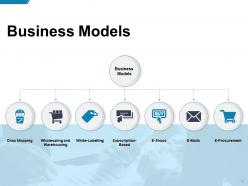
Slide 2: This slide shows Business Models describing- Drop Shipping, Wholesaling and Warehousing, White-Labelling, Subscription-Based, E-Shops, E-Malls, E-Procurement.
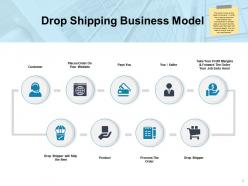
Slide 3: This slide presents Drop Shipping Business Model describing all the steps of process , in which the customer received order directly from manufacturer or another retailer.
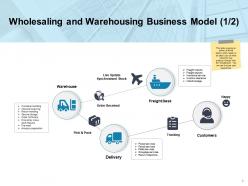
Slide 4: This slide displays Wholesaling and Warehousing Business Model outlining all the factors which needs to be taken care of while consumer buy products directly from the manufacturer.
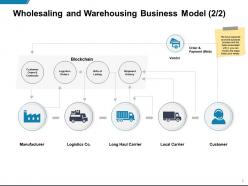
Slide 5: This is another slide for Wholesaling and Warehousing Business Model showing entire business process and the tasks associated with it.
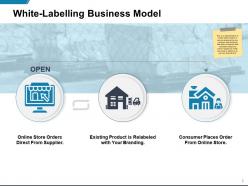
Slide 6: This slide represents White-Labelling Business Model where product or service produced by one company (the producer) that other companies (the marketers) rebrand to make it appear as if they had made it.
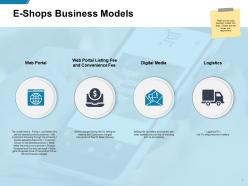
Slide 7: This slide showcases E-Shops Business Models as- Web Portal, Web Portal Listing Fee and Convenience Fee, Digital Media, Logistics.
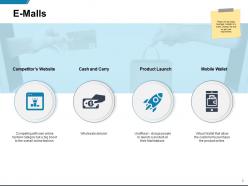
Slide 8: This slide shows E-Malls describing- Cash and Carry, Product Launch, Mobile Wallet, Competitor’s Website.
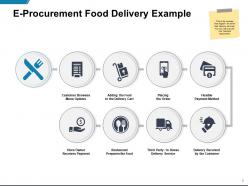
Slide 9: This slide presents E-Procurement Food Delivery Example describing- Customer Browses Menu Options, Placing the Order, Flexible Payment Method, Store Owner Receives Payment, Restaurant Prepares the Food, Third Party / in House Delivery Service, Delivery Received by the Customer, Adding the Food to the Delivery Cart.
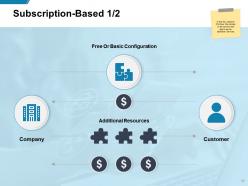
Slide 10: This slide displays Subscription-based model in which the customer first have free access to the service then they’ll pay for additional services.
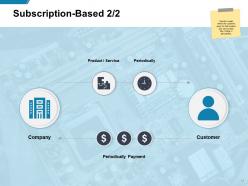
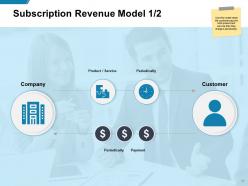
Slide 11: This slide represents another Subscription-Based model. In this the customer pays for both product and service then they charge it periodically.
Slide 12: This slide is titled as Revenue Model for moving towards such models.
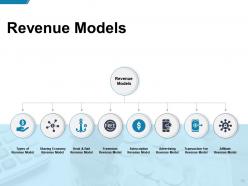
Slide 13: This slide showcases Revenue Models describing- Types of Revenue Model, Hook & Bait Revenue Model, Freemium Revenue Model, Subscription Revenue Model, Advertising Revenue Model, Transaction Fee Revenue Model, Affiliate Revenue Model, Sharing Economy Revenue Model.
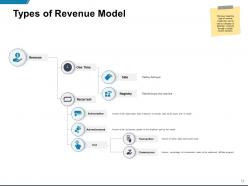
Slide 14: This slide shows Types of Revenue Model that can be used by company to generate revenues through multiple income streams.
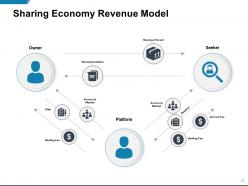
Slide 15: This slide presents Sharing Economy Revenue Model in which Private customers share access to products or services with other private customers through a platform.
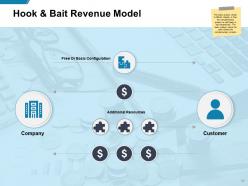
Slide 16: This slide displays Hook & Bait Revenue Model in which the basic product (hook) is offered cheaply or free; the complementary product or refill (bait) is sold expensively. The basic product cannot be used without the complementary product.
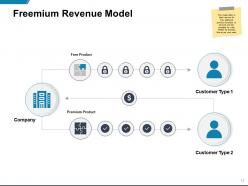
Slide 17: This slide represents Freemium Revenue Model in which the basic service is offered for free, additional premium functions or services are only available for a fee.
Slide 18: This slide showcases Subscription based Revenue Model with related imagery.
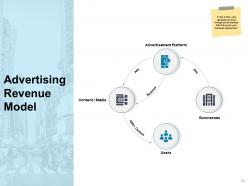
Slide 19: This slide shows Advertising Revenue Model in which the user generate revenue through advertisement.
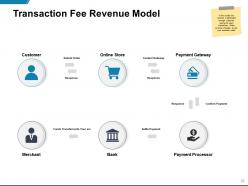
Slide 20: This slide presents Transaction Fee Revenue Model in which the revenue is generated through customer paying for each transaction.
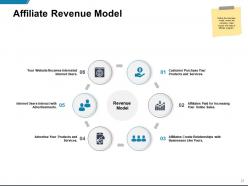
Slide 21: This slide displays Affiliate Revenue Model, where the company make money with help of affiliate program.
Slide 22: This slide showcases Ecommerce Business & Revenue Models Icons.
Slide 23: This slide reminds about a 15 minutes Coffee Break.
Slide 24: This slide is titled as Additional Slides for moving forward.
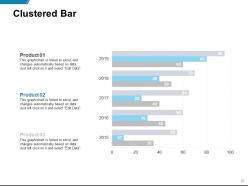
Slide 25: This slide presents Clustered Bar chart with three products comparison.
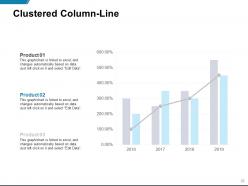
Slide 26: This slide displays Clustered Column - Line chart with three products comparison.
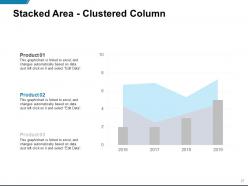
Slide 27: This slide shows Staked Area-Clustered Column with three products comparison.
Slide 28: This is Our Mission slide with related imagery and text.
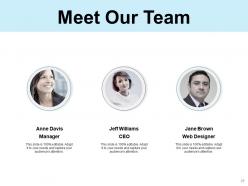
Slide 29: This is Meet Our Team slide with names and designation.
Slide 30: This is About Us slide to show company specifications etc.
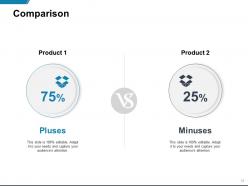
Slide 31: This is a Comparison slide to state comparison between commodities, entities etc.
Slide 32: This is a Financial slide. Show your finance related stuff here.
Slide 33: This is a Quotes slide to convey message, beliefs etc.
Slide 34: This is a Timeline slide to show information related with time period.
Slide 35: This is another slide continuing timeline.
Slide 36: This slide is titled as Post It Notes. Post your important notes here.
Slide 37: This is a Puzzle slide with text boxes.
Slide 38: This is a Venn slide with additional text boxes to show information.
Slide 39: This is a Bulb or Idea slide to state a new idea or highlight information, specifications etc.
Slide 40: This is a Thank you slide with address, contact numbers and email address.
E commerce business and financial model powerpoint presentation slides with all 40 slides:
Explain the judgement with our E Commerce Business And Financial Model Powerpoint Presentation Slides. Give folks a clear insight about the clauses.
FAQs for E commerce business and financial model
So B2B means you're selling to other companies - way longer sales process, multiple people making decisions, they want all the technical details. Consumer sales are totally different. People buy fast and with their emotions more. Companies will negotiate everything and buy in bulk, but once they trust you they stick around forever. Regular consumers? They care more about how your website looks and feels. Honestly, the pricing strategies are like night and day too. You basically need different approaches for everything - your marketing, how you present stuff, even how you talk to them.
Subscriptions work so well because you're building an ongoing relationship instead of just one-time sales. Customers stick around to see what comes next. The regular delivery schedule keeps you in their head, and honestly? People get into routines with your stuff - it becomes part of their life. You get way more chances to collect feedback and make things better too. Just make sure you're actually adding convenience or helping them discover cool things. Nobody wants to feel trapped in some annoying payment loop they'll end up hating later.
Honestly, marketplaces are a game-changer for getting your stuff seen. Amazon's got millions of people shopping every day - that's traffic you'd spend years trying to build yourself. You're basically riding their coattails with all their search stuff and recommendations. People trust buying from Amazon way more than some random website they've never heard of (can't blame them tbh). I'd throw your best products on 2-3 big marketplaces that fit your niche. See which ones actually work for you.
So basically, dropshipping means you don't actually keep any products around - the supplier ships stuff straight to your customers when they order. Pretty sweet setup since you're not dropping money upfront on inventory or dealing with storage. Just need a website and some cash for ads to get going. Downside is you make less per sale because the supplier gets their piece too. But honestly? It's genius for testing out products without going broke. See what sells first, then maybe buy in bulk later if things take off. Check out AliExpress for suppliers or just hit up manufacturers directly.
Fast loading is everything - seriously, slow sites kill sales immediately. You'll want multiple payment options and solid search functionality built in. Mobile-friendly is non-negotiable these days. Good inventory management will save your sanity, trust me on that one. Analytics and SEO basics should come standard, plus decent customer support tools. Oh, and make sure it plays nice with whatever marketing stuff you're already using. I'd start by figuring out what's driving you crazy with your current setup, then tackle those problems first. The rest can wait.
Dude, mobile shopping has totally flipped customer behavior. People are crazy impulsive now - literally buying random stuff while waiting for their latte! Speed is everything. Your checkout needs to be stupid simple or they'll bounce immediately. Oh, and they're constantly price-checking on their phones, even inside brick-and-mortar stores which is kinda brutal for retailers. Mobile shoppers have zero patience but they buy way more often than desktop users. One-click purchasing isn't just nice to have anymore, it's mandatory. Make your site load fast and keep the buying process brain-dead easy.
First thing - get that SSL certificate sorted and pick a solid payment gateway like Stripe. Those protect customer data during checkout, which is huge. Two-factor auth for admin access is non-negotiable too, I can't stress that enough. PCI compliance matters if you're handling cards directly. Oh and fraud detection tools are pretty clutch for catching sketchy transactions. Regular security audits and keeping everything updated should be on your radar as well. Honestly the SSL and payment setup are your starting points since that's where the real sensitive stuff lives.
So basically you track what customers browse, buy, or dump in their cart - then use that info to create personal profiles. Once you see the patterns emerge it gets kinda addictive honestly! Start small though, maybe just recommend products based on what they've bought before. From there you can customize emails, tweak pricing, even change your homepage for different visitors. Way better than sending the same boring email blast to everyone. The whole thing works because you're actually paying attention to what people do instead of just guessing what they want.
Honestly, the biggest pain points are gonna be shipping costs and all the regulatory BS. Every country has different tax laws and compliance stuff that'll make your head spin. Currency swings can totally mess up your pricing too. Cultural differences are huge - what works here might flop there, so you'll need different marketing approaches and payment options. Plus customs can eat into your profits real quick if you're not careful. I'd honestly just pick one similar market first to figure out your process, then slowly expand from there. Going global right away is tempting but it's a recipe for chaos.
PayPal and Apple Pay are huge right now - people are obsessed with that tap-and-go stuff. Credit cards aren't going anywhere, but customers really want those quick digital options. Klarna and Afterpay have been blowing up with Gen Z buyers who'd rather split everything into payments. More payment choices usually means better sales, which makes sense when you think about it. I'd probably start with PayPal and Stripe since they're solid, then maybe add the buy-now-pay-later thing depending on who you're selling to. Google Pay's decent too if you've got the bandwidth.
Honestly, social media shopping is a game changer because people can buy stuff without leaving the app they're already scrolling through. Instagram and Facebook let you add those little shopping tags, and TikTok's getting into it too. The best part? You can retarget people who visit your page and actually see which posts make money (not just likes). I'd say pick whichever platform your customers use most - don't try to do everything at once. User-generated content works really well for this stuff too. Test some shoppable posts first and see what happens.
Honestly, I'd start small with packaging - like recyclable stuff or maybe those reusable containers that people actually keep. Carbon-neutral shipping is pretty popular right now. Local pickup helps too if you're able to swing it. Partner with suppliers who are already doing sustainable stuff, then actually talk about it on your product pages. Don't do that fake green thing though - people can smell BS from a mile away. Oh, and consider some kind of take-back program? Customers are way more into this than they used to be. Pick maybe two things you can actually stick with first.
Honestly, micro-influencers are where it's at - way better engagement than those massive accounts and they won't break your budget. Look for people with like 10K-100K followers who actually match your vibe and target audience. Send them free products to try, set up discount codes for their people, or just sponsor some posts. I'd probably start small though - reach out to maybe 3-5 influencers in your space and see what works. The trick is finding people who actually connect with their followers instead of just having huge numbers. Oh, and test different collaboration styles! Some influencers are better at stories, others kill it with posts.
Focus on conversion rate, AOV, CAC, and CLV first - those are your money makers. Conversion rate shows if your site actually works, AOV tells you if orders are big enough to matter. The CAC to CLV thing is honestly make-or-break territory. You're basically dead in the water if customers cost more than they're worth long-term. Cart abandonment and repeat purchases matter too, but don't get overwhelmed tracking everything at once. Oh, and AOV can be tricky early on since you might not have enough data yet. Start simple, add metrics as you figure out what's actually moving the needle.
So AR is basically like trying stuff on without actually having it, which is pretty neat. Customers can see how that couch looks in their living room or try on makeup virtually. Honestly, I think the virtual glasses thing is genius - saves so much hassle. The best part? Way fewer returns since people actually know what they're getting. Start with just one product type though, don't go crazy trying to AR everything at once. Test it out first and see how your customers react to it.
No Reviews