

Ways to improve internal customer services





Try Before you Buy Download Free Sample Product
 Impress Your
Audience
 100%
Editable
 Save Hours
of Time


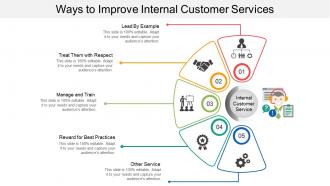
The customer service presentation design is a single slide template that can be used to showcase the steps to improve internal customer services in an organization. Through this internal customer service presentation design, you will be able to acknowledge the benefits of encouraging your audience to improve internal customer services. This presentation template has a creative design on its main slide through which you can explain your audience how interdepartmental communication is important in improving internal customer satisfaction. The template can be used by a Project Manager or business professional. You can easily put down your points on the left side of the customer management presentation slide. To create unconventional yet fresh presentation, you can modify the object and change the color scheme in the template. This customer service PowerPoint template is ready-to-use and is ideal for CRM (Customer Relationship Management) department. Download this template to set appropriate standards for internal customer service. Extract accurate feedback with our Ways To Improve Internal Customer Services. Give folks the courage to express their feelings.
People who downloaded this PowerPoint presentation also viewed the following :
Ways to improve internal customer services with all 5 slides:
Create an interactive atmosphere with our Ways To Improve Internal Customer Services. Give folks the chance to establish connections.



FAQs for Ways to improve
Honestly, I'd focus on response times and how often you're actually solving things on the first try. Those are your bread and butter metrics. Employee satisfaction surveys work too - ask people if they'd recommend your internal support to other teams (weird question but surprisingly telling). Watch out for repeat tickets on the same problems. That's usually a dead giveaway that your fixes aren't really working. Oh, and don't try tracking everything at once - you'll just end up with messy data. Pick 2-3 things and actually measure them well instead.
Honestly, just talk to people - surveys work, but I've found casual one-on-ones usually get you better info. Ask specific stuff instead of generic "how's everything going?" questions. Like, how long do IT tickets actually take? Is HR being weird about requests again? Focus groups can be good too if you want multiple perspectives at once. The real trick is spotting patterns in what people complain about. Once you figure out the biggest pain points, tackle whatever's blocking the most work first. Don't try to fix everything - you'll burn out and nothing will actually improve.
Honestly, if leadership doesn't model good internal customer service, forget about it trickling down to everyone else. Your team watches how you actually treat other departments - not what you say in meetings. I've watched so many leaders talk up teamwork then completely trash another department behind closed doors. Not a good look. Start with yourself: are you genuinely treating Finance or IT like valued partners? Show real appreciation when teams collaborate well. Make it obvious that helping each other is just how things work here. Whatever you do with your peer departments becomes the gold standard everyone else follows.
Honestly, getting departments to actually talk fixes so much drama. Those silos create this ridiculous telephone game where nobody knows what's happening. Teams start anticipating each other's needs instead of scrambling last-minute. Resources get shared better. Problems get solved way faster too - less of that annoying finger-pointing when stuff goes wrong. I swear, once people see beyond their own little corner, everything just flows smoother. Try monthly check-ins first, maybe between teams that work together a lot. Or set up some shared Slack channels for projects. Start small though.
Honestly, start with communication skills training - that's your foundation right there. Interactive workshops beat boring lectures every time (trust me, I've sat through way too many). Role-playing is huge because people can mess up safely before dealing with real situations. Cross-departmental shadowing helps too - nothing beats actually seeing what someone else's day looks like. Oh, and don't skip empathy training and conflict resolution stuff. Those three together? Total game changer for internal customer service. Just avoid anything that feels too lecture-heavy or your team will zone out completely.
Honestly, just automate the boring stuff that's eating up everyone's time. Chatbots work great for basic requests - people can get answers without waiting around. Ticketing systems track everything so nothing gets lost in email hell (which happens way too often). AI routing is clutch because it sends requests straight to the right team instead of that annoying back-and-forth. Those digital approval workflows? Total lifesaver for cutting through red tape. Pick one thing first though - maybe IT tickets or expense reports. Don't try to fix everything at once or you'll go crazy.
Track your response times and resolution rates first - that's your baseline data. But honestly? The survey feedback is way more valuable. Ask your internal users about service quality and if their problems actually got fixed. Nobody wants to submit the same ticket three times, so definitely monitor repeat issues too. Short surveys work best in my experience. Also keep an eye on your team's stress levels because burned-out support staff = worse service. Set up some kind of dashboard so you can catch problems early instead of scrambling later.
So basically, figure out what each team actually needs from you. Sales probably wants lightning-fast answers, but HR might need everything documented properly - totally different vibes. Map out these different "customer types" so you're not doing the same thing for everyone. Honestly, the one-size-fits-all thing never works anyway. You'll get faster fixes, happier people, way fewer "wait, what did you mean?" follow-ups. I'd start simple - just ask 3 or 4 teams about their biggest headaches and how they like to communicate. Makes such a difference.
Jump on it fast and own the situation - doesn't matter whose fault it really is. Start by acknowledging they're pissed off before you do anything else. Then actually listen without getting all defensive (way harder than it sounds, btw). Ask questions to figure out what's really going on. Write everything down so you can catch patterns later. Circle back after you fix it to make sure they're happy. Here's the thing - treat these complaints like goldmines for fixing your processes, not just fires to put out. Also set up regular check-ins so problems don't blow up later.
So basically, people just want to feel appreciated, right? When you call out employees who actually help their coworkers, they'll keep doing it. Set up peer nominations or shout people out in meetings - whatever works for your team. Small incentives for departments that play nice together can work too. Just don't wait forever to recognize someone because then it loses impact. Honestly, the visibility part is huge. Start small though - pick one person this week who's been crushing it with internal service and publicly thank them.
Look, when your teams actually work together smoothly, everything just flows better. Decision-making speeds up. Those annoying bottlenecks disappear. Plus your customers get way more consistent service because departments aren't operating in silos anymore. Your employees will be happier too - nobody wants to waste half their day fighting internal bureaucracy just to help someone. Honestly, I'd start by figuring out where your handoffs are failing. That's usually where you'll find the biggest wins hiding. It sounds obvious but most companies totally overlook this stuff.
Treat your internal teams like different customers - they all want info delivered differently. Sales people love quick Slack pings about policy stuff. IT teams? They actually want those long detailed emails with all the specs. Most companies just send the same boring message to everyone and then get confused when people ignore it (shocking, right?). Map out how each department actually works first. What tools do they use? When are they checking messages? Then write stuff that makes sense for their job. Short version: make it relevant to what they're doing or they'll just delete it like everything else.
Honestly, it's pretty simple - your team's mood totally affects how they treat each other. Stressed out employees? They'll do the bare minimum when someone from another department needs help. But when people feel good about their job, they actually *want* to solve problems and help out. I've seen this happen so many times. You know how different you are when you're having an awful day versus when everything's clicking? Same thing here. Short sentences, long ones - it all varies based on energy levels. Before worrying about internal service training or whatever, just check if your people are drowning in work or genuinely happy. That's where real change starts.
Hit them from every angle - email the basics, but also do quick team meetings where they can actually ask stuff. Nobody reads those monster policy emails anyway, trust me. Use Slack, your intranet, whatever you've got. Here's the thing though - don't just dump the new rules on people. Show them what's actually in it for them. Like, will this make their day easier? Fix something that's been driving them nuts? Give real examples they can picture. I learned this the hard way - people tune out unless they see how it affects their actual workday.
Honestly? Just start asking people what's pissing them off right now - you'll get way more useful feedback than any fancy survey. Set up monthly check-ins instead of those useless annual reviews. Get different departments talking to each other about specific problems, not just general complaints. Oh, and track stuff employees actually care about, not whatever makes the C-suite happy. Maybe try those "service sprint" things where teams can test small fixes quickly. The whole point is making it continuous. I learned this the hard way at my last job - waiting a whole year to address issues is basically useless.
No Reviews